
Reviewed · TOURS IN ICELAND
6-Day Around Iceland Small-Group Tour from Reykjavik with Accomm
Iceland packs an astonishing amount into six days, and this tour takes you around the Ring Road without asking you to drive, navigate, or worry about winter roads. You’ll see glacier lagoons, black beaches, waterfalls, volcanoes, geothermal fields, fishing villages, and the northern reaches of the country in one sweeping trip.
I like the mix of big-ticket sights and local-scale stops, from Gullfoss and Jökulsárlón to Djúpivogur and Siglufjörður. I also like the practical extras: breakfasts, Wi-Fi, five hotel nights, whale watching, and a glacier activity are built into the price.
The tradeoff is pace. Six days leaves little room for lingering, and some days include several hours on the road plus walking or hiking. Food and drinks are not included, the optional nature baths cost extra, and weather can force route changes.
Key points to know before booking
- Glacier adventure included: Walk on an outlet glacier of Vatnajökull for about three hours, or visit a natural ice cave between November and March.
- A true Ring Road sampler: The route reaches East Iceland, North Iceland, the remote Troll Peninsula, and Borgarfjörður before returning to Reykjavik.
- Small group, up to 19 people: A mini-coach makes the trip more personal than a large bus tour, with rotating seats on some departures.
- Guides add real value: Guides such as Gunnar, Almar, Adolf, Hjalti, and others have been praised for local stories, safe driving, and smart weather-based changes.
- Physical effort matters: Expect several walks and hikes, including Hengifoss, Grábrók, glacier terrain, and possibly a rough approach to an ice cave.
- The price covers a lot, but not everything: At $2,543.16 per person, accommodation, breakfasts, activities, park fees, and transport are included, but meals and the Mývatn baths are extra.
Why six days around Iceland works, and where it feels rushed
This is a strong choice if you want the broadest possible introduction to Iceland without renting a car. The route gives you the famous sights, but it also reaches quieter corners that are easy to miss on a short Reykjavik-based holiday.
You’ll travel with a maximum of 19 people, though some departures may be smaller. A mini-coach gives you more room than a full-size sightseeing bus, and several people have appreciated rotating seats so nobody is stuck in the back for the entire trip. Wi-Fi and USB charging help make the longer drives easier.
The guide is central to the experience. Names vary by departure, but guides praised for this route include Gunnar, Almar, Adolf, Hjalti Bjornsson, Sindri, Svan, Iggy, and others. Their role goes well beyond driving. Expect Icelandic sagas, folklore, geology, weather updates, and practical help when plans change.
That flexibility matters here. Wind, snow, rain, road closures, and poor visibility can affect the Ring Road. A good guide can replace a difficult stop with another worthwhile view, or revisit a sight missed in bad weather. You should see the itinerary as a well-planned framework, not a guarantee that every stop will happen in its printed order.
A few more things to do in Reykjavík worth a look
- 6-Day Minibus Tour Around Iceland from Reykjavik
★ 5.0 · 465 reviews
Day 1: The Golden Circle and Iceland’s famous waterfalls
Your first morning begins with pickup from an approved Reykjavik location at about 8:00 a.m. The operator does not collect from every city-center hotel or private rental, so check the pickup list carefully. You may need to walk or take local transport to a designated point such as Hallgrímskirkja, the BSÍ bus terminal, City Hall, or a listed hotel.
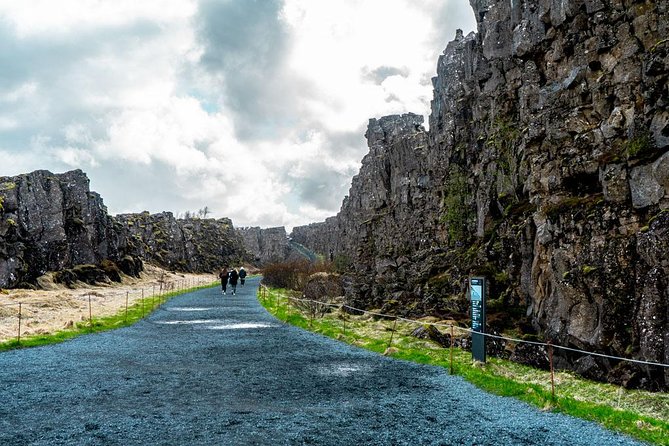
Þingvellir National Park introduces Iceland’s political and geological story. Iceland’s Althing parliament was established here more than 1,000 years ago, and the park shows the visible break between the North American and Eurasian tectonic plates. The stop combines open views with a sense of why this place matters to Iceland’s identity.
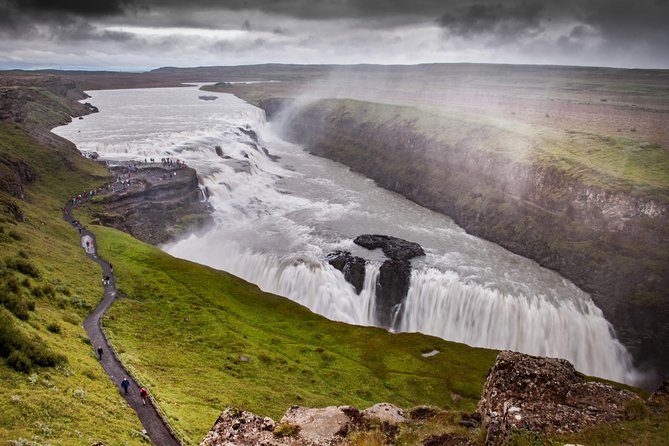
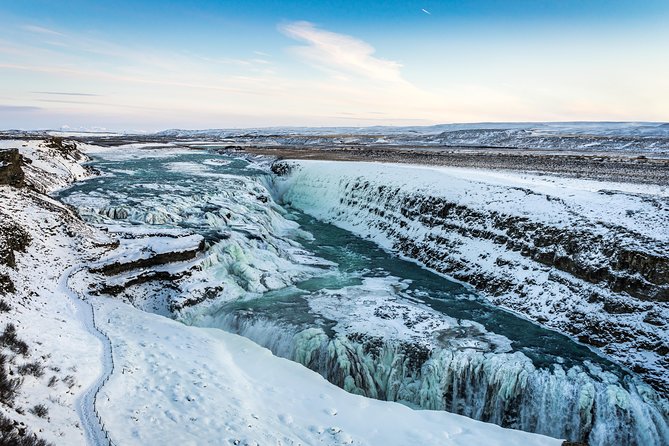
Gullfoss is the first major waterfall. Water drops in powerful steps into a deep gorge, and the spray can make the viewing area wet and slippery. You get about 30 minutes, enough for the main viewpoints but not for a long walk.
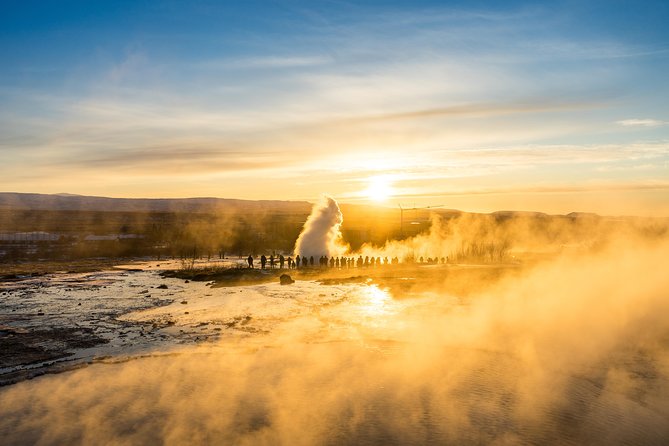
At the Geysir geothermal area, the active Strokkur geyser usually provides the action, sending hot water skyward every few minutes. Nearby vents, steaming ground, and bubbling pools give you plenty to see while you wait. Stay on marked paths, since this is a working geothermal area rather than a place for wandering freely.
The day continues to Seljalandsfoss, where a path can take you behind the falling water when conditions permit. Waterproof clothing is essential here. Skógafoss follows, with a 60-meter drop and a broad curtain of water that often throws up mist and rainbows.
The first day is packed but logical. It gives you Iceland’s classic sights without using up the more remote parts of the trip. You should expect short stops rather than long, quiet stretches at each waterfall.
Day 2: Black beaches, glacier ice, and Jökulsárlón
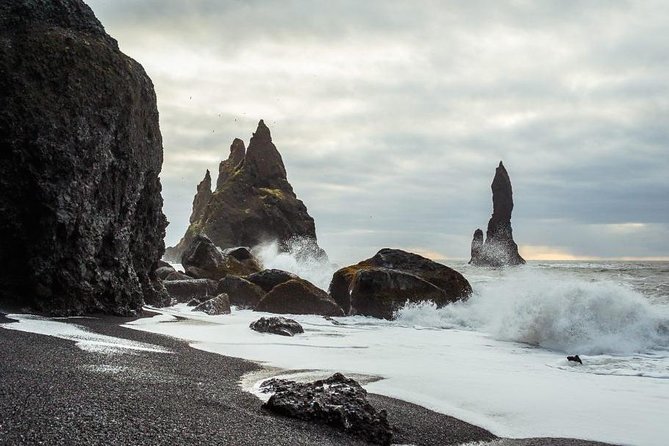
Day two brings a more dramatic change in scenery. Reynisfjara’s black sand, basalt columns, sea stacks, and heavy Atlantic surf create one of Iceland’s most striking coastal views. Keep well back from the water. The waves are powerful and unpredictable, and the beach is not a place to turn your back on the ocean for a photograph.
The village of Vík provides a short stop and a chance to see one of Iceland’s small coastal communities. You’ll also pass beneath or near Mýrdalsjökull, the glacier covering the Katla volcanic system.
The major activity is a guided glacier hike in the Skaftafell area. The walk lasts about three hours and takes place on an outlet glacier connected to Vatnajökull, Europe’s largest glacier. Specialist equipment and a guide are part of the activity, but you still need warm layers, waterproof clothing, gloves, a hat, and sturdy hiking boots.
From November through March, the glacier hike is replaced by a natural ice cave visit. This sounds gentler, but it may still involve uneven ground and a substantial walk. One account describes a rough approach with rocky terrain and streams, so do not treat the winter option as a simple indoor attraction.
Jökulsárlón Glacier Lagoon is a highlight for good reason. Icebergs drift across the water after breaking away from the glacier, and the colors can range from white to deep blue. You’ll have about 45 minutes, enough for the shoreline viewpoints and photographs.
Across the road, Diamond Beach is scattered with chunks of ice on black sand. The ice may be large or small, clear or cloudy, depending on conditions. The walk is short, but wind and cold can be intense.
This is one of the strongest days on the tour, but it is also physically demanding. You’ll combine a long drive, outdoor exposure, and a three-hour activity. Pack snacks, since meals are not included.
Day 3: East Iceland, Hengifoss, and a night in the wilderness
East Iceland feels quieter and less polished than the country’s most famous stops. The brief visit to Djúpivogur gives you time to see a traditional fishing village and Eggin í Gleðivík, an outdoor sculpture of large stone eggs representing local bird species.
The main walk is the Hengifoss track. Hengifoss drops 128 meters and is Iceland’s second-highest waterfall. The trail takes about three hours and climbs through a gorge lined with colored rock layers formed by ancient volcanic activity.
Litlanesfoss appears along the route, framed by tall hexagonal basalt columns. It is a fine example of how Iceland’s waterfalls and geology often arrive together. You get water, volcanic rock, and a strong sense of the forces that shaped the island.
The overnight arrangement is one of the tour’s more unusual features. You spend time around Egilsstaðir, then stay at the Wilderness Center, about 40 minutes away. The center has a museum and free hot pots, giving you a chance to slow down after the day’s walk.
This night may feel remote, and dining options can be limited. Hotel meals and restaurant meals in rural Iceland can be expensive, so carry snacks and budget carefully. Still, the wilderness setting adds something a standard roadside hotel cannot.
Same base, a different kind of day out:
- Reykjavik: Golden Circle Full-Day Tour with Kerid Crater
★ 4.8 · 24,485 reviews - Reykjavik Food Walk – Local Foodie Adventure in Iceland
★ 5.0 · 18,952 reviews - Iceland: Northern Lights Bus Tour from Reykjavik
★ 4.1 · 11,161 reviews - Reykjavík: South Coast Waterfalls, Black Sand & Glacier Tour
★ 4.8 · 11,030 reviews
Day 4: Dettifoss, Mývatn, and northern geothermal country
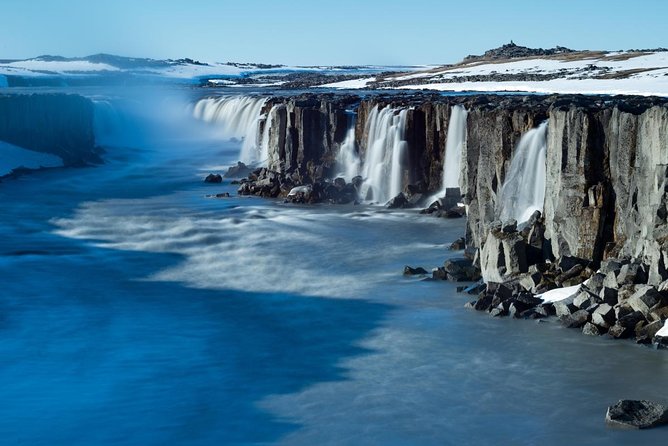
Day four takes you through the Mörðudalur valley toward Dettifoss, one of Iceland’s most forceful waterfalls. The water thunders into the gorge with raw power, and the viewing area can feel exposed in bad weather. Road and access conditions may affect this stop, particularly outside summer.
The Mývatn area brings a full collection of volcanic sights. Námaskarð has steaming vents, boiling pools, and bubbling mud. Hverfjall is a near-perfect volcanic crater, with a rim walk offering broad views if conditions and energy allow. Dimmuborgir, or the Dark Castles, is a maze of lava formations shaped into arches, towers, and rough walls.
The route also includes Studlagil Canyon, where basalt columns rise above a striking turquoise river. Conditions can change the view and access, but the canyon is one of the most memorable geological stops in the east and northeast.
At the Mývatn Nature Baths, you can spend about an hour in milky blue geothermal water. The admission fee is not included and costs about 40 euros. From January through March 2026, the Forest Lagoon replaces the Mývatn baths during renovation work.
Goðafoss finishes the sightseeing day. Its broad, curved shape is gentler than Dettifoss, but no less photogenic. You then continue toward Akureyri, the main town of northern Iceland, where you spend the night.
From September through April, your guide may share Northern Lights forecasts and suggest when to step outside. Seeing the lights depends on darkness, solar activity, and cloud cover, so regard it as a possibility rather than a promised part of the trip.
Day 5: Whales, Akureyri, and the Troll Peninsula
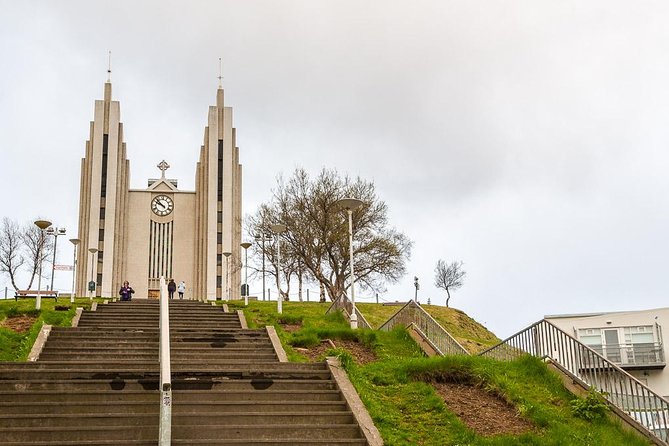
Akureyri is a pleasant change from the road. You’ll have a short introduction to Iceland’s northern capital before heading into Eyjafjörður, the long fjord that surrounds the town.
The whale-watching trip lasts about three hours and is advertised with a 98 percent chance of sightings. Humpback whales, porpoises, and dolphins are among the possible animals. The boat ride adds a different rhythm to the tour, but remember that it takes place outdoors on northern waters. Warm, waterproof clothing remains important even in fair weather.
Later, the route reaches Siglufjörður, a former herring center with a strong fishing-town character. The drive through the Troll Peninsula brings steep mountain scenery, small coastal settlements, ocean views, and well-known ski areas.
The night is spent in the Laugarbakki region. This is another place where the tour’s accommodation can be remote from a town center. That can mean fewer independent dinner choices, but it also puts you closer to the open countryside and possible Northern Lights viewing.
Day 6: Borgarfjörður and the road back to Reykjavik
The final day moves through Borgarfjörður, an area filled with volcanic and medieval landmarks. A short hike to Grábrók crater begins the day. Wear shoes with good traction, since even a short crater walk can be steep or uneven.
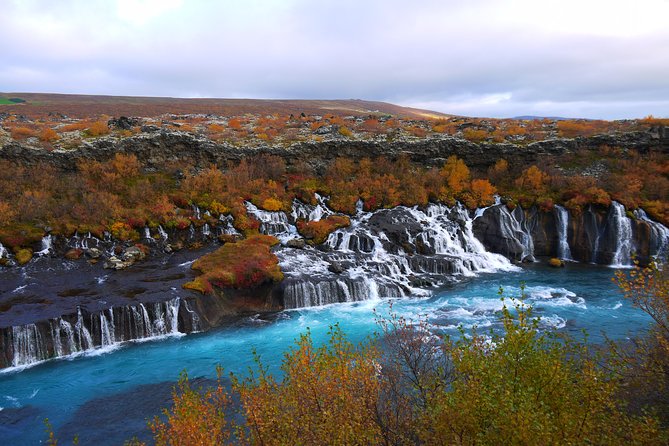
Hraunfossar is one of Iceland’s most unusual waterfalls. Instead of one narrow stream, cold water flows through lava fields and emerges in many small cascades. Nearby Barnafoss adds another powerful water view, though the listed stop focuses on Hraunfossar.
At Reykholt, you’ll see Snorralaug, the historic hot pool linked with Snorri Sturluson, the medieval scholar, law speaker, historian, and saga writer. This stop gives the trip a useful cultural finish after several days focused on geology and outdoor activity.
Deildartunguhver is Europe’s most powerful hot spring. Its water is used to heat homes and businesses in the Borgarfjörður region, showing how geothermal energy functions as part of daily life in Iceland, not just as a sightseeing oddity.
The return route follows Hvalfjörður, or Whale Fjord, before reaching Reykjavik. After six long days, you’ll have seen an extraordinary range of Iceland, though you may also be ready for a quiet evening and a proper meal.
What the $2,543.16 price really covers
The price is substantial, but it includes five nights of accommodation, five breakfasts, Reykjavik pickup and drop-off, a professional guide, park fees, Wi-Fi, whale watching, and the glacier hike or winter ice cave activity. Paying separately for those elements would quickly add up, especially in Iceland.
The value is strongest for anyone who does not want to rent a car. You avoid fuel, navigation, weather stress, hotel planning, and the risk of driving unfamiliar roads in wind or snow. You also get local interpretation and route changes when conditions demand them.
The price does not cover lunch, dinner, snacks, drinks, or the Mývatn Nature Baths. Iceland’s food prices can be high, and rural hotels may be your only convenient dinner choice. Budget for those costs before you book.
Accommodation is generally clean and comfortable, but it is not presented as luxury lodging. Styles vary, and some properties are isolated. Solo travelers are paired in a twin room with another participant of the same gender unless they arrange and pay for a single-room upgrade directly with the operator.
Who should choose this Iceland tour?
I would choose this trip if you have six days, want to see beyond Reykjavik, and prefer a guide to handle the driving. It suits active adults and families with children aged eight or older who can manage regular walks, changing weather, and a glacier activity.
You do not need to be a serious hiker, but you should have moderate physical fitness. Hengifoss takes about three hours, the glacier activity lasts three hours, Grábrók involves a climb, and sightseeing often means walking over uneven ground.
I would hesitate if you want slow mornings, long visits at each sight, or complete control over your meals and schedule. I would also think twice if you dislike group travel or need guaranteed access to every stop, since Icelandic weather can alter the plan.
Bring warm layers, waterproof outerwear, a hat, gloves, and hiking boots. Waterproof clothing and boots can be rented from the operator if arranged in advance. A few protein bars or other snacks are sensible, particularly if you have dietary needs outside the standard options.
Should you book it?
Book this tour if you want a broad, active introduction to Iceland and value convenience over leisure. The strongest reasons are the Ring Road coverage, glacier experience, whale watching, five included breakfasts, and guides who can bring sagas, geology, and local life into the long drives.
Skip it if you want to settle into one region or travel at your own speed. For the right person, though, six days with Arctic Adventures offers an efficient and memorable look at Iceland’s major natural sights and quieter eastern and northern communities.
The cancellation terms are worth noting before payment: a full refund requires cancellation at least six full days before the start time. Cancellation two to six days ahead receives a 50 percent refund, while cancellations less than two days before departure are not refunded.
FAQ
Where does the tour begin?
The tour starts at about 8:00 a.m. with pickup from authorized Reykjavik locations. Pickup is not available from every city-center hotel or private Airbnb, so you must use an approved location from the operator’s list.
How many people are in the group?
The maximum group size is 19 people. The tour uses a small coach, and some departures may have fewer participants.
Is glacier hiking included?
Yes. A guided glacier hike lasting about three hours is included. From November through March, the hike is replaced by a natural ice cave visit inside the glacier.
Are meals included?
Five breakfasts are included. Lunch, dinner, snacks, and drinks are not included, so you should budget separately for food during the six days.
Does the tour include the geothermal baths?
The stop at the Mývatn Nature Baths is included, but admission is extra at about 40 euros. From January through March 2026, the Forest Lagoon replaces the Mývatn baths during renovations.
What happens if the weather changes the route?
The operator may alter the itinerary because of weather or other conditions outside its control. Guides can use alternate stops when roads or visibility make the planned route impractical.
Just added in Reykjavík
- Reykjavík/Hella: Landmannalaugar Highlands Full-Day Trip★ 4.3 · 28 reviews
- Whale Watching in Reykjavik by Speedboat★ 4.8 · 77 reviews
- Midnight Sun ATV Adventure from Reykjavik★ 5.0 · 112 reviews
- Reykjavik: Midnight Sun Whale Watching Tour★ 4.6 · 286 reviews
- From Reykjavik: Landmannalaugar & Háifoss Waterfall Tour★ 4.8 · 314 reviews
- Airport Express Shared Departure Transfer from Reykjavik Hotels to Keflavik Airport★ 4.0 · 386 reviews
- Airport Transfer in Iceland from Reykjavik City to Keflavik Airport with Hotel Pick Up★ 4.0 · 332 reviews
- Small Group Husky Sledding Tour from Capital Region★ 5.0 · 171 reviews
Tours in Iceland, compared.
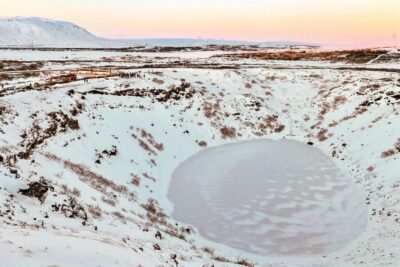
Golden Circle Full-Day Tour with Kerid Crater
Read our review →
Reykjavik Food Walk – Local Foodie Adventure in Iceland
Read our review →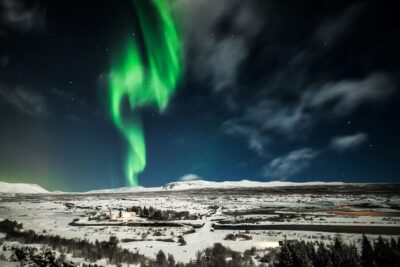
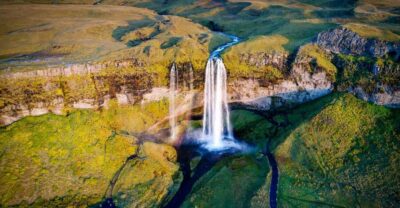
South Coast Waterfalls, Black Sand & Glacier Tour
Read our review →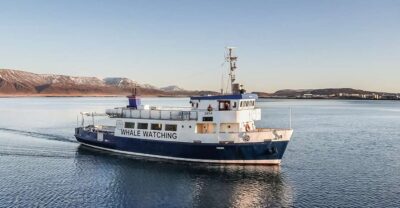
Sky Lagoon Entrance Pass With 7-Step Spa Ritual
Read our review →
Iceland South Coast Full Day Small-Group Tour from Reykjavik
Read our review →Browse the lists this tour appears in