
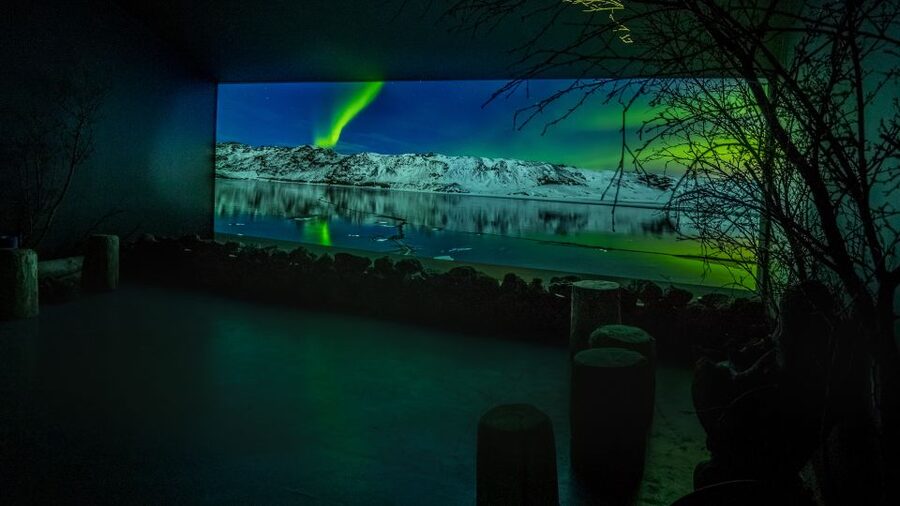
Reviewed · NORTHERN LIGHTS TOURS
Reykjavik: Aurora Reykjavik The Northern Lights Center Entry
The best reason to visit Aurora Reykjavík is simple: it gives you a useful indoor lesson in the Northern Lights before you head outside to search for them. You’ll move from Arctic folklore to solar science, then watch a 30-minute 4K film and try a 360-degree virtual reality show that places the glowing sky around you.
I especially like the photo simulator, which lets you practice the long-exposure settings needed for Aurora pictures, and the practical advice from the staff. The center also works well as a backup when clouds, daylight, or poor conditions keep the real lights out of reach. The main drawback is that the exhibits are compact, and the experience depends partly on visitors noticing how to start the VR and audio features.
Key points
- A 30-minute 4K film shows Icelandic Aurora displays in a quiet cinema room.
- The 360-degree VR experience is the most unusual part of the visit and can feel closer to an outdoor viewing session than a standard museum film.
- The photo simulator gives you a chance to practice Aurora camera settings before standing outside in the cold.
- Folklore and science appear together, explaining both ancient Arctic stories and the solar activity behind the lights.
- The Grandi Harbour District location is close to central Reykjavík, with bus service on line 14 and free parking.
- The $33 admission is most useful for visitors who want context, photography help, and an indoor alternative to a canceled Aurora outing.
Starting with Aurora myths and Arctic science
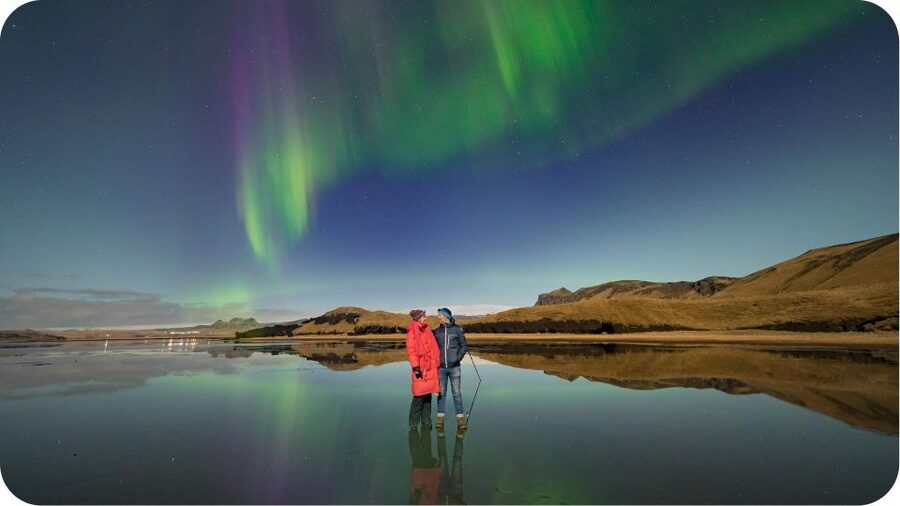
Aurora Reykjavík is a small museum devoted entirely to the Northern Lights. Instead of sending you straight into a dark theater, it begins with the stories people told about the lights long before scientists understood them.
You’ll see folklore and mythology from cultures across the Arctic region. This gives the Aurora a human side. The lights were not just a scientific event. For generations, people tried to explain the moving bands of color using local beliefs, spirits, omens, and stories.
The exhibition then shifts to science. You’ll learn how activity from the Sun interacts with Earth’s atmosphere and creates the glow known as the Aurora Borealis. Displays explain the different shapes and colors, along with why the lights can look stronger in photographs than they do to the naked eye.
I like this order because it gives you two ways to understand the same sight. The legends explain why the lights have inspired people for centuries. The science explains why the colors move, change shape, and appear only under certain conditions.
Do not expect a large natural history museum. This is a focused exhibit, not a full-day institution with dozens of galleries. Its strength is the subject itself, presented in a format that is easy to follow for adults, children, and anyone seeing the Aurora for the first time.
More Northern Lights Tours in Iceland
- Iceland: Northern Lights Bus Tour from Reykjavik
★ 4.1 · 11,161 reviews - Small-Group Premium Northern Lights Tour from Reykjavik
★ 4.4 · 2,977 reviews - #1 Northern Lights Tour In Iceland from Reykjavik with PRO photos
★ 4.5 · 2,887 reviews
The 30-minute film in a dark cinema
The center’s cozy cinema room is the heart of the visit for many people. You’ll sit back and watch a 30-minute 4K time-lapse film showing Northern Lights displays around Iceland.
The film gives you something a real Aurora hunt cannot promise: a steady sequence of strong displays. Outside, you may spend hours under a cloudy sky or see only a faint green arc. In the theater, the lights keep appearing, shifting, and filling the screen.
That makes the film especially useful if your outdoor outing has been canceled or if your Iceland visit takes place during a season with little or no darkness. It also helps set expectations. The Aurora is not always a dramatic curtain waving across the whole sky. It can be faint, pale, slow, or visible only for a short time.
The theater should be treated as a visual presentation rather than a replacement for nature. A filmed time-lapse compresses hours of movement into a short show and uses strong displays selected for their beauty. It cannot give you the silence, cold air, and surprise of seeing the lights above Iceland yourself.
Still, the film is a solid part of the admission. It gives you a clear sense of what a successful night might look like and offers an enjoyable indoor break during a cold or wet day.
The 360-degree VR Northern Lights show
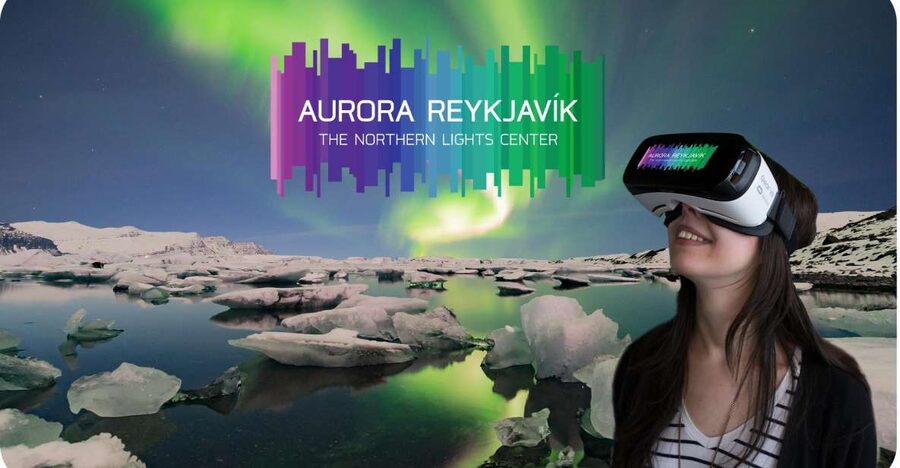
The 360-degree virtual reality film is the center’s most distinctive feature. Put on the headset and look around an Icelandic night sky as the Aurora moves above you.
This is different from the large-screen film. The theater asks you to watch a framed scene. The VR experience places the scene all around you, so you can turn your head and follow the lights across the virtual sky.
Pay attention when you arrive. The headset may be available without a staff member actively directing every visitor through the process. One visitor nearly missed it by assuming the large-screen film was the only special presentation, so look for the VR equipment and ask the staff how it works.
I would rate the VR as a strong reason to visit, particularly if you have never seen the Northern Lights. It cannot reproduce the physical feeling of standing outdoors, and it is still a recorded experience. Yet the 360-degree format gives you a much better sense of looking up rather than looking at a screen.
The center is family-friendly, but younger children may need help handling the headset. Since the experience is indoors and does not depend on weather, it is also a useful choice for people who want to see an Aurora display during summer, when daylight makes a real sighting difficult.
Practicing Aurora photography before going outside
The photo simulator is one of the most practical parts of the center. Northern Lights photography is not usually a point-and-shoot task. You need to understand exposure, focus, and the effect of camera movement in the dark.
At the simulator, you can practice taking pictures of the Aurora before trying it in the field. The exercise is useful because a camera often records color and detail that your eyes cannot see clearly in a faint display.
The simulator also helps you understand why a tripod is important, though the supplied information does not specify the exact camera equipment or settings provided there. Use the session as an introduction rather than a full photography course.
The timing of this lesson is good. You learn about the lights, see examples on film, and then practice how to record them. If you already own a camera, pay attention and ask the team about any questions you have. Staff members are available to discuss Aurora photography and other Northern Lights topics.
Even visitors who do not care about photography can enjoy the simulator. It adds an activity to the visit and turns a technical subject into something you can try instead of simply reading about.
More Northern Lights Tours in Reykjavík
- Northern Lights Small-Group Tour with Hot Chocolate & Photos
★ 4.5 · 2,068 reviews - Northern Lights Night Tour from Reykjavik
★ 3.5 · 1,921 reviews - Northern Lights Bus Tour from Reykjavik with Hot Chocolate
★ 4.0 · 1,782 reviews - From Reykjavik: Northern Lights Tour with Lifetime Guarantee
★ 3.7 · 1,578 reviews
Getting useful advice from the staff
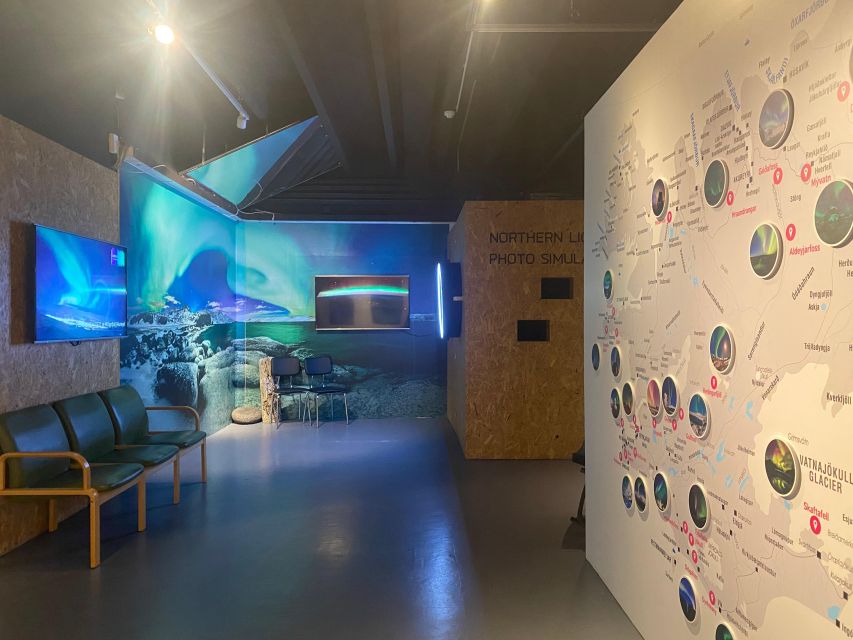
Aurora Reykjavík is not only a self-guided museum. English-speaking staff are available to answer questions and share tips for planning an Aurora hunt.
Ask about how to maximize your chances of seeing the lights, what conditions matter, and what to expect from the human eye. The center’s stated purpose is partly preparation, so do not rush through the displays without asking for help.
Staff quality can affect the feel of the visit. Several experiences describe the team as friendly and helpful, and one particularly positive account praised a host who gave a talk about the Aurora. At quieter times, you may have more room to ask questions and use the displays without waiting.
The experience can be less polished when no one points out the VR equipment or when a staff member is focused elsewhere. One person found that background conversation interrupted the relaxing cinema atmosphere. That is a small but fair concern, since the film works best in a quiet room.
My advice is to be active. Ask where the VR begins, request help with the photo simulator, and speak to the team if a science display raises a question. You will get more from the center than by simply walking through the rooms.
Languages, audio, and the small shop
Printed guidebooks are available in a broad range of languages, including Chinese, Czech, Dutch, French, German, Italian, Japanese, Polish, Portuguese, Russian, and Spanish. The listed guidebook languages and the audio options are not identical, so check which format suits you.
QR-based audioguides are available in English, Cantonese, French, German, Italian, Mandarin, and Spanish. You need your own headphones, or you can buy earphones for an extra 7 EUR per person.
If you prefer to read rather than scan QR codes, a separate Northern Lights souvenir guidebook is available for 14 EUR per person. It is sold in English, Spanish, German, French, Italian, Czech, Dutch, and Chinese.
The boutique comes at the end of the visit, with local art and souvenirs. There is also a café where a hot drink costs 4 EUR. One account described complimentary tea or coffee, but the current activity information lists a hot drink as an extra purchase, so I would budget for the stated charge rather than count on a free drink.
Bring your own headphones if you plan to use the audio content. That small detail matters because the QR material gives you another way to learn, but it is less convenient if you arrive without earphones.
How the $33 price works for your visit
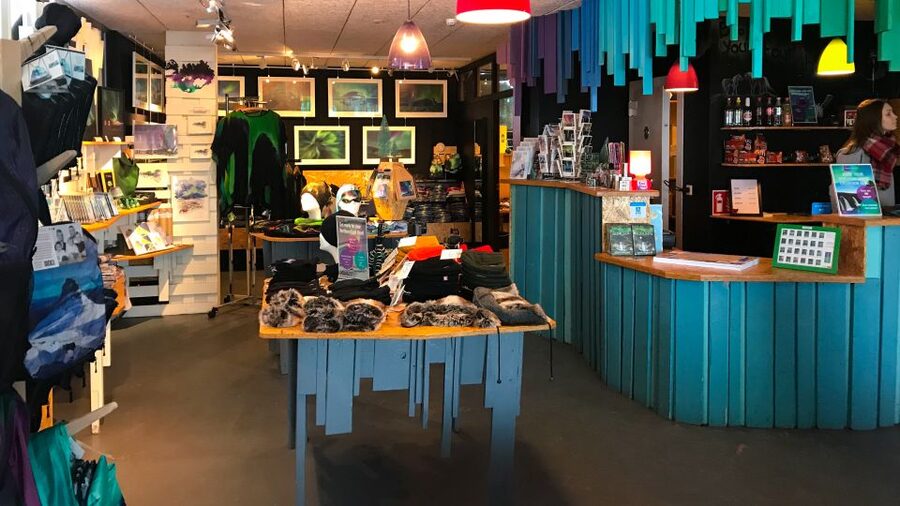
Admission costs $33 per person. That is not cheap for a compact museum, so the value depends on how you use the visit.
If you only watch the main film and spend a few minutes looking at the displays, the price may feel high. The film is enjoyable, but it is not a substitute for an outdoor Aurora tour and should not be the only reason you pay admission.
The value improves if you use the full package: folklore and science exhibits, the 30-minute cinema, 360-degree VR, photo simulator, multilingual material, and staff advice. You are paying for preparation as much as entertainment.
It is particularly worthwhile after a canceled Northern Lights outing or during a trip when the weather has been poor. It also gives you a planned activity on a cloudy day, rather than leaving your Iceland schedule dependent on a natural event.
Extra purchases can raise the cost. Earphones are 7 EUR, the souvenir guidebook is 14 EUR, and a hot drink is 4 EUR. None is required, and you can keep the basic visit at the admission price if you bring headphones and skip the shop extras.
Location, timing, and access in Reykjavík
Aurora Reykjavík is at Fiskislóð 53 in the Grandi Harbour District, a short distance from central Reykjavík. Bus line 14 serves the area, and free parking is available.
The ticket is valid for one day, but the information does not give a fixed total visit length. The center’s film alone lasts 30 minutes, and the displays, VR, photo simulator, and audio material add time according to your pace.
I would avoid scheduling it as a rushed stop between major plans. Give yourself time to watch the film, ask questions, and locate the VR station. The visit is compact enough to fit into a Reykjavík day, but it works best when you are not hurrying out after one presentation.
Opening hours can change, so check aurorareykjavik.is before setting out. That is especially important if you are planning around a bus trip, a restaurant booking, or a late arrival.
The center is wheelchair accessible and suitable for all ages. The entrance area can become slippery in icy weather, so take care in winter and wear sensible footwear.
Who will get the most from Aurora Reykjavík?
I would recommend this center to first-time Northern Lights visitors who want the basic science explained in plain language. It is also a good fit for families, photography beginners, and anyone who wants a weather-proof Iceland activity.
You will get the most from it if you are actively planning an outdoor Aurora hunt. The tips, photo practice, and explanation of what the eye can see can make a later night outside less confusing.
It is also a sensible choice if the real lights never appear. Nothing indoors can fully replace seeing the Aurora in the sky, but the theater and VR provide a more satisfying alternative than simply leaving Iceland without learning what you missed.
Experienced Aurora photographers may find the display material basic. Even so, the photo simulator and access to staff can make a short visit worthwhile if you have specific questions.
Should you book Aurora Reykjavík?
Book it if you want a focused, indoor introduction to the Northern Lights, especially if your schedule includes cloudy weather or a canceled outdoor outing. The VR presentation, cinema film, and photo simulator give the $33 admission real value when you use all three.
Skip it if your only goal is to see the real Aurora and you have limited time or a tight budget. This is an educational and visual substitute, not a live sighting.
For most first-time visitors, I would place Aurora Reykjavík early in the Iceland itinerary. You can learn how the lights work, practice taking pictures, and then use that knowledge during your own night outside.
FAQ
Where is Aurora Reykjavík located?
Aurora Reykjavík is at Fiskislóð 53 in the Grandi Harbour District of Reykjavík, Iceland. It is close to the city center.
How much does admission cost?
Admission costs $33 per person.
How long is the Northern Lights film?
The 4K Northern Lights film lasts 30 minutes.
Is the 360-degree VR experience included?
Yes. The 360-degree virtual reality video is included with admission.
Are headphones included for the audioguide?
No. You should bring your own headphones. Earphones can also be purchased for 7 EUR per person.
What languages are available?
Guidebooks are available in Chinese, Czech, Dutch, French, German, Italian, Japanese, Polish, Portuguese, Russian, and Spanish. QR-based audioguides are available in English, Cantonese, French, German, Italian, Mandarin, and Spanish.
Is Aurora Reykjavík wheelchair accessible?
Yes. The center is wheelchair accessible and suitable for all ages.
Can I cancel my booking?
You can cancel up to 24 hours in advance for a full refund. Reserve now and pay later is also available.
Just added in Reykjavík
- From Reykjavik: Full-Day Horse Riding & Golden Circle Tour★ 3.7 · 81 reviews
- Reykjavik: Evening Icelandic Food and Drink Tour★ 4.9 · 66 reviews
- Hveragerdi: The Siggi Horse Riding Tour★ 4.8 · 13 reviews
- The Reykjavik Christmas Food Tour★ 4.8 · 19 reviews
- Reykjavik: Small-Group Snæfellsnes Day Trip★ 4.8 · 214 reviews
- The Golden Circle & Hop On – Hop Off Combo Deal★ 4.5 · 15 reviews
- Reykjavik: The Icelandic Sweet Tooth Tour★ 4.6 · 30 reviews
- Reykjavik: The Golden Circle Full-Day Tour★ 4.7 · 170 reviews
Northern Lights Tours, compared.
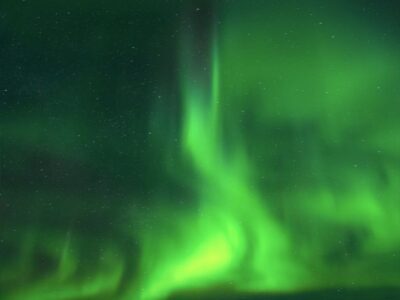
Northern Lights Tour with Guaranteed Sightings
Read our review →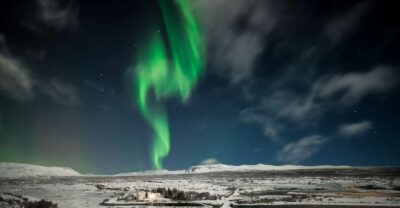
Small-Group Premium Northern Lights Tour from Reykjavik
Read our review →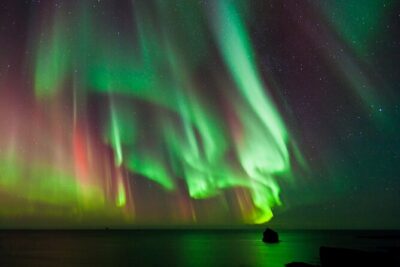
#1 Northern Lights Tour In Iceland from Reykjavik with PRO photos
Read our review →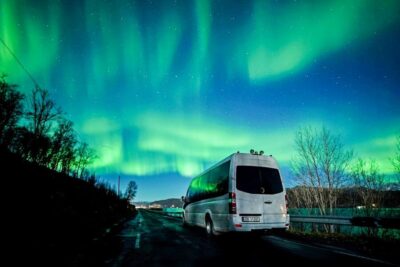
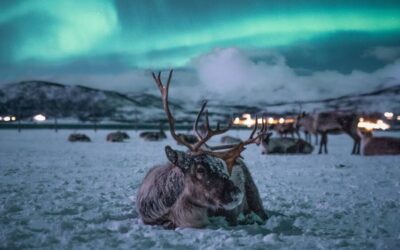
Reindeer Sled, Dinner, and Chance of Northern Lights
Read our review →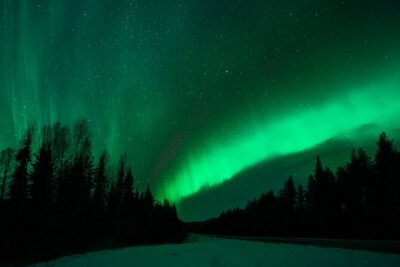
Northern Lights Rovaniemi: Guaranteed Viewing & Unlimited Mileage
Read our review →Browse the lists this tour appears in