Reviewed · TOURS IN ICELAND
Reykjavik: Silver Circle Tour, Canyon Ride, & Thermal Baths
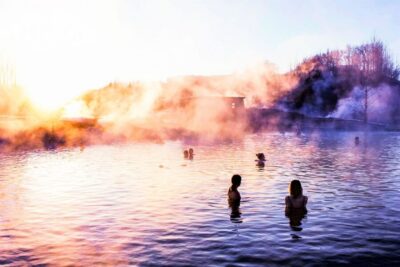
The best part of this day is the Husafell Canyon Baths, where you soak in geothermal stone pools deep in a remote canyon rather than sharing a large resort lagoon with hundreds of people. I like the quiet setting and the changing water temperatures, from 30 to 41°C, plus the chance to cool off in a cold pool or waterfall.
I also like the mix of waterfalls, horses, and Viking-era stories. Feeding Icelandic horses, tasting rye bread baked with geothermal heat, and visiting Snorri Sturluson’s old home give the day more character than a simple waterfall run. The main drawback is physical access: the Canyon Baths require about 67 steps and a steep slope, so this is not a good choice for anyone with significant mobility limits.
Key points to know before you book
- Three small Canyon Baths pools offer warm water at different temperatures, with a cold pool and cooling waterfall nearby.
- Hraunfossar and Barnafoss sit close together, making one of the day’s strongest waterfall stops.
- Sturlureykir Horse Farm includes time with friendly Icelandic horses and hot spring baked rye bread.
- The 4×4 canyon ride is meant to reach remote scenery and Langifoss, though the exact route can vary.
- Reykholt connects the day to Icelandic medieval history, especially the writer and chieftain Snorri Sturluson.
- The small minibus has Wi-Fi and USB chargers, but some people find the seats tight on a full 10-hour day.
Why the Canyon Baths make this Silver Circle trip different
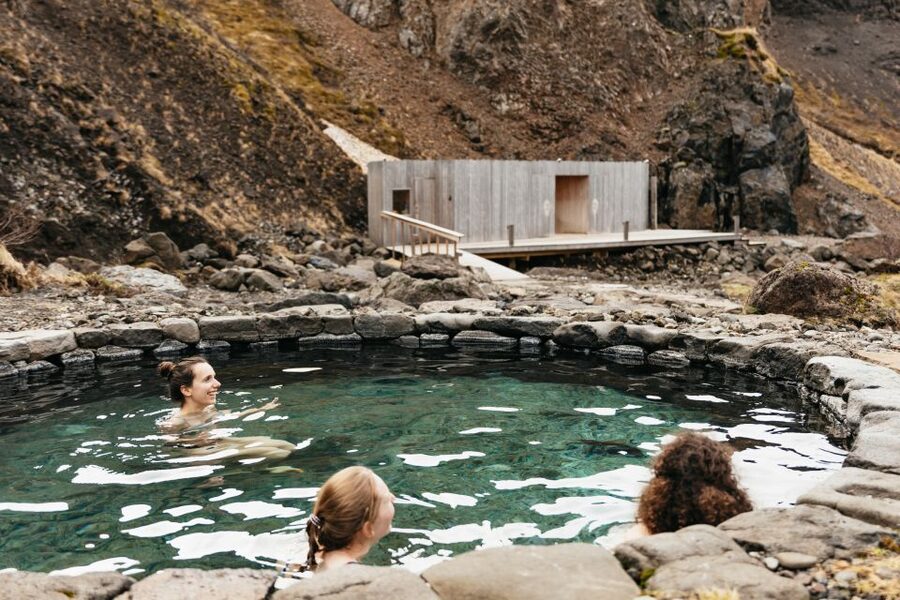
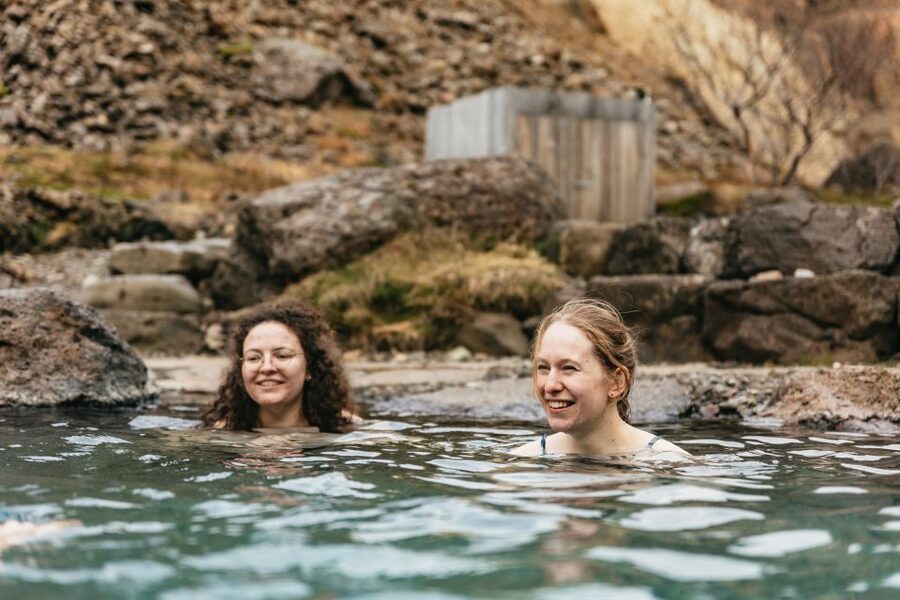
Iceland has no shortage of hot pools, but the Canyon Baths feel far removed from the better-known bathing stops near Reykjavik. They sit in the Hringsgil canyon, surrounded by rock, steam, and quiet. Capacity is limited to 20 people at a time, and several outings have had only a handful of bathers present.
That limited capacity matters. You can sit in the water and hear the surroundings instead of background chatter from a crowded pool. The setting also makes the experience feel connected to Iceland’s old bathing traditions. Early settlers used natural hot water in much the same practical way, though you should not expect a polished spa complex.
There are three geothermal stone pools, ranging from 30 to 41°C. One may feel pleasantly warm, while another can seem hot after you have been outside in cold weather. A cold-water pool and a small waterfall give you ways to cool down, though the waterfall is best treated as a quick bracing rinse rather than a long swim.
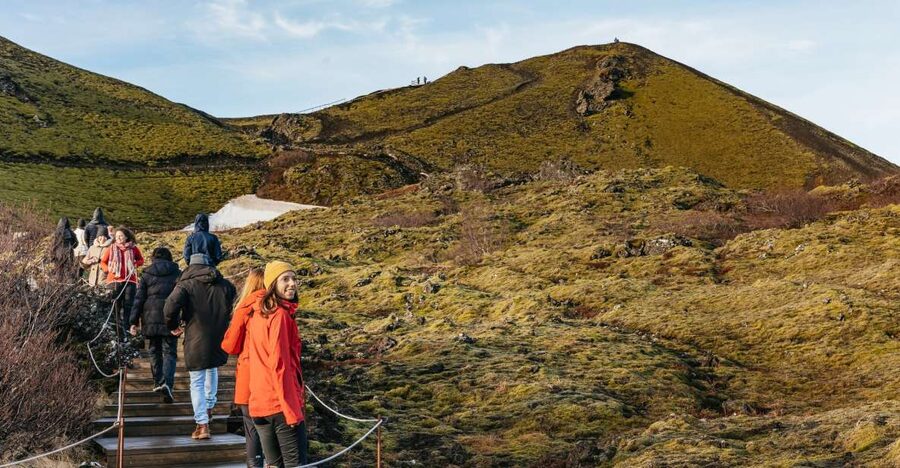
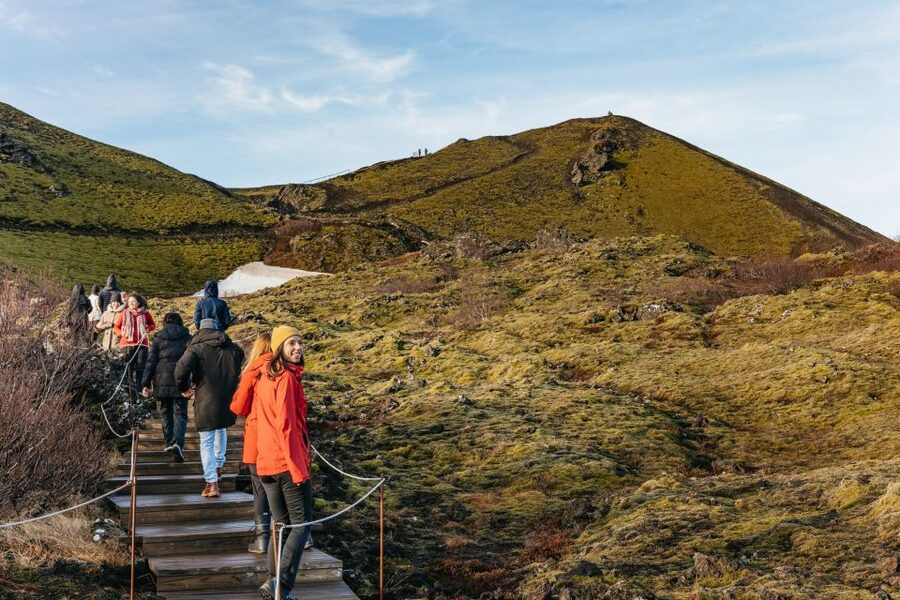
The practical catch is the walk down. You need to manage approximately 67 steps and a steep slope to reach the pools. The return climb can be tiring after soaking, especially in wet or icy weather. Bring proper shoes, and do not assume that the bathing part is accessible simply because the tour includes transportation.
No soap is allowed in the showers at the protected natural site. You can use the facilities at Husafell for free if you want a more conventional wash. Towels are supplied according to one account, but I would still confirm current arrangements when booking and bring swimwear, a towel, water shoes, warm clothing, and hiking shoes.
Other trips people book in Reykjavík:
- Reykjavik: Golden Circle Full-Day Tour with Kerid Crater
★ 4.8 · 24,485 reviews - Reykjavik Food Walk – Local Foodie Adventure in Iceland
★ 5.0 · 18,952 reviews - Iceland: Northern Lights Bus Tour from Reykjavik
★ 4.1 · 11,161 reviews
Reykjavik to Borgarnes, the gateway to West Iceland
Pickup takes place in Reykjavik between 8:30 and 9:00 AM. If your accommodation is on a street closed to commercial traffic, you will be given a nearby pickup point. From the city, the minibus heads toward Borgarnes, which serves as the entry point to West Iceland.
This first stretch is useful for settling into the long day. The drive can offer sunrise views in late autumn and winter, while the return may bring sunset colors in other seasons. Your guide provides background on Icelandic culture, local history, and the places ahead.
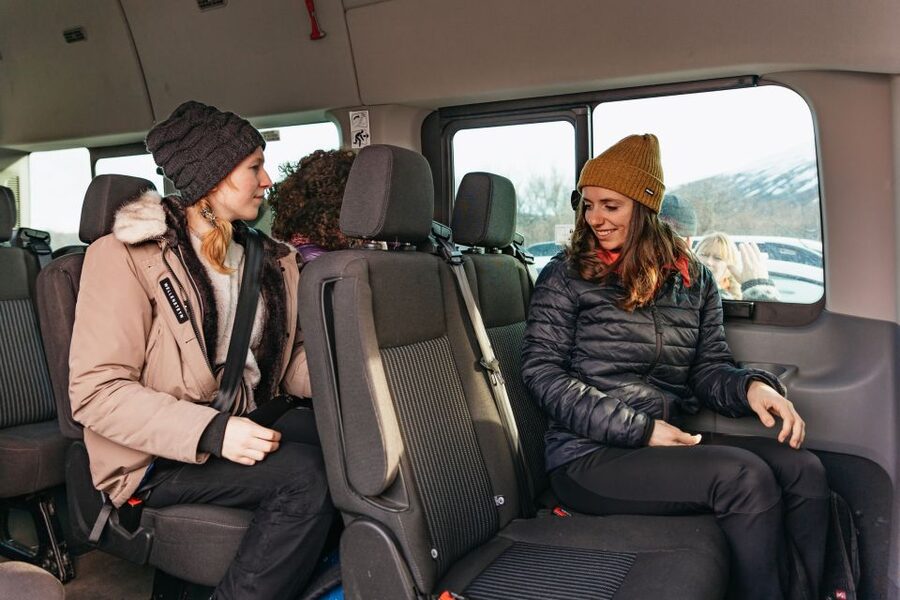
The bus includes free Wi-Fi and USB chargers at every seat. That is a real help on a 10-hour outing, especially if you use your phone for photographs. Space is the less certain part. One account describes the minibus as comfortable and new, while another found the seats tight and lacking legroom, even for shorter passengers. If you value extra space, ask about the vehicle size before booking.
The tour is conducted in English. Guides have included Dominika, Pavel, Addi, Mika, Halldor, David, and others. The strongest guiding style here is active rather than hands-off. Several guides have walked with the group at each stop, helped older people, answered questions, and kept the long drive lively with stories and music.
Deildartunguhver, Iceland’s powerful hot spring
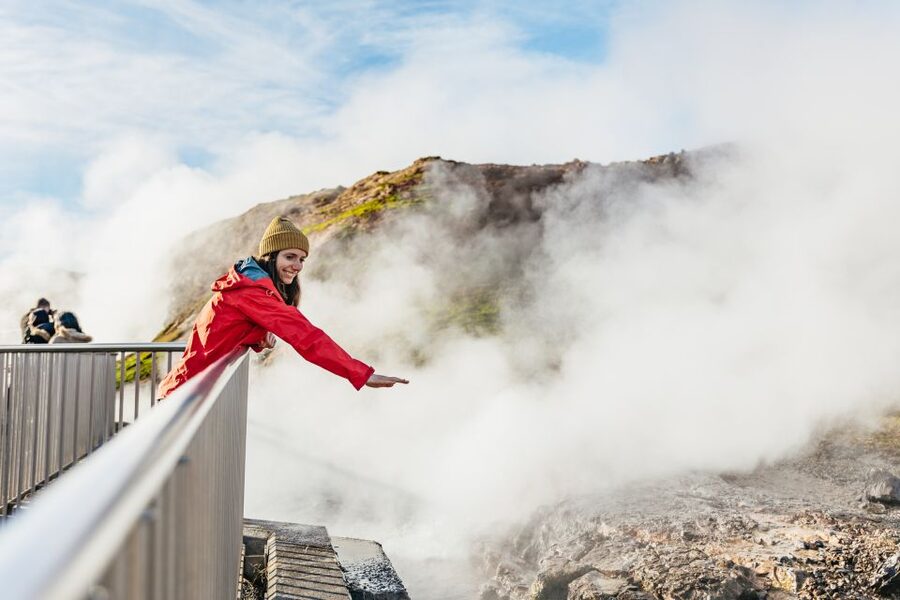
The first major stop is Deildartunguhver, described as the most powerful hot spring in Europe. It produces enough hot water to supply homes and power systems for communities many miles away.
This is not a place for a swim. The water is dangerously hot, and the attraction is the force of the steaming ground. Vapor rises around the pools, making the stop feel raw and industrial as well as scenic. Stay on the marked paths and keep close control of children.
I like this stop because it explains how Iceland’s geothermal energy works in everyday life. The country’s hot water is not just a holiday attraction. It heats buildings and supports local communities, and Deildartunguhver makes that fact easy to understand.
Sturlureykir Horse Farm and hot spring bread
At Sturlureykir Icelandic Horse Farm, you get a close look at the small, sturdy horses that are part of Iceland’s national identity. The stop is more personal than a quick roadside photograph. You can meet, feed, and groom the horses, and the animals are known for being calm and friendly.
The farm also serves rugbrauð, a dense rye bread baked using geothermal heat. It comes with coffee or cold water. This is a small detail, but it gives the tour a taste of ordinary Icelandic life and makes the hot spring connection feel practical rather than theatrical.
Families should especially like this stop, and it works well for anyone who wants more than geology and waterfalls. It also breaks up the driving before the main waterfall stops.
Same base, a different kind of day out:
- Reykjavík: South Coast Waterfalls, Black Sand & Glacier Tour
★ 4.8 · 11,030 reviews - Reykjavík: Whale Watching and Marine Life Cruise
★ 4.6 · 9,838 reviews - Reykjavik: Sky Lagoon Entrance Pass With 7-Step Spa Ritual
★ 4.8 · 6,166 reviews - From Reykjavik: Golden Circle, Kerid, & Secret Lagoon Tour
★ 4.8 · 6,009 reviews
Hraunfossar and Barnafoss, two very different waterfalls
Hraunfossar is known as the Lava Waterfalls because water appears to flow out through ancient lava fields rather than from one narrow river channel. Meltwater from Langjökull glacier moves through the rock and emerges along a stretch of nearly one kilometer before reaching the Hvítá River.
Several viewing platforms give you different angles. You can see the pale water threading through dark rock and vegetation, with the river below. The effect is broad and delicate rather than a single dramatic plunge.
A short distance away, Barnafoss has a faster, more forceful character. Its name means the waterfall of the children, tied to a tragic local story about two children. Your guide can provide the details and place the story in the setting, which is one reason the live guide adds value here.
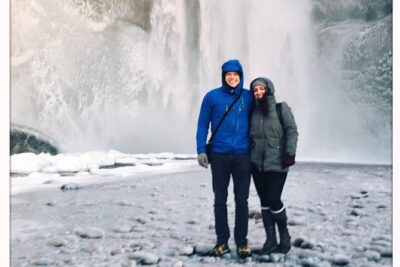
Allow time for both viewpoints. Hraunfossar rewards careful looking, while Barnafoss gives you rushing water and a stronger sense of power. In winter, ice can frame the falls, and the paths may be slippery. In wet or snowy weather, hiking shoes are far more useful than casual trainers.
Food is available at scheduled stops, but choice and price can vary. One stop near the falls had limited gluten-free options, while another lunch location was considered expensive compared with a later option. If you have dietary needs, carry a snack and ask your guide about the next food stop instead of relying on one café.
Husafell, turf houses, and the old strongman stone
Husafell is a wooded oasis in an otherwise open part of West Iceland. It has a long connection with local settlement, summer homes, and camping, and it gives you a look at how Icelanders use this region beyond sightseeing.
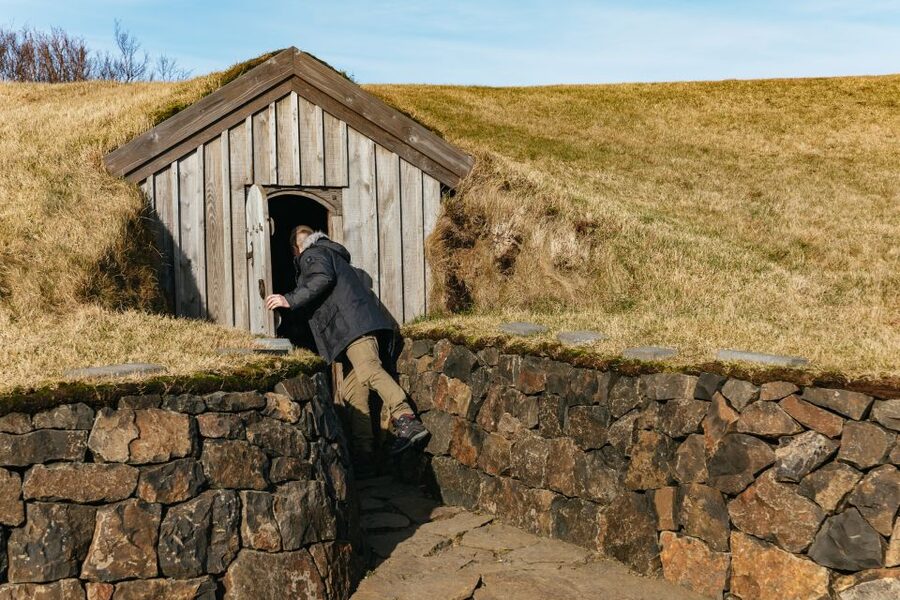
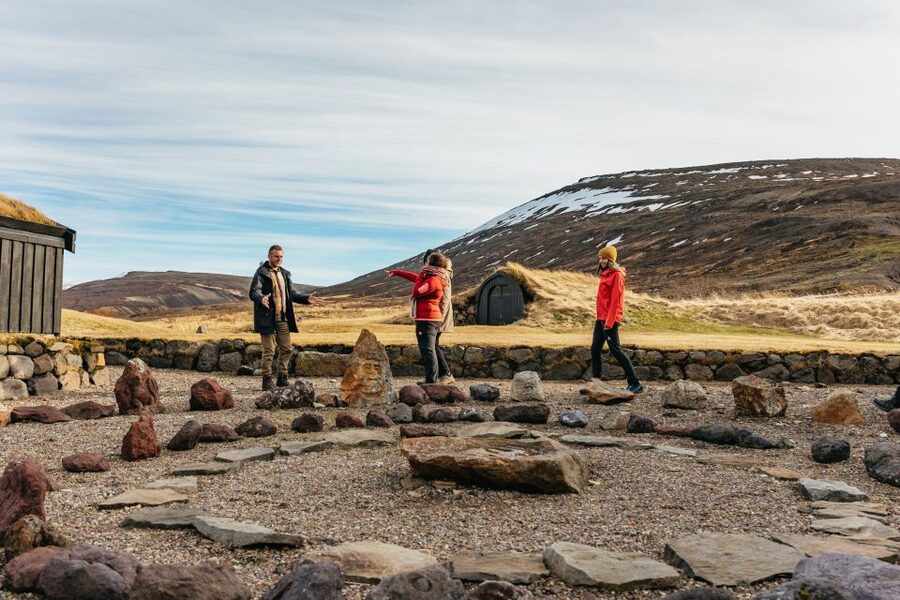
Traditional turf houses add a sense of place. Children may enjoy the small elf huts, while local artwork gives adults something to look at beyond the natural scenery. You will also see the Lifting Stone of Husafell, a famous test of strength connected to local strongman tradition.
This stop is easy to underestimate. It is not as instantly dramatic as a waterfall, but it gives the day texture. You are seeing a lived-in part of Iceland, not only a series of scenic stops arranged for a camera.
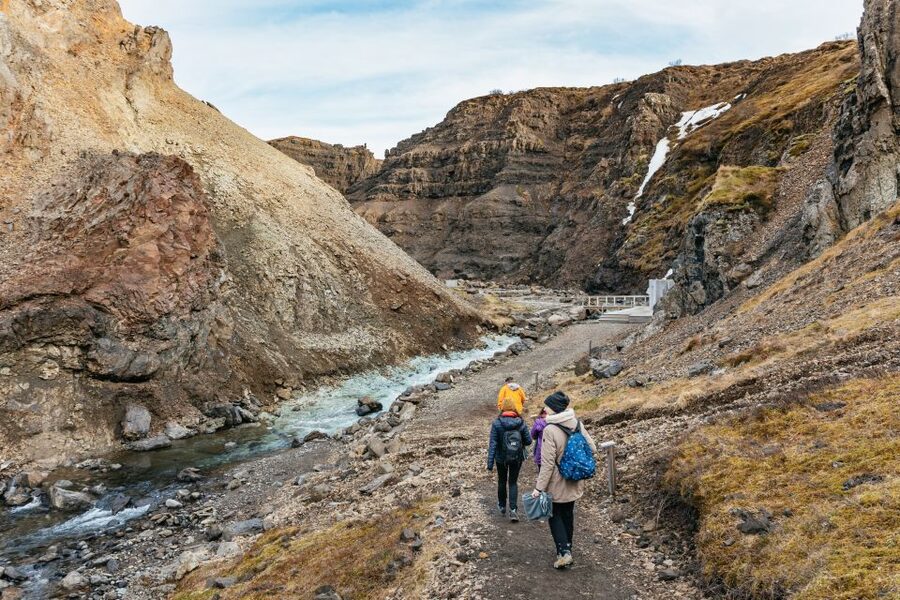
From Husafell, the tour shifts to 4×4 vehicles for the canyon section. The rougher route is part of the appeal, since it reaches areas that standard sightseeing buses do not usually visit. Still, the exact canyon itinerary may depend on conditions and timing.
The 4×4 canyon ride and Langifoss
The stated canyon route reaches Deildargil Canyon and includes Langifoss, a tall two-tiered waterfall that receives far less attention than Iceland’s famous falls. The remote setting is the point. You are going farther inland, along rugged mountain passages, to see a quieter side of West Iceland.
I would treat Langifoss as an intended feature rather than an absolute guarantee. At least one outing did not reach the waterfall, and the time was used to enjoy the Canyon Baths instead. Weather, road conditions, and the day’s schedule can affect the route. If Langifoss is important to you, ask the guide at the start of the day if the canyon ride is operating as described.
That uncertainty does not erase the value of the 4×4 section. The ride itself adds variety and takes you away from the main road. Just keep your expectations practical: this is an excursion into rough country, not a guaranteed private off-road expedition.
Reykholt and Snorri Sturluson’s pool
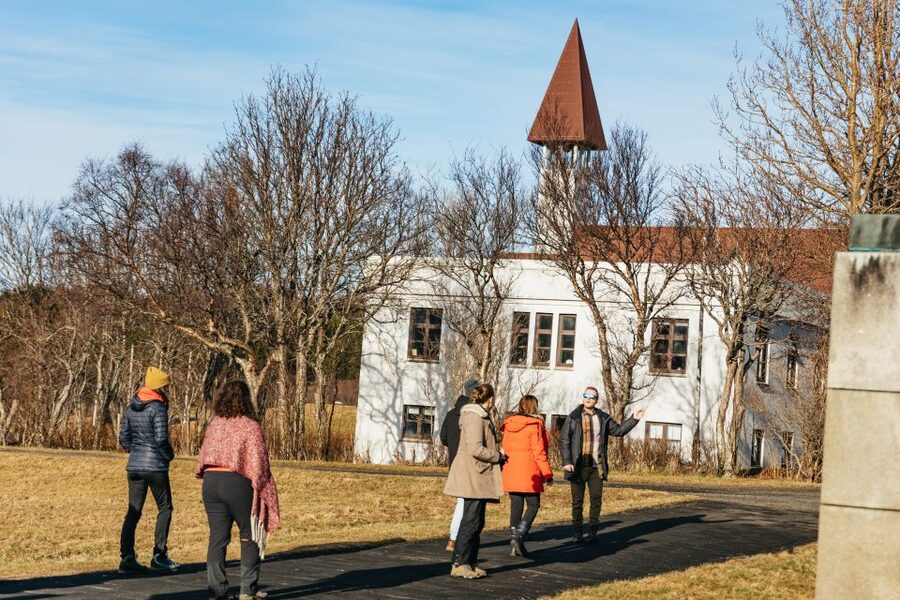
The final cultural stop is Reykholt, the medieval home of Snorri Sturluson. Snorri was a chieftain, historian, and writer whose work helped preserve much of what is known about Icelandic saga tradition and Norse mythology.
Snorralaug, or Snorri’s Pool, is a natural hot spring where people have bathed since the 12th century. You do not use it as part of the tour’s bathing session, but seeing it connects the day’s geothermal theme with Iceland’s medieval past.
Reykholt is a good late-day stop because it slows the pace after waterfalls and the Canyon Baths. You get a final dose of history before the drive back to Reykjavik. If saga stories interest you, pay attention to the guide here. If you mainly want scenery, the stop is shorter and less visually dramatic than Hraunfossar or the canyon.
Is $246 a fair price for a 10-hour day?
At $246 per person, this is not a cheap day trip. The value comes from the number of separate elements included: Reykjavik pickup and return, an English-speaking guide, the minibus, the horse farm admission, entry to the Canyon Baths, and the 4×4 ride to the canyon area.
You are also paying for a small-group format and a route that combines several types of experiences. A standard waterfall trip may cost less, but it usually will not include a remote geothermal bath, a horse farm, turf houses, a medieval site, and an off-road section in one day.
The price makes the most sense if the Canyon Baths are a priority. If you only want the waterfalls, you may find a simpler West Iceland excursion better value. The 10-hour schedule also means you are buying convenience. You do not need to rent a car, plan remote roads, or arrange the bath entry yourself.
Lunch and drinks are not included. Budget for food at the scheduled stops, and bring something small in case the available menu does not suit you. The quality and price of food stops can vary, so I would not make the included tour price your entire day’s budget.
Who will enjoy this tour most?
I would choose this day for you if you want a quieter alternative to the Golden Circle and prefer a mix of nature, local culture, and bathing. It suits first-time visitors who want West Iceland without renting a car, as well as returning visitors looking for lesser-known stops.
It is a strong fit for families because of the horses, elf huts, waterfalls, and warm pools. It also suits people who enjoy stories and context, since guides such as Dominika and Pavel have been praised for staying with the group, explaining each place, and adding humor and music to the long drive.
I would be cautious if you have mobility problems. The steep path and steps to the Canyon Baths are the key concern, and one person in a party could not participate after discovering the access was harder than expected.
This is also a long day in a minibus. If you dislike sitting for extended periods or need generous legroom, ask about the vehicle before committing. The tour operates in all weather, so you need to accept cold, rain, wind, snow, or icy paths as part of the experience.
Should you book the Silver Circle Canyon Baths tour?
Book it if you want a full West Iceland day with a memorable bathing stop, rather than a quick circuit of famous sights. The Canyon Baths are the reason to choose this tour, and the combination of warm water, canyon walls, waterfalls, horses, and saga history gives the day a strong sense of place.
Skip it if you need easy access, dislike long drives, or mainly want a guaranteed visit to Langifoss. For everyone else, $246 is reasonable for the transport, guide, admissions, and unusual route, especially if the alternative is arranging several separate activities yourself.
The best practical choice is to arrive prepared: wear warm layers, pack swimwear and water shoes, bring a snack, and leave room in your plan for the itinerary to shift with weather. That is Iceland in a nutshell, and this tour gives you a very good day of it.
FAQ
How long is the Silver Circle and Canyon Baths tour?
The tour lasts about 10 hours, including pickup and return to Reykjavik.
Where does pickup take place?
Pickup is provided within Reykjavik between 8:30 and 9:00 AM. If your accommodation is in an area closed to commercial traffic, you will receive a designated pickup point.
What language is the tour conducted in?
The live tour guide speaks English.
Are the Canyon Baths included in the price?
Yes. Entry to the Canyon Baths is included.
How warm are the Canyon Baths?
The three stone pools range from approximately 30 to 41°C, or 86 to 105°F. A cold-water pool and cooling waterfall are also available.
Can I use soap at the Canyon Baths?
No. The baths are in a protected natural setting, so soap cannot be used in the showers there. Facilities at Husafell are available for free.
What should I bring?
Bring warm clothing, swimwear, a towel, hiking shoes, and water shoes.
Is the 4×4 canyon ride included?
Yes. The tour includes a 4×4 ride to two canyons. The route is intended to include Deildargil Canyon and Langifoss, but conditions and timing can affect the exact stops.
Is food included?
No. Food and drinks are available for purchase at scheduled stops.
Can I cancel the booking?
You can cancel up to 24 hours in advance for a full refund. You can also reserve now and pay later.
Just added in Reykjavík
- From Reykjavik: Full-Day Horse Riding & Golden Circle Tour★ 3.7 · 81 reviews
- Reykjavik: Evening Icelandic Food and Drink Tour★ 4.9 · 66 reviews
- Hveragerdi: The Siggi Horse Riding Tour★ 4.8 · 13 reviews
- The Reykjavik Christmas Food Tour★ 4.8 · 19 reviews
- Reykjavik: Small-Group Snæfellsnes Day Trip★ 4.8 · 214 reviews
- The Golden Circle & Hop On – Hop Off Combo Deal★ 4.5 · 15 reviews
- Reykjavik: The Icelandic Sweet Tooth Tour★ 4.6 · 30 reviews
- Reykjavik: The Golden Circle Full-Day Tour★ 4.7 · 170 reviews
Tours in Iceland, compared.
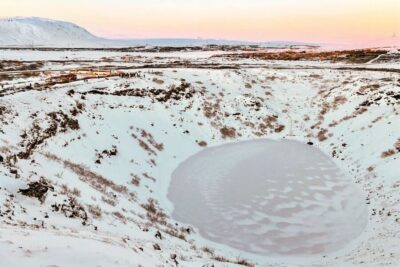
Golden Circle Full-Day Tour with Kerid Crater
Read our review →
Reykjavik Food Walk – Local Foodie Adventure in Iceland
Read our review →
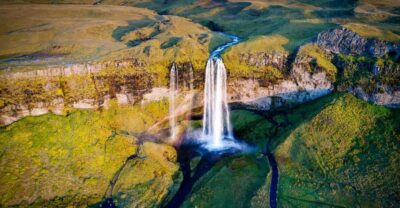
South Coast Waterfalls, Black Sand & Glacier Tour
Read our review →
Sky Lagoon Entrance Pass With 7-Step Spa Ritual
Read our review →