
Reviewed · WALKING TOURS
Helsinki: Small-Group Walking Tour with City Planner Guide
Helsinki becomes much easier to understand when a city planner connects its grand squares, Russian-era buildings, modern libraries, and everyday public spaces. This three-hour walk with Emek moves from Senate Square to Oodi, mixing stories about tsars, Lenin, Finnish politics, architecture, and local habits.
I like the small-group format, which gives you room to ask real questions instead of listening through a microphone. I also like the balance between major sights and useful local context, especially the way the tour links Helsinki’s past to its modern planning. The main consideration is practical: you may walk up to 6 kilometers in weather that can change quickly, and the tour is not suitable for wheelchair users.
Key points to know before you book

- A city planner leads the way: Emek explains Helsinki through architecture, public spaces, transport, politics, and history.
- The route covers a lot: You see Senate Square, both cathedrals, Market Square, Esplanadi, Central Station, and Oodi.
- Questions are part of the experience: The small group makes it easy to ask about Finnish society, local customs, and difficult historical topics.
- The pace is steady, not frantic: Stops inside buildings and regular pauses make the walk manageable for many people.
- The modern finish is excellent: Oodi gives the tour a strong look at present-day Helsinki after the older city center.
- Prepare for Nordic weather: Wear comfortable shoes and warm layers, and bring an umbrella.
Why a city planner makes Helsinki easier to read
Many city walks give you a list of buildings. This one aims to explain why the buildings are there and how they work together.
That difference matters in Helsinki. The city center brings together Swedish roots, Russian imperial rule, Finnish independence, Orthodox and Lutheran traditions, modern welfare-state ideals, and bold contemporary design. A guide with city-planning experience can point out more than a pretty facade. You learn how a square functions, why a public building was placed where it is, and how Helsinki balances old structures with new civic projects.
Emek’s approach also leaves room for questions. You can ask about Finnish politics, daily life, city design, or the relationship between Finland and its neighbors. The supplied tour details specifically invite questions, and past participants describe his explanations as clear, engaging, and easy to follow.
That open format is one of the strongest reasons to choose this walk. In a small group, you are not simply moving from one photo stop to the next. You can pause over a question about the Russian tsar in Senate Square, the presence of an Orthodox cathedral, or the way Helsinki residents use an old burial site as a picnic area.
A few more things to do in Helsinki worth a look
- A Finntastic Walking Tour in Helsinki
★ 5.0 · 700 reviews - Epic Helsinki: English Speaking Walking Tour
★ 4.9 · 192 reviews - Helsinki walking tour with a city planner
★ 5.0 · 175 reviews
Senate Square and Helsinki Cathedral set the historical tone
The tour begins at Aleksanterinkatu 9, at Nanso Kluuvin Kulma, with the exact meeting arrangement depending on the option you book. From there, Senate Square is the natural opening chapter.
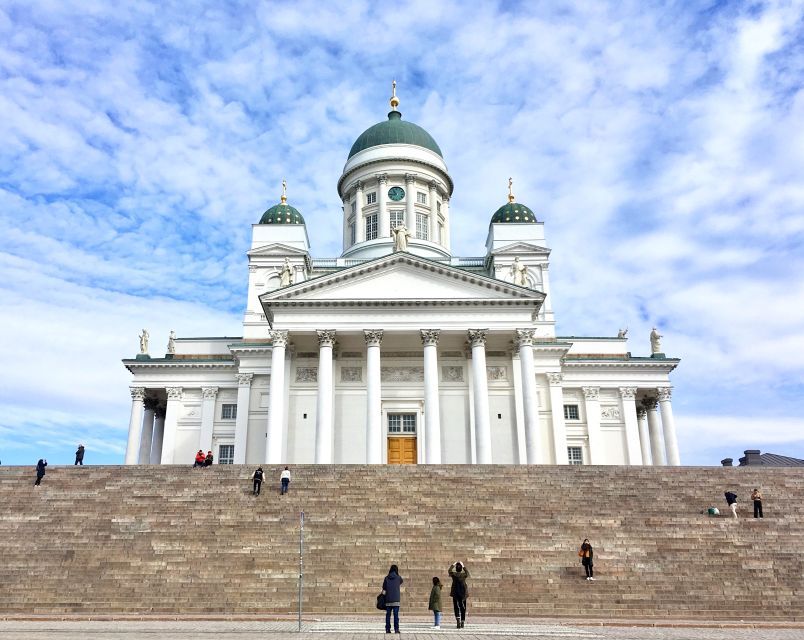
The square gathers several of Helsinki’s most important buildings in one view. You will spend about 20 minutes here with a guided explanation, which gives Emek time to discuss the city’s past rather than simply point out the surrounding facades. This is where stories about Russian rule, the plague in the Middle Ages, and Lenin’s time in Helsinki can place the city in a wider European setting.
The statue of a Russian tsar in the middle of Helsinki is a particularly useful prompt. It raises the question of how Finland remembers a complicated period, and why imperial symbols remain part of the city center.
Helsinki Cathedral receives about 15 minutes. Its bright exterior and prominent location make it one of the city’s essential sights, but the value here comes from understanding its role within the square and Finland’s religious and political story.
The timing is enough for orientation and explanation, but not for a long, quiet visit. If you want extensive interior sightseeing, plan to return on your own.
Uspenski Cathedral shows another side of Finnish identity

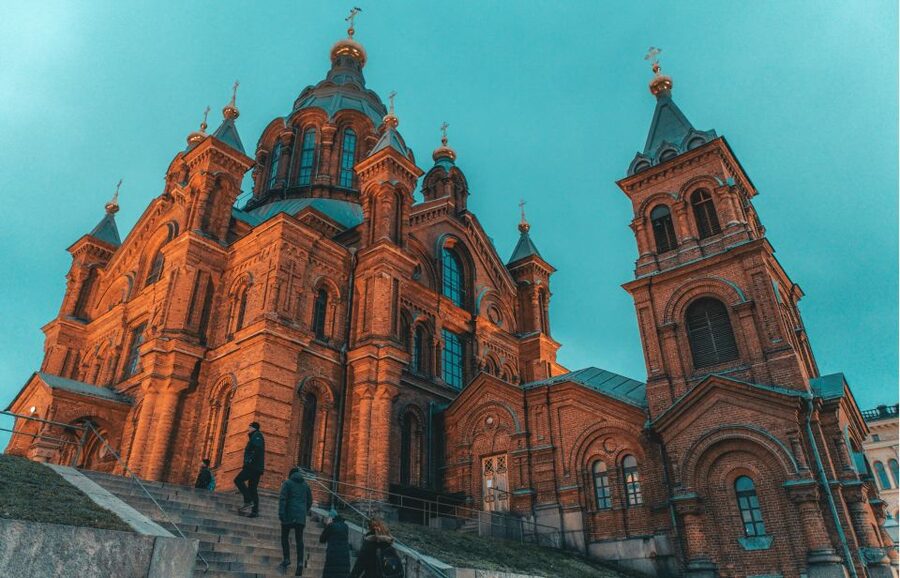
From Senate Square, the walk continues to Uspenski Cathedral, with about 20 minutes scheduled here. The red-brick Orthodox cathedral provides a sharp contrast to the Lutheran cathedral nearby.
That contrast is not just visual. It gives you a chance to ask why an Orthodox church exists in Helsinki and how the city’s position between Swedish and Russian spheres shaped its culture. The tour uses buildings to explain the people and political forces behind them, which is more useful than treating the cathedral as an isolated attraction.
As with Helsinki Cathedral, access and the amount of time inside can depend on conditions, events, or holidays. The route is subject to change, so you should think of the itinerary as a well-planned outline rather than a promise that every door will be open.
The Presidential Palace, Market Square, and Market Hall bring Helsinki down to street level
The Presidential Palace is a brief pass-by stop, listed at about 10 minutes. You will not have a full palace visit. Instead, Emek places the building in the city’s political setting and explains how this waterfront district functions.
Market Square follows, with around 10 minutes to look around. This is one of the best points on the walk for seeing Helsinki as a working city rather than a collection of monuments. The harbor, open-air stalls, and nearby civic buildings show how public life reaches the water.
The nearby Market Hall gets about 15 minutes. This indoor stop matters on a cool or wet day, since it offers shelter as well as a look at Finnish food culture. Food and drinks are not included, so any snack or purchase is your responsibility. That is actually useful: you can choose what interests you instead of paying for a fixed tasting.
I would not treat these market stops as a full food tour. They are better for orientation, local atmosphere, and a short break from the weather.
Same base, a different kind of day out:
- Helsinki: Sightseeing Canal Cruise with Audio Commentary
★ 4.5 · 1,299 reviews - From Helsinki: Nuuksio National Park Half-Day Trip
★ 4.8 · 688 reviews - Helsinki: Tallinn Guided Day Tour with Ferry Crossing
★ 4.6 · 670 reviews - Helsinki: Hop-On Hop-Off City Bus Tour
★ 4.2 · 585 reviews
Esplanadi and the Swedish Theatre reveal Helsinki’s polished center
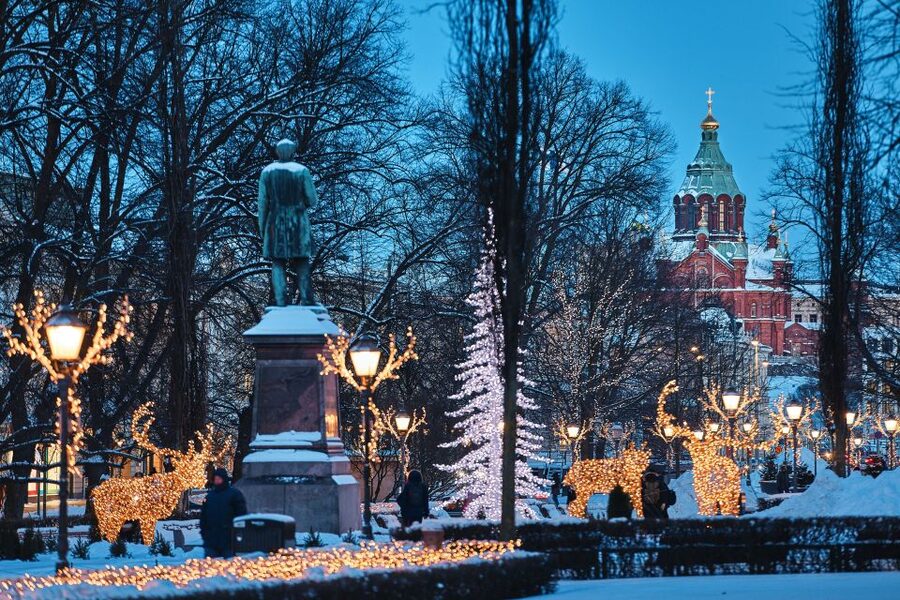
The route then crosses Esplanadi, one of central Helsinki’s best-known public parks. The scheduled visit lasts about 15 minutes, enough to discuss how the park fits into the city’s formal center and how people use it.
The Johan Ludvig Runeberg memorial receives about 10 minutes. This stop adds literary and national context to the walk, while the nearby Swedish Theatre is a quick pass-by. Together, these places show that Helsinki’s identity is not built from one language or one political period.
This part of the walk is also a useful breather between heavier historical stops. You continue seeing important buildings, but the pace has room for conversation. Several past participants valued the relaxed rhythm and the chance to ask questions without feeling rushed.
Central Station leads into Helsinki’s modern civic district
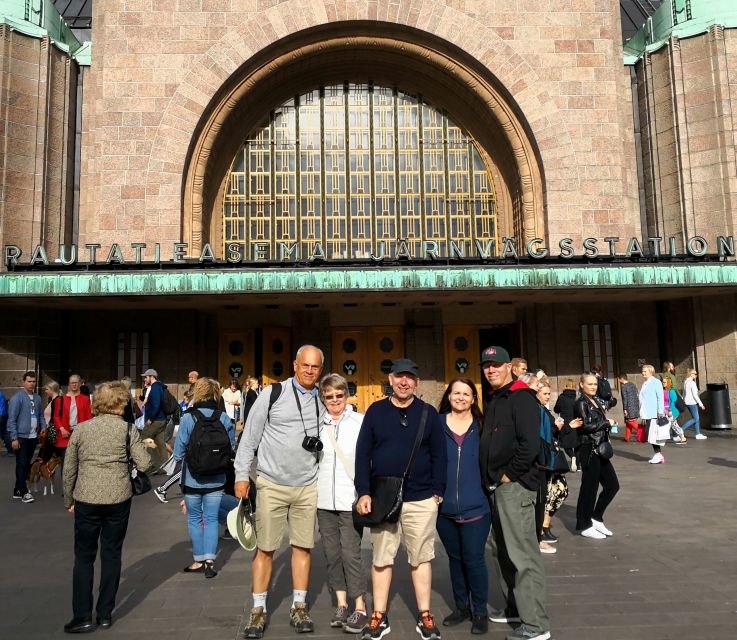
Helsinki Central Station gets about 15 minutes. It is a major landmark and an important point in the city’s transport network, so a city planner’s perspective is especially useful here.
The route then passes Kiasma, the Museum of Contemporary Art, Kansalaistori, and Musiikkitalo. These stops are brief, usually about five minutes each, but they help you see how Helsinki has extended its center toward culture, public gathering spaces, and modern architecture.
Do not expect a museum visit at Kiasma during this walk. The tour uses it as part of the city’s larger cultural district. If contemporary art is a priority, mark Kiasma for a separate visit.
Oodi is the right place to finish
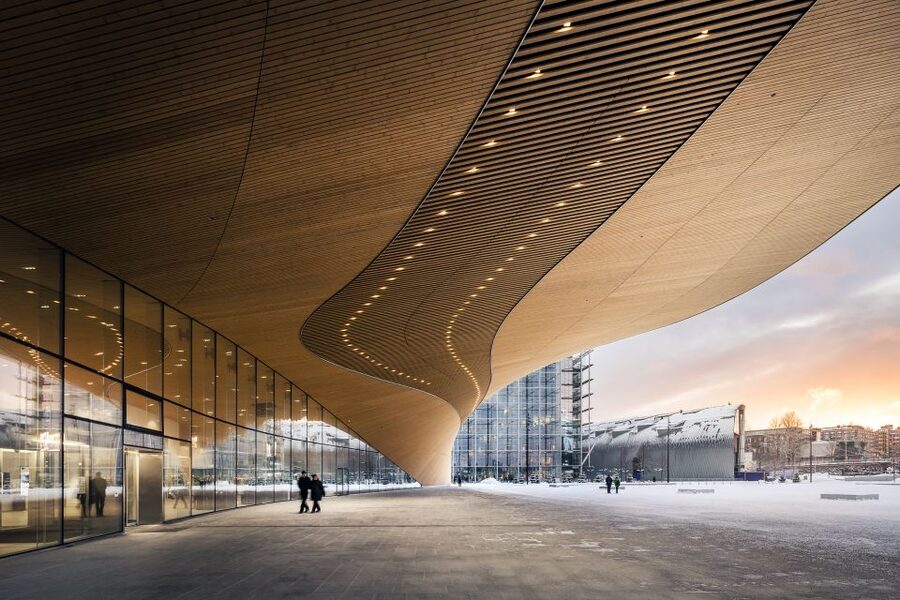
The final major stop is the Central Library Oodi, with about 20 minutes set aside for a visit. This is more than a library in the traditional sense. It is a public building that reflects how Finland invests in shared civic spaces, access to information, and everyday urban life.
Ending here gives the tour a useful shape. You begin with imperial power and religious landmarks, pass through markets and parks, and finish with a modern Finnish institution designed for public use. Oodi also provides an indoor stop near the end of the walk, which is welcome in winter or rainy weather.
The official finish is at Helsinki Central Railway Station. The listed route also includes Lasipalatsi, Kamppi Chapel, and Amos Rex among the possible central Helsinki sights, though the detailed stop-by-stop plan places the final section around Kiasma, Kansalaistori, Musiikkitalo, and Oodi. Weather, public holidays, and events can affect exactly what you see.
What the three-hour format feels like

The advertised duration is three hours, with a possible walking distance of up to 6 kilometers. That sounds substantial, but the route includes many pauses and indoor or semi-indoor stops. One past participant described walking about two miles and found it manageable for a couple in their early seventies. Another account described a walk lasting more than three hours, so allow a little flexibility if the conversation runs long.
This is not a sprint through Helsinki. The guide stops often enough to explain buildings and answer questions. The small group also avoids the usual problem of losing the guide in a crowd or straining to hear through shared headsets. One useful feature is that the tour does not rely on microphones and earphones.
Still, you should wear proper walking shoes. Helsinki’s streets, plazas, and waterfront areas can be tiring if you are not used to extended walking. Bring warm clothing and an umbrella. The tour runs in rain or shine, and winter conditions can be severe. A participant described completing the walk in near-blizzard conditions, which is a reminder to take the weather warning seriously.
The $58 price: good value for a first Helsinki day
At $58 per person, this is not the cheapest way to see the city center. You can walk past many of these sights without paying anything. The value comes from the guide’s interpretation, the small-group setting, and the number of major districts covered in three hours.
I consider the price fair if Helsinki is new to you or your visit is short. You get a broad introduction to history, architecture, politics, culture, and modern life in one outing. The guidance can also help you decide what deserves a longer return visit, such as Oodi, Kiasma, the cathedrals, or the market area.
The value is less clear if you have already studied Helsinki’s history or prefer to explore alone. You also pay separately for food, drinks, museum admission, and any transport before or after the tour. The route itself is on foot, with no transportation between sights.
Private and small-group options are available. The smaller the group, the more useful the question-and-answer format becomes, especially if you want to discuss city planning or Finnish society rather than just hear standard facts.
Who should book this Helsinki walking tour?
I would choose this tour for a first visit, a short stay, or the first morning of a longer trip. It gives you a map in your head and a framework for understanding what you see afterward.
It suits adults, older walkers who can comfortably manage several kilometers, and families if the children enjoy questions and stories. One past family group found Emek engaging with children while still providing useful material for adults.
It is also a strong choice for anyone interested in architecture, public spaces, politics, or how cities grow. You do not need a specialist background. The guide’s job is to explain those subjects in ordinary language.
I would be more cautious if you use a wheelchair, need a very short walking route, or want guaranteed access to every interior. The tour is not suitable for wheelchair users, and the itinerary can change with weather, holidays, and events.
Final verdict: a smart first look at Helsinki
Book this walk if you want more than a checklist of landmarks. Emek’s city-planning perspective gives the route a clear purpose, and the small group lets you ask about the details that make Helsinki different from other Nordic capitals.
The strongest parts are the connections: Senate Square to Russian rule, the two cathedrals to Finland’s cultural mix, the markets to daily life, and Oodi to modern civic ideals. Bring good shoes, dress for the forecast, and leave room in your schedule in case the conversation extends beyond the advertised three hours.
Skip it only if you want a museum-heavy tour, a food-focused outing, or a very short stroll. For most first-time visitors who want an informed overview without a rushed group experience, $58 is a sensible use of three hours.
FAQ
How long is the Helsinki walking tour?
The tour lasts three hours. You should be prepared to walk up to 6 kilometers.
What language is the tour conducted in?
The live tour guide speaks English.
Who guides the tour?
The main guide identified for the experience is Emek, a city planner and authorized expert guide. Some supplied comments also refer to the guide as Emil.
What sights are included?
The route can include Senate Square, Helsinki Cathedral, Uspenski Cathedral, the Presidential Palace, Market Square, Market Hall, Esplanadi, the Runeberg memorial, the Swedish Theatre, Helsinki Central Station, Kiasma, Kansalaistori, Musiikkitalo, Oodi, Lasipalatsi, Kamppi Chapel, and Amos Rex.
Does the tour go inside Helsinki Cathedral and Uspenski Cathedral?
The itinerary lists visits to both cathedrals, but access can depend on weather, holidays, events, and other conditions. The itinerary may change.
Is food included?
No. Food and drinks are not included in the tour price.
Where does the tour start and finish?
There are two possible starting location options, including Aleksanterinkatu 9 and Nanso Kluuvin Kulma. The exact meeting point can vary by booking option. The tour finishes at Helsinki Central Railway Station.
What should I bring?
Wear comfortable shoes and warm clothing, and bring an umbrella. Tours operate in all weather.
Can wheelchair users join the tour?
No. The activity is listed as unsuitable for wheelchair users.
Just added in Helsinki
- Helsinki and Porvoo Private Tour by Luxury Car with Guide★ 5.0 · 16 reviews
- Helsinki tram tour with a city planner★ 5.0 · 39 reviews
- Helsinki Self-Guided Audio Tour★ 3.5 · 14 reviews
- Exclusive Grand Tour Helsinki and Porvoo City*****★ 5.0 · 109 reviews
- TASTE HELSINKI FOOD TOUR CLASSIC – Private Food Tour★ 5.0 · 17 reviews
- Helsinki walking tour with a city planner★ 5.0 · 175 reviews
- Helsinki private tour with a city planner★ 5.0 · 50 reviews
- Helsinki architecture tour with a city planner★ 5.0 · 47 reviews
Walking Tours, compared.

Reykjavik Food Walk – Local Foodie Adventure in Iceland
Read our review →
Reykjavík Small group Walking Tour – by CityWalk
Read our review →



Past & Present Small Group Guided Walking Tour
Read our review →
Walking Tour in Bergen of the Past and Present
Read our review →
Browse the lists this tour appears in