
Reviewed · TOURS IN DENMARK
Copenhagen: Guided Architecture and Sustainability Tour
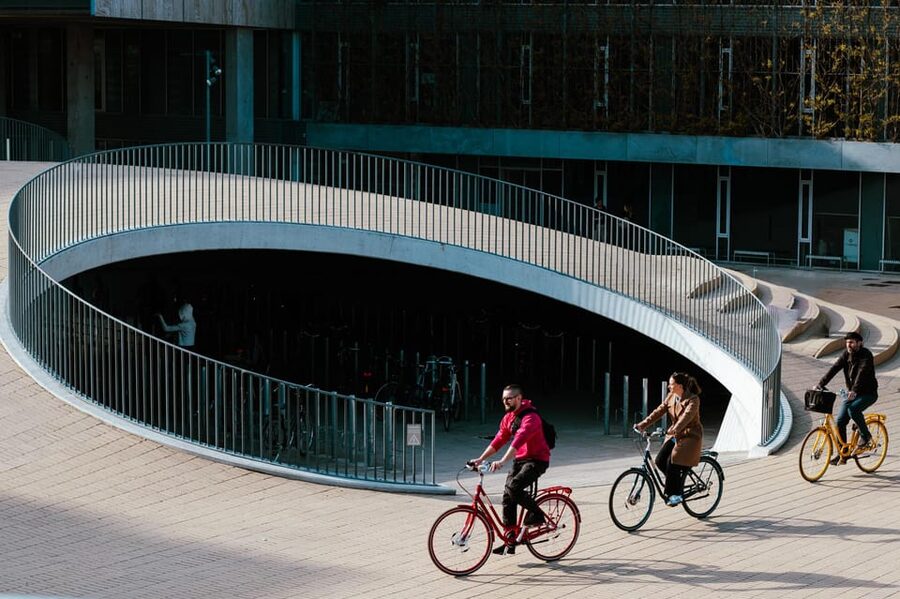
Copenhagen’s best architecture tour may be the one that gets you out of the postcard center. Over three hours and roughly 17 kilometers by bike, you’ll connect harbour swimming, former industrial districts, student housing, public squares, and bold new towers. The focus is not just on pretty buildings, but on how design affects daily life.
I like two things right away: you see Copenhagen as a working city, not a museum, and the bicycle lets you cover far more ground than a walking tour. Guides including René, Jörn, John, and Josephine have earned warm praise for their personal explanations and careful attention to safety. The main caution is simple: this is a long ride, and one past guest found the group could become spread out, so confident urban cycling helps.
Key points to know before you book
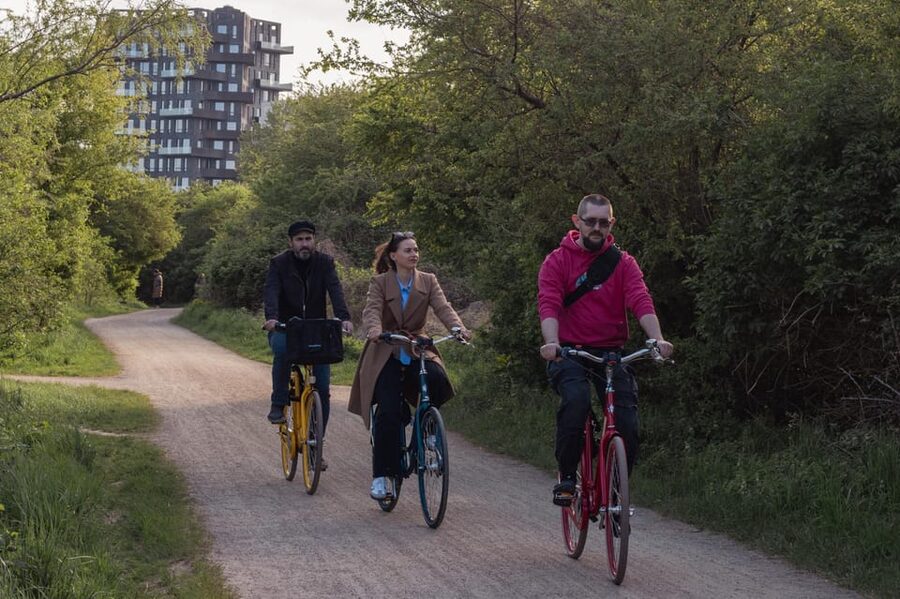
- 17 kilometers of cycling: This is an active three-hour ride, not a short architecture stroll.
- A modern Copenhagen focus: Expect the strongest attention on 21st-century buildings, city planning, bike infrastructure, and sustainable ideas.
- Harbour and outer districts: Blox, Islands Brygge, Ørestad, Amager Fælled, and Enghave Plads show a side of the city many first-time visitors skip.
- Experienced local guides: René, Jörn, John, and Josephine have been praised for clear explanations, humor, warmth, and safety-minded leadership.
- Useful bike support: Helmets, several adult frame sizes, rain ponchos, luggage storage, and a lounge with toilets are included.
- Extra equipment costs more: Baskets and phone holders cost 49 DKK each, while e-bikes, cargo bikes, tandems, and child seats require advance booking and an additional fee.
Why a bicycle is the right way to see Copenhagen’s new side
Copenhagen’s architecture makes more sense when you move through it at street level. From a bicycle, you notice the distance between housing, water, parks, bridges, and public squares. You also see how older parts of the city meet new construction without turning every district into a collection of isolated showpieces.
The route covers several different parts of Zealand Region and crosses beyond the most familiar central sights. You’ll ride beside the harbour, pass through areas shaped by former industry, and reach Ørestad, where large modern buildings and open spaces create a very different feel from the old center.
I especially like the way this tour links buildings to policy. You are not simply told who designed a residence hall or tower. You hear how Copenhagen has tried to support cycling, public life, access to the water, and lower-impact development. That gives the architecture a practical purpose.
The experience costs $70 per person. That is not the cheapest way to see Copenhagen, but it is reasonable if you want three hours with a guide, a bicycle, helmet, and a route that would be awkward to arrange on your own. The value is strongest for anyone interested in urban planning, modern design, cycling, or the city’s efforts to make everyday life more pleasant.
A few more things to do in Copenhagen worth a look
- Copenhagen: Canal Cruise with Guide
★ 4.6 · 9,115 reviews - Copenhagen: Highlights 3 Hour Bike Tour with a Local Guide
★ 4.8 · 2,312 reviews - Copenhagen Sightseeing Classic Canal Tour With Live Guide
★ 4.5 · 1,906 reviews
Starting at Tropical Bikes and getting ready to ride
The listed starting point is Tropical Bikes at Vester Voldgade 2A, though the exact meeting place can vary with the option you book. Give yourself enough time to find the correct departure point and choose a comfortable bike before the group leaves.
Adult bicycles are available with 48, 51, and 56 centimeter frames. Children’s bikes with 24-inch and 26-inch frames can be arranged, but you need to reserve them beforehand. Special equipment also needs advance planning, including cargo bikes for 449 DKK, e-bikes for 249 DKK, e-cargo bikes for 649 DKK, and child seats for 119 DKK.
A helmet is included. Rain ponchos are available if the weather turns wet, and luggage storage plus a comfortable lounge and toilets make the base useful before and after the ride. Baskets and phone holders are not included, but each can be bought on site for 49 DKK.
The tour runs in any weather, so dress for the forecast and wear shoes you can pedal in for several hours. You do not need racing gear, but casual shoes with a secure sole are a sensible choice.
Blox and Lille Langebro: where old Copenhagen meets new design
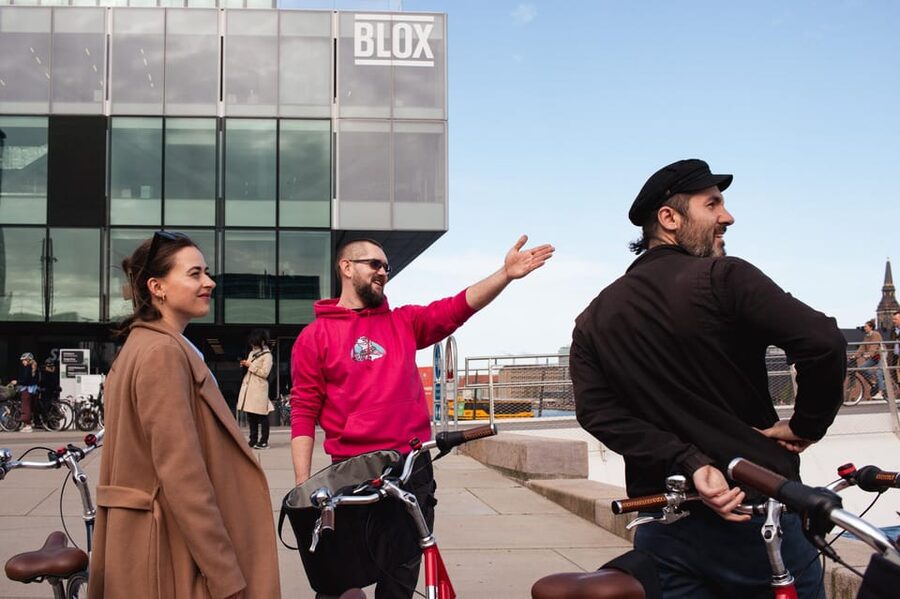
The first major stop is Blox, a modern building and cultural meeting point near the harbour. It is a good opening lesson because it places contemporary architecture beside older parts of Copenhagen. Your guide can use the setting to explain how the city has added new public and cultural functions without abandoning its historic center.
The stop is scheduled for about 10 minutes. That is long enough for an explanation and a look around, but not for a full building visit. You should think of this as an outdoor architecture tour, with short stops rather than interior access.
From Blox, the route continues to Lille Langebro, a striking pedestrian and cycling bridge. The bridge matters not only as a piece of engineering, but as part of Copenhagen’s effort to make movement by bicycle and on foot easy across the harbour.
This is where the format begins to pay off. You see the structure, then continue riding through the city it serves. The five-minute stop is brief, so listen closely and keep the group in sight.
Islands Brygge and the harbour as public space
Havnebadet Islands Brygge is one of the clearest examples of Copenhagen treating the waterfront as part of everyday city life. The harbour is not presented only as a place for ships, offices, or expensive views. It has also become a place for recreation and public use.
The guided stop lasts about 10 minutes. You’ll learn how the area fits into the city’s wider approach to public space and waterfront renewal. This is a useful counterpoint to the glossy image of Copenhagen, because the point is not just visual appeal. The question is who gets to use the water and how the city makes that possible.
The ride through this part of town is also fairly calm compared with the busiest central streets, based on the route’s emphasis on harbour districts and quieter areas. Still, you are cycling in a city, so stay alert at crossings and follow your guide’s signals.
Same base, a different kind of day out:
- Copenhagen: Hop-On Hop-Off Bus Tour with Boat Tour Option
★ 3.9 · 4,122 reviews - Private Walking Grand Tour of Copenhagen
★ 5.0 · 3,953 reviews - From Copenhagen: Lund and Malmö 2-Country Tour
★ 4.7 · 2,772 reviews - Copenhagen Highlights Walking Tour
★ 5.0 · 2,324 reviews
Karen Blixens Plads and the modern face of Ørestad
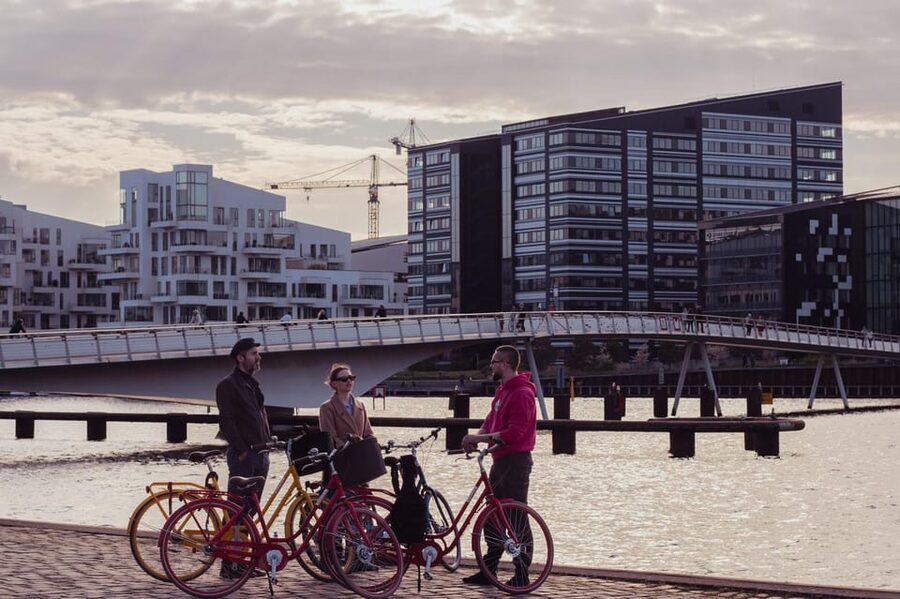
Karen Blixens Plads introduces a newer side of Copenhagen, with open public space and contemporary buildings around Ørestad. The name connects the area to one of Denmark’s best-known writers, while the surroundings point firmly toward present-day urban development.
The stop lasts about 10 minutes, followed by scenic riding through Ørestad. This part of the route is especially useful if you want to understand how Copenhagen has expanded beyond its historic core. The buildings are larger, the spaces more open, and the urban feel more planned than old Copenhagen’s tight streets.
Ørestad can divide opinion. Some people come for its bold forms and large-scale planning, while others find it less intimate than the center. I see that as a strength of the tour. You are not being shown only buildings that everyone agrees are charming. You get to think about what modern city planning gains and what it gives up.
Tietgen Residence Hall and Amager Fælled
The Tietgen Residence Hall is one of the route’s most memorable architectural stops. Its unusual form gives the guide plenty to discuss, especially the relationship between shared student life, private rooms, and the building’s overall shape.
You have about 10 minutes here. That is enough to understand the main idea and take in the building from outside, though architecture fans may wish for more time. If modern residential design interests you, this is one of the stops where the tour’s subject becomes especially clear: a building can shape how people meet, move, and live together.
The route then reaches Amager Fælled, where the setting changes from dense development to open natural space. The stop lasts around 10 minutes. This contrast is important. Sustainable planning is not only about energy-efficient buildings or cycle lanes. It also involves deciding how open land fits into a growing city.
You’ll get a break from walls, glass, and concrete here. The mix of urban development and open ground gives the ride a more varied rhythm, though it also reinforces the need for suitable clothing in exposed weather.
Gemini Residence and Copenhagen’s cycling details
E/F Gemini Residence brings you back to converted industrial architecture along the harbour. The building shows how older structures can be adapted for new uses rather than simply replaced. That idea is central to Copenhagen’s architectural story: retain useful parts of the past, then give them a new role.
The guided stop is about 10 minutes. Your guide will help you look beyond the building’s dramatic exterior and consider the larger change in the harbour districts.
Next comes Cykelslangen, a dedicated cycling route that gives you a taste of Copenhagen’s bike-first thinking. The scenic ride lasts roughly five minutes. It is short, but it may be one of the most enjoyable parts of the tour because you experience the infrastructure rather than just hearing about it.
For confident cyclists, this section should feel natural. If you are not used to riding in a group, pay attention to spacing and do not stop suddenly. One account of the tour raised a concern about people becoming separated, so keeping visual contact with the guide is smart.
Kaktus Towers and the changing skyline
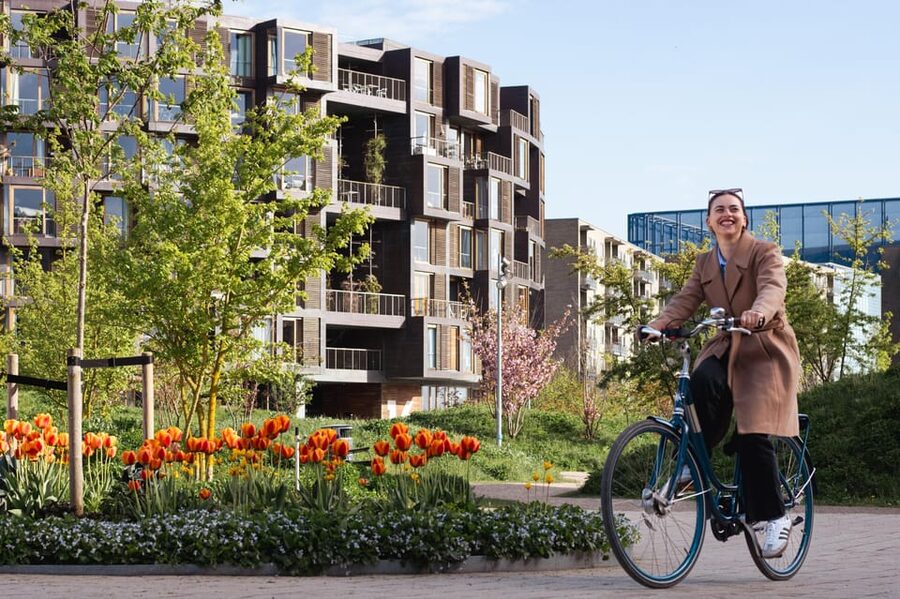
Kaktus Towers provides another look at Copenhagen’s recent housing. Its unusual profile is easy to spot, but the more useful question is how new residential buildings fit into a district that is still changing.
The guided stop lasts about 10 minutes. You can expect discussion of form, housing, and the way large new buildings alter the city’s skyline. This is a good place to ask your guide questions if you are curious about why Copenhagen accepts such bold designs in some areas.
The tour’s modern focus is strongest here and in Ørestad. If your main interest is medieval streets, royal history, or older churches, this will not be the best use of your afternoon. If you want 21st-century architecture and urban design, the route gives you plenty to consider.
Enghave Plads and Israels Plads: public life at street level
Enghave Plads brings the tour back toward a more established urban district. The square shows how public space can be reshaped to support daily use, cycling, and social activity. It is a helpful change of scale after the large buildings and wide spaces farther out.
The stop lasts 10 minutes. You’ll have time to hear how planning choices affect an ordinary neighborhood, not just a landmark building.
Israels Plads is the final main stop and another example of a public area transformed for modern city life. It combines a sense of Copenhagen’s older urban fabric with newer ideas about open space and environmental responsibility.
I like ending here because it brings the tour back to the human scale. After seeing towers, bridges, residences, and harbour projects, you finish by looking at a place where the success of design depends on how people actually use it.
The ride then returns to the Tropical Bikes area, with the stated drop-off options linked to Vester Voldgade 2A. Confirm the precise return point when booking, especially if you have a tight schedule afterward.
Guides, pace, and the practical trade-offs
The guide can make or break an architecture tour. This experience has received particularly strong praise for guides such as René, Jörn, John, and Josephine. René has been described as friendly, informative, and attentive to cycling safety. Jörn is noted for adding more context than you might find in a quick online search, while Josephine has been praised for clear explanations and a good sense of humor.
English and German tours are available. Private groups can also be arranged, which may be worth considering if your party wants to ask many questions or keep a gentler pace.
The schedule includes many short stops, often around 10 minutes, with shorter scenic sections between them. That keeps the ride moving, but it also means you will not spend a long time studying any single building. Think of the experience as a guided city story told through many examples.
You must be able to ride a bike. There is no indication that the tour is suitable for anyone unable to cycle, and the total distance is substantial. Families can request children’s bikes, but reserve them before arrival.
Is the $70 price fair?
At $70, you are paying for more than a rental bike. The fee covers a local guide, helmet, bike, rain poncho, luggage storage, and access to the lounge and toilets. Most important, it buys a planned route through districts that are not always easy to connect on your own.
The price makes the most sense if you value explanation. You could cycle past Blox, Lille Langebro, Kaktus Towers, or Tietgen Residence Hall independently, but you would miss the link between architecture, public life, and sustainability.
Budget-conscious visitors may prefer a self-guided ride, especially if they already know Copenhagen’s bike system. You will need to pay extra for a basket, phone holder, e-bike, cargo bike, tandem, or child seat, so add those costs before comparing the tour with a basic rental.
Who should book this ride?
I would choose this tour for architecture fans, urban planners, curious first-time visitors, and repeat visitors who have already seen the central sights. It also suits anyone who wants to understand why Copenhagen is often held up as a model for cycling and public-space planning.
You’ll get the most from it if you enjoy listening while moving and are comfortable riding for three hours. The tour is less suitable if you want a slow walking pace, detailed interior visits, or a strong focus on older Copenhagen.
Book it if you want a thoughtful view of the city’s recent growth and do not mind covering ground. Skip it if 17 kilometers sounds tiring or if your main goal is castles, museums, and historic streets. For the right cyclist, this is a practical and unusually revealing way to see Copenhagen.
FAQ
How long is the Copenhagen architecture and sustainability tour?
The tour lasts three hours.
How far will I cycle?
You will cycle roughly 17 kilometers in total.
What languages are available?
The tour is available in English and German.
Is a bicycle included?
Yes. Bikes in 48, 51, and 56 centimeter adult frame sizes are included, along with a helmet.
Can children join the tour?
Children’s bikes with 24-inch and 26-inch frames are available, but you need to reserve them beforehand.
Is the tour suitable for someone who cannot ride a bike?
No. The experience is not suitable for people who cannot ride a bike.
What happens if it rains?
The tour starts in any weather. Rain ponchos are provided, but you should still wear suitable clothing and comfortable shoes.
Can I cancel and receive a refund?
Yes. You can cancel up to 24 hours in advance for a full refund. You can also reserve now and pay later.
Just added in Copenhagen
- a day at North Zealand Castle Tour★ 4.5 · 19 reviews
- Copenhagen Walking Tour: Highlights and Hygge w/Lunch★ 5.0 · 272 reviews
- Exhibition – Home of Carlsberg★ 4.5 · 281 reviews
- The Six Forgotten Giants Trolls Hunt with Minibus★ 4.5 · 27 reviews
- The Hunt For The Six Forgotten Giants★ 5.0 · 45 reviews
- Politically Incorrect Private Hidden Gems Walking Tour★ 5.0 · 270 reviews
- Social Nightlife Crawl Copenhagen★ 5.0 · 164 reviews
- THE TUBE – Copenhagen: an immersive Experience★ 4.0 · 124 reviews
Tours in Denmark, compared.
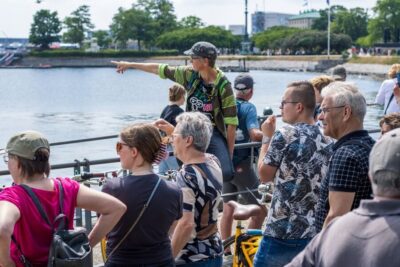
Highlights 3 Hour Bike Tour with a Local Guide
Read our review →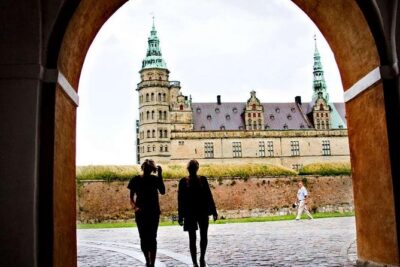
Hamlet and Sweden Tour – Two Countries in one day !
Read our review →
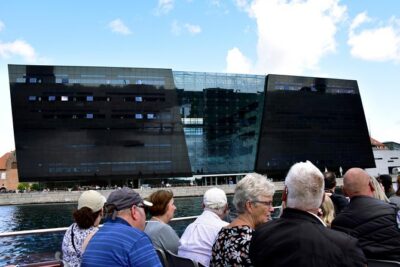
Copenhagen Sightseeing Classic Canal Tour With Live Guide
Read our review →
Kronborg, Frederiksborg Castle and Roskilde Tour
Read our review →Browse the lists this tour appears in