
Reviewed · WALKING TOURS
Make Your Own Tour – Guided Walking Tour
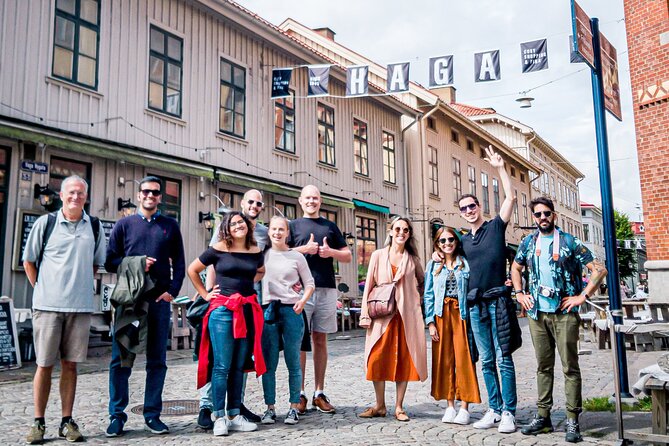
Gothenburg reveals itself best on foot, and this private tour gives you room to follow your own interests. You can move from the city’s founding square to its old market hall, fish market, hilltop church, and café-lined Haga streets without being tied to a fixed group route. The guide can adapt the walk, which is especially useful if you want more history, food, architecture, or local oddities.
I like the private format and the choice of start time. I also like the mix of major sights and curious details, from the myths around Queen Christina’s Hunting Lodge to the strange Tomtehuset. The main consideration is the high price of $735.72 per person, especially for a walk lasting about 90 minutes to two hours. Confirm the final length and route before booking.
Key points at a glance
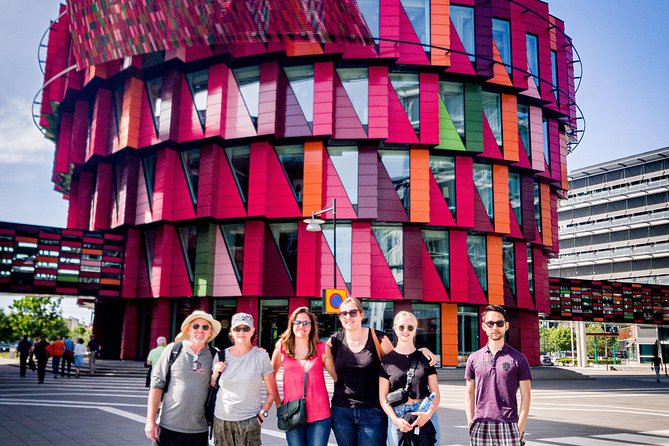
- A private route through central Gothenburg: Only your group takes part, so the guide can adjust the focus to your wishes.
- Twelve possible stops: The route links squares, churches, markets, Haga, city viewpoints, and several unusual landmarks.
- Christina is a named guide: She is praised for arriving on time, planning around the group’s interests, and explaining Gothenburg’s past in a friendly way.
- Haga includes time for Swedish fika: Plan for coffee and a break on Haga Nygata, though drinks are not included.
- Masthuggskyrkan supplies the big view: The hilltop church is one of the tour’s best opportunities for seeing Gothenburg from above.
- Children join free: Service animals are allowed, and most people can take part.
A private introduction to Gothenburg
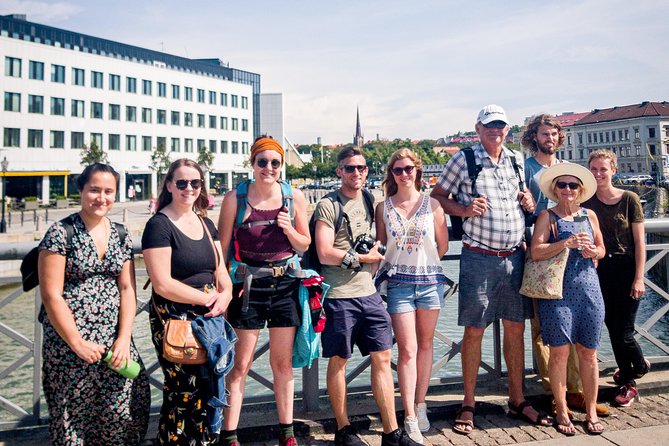
This experience begins at Gustav Adolfs Torg, the main square in central Gothenburg. The statue of Gustav Adolf, described as one of the city’s founding fathers, gives the guide a natural place to explain how Gothenburg began and why this square matters.
Because this is a private activity, you are not simply following a guide’s standard script. You can ask for more time on a subject that catches your attention, or keep moving if a stop is less important to you. That flexibility is the main reason to choose this tour over a standard group walk.
The advertised duration is approximately one hour and 30 minutes to two hours. The suggested stop times add up to considerably longer than two hours if you visit every place at the listed pace, particularly once you include the coffee break and the hilltop church. Treat the route as a menu of possibilities, not a promise that every stop receives its full suggested time in one short outing.
A few more things to do in Gothenburg worth a look
- Gothenburg: Haga Old Town Walking Tour
★ 4.5 · 205 reviews - Gothenburg Private Walking Tour with a Local
★ 4.0 · 36 reviews - Best of Gothenburg: Private Walking Tour with a Local
★ 4.6 · 24 reviews
From Gustav Adolfs Torg to Gothenburg Cathedral
The first two stops offer a useful introduction to the city’s civic and religious past. At Gustav Adolfs Torg, you begin with the city’s main square and its founding figure. It is a practical meeting point because it places you directly in central Gothenburg.
The nearby Göteborg Domkyrkan is the city’s oldest cathedral. Its history has not been simple, and the guide can add context that you would probably miss by walking past the building on your own. The cathedral is free to enter according to the tour details, but the experience does not promise a lengthy interior visit.
These opening stops suit you if you enjoy knowing why a city developed as it did, rather than rushing straight to photo stops. If your main interest is food, shopping, or views, you may want to ask the guide to keep the early history focused and save more time for Haga or Masthuggskyrkan.
Stora Saluhallen and the flavors of Sweden
Stora Saluhallen is Gothenburg’s large market hall, with Swedish delicacies available to see and try. The planned visit is short, only about five minutes, so you should not expect a full food tour or a long tasting session.
Still, a market hall is a useful stop on a walking route. It gives you a sense of local food culture and may help you decide what to return for later. Since coffee, tea, and food are not included, bring your own spending money if you want to sample something.
I would ask the guide at the start how much time is available here. A quick look works well in a compact tour, while anyone keen on Swedish food may prefer to shorten another stop and give the market more attention.
City walls, Karl IX, and a royal oddity
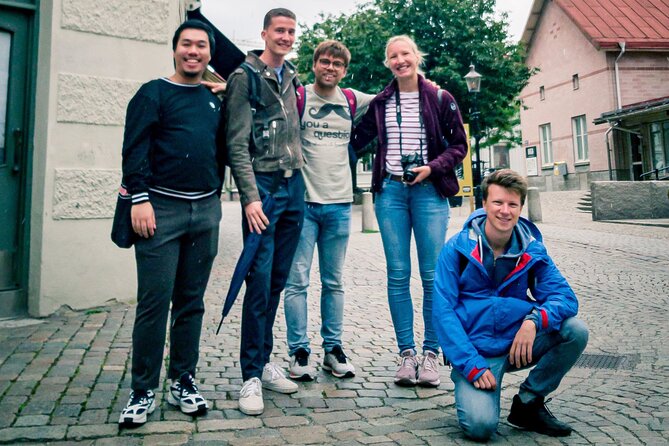
The Equestrian Statue of Karl IX marks the area where Gothenburg’s city walls once stood. It is also linked with another founding figure, giving the guide a chance to connect the physical shape of modern Gothenburg with its earlier defenses.
This kind of stop is valuable because the walls are no longer there to explain themselves. A statue and an open city space can seem ordinary until you know what occupied the site before. The guide’s storytelling is what makes this visit worthwhile.
Drottning Kristinas Jaktslott, or Queen Christina’s Hunting Lodge, offers a different mood. It is described as one of Gothenburg’s oddities, surrounded by myths. You should come here expecting an unusual story rather than a grand palace visit. The stop is brief, around 15 minutes, and the tour does not include a museum entrance.
Same base, a different kind of day out:
- Gothenburg: Archipelago cruise with guide
★ 4.3 · 1,002 reviews - Gothenburg: City Canal Sightseeing Cruise
★ 4.7 · 470 reviews - Gothenburg: Go City All-Inclusive Pass with 20+ Attractions
★ 3.8 · 222 reviews - Gothenburg: City Sightseeing Hop-On Hop-Off Bus Tour
★ 3.8 · 206 reviews
Feskekorka and Gothenburg’s fish market
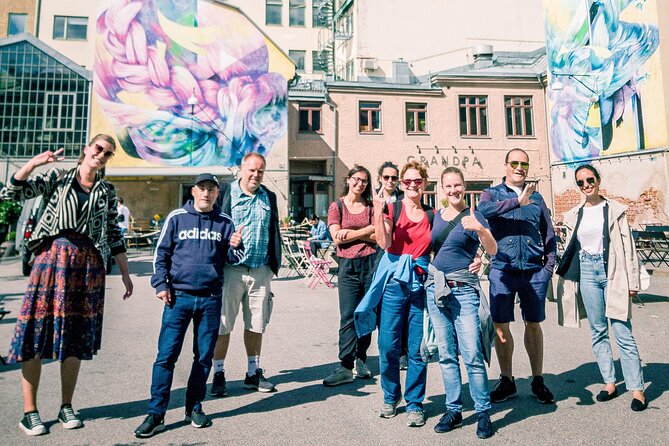
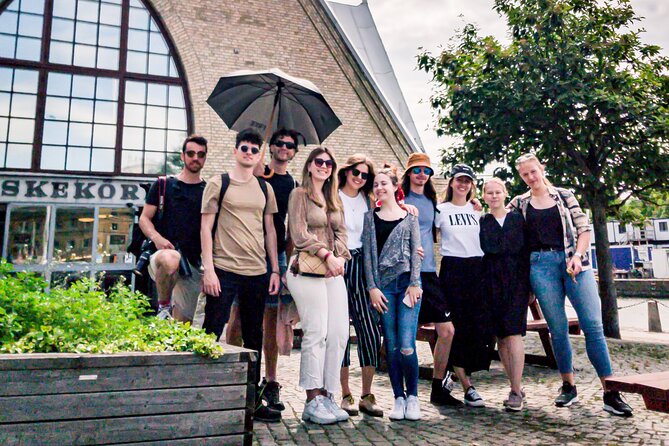
Feskekorka is one of Gothenburg’s best-known landmarks and a traditional fish market. The name is commonly associated with the building’s church-like appearance, but the supplied tour details focus on the market and its place in the city.
The planned visit lasts about ten minutes. That is enough to see the landmark and get a short explanation, but not enough for a leisurely meal or extended browsing. If seafood is high on your list, tell the guide early. The private format may allow the route to give this stop more weight, though extra time is not guaranteed.
Feskekorka also helps balance the historical stops. You are not only hearing about founders and churches. You are seeing how Gothenburg’s waterfront identity connects with everyday food and commerce.
Akademibokhandeln and the changing city center
Akademibokhandeln is presented as a key connection point in Gothenburg during the 19th century. Today, the area is associated with nightlife, cafés, and access to places where you can take a break.
This stop shows how the tour shifts from old Gothenburg to the city as you experience it now. A building or street can carry one role in the 19th century and another today. That contrast gives the walk a more useful shape than a simple checklist of monuments.
The listed time is about 15 minutes. You might use it to ask about the area’s past, or to note a café for later. Since drinks are not part of the tour, this is also a sensible place to ask the guide where you might return for coffee after the walk.
Masthuggskyrkan and the best view on the route
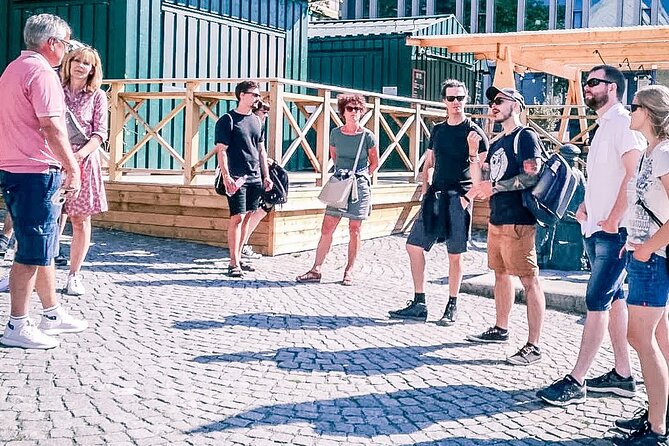
Masthuggskyrkan sits on a hill and is described as a fantastic church with a great view over Gothenburg. At 30 minutes, it receives one of the longer suggested visits, and that makes sense. The hilltop setting adds a visual payoff after the central streets.
This is likely to be one of the tour’s strongest stops for first-time visitors. A city view helps you understand Gothenburg’s layout, while the church gives the guide another piece of local architecture and history to explain. The combination is more memorable than either a viewpoint or church alone.
The hill is also the clearest practical point to consider. The tour is on foot, and the route includes an uphill destination. The supplied details do not state the exact walking distance, pace, or level of assistance available, so ask before booking if mobility is a concern. Most people can participate, but the tour does require walking between stops.
Haga Nygata and the right place for fika
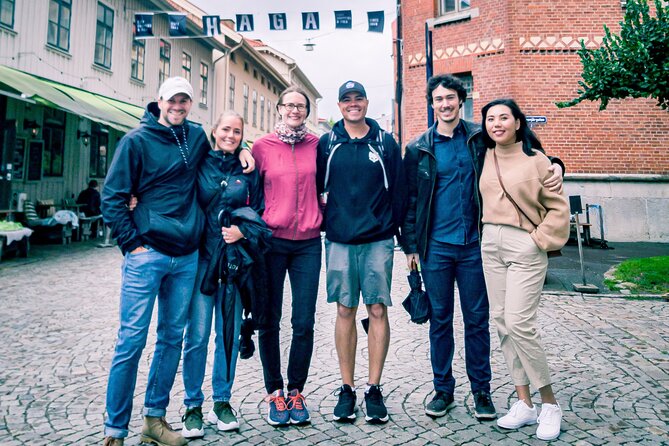
Haga Nygata is one of Gothenburg’s best-known districts. It also has a darker past, so the guide can show you more than the pretty café frontage and old streets.
The planned visit lasts about 35 minutes, making it the longest stop. That time includes the chance for a Swedish fika, the traditional coffee break that is an important part of daily life in Sweden. Coffee and tea are not included, so you pay for your own drink or snack.
I like the way this stop gives the tour a slower rhythm. After squares, statues, churches, and market buildings, you have time to sit, eat, and watch the neighborhood. If you want a relaxed visit, ask whether Haga can remain the final substantial stop rather than treating it as a quick photo opportunity.
The darker history is also worth keeping in the story. Haga is not just a charming district. Its past adds context and keeps the walk from turning into a string of attractive façades with no explanation.
Haga Church and Gothenburg’s odd details
The Haga Church is described as the first neo-Gothic church in the area, with a beautiful wooden interior. The visit is planned for about ten minutes, so expect a focused look rather than a long church tour.
This is a good companion to Masthuggskyrkan. You see two churches with different settings and character: one on a hill with a city view, and one connected with Haga and its wooden interior. If architecture interests you, tell the guide. The private format is at its best when the guide knows what details you want to notice.
Tomtehuset is another small Gothenburg oddity, right beside the streets. The planned visit is only five minutes, which tells you what kind of stop it is. You are there for a curious detail and a quick story, not a major attraction.
These smaller places may become the most memorable part of the walk. Large churches and squares are easy to find. A strange building or local myth is harder to spot without someone pointing it out.
Poseidon and Gothenburg’s public heart
The final suggested stop is Gotaplatsen, home of the Poseidon statue. It is one of Gothenburg’s best-known landmarks and a place used for many city activities.
This is a strong closing point because it brings you back to a large public space after the more intimate streets of Haga. The statue gives you an obvious photo subject, while the surrounding activity helps show how the city uses its central spaces.
The itinerary says the activity ends back at the meeting point, Gustav Adolfs Torg. That means Gotaplatsen is not necessarily the final physical point of the walk, or the guide may adjust the order. Ask how the route will run on your chosen day, especially if you have a train, meal, or other booking afterward.
What the $735.72 price means
At $735.72 per person, this is an expensive walking tour. The price needs to be judged against the private service, not compared only with a low-cost group stroll. You are paying for a guide who adapts the route to your group, offers a chosen start time, and can adjust the balance between history, food, architecture, and local curiosities.
The value improves for a group that wants privacy and has very specific interests. A family, a group of friends, or several people traveling together may find the custom format more useful than splitting up or following a fixed route. Group discounts are available, but the actual discounted price is not provided, so check how the total changes for your party.
The value is weaker if you want a quick standard introduction at the lowest possible cost. Many of the stops are free, but your price does not include museum admission, coffee, tea, food, or public transportation. You should also confirm the exact route and length because the suggested stop times cannot all fit neatly into the stated two-hour maximum.
Guide style, timing, and practical details
The tour is offered in English and begins at 11:00 am at Gustav Adolfs Torg. It is a mobile-ticket experience, and booking confirmation arrives at the time of booking.
Christina is one named guide associated with the experience. Her approach is described as friendly and well planned, with attention to the group’s interests and a reputation for arriving on time. That matters on a private tour. A guide who listens can turn a general city walk into something much more useful for your group.
The activity ends back at the meeting point. Public transportation tickets are not included if they are needed, although the route is designed as a walking experience. Service animals are allowed, and most people can participate. Children and infants join free, making the price structure more appealing to families, though the stated per-person rate still deserves careful checking when you book.
The tour requires good weather. If poor weather causes cancellation, you are offered another date or a full refund. You can cancel for a full refund up to 24 hours before the start time. Changes or cancellations inside that window are not accepted, so keep your plans firm once the deadline passes.
Who should book this Gothenburg walk?
I would consider this tour for a group that wants a private introduction with room to adjust. It suits people who enjoy stories about city founders, old walls, churches, myths, food markets, and unusual buildings. It is also a good match for families because children and infants join free.
It may work well early in your Gothenburg stay. The guide can help you get your bearings, point out places to return to, and suggest where a fika or meal might fit later. The 11:00 am start also leaves time for a morning arrival at the meeting point, though you should allow enough time to reach Gustav Adolfs Torg.
I would think twice if you mainly want a cheap, fast overview. The price is substantial, the route is entirely on foot, and the exact balance of the 12 stops depends on your conversation with the guide. Ask for a clear plan before setting out.
Should you book it?
Book this tour if privacy, personal attention, and local stories matter more to you than price. The strongest features are the flexible route, the unusual stops, Christina’s thoughtful planning, and the chance to connect major sights with everyday Gothenburg traditions such as fika.
Skip it if you want a fixed two-hour route with every stop guaranteed or if $735.72 per person does not fit your budget. If you do book, tell the guide your top three priorities before the walk and ask how the full route fits the stated duration. That simple step will help you get the best value from this unusually customizable Gothenburg experience.
FAQ
Where does the tour start?
It starts at Gustav Adolfs Torg, also called Gustav Adolfs Square, in Nordstaden, Gothenburg.
What time does the tour begin?
The listed start time is 11:00 am.
How long does the walking tour last?
The approximate duration is one hour and 30 minutes to two hours.
Is this a private tour?
Yes. Only your group participates, and the private guide adapts the experience to your wishes.
Is the tour offered in English?
Yes. The activity is offered in English.
Are children and infants allowed?
Yes. Children and infants can join for free.
What is not included in the price?
Museum entrance fees, coffee or tea, and public transportation tickets, if needed, are not included.
Just added in Gothenburg
- Paddan on Säveån★ 4.5 · 27 reviews
- Gothenburg : Private Walking Tour with A Guide (Private tour)★ 4.0 · 19 reviews
- Landvetter Airport Bus Transfer Arrival★ 3.5 · 117 reviews
- 24h Gothenburg Hop-On Hop-Off Boat Tour★ 4.5 · 18 reviews
- Gothenburg Private Walking Tour with a Local★ 4.0 · 36 reviews
- Landvetter Airport Bus Transfer Departure★ 3.5 · 158 reviews
- Archipelago Tour with guide Gothenburg★ 4.0 · 73 reviews
- Private Bike Tour in Gothenburg with Pickup★ 5.0 · 22 reviews
Walking Tours, compared.

Reykjavik Food Walk – Local Foodie Adventure in Iceland
Read our review →
Reykjavík Small group Walking Tour – by CityWalk
Read our review →

Past & Present Small Group Guided Walking Tour
Read our review →
Walking Tour in Bergen of the Past and Present
Read our review →
Browse the lists this tour appears in