
Reviewed · WHALE WATCHING
Dalvík: Whale Watching Speedboat Tour
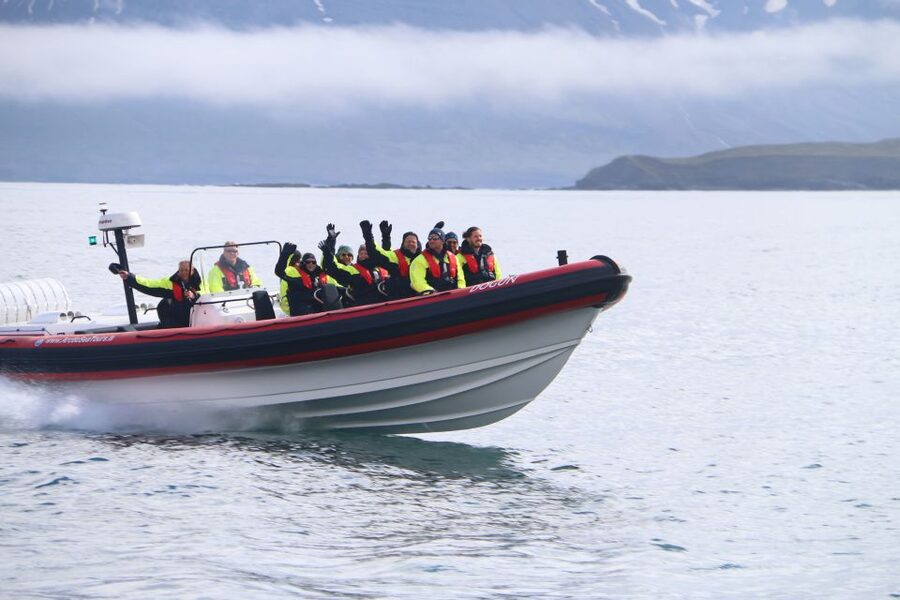
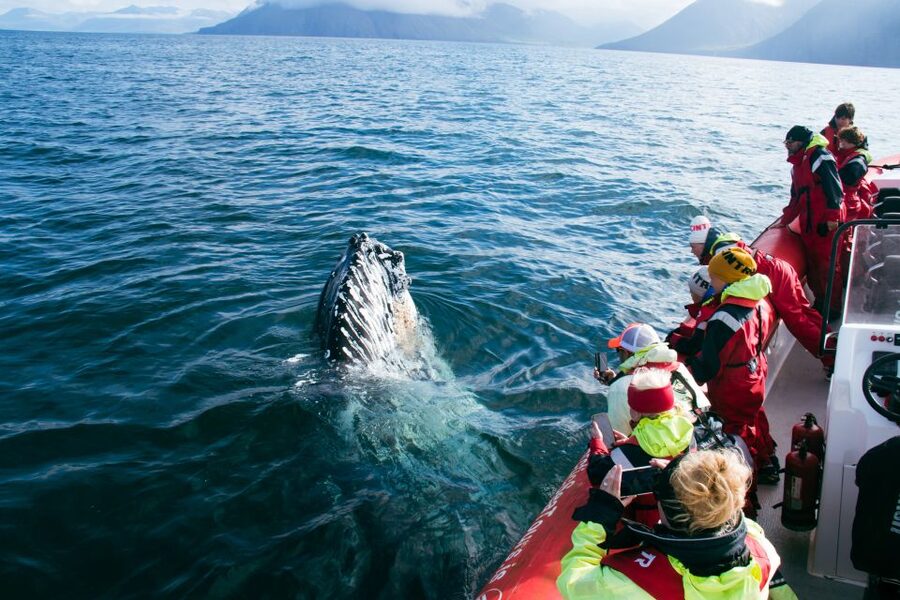
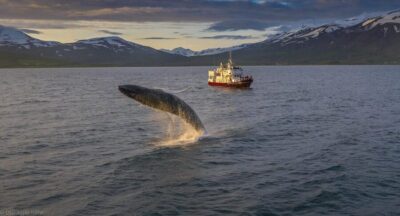
A humpback whale rising beside a fast RIB boat is the sort of North Iceland moment you remember long after the spray has dried. This two-hour trip leaves Dalvik and runs into Eyjafjordur, with the mountains behind you and open water ahead. You may see humpbacks, minke whales, white-beaked dolphins, harbor porpoises, seals, and, if luck is on your side, a much larger blue whale, fin whale, or killer whale.
I like the small group size, capped at 12, and the suspension seats, which make the fast ride more comfortable than a hard bench. I also like the guides’ clear focus on both wildlife and scenery. The main drawback is simple: a speedboat moving through Icelandic water can feel very cold, even when the day on shore seems mild. Bring proper layers, a hat, and gloves.
Key points to know before booking
- Several whale species are possible: Humpback whales are the main prize, but minke whales, dolphins, porpoises, seals, and rare larger whales may appear.
- The RIB is built for speed and comfort: Suspension seating helps soften the ride, while flotation coveralls and life jackets are supplied.
- Eyjafjordur is part of the show: You get wide mountain views while moving between wildlife-search areas.
- Summer adds puffins: Atlantic puffins breed in the bay between April and August.
- The trip lasts two hours: About five minutes goes to the safety briefing, followed by roughly 105 minutes on the water.
- The price is $165 per person: That is a serious excursion cost, but the small group and fast access to the fjord add real value for whale-watchers.
Setting out from Dalvik into Eyjafjordur
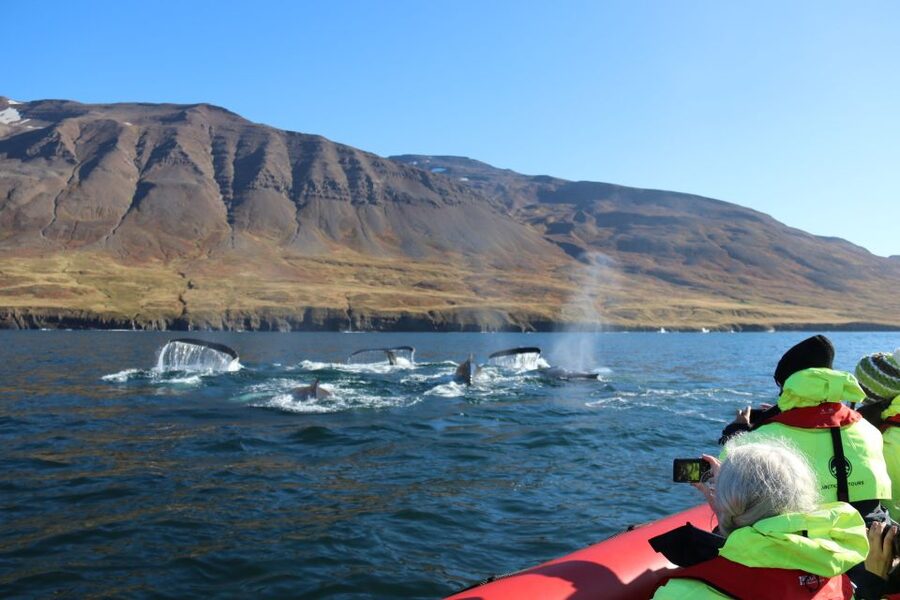
You meet at Hafnarbraut 22 in Dalvik, a useful starting point for a trip built around the waters of Eyjafjordur. Dalvik sits in North Iceland, where the fjord opens beneath steep mountains. From the boat, the setting gives you more than a wildlife search. You also get a strong sense of the scale of northern Iceland, with dark water below and high ridges around it.
The first five minutes are set aside for the safety briefing. Pay attention here, especially if this is your first RIB trip. You will be moving quickly, and your position in the suspension seat matters for comfort and safety.
The tour uses a small boat with space for no more than 12 people. That limit matters. A smaller group means less crowding when a whale surfaces and a better chance of turning your head or shifting your view without having someone directly in front of you. A September trip had only six people aboard, allowing everyone more room to move around the boat.
The boat is fitted with suspension seats rather than a plain fixed bench. These seats are intended to absorb some of the movement as the RIB crosses the water. That does not make the journey perfectly smooth, but it should help reduce the jolt of speed and small waves.
More whale trips leaving Iceland:
- Reykjavík: Whale Watching and Marine Life Cruise
★ 4.6 · 9,838 reviews - Akureyri: 3-Hour Classic Whale Watching Tour by Ship
★ 4.6 · 3,000 reviews - Reykjavík: Whale Watching Cruise on the Amelia Rose Yacht
★ 4.5 · 2,911 reviews
The first 30 minutes: speed, scenery, and a search pattern
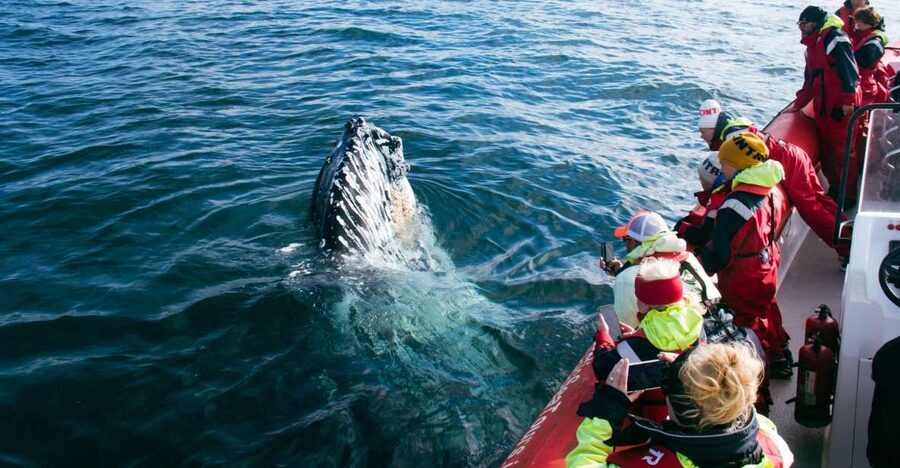
After the briefing, the boat spends about 30 minutes cruising through Eyjafjordur. This opening section combines transport with wildlife watching. The crew is not simply racing to one fixed spot, since marine animals move and the best search area can change.
The speed is part of the appeal. You feel the boat skim across the water, and you see the fjord from a low, lively position rather than from a large sightseeing vessel. The mountains appear particularly impressive from here because the RIB keeps you close to the waterline.
The tradeoff is exposure. A fast boat creates wind chill, and the cold can be sharp when the RIB is moving. Even with flotation coveralls, you should wear warm clothing underneath. A hat and gloves are specifically advised, and I would treat them as essential rather than optional.
This first run is also a good time to settle into the boat. Keep both hands available when needed, listen to the guide’s instructions, and scan the water instead of staring at one point. Whales may surface well away from the boat, and the first sign can be a small disturbance, a dark back, or a brief blow.
The central 45 minutes: the best chance for whales and dolphins
The middle section lasts about 45 minutes and concentrates on dolphin watching, whale watching, and other marine life. This is the part most people will be waiting for, but it helps to understand how wildlife watching works. The animals are free-moving, so no trip can promise a particular species or a perfect close-up.
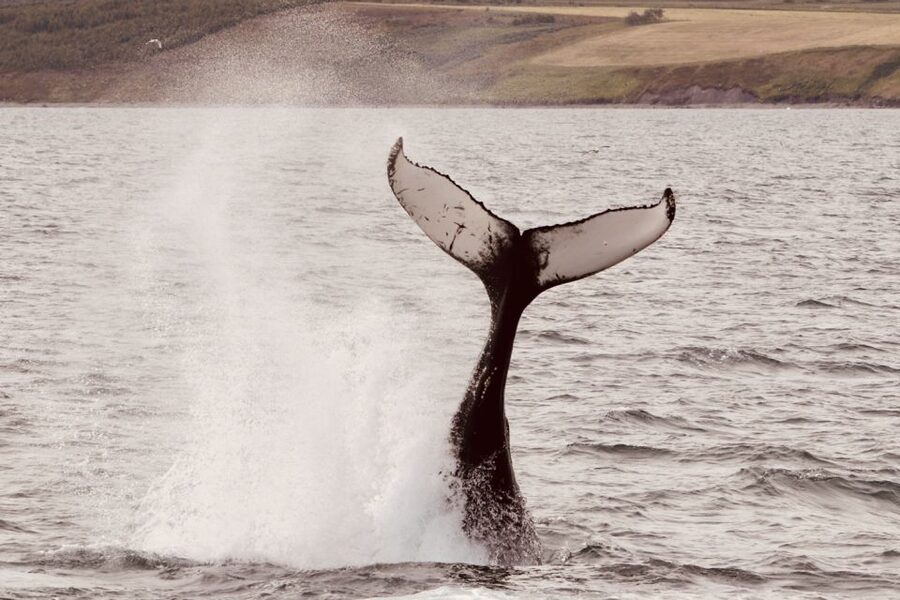
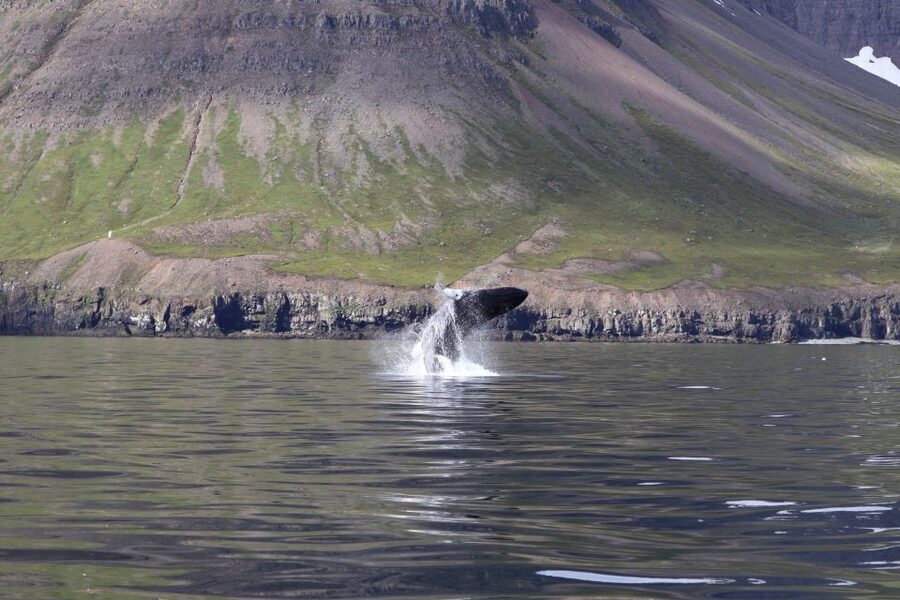
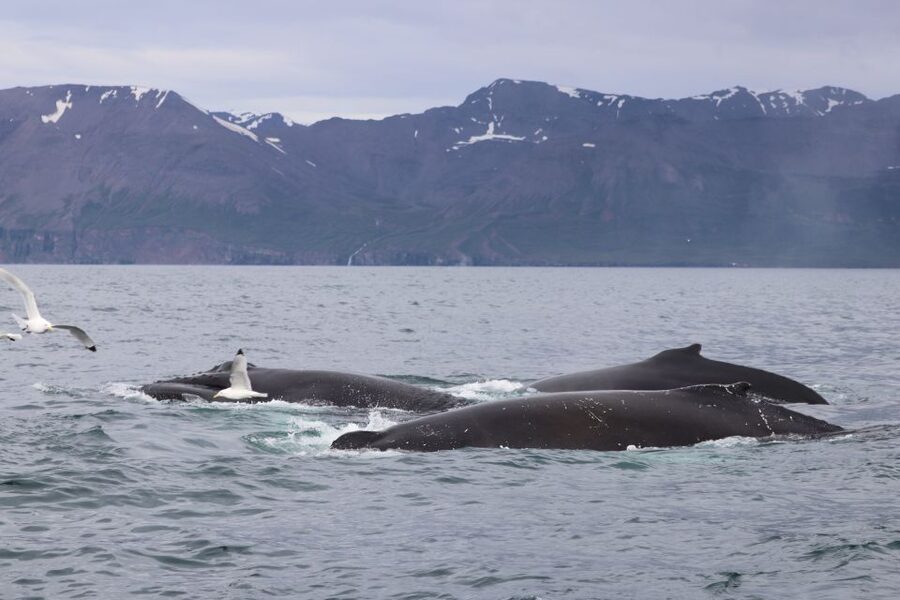
Humpback whales are the main draw. Their size makes them easier to notice, and their broad backs can create a memorable sight even when they surface briefly. On one October outing, the group saw eight humpback whales. Another October trip produced several humpbacks, while a September trip had four separate whales.
Those sightings show what can happen, but they are not a guarantee. Weather, animal behavior, and the season all affect the result. You should book this as a wildlife search with strong possibilities, not as a scheduled whale performance.
Minke whales are another likely possibility. They are smaller and can surface quickly, so you may need to watch closely. White-beaked dolphins can be more playful around a moving boat, and a pod can change the mood of the whole trip in seconds.
Harbor porpoises are smaller and less dramatic, but still worth watching for. Seals may appear as curious heads in the water. The appeal here is variety. Even if a large whale stays submerged, the fjord can still offer several kinds of marine life.
The guides also explain how to identify whales and point out details about the animals and the surrounding scenery. Two guides on one outing answered questions about both subjects, which is useful when you want more than a quick sighting. The strongest part of a wildlife trip is not only seeing an animal. It is learning what you are looking at and why the behavior matters.
The last 30 minutes: one more look before Dalvik
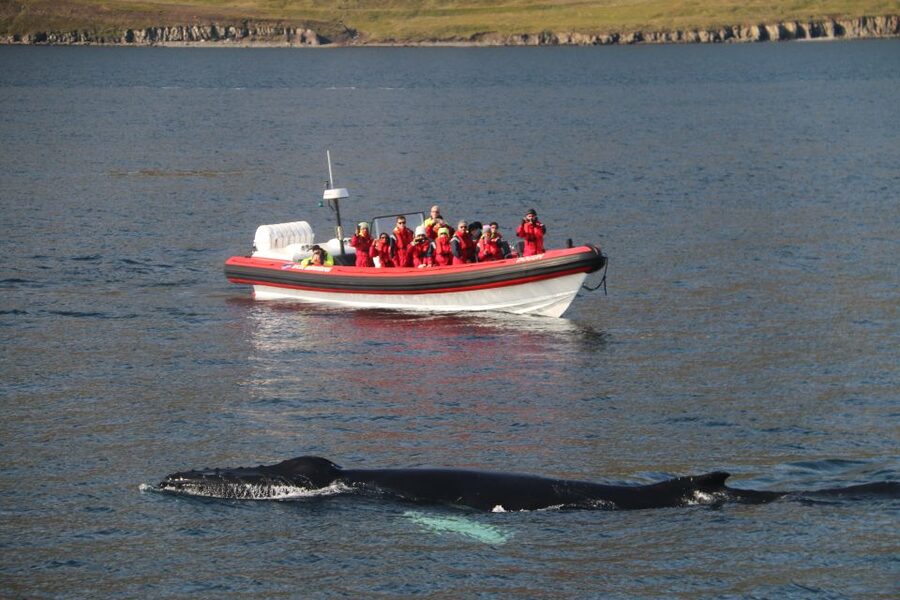
The final 30 minutes take you back through Eyjafjordur toward Hafnarbraut 22. This is not dead time. The boat continues its search while giving you another chance to watch the water and take in the mountains.
If the middle section produced a major sighting, the return run gives you a chance to reflect without feeling rushed. If the wildlife search was quiet, the return is valuable because conditions can change and animals may appear in a different part of the fjord.
You may also get a second look at seals, dolphins, porpoises, or whales. Keep your camera ready, but do not spend the whole trip looking through a screen. A whale can surface for only a few seconds, and watching the water directly gives you a better chance of spotting the next movement.
The RIB returns to the same meeting point, making this a compact excursion for a day built around North Iceland. The total time is two hours, not half a day, so it can fit into a wider driving plan. Still, you should allow yourself enough time around the scheduled departure rather than treating the tour as a last-minute stop.
Same base, a different kind of day out:
- Reykjavik: Golden Circle Full-Day Tour with Kerid Crater
★ 4.8 · 24,485 reviews - Reykjavik Food Walk – Local Foodie Adventure in Iceland
★ 5.0 · 18,952 reviews - Iceland: Northern Lights Bus Tour from Reykjavik
★ 4.1 · 11,161 reviews - Reykjavík: South Coast Waterfalls, Black Sand & Glacier Tour
★ 4.8 · 11,030 reviews
What wildlife might appear in Eyjafjordur
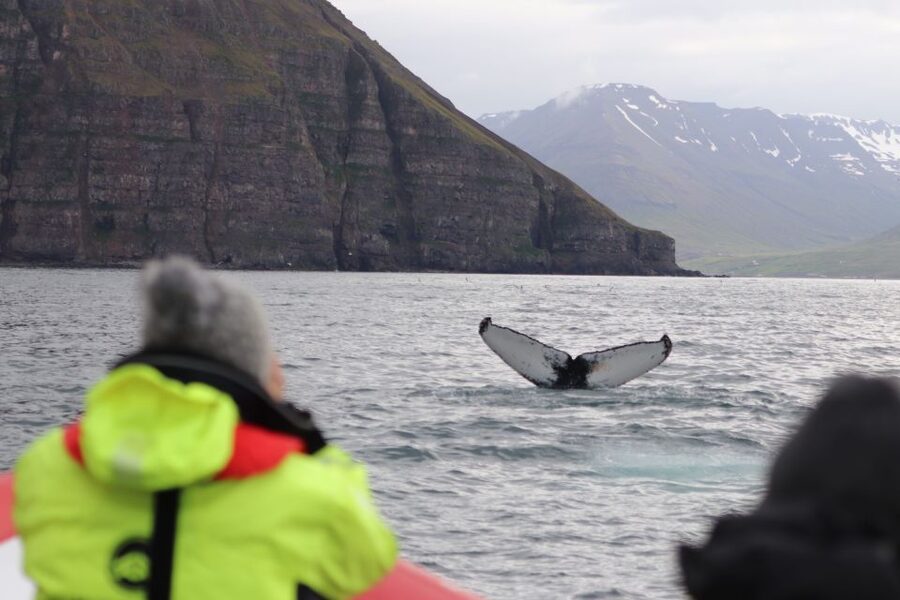
The species list is broad, though the chance of seeing each one is not equal. Humpback whales and minke whales are the most clearly expected whale possibilities. White-beaked dolphins, harbor porpoises, and seals add smaller wildlife to the search.
Puffins bring a seasonal bonus. They breed in the bay during the summer, from April through August. If you visit during that period, keep an eye on the water and air for Atlantic birds. Puffins are not the central purpose of the trip, but their presence makes a summer fjord crossing feel more complete.
A blue whale, fin whale, or killer whale may occasionally be seen. These are the extraordinary possibilities, not dependable targets. I would not choose this tour solely because of those species. Instead, treat them as a rare reward on top of a strong chance to search for humpbacks and other common marine life.
The setting helps even when wildlife is shy. Eyjafjordur supplies open views, steep mountains, and a changing sense of distance as the boat moves. You are not waiting beside a flat harbor. The scenery gives the whole outing a clear North Iceland character.
Comfort, clothing, and the reality of a fast boat
The supplied flotation coverall is an important part of the kit. You also receive a life jacket and goggles. These items help with safety and exposure, but they do not replace warm personal clothing.
Wear warm layers, a hat, and gloves. The October outings were especially useful reminders that the moving boat can feel cold. One person described the speedboat as a beautiful experience but stressed how cold it became while the RIB was moving. That is exactly the kind of practical warning worth taking seriously.
The suspension seats are a strong feature for this format. A RIB is more exciting than a slow sightseeing boat, but speed can make bumps tiring. The seating helps make the ride more manageable, and one outing found the boat comfortable even with the waves.
You should still think carefully about your own comfort. This trip is not suitable for pregnant women, people with back problems, or anyone under 3 feet 9 inches, or 120 centimeters. The restrictions make sense given the boat’s speed and movement.
If you are prone to discomfort on boats, the short two-hour length helps. You get a real fjord excursion without committing to a full day on the water. If you prefer a slow, quiet cruise, however, this is the wrong style of whale watch.
Why the small group changes the experience
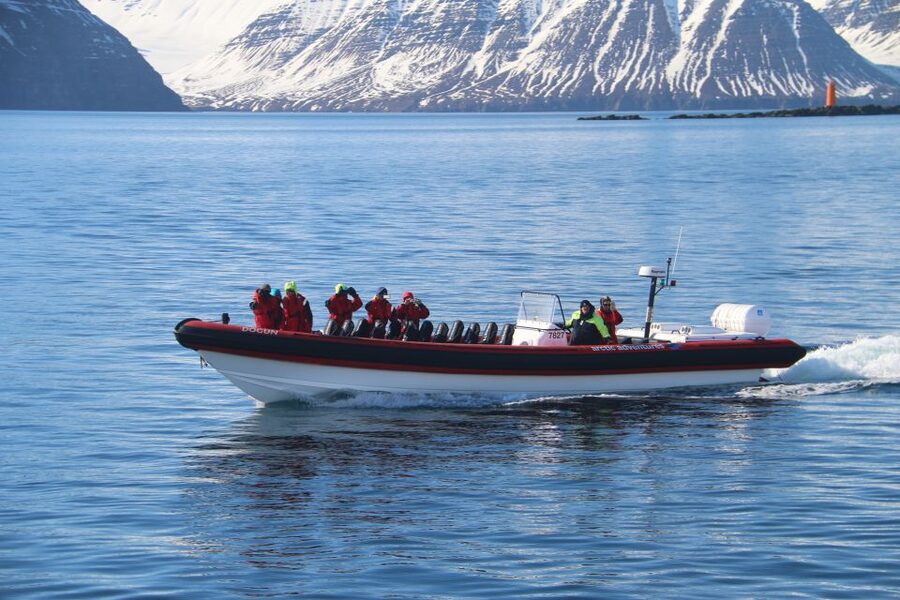
A maximum of 12 people gives this outing a more personal feel than a large boat tour. You have a better chance of hearing the guide, asking questions, and moving your gaze when wildlife appears.
The small format also helps with timing. The guide can keep the boat positioned for viewing without managing a large crowd across several decks. When humpbacks surfaced on recent outings, the limited number of people would have made it easier to share the view.
There is one limit to remember: a smaller RIB has less space than a large vessel. You are close to the water, exposed to wind, and expected to remain attentive to the boat’s movement. The same features that make the experience exciting can feel demanding if you want lots of room to walk around.
The English-speaking guides focus on marine life and the fjord. You should ask questions during calmer moments, then give your full attention when the boat slows or the guide points out an animal.
Is $165 a fair price?
At $165 per person, this is not a budget add-on. You are paying for a specialized two-hour wildlife trip, a small group, safety equipment, a RIB boat, and a guide who can take you quickly into the fjord.
The value improves if your priorities are close-to-the-water excitement and a better chance to see the guide’s chosen search areas. The small capacity is a real benefit, especially compared with a crowded boat where you may struggle to see over other people.
The price is harder to justify if you want only a scenic ride or if you would be disappointed without a guaranteed whale. Wildlife cannot be scheduled. You are paying for the search, the setting, and the possibility of a strong sighting.
A high rating of 4.8 from 154 ratings, with 96 percent giving the transport a perfect score, suggests a dependable experience overall. The strongest praise centers on the guides, the comfortable boat, good organization, and multiple humpback sightings. Those points support the price, but I would still advise you to book only if you accept the uncertainty that comes with nature.
Free cancellation up to 24 hours before departure and the option to reserve now and pay later make planning less rigid. Check the available starting times when you choose your date, since the tour lasts two hours and may need to fit around other North Iceland plans.
Who should book this Dalvik whale tour?
I would recommend it most strongly to you if you want a high-energy whale watch rather than a slow cruise. It suits adults and older children who can handle a fast boat, cold air, and a moving seat.
It is also a good match for photographers who want a low position near the water, though you should keep your camera secure and remain ready to watch directly. Wildlife lovers will appreciate the range of possible sightings, from puffins in summer to humpbacks and dolphins in the fjord.
You may want to skip it if you have back problems, are pregnant, or are below the stated height minimum. You should also think twice if cold, wind, or boat movement quickly ruins your day.
The tour works well as a focused two-hour stop in North Iceland. It does not take over an entire day, and the return to Dalvik keeps the plan simple. The main question is not only Can I afford $165? It is also Am I happy paying that amount for a chance to see wildlife in a fast, exposed boat?
Should you book it?
Book this tour if you value a small group, direct access to Eyjafjordur, and the thrill of moving quickly between possible whale sightings. The combination of humpbacks, dolphins, puffins in summer, mountain views, and a comfortable suspension seat gives the trip plenty of substance.
I would not book it expecting a guaranteed blue whale, killer whale, or even a guaranteed whale at all. I would book it expecting a well-equipped search in a beautiful fjord, with a strong chance of humpbacks and other marine life.
Bring serious warm layers, accept the cold, and keep your attention on the water. For the right person, this is one of the more memorable ways to experience Dalvik and Eyjafjordur.
FAQ
Where does the whale-watching tour begin?
The tour begins at Hafnarbraut 22 in Dalvik and returns to the same location.
How long does the experience last?
The full experience lasts two hours. This includes a five-minute safety briefing and about 105 minutes cruising and watching wildlife in Eyjafjordur.
What animals might I see?
Possible sightings include humpback whales, minke whales, white-beaked dolphins, harbor porpoises, seals, and sometimes blue whales, fin whales, or killer whales. Atlantic puffins may be seen between April and August.
Is the tour suitable for children?
The tour is not suitable for anyone under 3 feet 9 inches, or 120 centimeters. The available information does not provide a separate age recommendation beyond that height restriction.
What equipment is provided?
You receive a flotation coverall, life jacket, and goggles. You should also bring warm clothing, a hat, and gloves.
Can I cancel the booking?
You can cancel up to 24 hours before departure for a full refund. A reserve-now, pay-later option is also available.
Just added in Iceland
- Beer Spa Experience★ 4.0 · 29 reviews
- The Wool Monster Workshop – make your own souvenir!★ 5.0 · 32 reviews
- Self-Guided Tour of Ísafjörður: Art, History, and Architecture★ 5.0 · 23 reviews
- Jökulsárlón: Blue Ice Cave and a Long Glacier Hike★ 5.0 · 50 reviews
- The Original Ice Cave Tour in Jökulsárlón Glacier Lagoon★ 5.0 · 185 reviews
- Eimverk Distillery Visit★ 5.0 · 315 reviews
- Crystal Ice Cave Adventure★ 5.0 · 255 reviews
- Ice Cave and Glacier Walk into Blue Glacier Canyon★ 5.0 · 224 reviews
Whale Watching, compared.
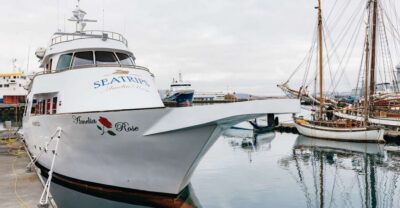
Whale Watching Cruise on the Amelia Rose Yacht
Read our review →
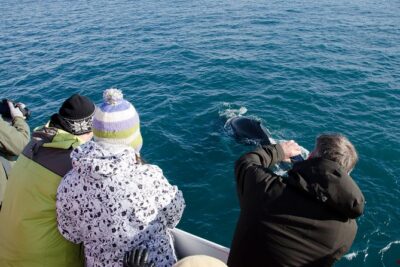
The Original Classic Whale Watching from Reykjavik
Read our review →
Traditional Whale Watching by Local Family Company
Read our review →Browse the lists this tour appears in