

Reviewed · TOURS IN ICELAND
Perlan – Wonders of Iceland Experience
Perlan puts Iceland’s biggest natural forces under one roof: glaciers, volcanoes, wildlife, and the Northern Lights. You can walk through a real ice cave, watch the Áróra planetarium show, and finish with wide views from the 360° observation deck.
I like the mix of useful science and hands-on displays, especially the ice tunnel and volcanic experiences. I also like that Perlan works well on a rainy day and can be visited in a short two-hour window. The main drawback is price: at $56.84 per person, it is not a cheap museum, and some displays may feel more like entertainment than serious science.
Key points to know before visiting
- The ice cave is the star attraction: You walk through a cold, carved ice passage that gives you a small taste of Iceland’s glacier world.
- The Áróra show lasts about 30 minutes: Watch it early if you have a tight schedule, since it is easy to miss when you leave it until the end.
- The volcano experiences are highly praised: A volcano simulator and volcanic films add sound, motion, and sensory effects to the displays.
- The observation deck is free with admission: Walk outside for 360-degree views across Reykjavík and far beyond.
- Two hours is possible, three hours is better: You can move quickly, but a relaxed visit includes the shows, exhibits, ice cave, and a café stop.
- Book ahead for a smoother visit: Entry times run from morning into the evening, and advance booking helps protect your plans during busy periods.
Why Perlan works as an introduction to Iceland
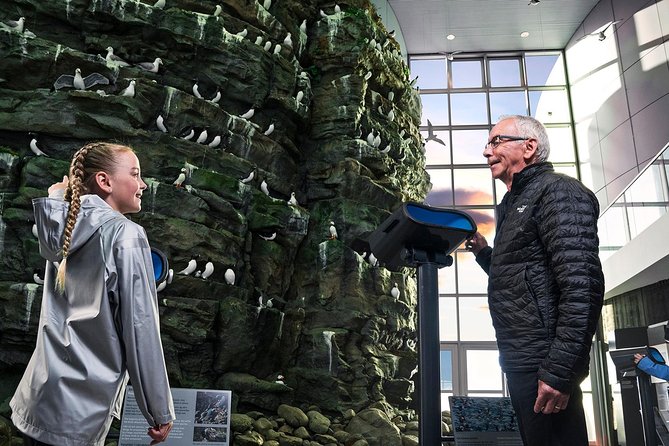
Perlan is more than a room full of display cases. It gathers several experiences that connect the natural sights you may see around Iceland: glaciers, volcanic activity, geothermal power, wildlife, and the Northern Lights.
That makes it especially useful at the start or end of a trip. Visit early, and the exhibits can give you context for what you will see around the country. Visit near the end, and Perlan helps connect the waterfalls, lava fields, glaciers, and dark skies you have already experienced.
The museum is housed in one of Reykjavík’s best-known landmarks. Inside, the design leans heavily on modern technology, moving images, sound, simulations, and interactive displays. Some exhibits are built for children, but the subject matter is broad enough for adults too.
I would not expect a traditional museum with long rows of artifacts and quiet labels. Perlan is closer to a nature center combined with a film venue and an observation attraction. That format keeps the visit moving, though some people may find the presentation a little simplified.
Other trips people book in Reykjavík:
- Reykjavik: Golden Circle Full-Day Tour with Kerid Crater
★ 4.8 · 24,485 reviews - Reykjavik Food Walk – Local Foodie Adventure in Iceland
★ 5.0 · 18,952 reviews - Iceland: Northern Lights Bus Tour from Reykjavik
★ 4.1 · 11,161 reviews
Start with the Áróra Northern Lights show
The Áróra Northern Lights planetarium show is one of the main reasons to plan your timing instead of simply wandering in. It runs for about 30 minutes and explains the aurora through a large-format film and narration.
If your schedule is tight, I would start here. A fixed show is the one part of your visit you cannot casually postpone, and it is easy to spend too long with the exhibits before realizing that the next showing is underway.
The presentation is designed to make the Northern Lights understandable and dramatic. It gives you a better sense of how the aurora forms, while the planetarium setting lets you see it in a way that does not depend on clouds, darkness, or luck.
The narration may feel a little cheesy at times. That is worth knowing if you want a technical lecture rather than a polished public show. Still, the film offers something real aurora hunting cannot guarantee: you will see the Northern Lights during your visit.
The show is also a useful choice for anyone whose Iceland trip does not include an evening aurora outing. It cannot replace seeing the lights outdoors, but it does provide a dependable explanation and visual experience.
Walk through Perlan’s ice cave
The ice cave is probably the most distinctive physical part of the museum. You walk through a passage made from ice, with cold walls and tunnel-like spaces that suggest what it feels like inside a glacier.
It is not a substitute for a guided glacier trip, but it gives you a clear sense of why Iceland’s ice is worth understanding. The cave makes the subject physical. Instead of only reading about glaciers, you feel the cold and move through a space shaped to resemble the inside of one.
This section is particularly good for families. Children get a simple adventure, while adults can use it as a short lesson in glacier environments and changing ice. It is also a strong choice if you have limited time, since the experience is easy to find and memorable without requiring a long explanation.
The cave is not enormous, so do not build your entire visit around expecting a full underground expedition. Its value comes from being one part of a larger museum, paired with the glacier displays and films nearby.
Wear something comfortable and be ready for a cooler section of the building. The available information does not specify a required clothing policy, but the point of the exhibit is to recreate an icy setting.
Feel the force of Iceland’s volcanoes
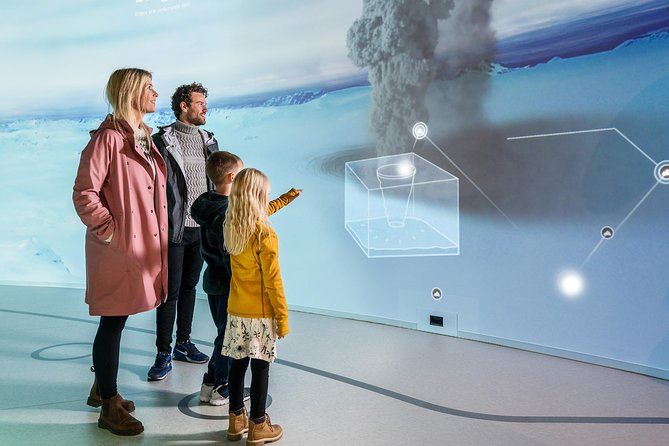
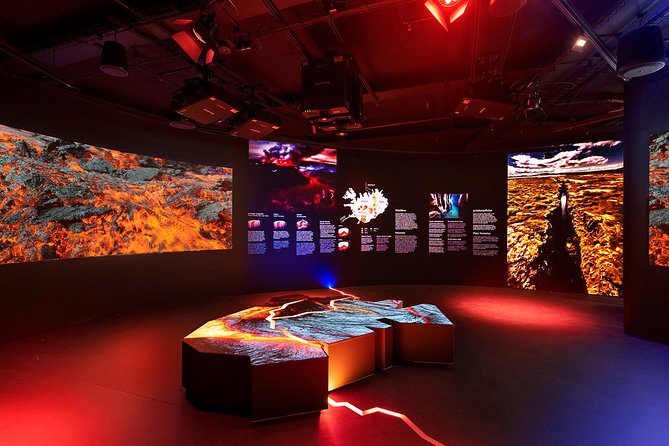
The volcanic exhibits receive some of the strongest praise, and I can see why. Iceland’s volcanoes are difficult to explain with static signs alone. Perlan uses films, simulations, sound, and sensory effects to show the power and movement involved.
The volcano simulator is a highlight for many people. A newer experience takes you toward the inside of a volcano crater, creating a more active ride-style presentation than a standard museum film. Another display uses volcanic smells and lava effects, making the lesson more physical.
This approach works well after you have seen volcanic areas in the open air. It gives you a way to think about what is happening beneath the ground, rather than treating lava as a scenic backdrop for photographs.
The tradeoff is that the simulator can feel more like a theme-park attraction than a scientific exhibit. I think that is a fair exchange for families and for anyone who learns better through motion and sound. If you want detailed geology at every turn, you may find some material too basic.
Make the volcano section a priority if you have only two hours. Along with the ice cave, it is the part most likely to make the admission feel worthwhile.
Same base, a different kind of day out:
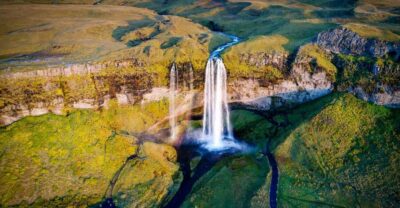
- Reykjavík: South Coast Waterfalls, Black Sand & Glacier Tour
★ 4.8 · 11,030 reviews - Reykjavík: Whale Watching and Marine Life Cruise
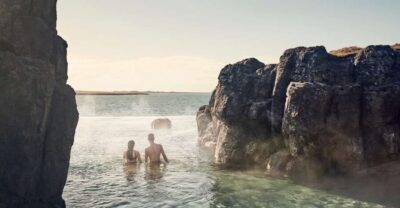
★ 4.6 · 9,838 reviews - Reykjavik: Sky Lagoon Entrance Pass With 7-Step Spa Ritual
★ 4.8 · 6,166 reviews - From Reykjavik: Golden Circle, Kerid, & Secret Lagoon Tour
★ 4.8 · 6,009 reviews
The exhibits cover wildlife, glaciers, and Icelandic nature
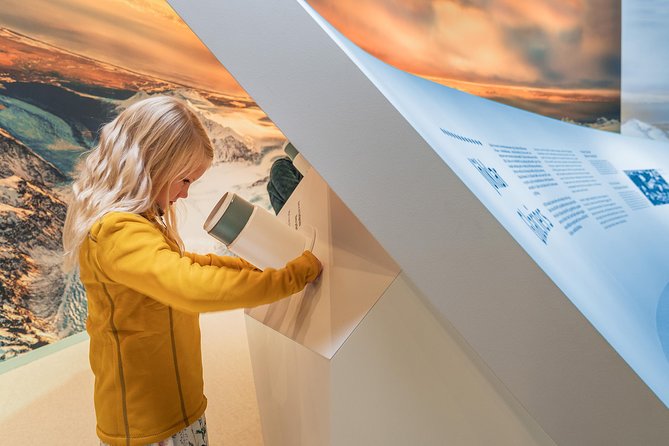
Perlan also includes information about Iceland’s wildlife and natural systems. Displays about puffins, glaciers, geology, and the country’s volcanic activity help fill in the larger picture.
The information is presented mainly through reading, screens, films, and interactive elements. You should expect to spend some time standing and reading as you move around. One useful advantage is that you can set your own pace rather than follow a guide or a fixed group.
That makes the museum flexible. You can skim sections that overlap with places you have already visited and spend longer on subjects that are new to you. A family can split up briefly and meet again, while a solo visitor can move at a steady pace without waiting for a tour group.
Not every display is equally interactive. One fair criticism is that some sections rely more on text than physical activity. If your ideal museum requires constant buttons, motion, and hands-on displays, Perlan may feel uneven.
Still, the exhibits provide good context for the rest of Iceland. The museum helps explain why glaciers matter, how volcanic forces shape the country, and how wildlife fits into this cold, exposed environment.
Finish at the 360-degree observation deck
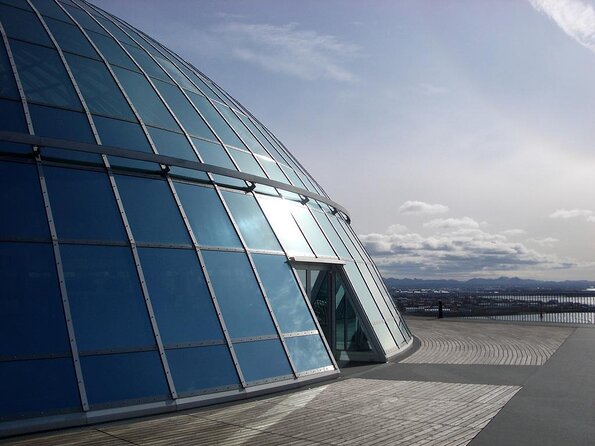
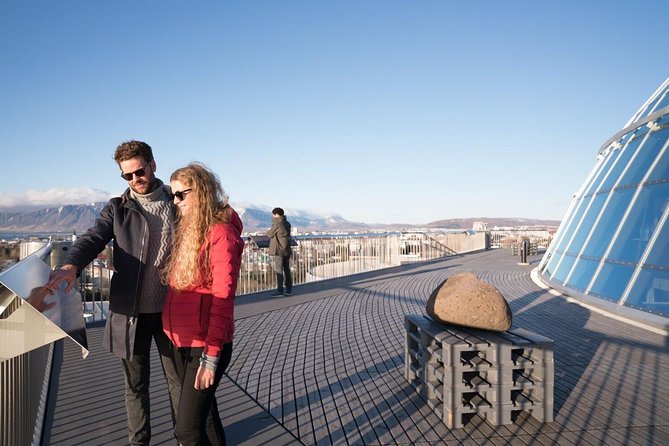
The observation deck is a simple but important part of the visit. From the top, you get broad views in every direction, making it easier to understand Reykjavík’s position between the sea, mountains, and volcanic country.
I would save the deck for the end, then take a few minutes outside before leaving. It is a good place to clear your head after the darker planetarium and enclosed cave sections.
The view is also a reason to consider visiting in the morning. One visitor particularly recommended arriving around 10 a.m. in winter to catch the sunrise. Sunrise timing changes through the year, so treat that as a seasonal suggestion rather than a guarantee.
The deck is not dependent on a sunny day to be useful. Even in poor weather, you may get a dramatic sense of Iceland’s changing sky. On a clear day, the views are a major bonus included with your museum ticket.
A café, bar, and restaurant are available on site, and the upper dining area has views of its own. Food and drinks are extra, and the restaurant can be expensive, so I would think of it as a convenient stop rather than part of the ticket’s value.
How long should you allow?
The official estimate is two to three hours, and that feels sensible. You can cover the main attractions in about two hours if you begin with the Northern Lights show and keep your reading time short.
Allow closer to three hours if you want to see the exhibits carefully, take photographs, visit the observation deck, and stop for coffee. You could also spend longer, since the museum has enough material for a slow visit.
A practical order is:
- Watch the Áróra show first.
- Visit the ice cave.
- Spend time with the volcano simulator and lava displays.
- Read through the wildlife, glacier, and geology exhibits.
- Finish at the observation deck.
- Add a café or restaurant stop if you want one.
This order protects you from missing the fixed planetarium presentation. It also saves the outdoor view for the end, when you can leave directly after your final look across Reykjavík.
Is $56.84 good value?

At $56.84, Perlan asks for a substantial admission fee. I would not call it a bargain, especially if you only spend an hour moving quickly through the building.
The price makes more sense when you use the ticket for the full package: museum admission, the Áróra show, the ice cave, volcanic experiences, and the observation deck. You are paying for several different formats rather than one standard exhibition.
Families may find the price easier to justify because the museum fills a rainy or low-energy day without requiring outdoor travel. It also gives children something to do while adults learn about the country’s natural forces.
Solo visitors and museum fans should judge how much time they will spend reading. If you enjoy displays, films, and observation decks, two or three hours can provide reasonable value. If you only want a quick view and one unusual photo, the cost may feel high.
The lack of transport keeps the arrangement simple, but it also means you must get to Perlan yourself. No meal is included, so budget separately for the café or restaurant.
When Perlan fits best into your Reykjavík plans
Perlan is especially useful on a wet or windy day. The main experiences are indoors, and the museum gives you a meaningful alternative to walking around Reykjavík in poor weather.
It is also a good first stop if you want a broad introduction to Iceland. The displays can help you understand the natural sights before you head out on day trips.
At the end of a longer Iceland visit, Perlan works differently. You can connect the exhibits to things you have already seen, from glaciers and lava fields to the Northern Lights. That can make the museum feel more rewarding than it would as an isolated attraction.
Morning and evening visiting times are available. Booking about three weeks ahead is common, and reserving in advance helps guarantee entry and removes one more decision from a busy Reykjavík day.
Most people can take part, and service animals are allowed. Perlan is also near public transportation, but no transfer is included with the experience.
Who should book Perlan?
I recommend Perlan most strongly for families, first-time visitors to Iceland, and anyone needing a dependable indoor activity. The ice cave and volcano simulator give children something concrete to enjoy, while the planetarium and nature displays give adults useful context.
It also suits people who have not seen the Northern Lights in person. The Áróra show gives you a scheduled version of that experience, even when weather or daylight makes an outdoor sighting impossible.
You may be less impressed if you want a quiet, artifact-based museum or highly technical geology. Some displays are text-heavy, and the planetarium narration can be a little overdone. The experience favors clear storytelling and visual effects over academic detail.
The staff are described as friendly and attentive, which helps when you need directions or want to understand how the exhibits work. Since this is not a guided tour, you control the pace and decide which sections deserve your time.
Should you book Perlan?
Book it if you want one Reykjavík attraction that combines an ice cave, volcanic displays, Northern Lights film, wildlife information, and a major city view. It is a particularly smart choice for a rainy day, a family outing, or the first or last day of an Iceland trip.
I would book ahead, start with the 30-minute Áróra show, and allow at least two hours. At $56.84, it is not the cheapest museum visit, but the package feels more reasonable when you use the interactive volcano experiences, ice cave, observation deck, and planetarium instead of treating it as a quick walk-through.
Free cancellation is available if you cancel at least 24 hours before the local start time. Inside that window, the payment is not refunded and changes are not accepted.
FAQ
How long does the Perlan experience take?
Plan on approximately two to three hours. You can see the main attractions in about two hours, while a slower visit with more reading, the observation deck, and a café stop may take longer.
What is included in the Perlan ticket?
Admission includes the Perlan Museum Wonders of Iceland entrance ticket, the Áróra Northern Lights Planetarium Show, and access to the 360° Observation Deck.
Is transportation included?
No. The experience does not include a transfer. Perlan is near public transportation, so you arrange your own way to the museum.
Are food and drinks included?
No. Food and drinks are not included, but you can buy them at the café, bar, or restaurant on site.
Can I visit Perlan at different times of day?
Yes. Visiting times are available from morning through evening. Booking ahead is recommended to guarantee entry.
What happens if I cancel?
You receive a full refund if you cancel at least 24 hours before the experience’s local start time. Cancellations or changes made within 24 hours are not accepted and are not refunded.
Just added in Reykjavík
- Reykjavík/Hella: Landmannalaugar Highlands Full-Day Trip★ 4.3 · 28 reviews
- Whale Watching in Reykjavik by Speedboat★ 4.8 · 77 reviews
- Midnight Sun ATV Adventure from Reykjavik★ 5.0 · 112 reviews
- Reykjavik: Midnight Sun Whale Watching Tour★ 4.6 · 286 reviews
- From Reykjavik: Landmannalaugar & Háifoss Waterfall Tour★ 4.8 · 314 reviews
- Airport Express Shared Departure Transfer from Reykjavik Hotels to Keflavik Airport★ 4.0 · 386 reviews
- Airport Transfer in Iceland from Reykjavik City to Keflavik Airport with Hotel Pick Up★ 4.0 · 332 reviews
- Small Group Husky Sledding Tour from Capital Region★ 5.0 · 171 reviews
Tours in Iceland, compared.
Golden Circle Full-Day Tour with Kerid Crater
Read our review →
Reykjavik Food Walk – Local Foodie Adventure in Iceland
Read our review →
South Coast Waterfalls, Black Sand & Glacier Tour
Read our review →
Sky Lagoon Entrance Pass With 7-Step Spa Ritual
Read our review →

Iceland South Coast Full Day Small-Group Tour from Reykjavik
Read our review →Browse the lists this tour appears in