
Reviewed · OLD TOWN & HISTORIC QUARTER TOURS
Gothenburg: Haga Old Town Walking Tour
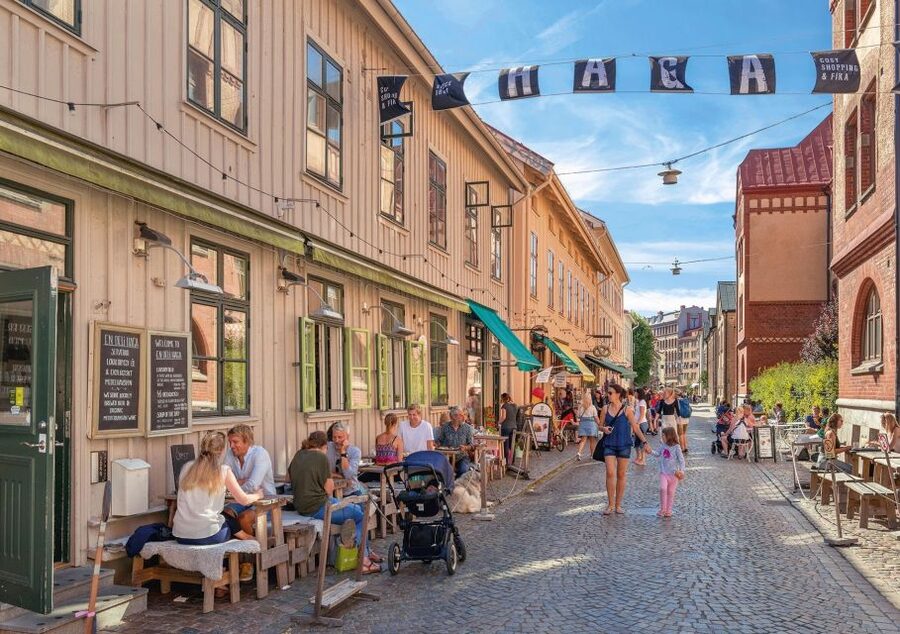
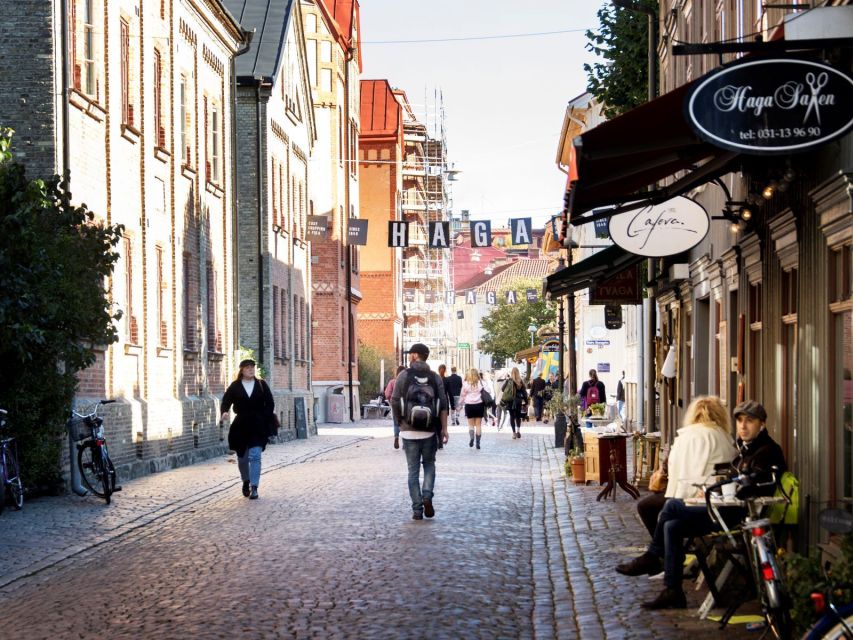
Haga is where Gothenburg’s past feels close enough to touch. Along Haga Nygata, old wooden homes, cafés, and small shops create a pleasant 19th-century mood, while stories about poverty, local life, and the district’s transformation give the pretty streets some needed depth. The tour also reaches Skansen Kronan, a hilltop fort with broad views over the city.
I like the way this walk connects Haga to the wider story of Gothenburg, rather than treating the neighborhood as a collection of photogenic buildings. I also like the strong local angle: guides such as Sarah, Sara, Kalina, and Luka have shared tips on food, Swedish culture, and what to do after the walk. The main consideration is the steep climb to Skansen Kronan, which may be hard for anyone with limited mobility.
Key points to know before booking

- Haga Nygata sets the scene: See preserved wooden houses, cafés, delicatessens, and independent shops along the district’s best-known pedestrian street.
- The tour goes beyond pretty façades: Learn how Haga changed from a poor and rough 19th-century area into one of Gothenburg’s most fashionable neighborhoods.
- Skansen Kronan adds a climb: The former hilltop fort brings fine city views, but the ascent is steep and should not come as a surprise.
- Small groups can feel personal: Several departures have been private or nearly private, with time for questions and tailored recommendations.
- Guides explain modern Sweden too: Expect conversation about education, parental leave, daily life, food, and local customs alongside the older stories.
- Plan for 1.5 to 2 hours: The published timing varies, and at least one walk lasted exactly two hours.
Why Haga is worth seeing with a guide
Haga is easy to visit on your own. You can stroll down Haga Nygata, stop for coffee, and admire the old buildings without paying for a tour. But the neighborhood’s real interest is not only its appearance. It is the contrast between what Haga was and what it has become.
Founded in the mid-17th century, Haga developed outside Gothenburg’s central core. By the 19th century, it had a poor reputation and was known as a rougher district. Today, its pedestrian streets are filled with cafés, food shops, and independent businesses. That change gives the walk a useful social angle. You are not simply looking at old houses. You are hearing how an unfashionable area became one of the city’s most sought-after addresses.
A local guide helps you read the buildings and streets. You learn why the houses look the way they do, where the district fits into Gothenburg’s growth, and how older working-class areas were reshaped. The best guides also connect the past with present-day Swedish life, something this experience does especially well.
Other walks through old Gothenburg:
- Walking Tour of Stockholm Old Town
★ 5.0 · 1,175 reviews - The Original Stockholm Ghost Walk and Historical Tour – Gamla Stan
★ 4.5 · 1,165 reviews - Stockholm: Old Town Walking Tour with Local Guide
★ 4.7 · 719 reviews
Starting outside Haga Church
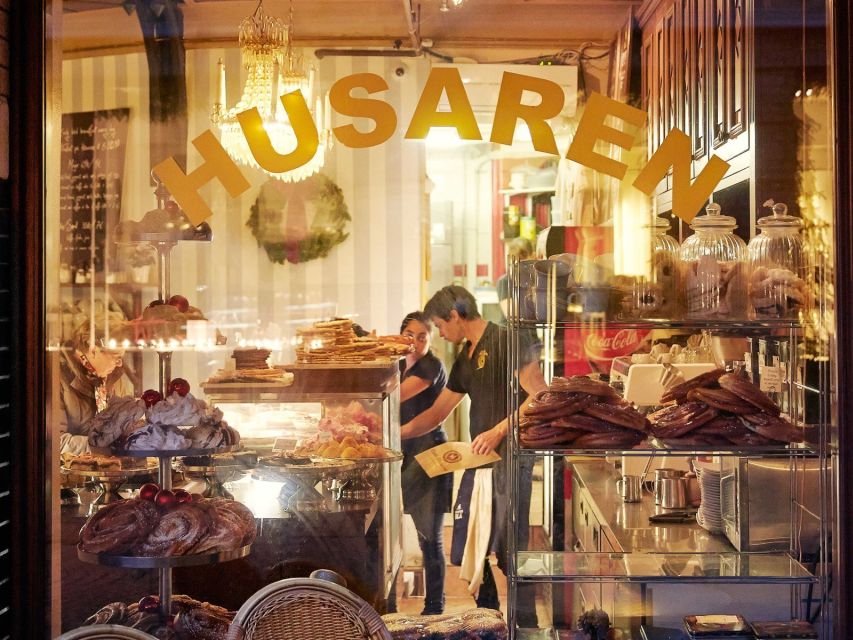
The meeting point is directly outside the main entrance to Haga Church. That is a clear landmark, but pay close attention to your final meeting instructions. One departure created confusion because some information pointed to Café Husaren on Haga Nygata while the guide was waiting at the church. The guide waited, but the walk began about 15 minutes late.
That is a useful practical lesson: arrive at Haga Church and check the latest details before setting off. The church also gives you a sensible place to orient yourself before the walk begins.
Your guide speaks English, and the experience is offered as a live walking tour. The guide names praised in past departures include Sarah, Sara, Kalina, Luka, Helena, Karen, and David. The consistently personal tone is one of the tour’s strengths. Even when only one person booked, the walk continued rather than being canceled, and the format became a private conversation.
Haga Nygata and the wooden houses

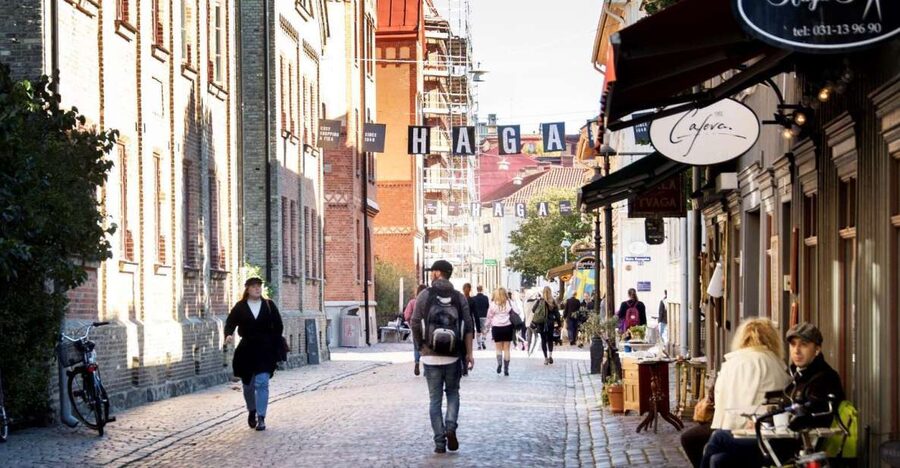
The heart of the walk is Haga Nygata, a pedestrian street lined with old wooden buildings. This is the part of Haga most people picture first: timber façades, small storefronts, cafés, and a slower pace than you find on the main city streets.
The architecture is particularly useful for understanding Gothenburg. Many buildings use the local landshövdingehus style, with a brick ground floor and wooden upper floors. Your guide points out these details and explains why individual houses matter. That turns a pleasant stroll into a lesson in how the city was built.
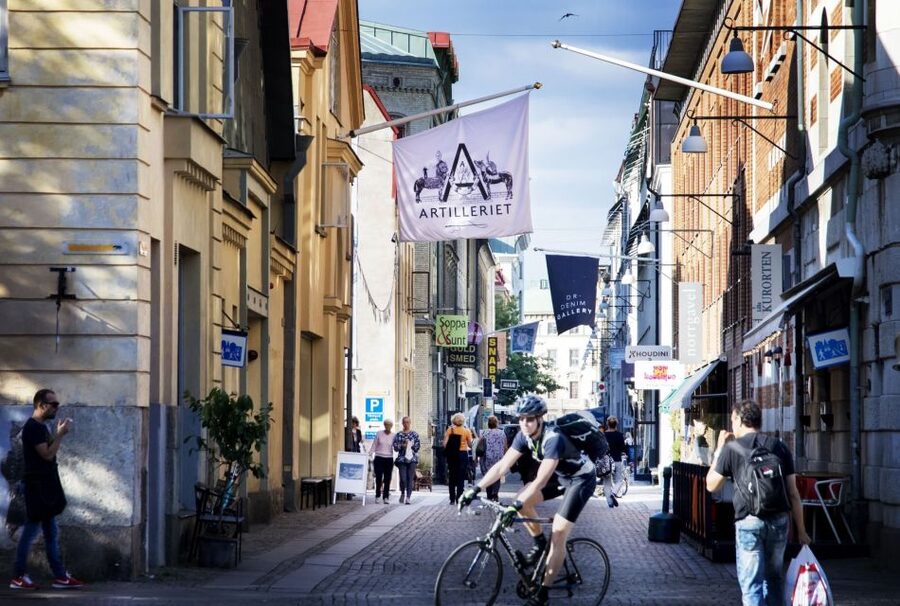
You will have chances to pause for photographs and look into the independent shops and food businesses. Still, this is not designed as a shopping tour. The shops and cafés help show how Haga functions today, while the guide supplies the background that you would likely miss while walking alone.
The street is also a good place to notice the tension between preservation and change. Haga has retained a strong old-town feel, but it is now one of Gothenburg’s hippest areas. The tour presents that shift as part of the neighborhood’s story, not as a reason to ignore its less comfortable past.
From poor district to fashionable quarter
The most valuable part of the tour is the explanation of Haga’s social history. Pretty streets can make an old neighborhood seem frozen in time, but Haga was once a slum with a seedy reputation. The guide places the houses and lanes in that earlier setting.
This is where the walk becomes more than a photo stop. You begin to understand why the district developed differently from central Gothenburg, how its residents lived, and why the neighborhood later attracted new attention. One guide described Haga as a successful example of gentrification, a useful label, though it also raises questions about what is gained and lost when an old working district becomes fashionable.
Ask questions as you go. Small groups allow you to pause for discussions about Swedish society, local politics, education, parental leave, and everyday life. Several guides have made the tour feel like a conversation rather than a memorized speech. That makes the experience a good first activity in Gothenburg, especially if you want help deciding what to do next.
A few more things to do in Gothenburg worth a look
- Gothenburg Private Walking Tour with a Local
★ 4.0 · 36 reviews - Make Your Own Tour – Guided Walking Tour
★ 4.5 · 32 reviews - Best of Gothenburg: Private Walking Tour with a Local
★ 4.6 · 24 reviews - Gothenburg : Private Walking Tour with A Guide (Private tour)
★ 4.0 · 19 reviews
The climb to Skansen Kronan
The route includes Skansen Kronan, a former fort on a hill above Gothenburg. The climb is the one part of the experience that deserves more warning than the basic description usually gives it.
The views from above are a reward. You get a wider sense of Gothenburg and see how Haga relates to the rest of the city. The hill also gives the walk some physical variety after the flatter streets below.
The ascent is steep, though, and one member of a walking party could not make it to the top. A guide adjusted the route so the group could return and meet that person. That flexibility is helpful, but you should still decide in advance if the climb suits you. The tour is described as wheelchair accessible, yet the steep approach to the fort may affect how comfortable the full route is for some participants.
If you prefer a gentle, level walk, ask about the route before booking or tell the guide at the start. If you can manage the hill, the fort and its views add real value. You see Haga from above, rather than only from street level.
Stories, folklore, and modern Swedish life
The guides do more than recite dates. They share local stories, folklore, and personal observations about Gothenburg. Sarah and Sara have been especially good at linking Haga’s past with how people live in the city today. Kalina has also received praise for discussing Swedish culture and answering questions about daily life.
That conversational style is useful if you are new to Sweden. You can ask about education, maternity and paternity leave, university costs, food, neighborhoods, and local customs. These subjects are not a formal part of a fixed museum program, but they often become part of the walk when the group is small.
You also get practical advice for the rest of your day. Guides have suggested cafés for coffee and cake, restaurants, bars with views, churches, sightseeing stops, and places to buy authentic souvenirs. This is one reason I would schedule the tour near the start of a Gothenburg visit. You can use the recommendations immediately instead of collecting them when your time is nearly over.
The Swedish coffee break, or fika, fits naturally into the Haga experience. The walking tour does not include food or a café stop as part of the price, but the neighborhood gives you plenty of places to continue on your own. One guide also recommended a separate fika tour, which may suit you if food is your main interest.
Pace, group size, and guide quality
The walk is promoted with both 1.5-hour and 2-hour timings. That difference matters if you have a train, a meal reservation, or a tight port visit. Plan on roughly two hours so you are not rushing away from the final stop.
The pace has generally been comfortable, with guides adjusting to mixed ages and different questions. The walk is still outdoors and includes the hill to Skansen Kronan, so wear sensible shoes and prepare for Gothenburg’s changeable weather. A departure continued through heavy rain and another took place during a very hot midday, with the guide adapting as needed.
Group size can change the feel of the tour. A larger group may offer more varied questions, but the strongest personal experiences came when only one to three people attended. In that setting, you can ask about Swedish life, change the emphasis, and get recommendations suited to your interests.
The guides are the main reason to book rather than simply walk Haga alone. Sarah has been described as clear, funny, and generous with her time. Sara is praised for her enthusiasm and local knowledge. Luka has been noted for entertaining explanations and old photographs that supported his stories. David handled a meeting-point mix-up with flexibility and even extended one private walk.
The quality appears consistently strong, but guide style will naturally vary. You may get more history with one person, more cultural conversation with another, and more restaurant suggestions with a third.
Is $55 a fair price?
At $55 per person, this is not the cheapest way to see Haga. The neighborhood is free to explore, and you can easily spend an hour walking Haga Nygata by yourself.
The price makes more sense if you value context and personal advice. You are paying for an English-speaking local guide, roughly two hours of interpretation, the story of Haga’s transformation, and the chance to ask about Gothenburg beyond the standard sights. A private or very small group can make the cost feel more reasonable, since you receive a level of attention that a large city tour rarely offers.
I would be less enthusiastic about the price if you only want photographs or a short independent stroll. The tour’s value comes from the stories, questions, and recommendations. Book it early in your stay, use the guide to shape the rest of your visit, and the fee becomes easier to justify.
The tour includes the walking route and professional local guide. Gratuity is not included. Cancellation is free up to 24 hours before the start, and you can reserve now and pay later, which helps if your Gothenburg plans are still moving around.
Who should book this Haga walk?
I recommend it to first-time visitors who want a quick introduction to Gothenburg with a strong local feel. It works well for solo visitors too, since the tour has continued with only one participant and can become almost private.
It also suits anyone interested in architecture, urban change, Swedish culture, or food recommendations. Families and mixed-age groups can benefit from the adaptable pace, although the Skansen Kronan climb needs consideration.
You may want to skip it if you have limited time and only want central city highlights, if you dislike uphill walks, or if you already know Haga well. In those cases, explore Haga independently and spend the $55 elsewhere.
Should you book it?
Book this tour if you want Haga explained rather than simply photographed. The wooden houses and cafés are attractive on their own, but the story of a once-poor district becoming Gothenburg’s fashionable quarter gives the area meaning.
The best plan is to take the walk early in your visit, listen for café and restaurant suggestions, and leave time afterward for fika on Haga Nygata. Just confirm the meeting point, allow two hours, and be ready for the steep route to Skansen Kronan. For most first-time visitors who enjoy local stories and conversation, this is a practical and worthwhile introduction to Gothenburg.
FAQ
Where does the Haga walking tour meet?
You meet your guide directly outside the main entrance to Haga Church.
How long does the tour last?
The activity information gives a duration of 1.5 hours, while the tour description and one confirmed experience describe a 2-hour walk. Plan for up to two hours.
How much does the tour cost?
The listed price is $55 per person.
What language is the tour offered in?
The live tour guide speaks English.
Is the tour wheelchair accessible?
The activity is listed as wheelchair accessible. The route also includes a steep walk toward Skansen Kronan, so ask about the full route if you have mobility concerns.
Does the tour include food or drinks?
No. The tour includes the walking experience and local guide, but food and drinks are not included. Your guide may recommend cafés and places for coffee and cake.
Is gratuity included?
No. Gratuity is not included in the price.
Can I cancel for a full refund?
Yes. You can cancel up to 24 hours in advance for a full refund.
Can I reserve the tour and pay later?
Yes. You can reserve your place and pay later, so you do not need to pay at the time of booking.
Just added in Gothenburg
- Paddan on Säveån★ 4.5 · 27 reviews
- Make Your Own Tour – Guided Walking Tour★ 4.5 · 32 reviews
- Gothenburg : Private Walking Tour with A Guide (Private tour)★ 4.0 · 19 reviews
- Landvetter Airport Bus Transfer Arrival★ 3.5 · 117 reviews
- 24h Gothenburg Hop-On Hop-Off Boat Tour★ 4.5 · 18 reviews
- Gothenburg Private Walking Tour with a Local★ 4.0 · 36 reviews
- Landvetter Airport Bus Transfer Departure★ 3.5 · 158 reviews
- Self Drive Electric Boat in the Canals★ 4.5 · 58 reviews
Old Town & Historic Quarter Tours, compared.


The Original Stockholm Ghost Walk and Historical Tour – Gamla Stan
Read our review →
Walking Tour of Stockholm’s Old Town, Gamla Stan
Read our review →

Old Town Guided Walking Tour (English / Deutsch)
Read our review →
Secrets of Gamla Stan Guided Tour w/ Fika Option
Read our review →
Browse the lists this tour appears in