
Reviewed · WALKING TOURS
Best of Stockholm Walking Tour-3 Hours, Small Group max 10 people
Stockholm reveals itself best on foot, and this three-hour walk gives you a brisk introduction to the city’s grand buildings, medieval lanes, royal landmarks, and Nobel connections. You’ll move from the colorful houses of Stortorget to the golden crowns of City Hall, with guides such as Berna, August, Zenid, Lise, and Michael bringing the stories into focus.
I like the small maximum of 10 people, which makes it easier to ask questions and hear the guide in busy streets. I also like the practical local advice, from restaurant suggestions such as Pelikan to tips on finding a good fika stop. The main drawback is that you do not enter the attractions, and three hours of walking can feel long in cold, icy, or wet weather.
Key points at a glance
- A compact Stockholm orientation: Cover Gamla Stan, the Royal Palace, Riddarholmen, City Hall, the Opera, and more in about three hours.
- Small-group format: The tour is limited to 10 people, allowing for questions and a more personal pace.
- History with local context: Guides explain Swedish culture, royal life, architecture, Nobel traditions, and everyday life.
- Mostly an outdoor experience: Attraction admission is not included, so you see the exteriors rather than tour the interiors.
- Strong value at $49.10: You pay for a local guide and a broad introduction, not entry tickets or transport.
- Best early in your stay: Use the walk to decide which museums, palaces, restaurants, and neighborhoods deserve a longer visit.
Why this three-hour walk works well for a first day
The route gathers many of Stockholm’s essential sights into one manageable outing. That matters because the city’s historic center can feel confusing at first, with water, islands, bridges, and old lanes dividing the main areas.
You begin at Centralplan 15, close to central transport, then head into the historic core. The tour ends in central Stockholm, but not at a fixed attraction or transport hub, so plan to make your own way onward. That open finish can be useful if you want to continue with dinner, shopping, or another museum.
A small group changes the feel of the walk. With no more than 10 people, you can ask about Swedish customs, get restaurant suggestions, or request a little more explanation at a particular stop. Several guides, including Berna and August, are praised for being patient, funny, and generous with practical advice.
This is not a food tour, and it is not a palace or museum tour. It is a city introduction built around outdoor sights. A guide may suggest a bakery or coffee stop if the group wants one, but the schedule focuses on covering Stockholm’s major landmarks.
A few more things to do in Stockholm worth a look
- Stockholm: Ghost Walk and Historical Tour
★ 4.7 · 2,206 reviews - Walking Tour of Stockholm Old Town
★ 5.0 · 1,175 reviews - The Original Stockholm Ghost Walk and Historical Tour – Gamla Stan
★ 4.5 · 1,165 reviews
Stortorget and the heart of Gamla Stan
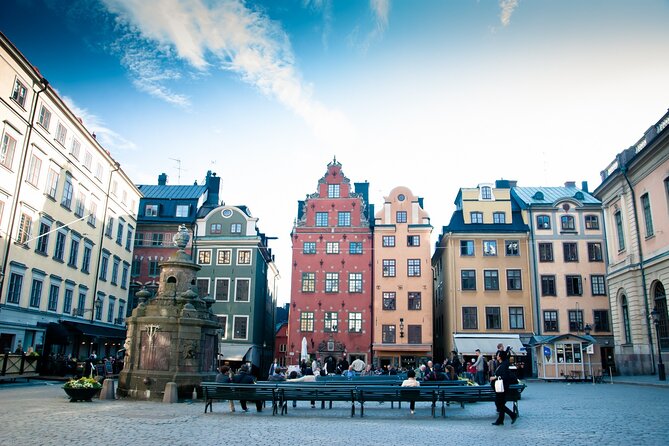
The first major stop is Stortorget, the main square in Stockholm’s Old Town. Its brightly painted historic buildings make it one of the city’s most recognizable views, but the square is more than a photo stop.
This is a good place to begin learning how Stockholm developed around its old center. Your guide can set the scene for Gamla Stan and explain why the square remains such a useful reference point. With about an hour allocated here, the opening section receives more attention than the shorter stops later in the walk.
The long opening also gives you time to get comfortable with the group and ask questions. If you want photographs, say so early. One weakness noted in the tour format is that the pace can favor explanation and movement over long photo pauses, so do not wait until the end to ask for a picture stop.
Stortorget is also home to the Nobel Prize Museum, visited later in the walk. Seeing the square first helps connect the old setting with Sweden’s modern cultural identity.
The Royal Palace and the story of Sweden’s monarchy
The Royal Palace is the official residence of His Majesty the King of Sweden. The walk pauses here for about 30 minutes, giving you time to look at the exterior and hear about its role.
This is one of the tour’s strongest stops for visitors who want a broad sense of Swedish history without committing to a full palace visit. You can learn why the building matters, how it fits into the old city, and what the monarchy means in present-day Sweden.
Keep your expectations clear: the palace is not entered. Admission tickets are not included, and the experience here is guided sightseeing from outside. If the palace interiors are high on your list, use the guide’s introduction to decide if you want to return independently.
The route also includes a second short Royal Palace stop later. That may feel repetitive on paper, but it can make sense as the group moves through different parts of Gamla Stan and revisits the palace from another position. Still, anyone seeking a detailed palace visit should allow separate time and budget for admission.
St. George, Storkyrkan, and medieval stories
The statue of St. George battling the dragon gets only about five minutes, but it adds a memorable piece of medieval symbolism to the walk. Your guide can connect the sculpture with Stockholm’s old religious and civic traditions.
Nearby, Storkyrkan, or Stockholm Cathedral, receives another short stop. It is the main church of Gamla Stan and houses the St. George and dragon sculpture. The cathedral is an important landmark, but admission is not included, so you will generally be viewing it as part of the outside walk unless you arrange a separate visit.
These brief stops show both the strength and limit of the tour. You see a great number of important places, but you do not get a long, quiet look inside each one. I would treat them as useful previews rather than complete visits.
If religious art or old church interiors matter to you, mark Storkyrkan for a return visit. The guide’s explanation can help you notice more when you come back on your own.
Same base, a different kind of day out:
- Stockholm: City Archipelago Sightseeing Cruise with Guide
★ 4.3 · 10,798 reviews - Stockholm: Skansen Open-Air Museum Admission Ticket
★ 4.5 · 3,427 reviews - Stockholm: Archipelago Boat Tour
★ 4.4 · 3,110 reviews - Stockholm: Highlights Boat Tour
★ 4.3 · 2,542 reviews
Riddarholmen and the city’s island setting
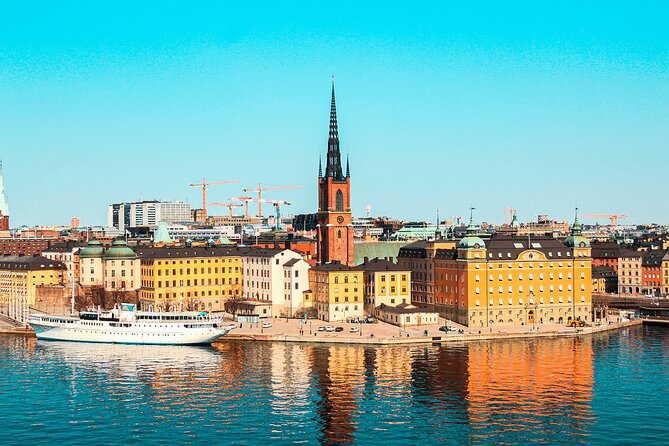
Riddarholmen, known as the Knights Islet, helps explain Stockholm’s geography. The route uses this small island to show how Gamla Stan was founded and to point out its own palace, described as the first palace in Stockholm.
This stop is valuable because it shifts your view from individual buildings to the shape of the city. Stockholm is spread across islands, and the water and bridges are part of its identity. From here, you can better understand why the historic center feels compact but never quite simple.
Only about five minutes are assigned to Riddarholmen, so you should expect a quick orientation rather than a full island walk. The stop is free, but the guide’s time is limited. If you enjoy city views and old architecture, this is one place where you may want to linger after the official tour ends.
City Hall and the three golden crowns
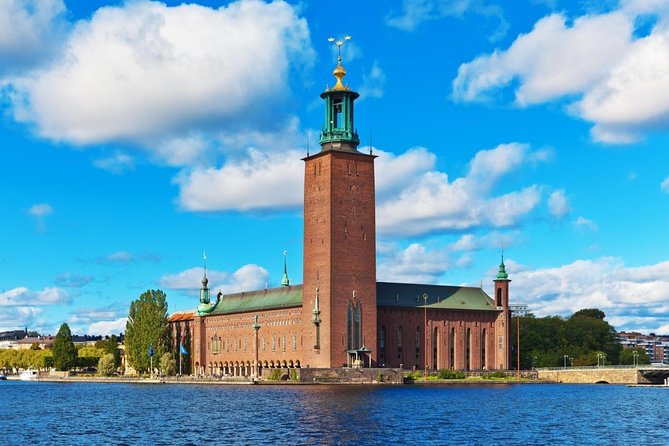
Stockholm City Hall is marked by its three golden crowns, a symbol closely associated with Sweden. The walk allows about 15 minutes here, enough to appreciate the building’s outside appearance and hear why it is nationally important.
City Hall is also tied to the Nobel Prize ceremonies, which gives this stop a useful connection to the Nobel Prize Museum later in the route. The tour does not take you inside, and tickets are not included, so do not expect the famous interior rooms or a formal hall visit.
For many people, City Hall is one of the most photogenic landmarks on the route. The short stop works well as part of a broad city walk, but a dedicated City Hall visit would require a separate ticket and more time.
Mårten Trotzigs gränd, Stockholm’s narrowest alley
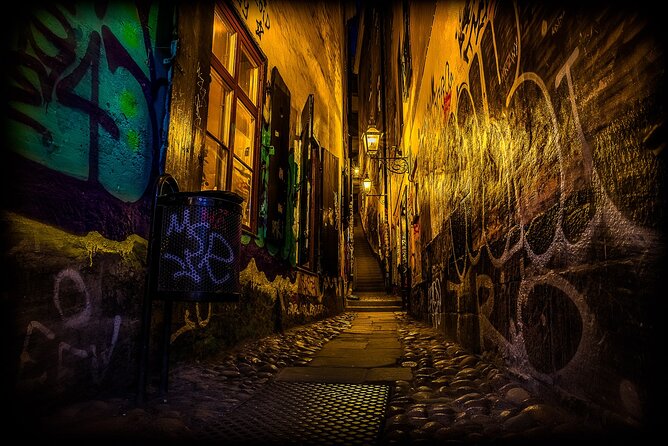
Mårten Trotzigs gränd is a quick but entertaining stop. This narrow lane gives you a close look at the tight medieval street pattern that still shapes Gamla Stan.
You will have about five minutes here, which is enough to walk through and take a few photographs. It is not a major museum or grand monument, but it provides a change of scale after the palace and City Hall. The alley helps you see that old Stockholm is not only about large landmarks. Its character also comes from cramped passages and uneven historic streets.
Wear shoes with a secure grip. The walk can include uneven or icy surfaces in winter, and one guide took particular care to help a participant avoid slipping. Weather makes a real difference to this experience, so dress for the forecast rather than for the calendar.
The Nobel Prize Museum and Sweden’s cultural identity
The Nobel Prize Museum receives about 10 minutes. It is connected with the Nobel Prize and the Swedish Academy, including the institution associated with deciding the literature prize.
This is a short exterior and orientation stop, not a museum visit. Admission is not included, so anyone who wants the exhibits, objects, and fuller Nobel story will need to return separately.
Even with limited time, the stop adds useful cultural balance. The walk is not only about kings, churches, and old buildings. It also points to Sweden’s global role in science, literature, and public life.
I especially like this part for visitors who have heard of the Nobel Prize but have not connected it with a specific place in Stockholm. The guide can give you a starting point, then you can decide if the museum deserves more of your afternoon.
The Royal Swedish Opera and the route back through the center
The final listed sight is the Royal Swedish Opera, with about 15 minutes devoted to the building. This gives the walk a graceful finish and brings you beyond the tight lanes of Gamla Stan into a more open central setting.
The Opera is another exterior stop, with no admission included. Its value here is as part of the city’s cultural map. After seeing royal, religious, civic, and Nobel landmarks, you get a final look at Stockholm’s performing arts tradition.
Because the tour ends in the city rather than at a specified attraction, you can continue on your own. You may want to ask the guide for a restaurant or coffee recommendation before saying goodbye. Past guides have suggested places to eat and shop, and one guide even walked with a participant to a shop after the formal tour.
What $49.10 gets you
At $49.10 per person, this tour sits in a sensible range for a three-hour guided introduction, especially with the group capped at 10. The value comes from having a local person organize the route, explain the sights, answer questions, and help you understand what deserves a closer look later.
You are not paying for palace, church, museum, or City Hall entry. You also pay separately for food, drinks, public transport, and gratuities. That makes the price easy to understand, but you should compare it with your plans. If you want interior visits, buying separate admission tickets may add a noticeable amount to your day.
The tour is strongest when you are new to Stockholm and want context quickly. A guide can point out the places you would otherwise pass without understanding, then give you ideas for the rest of your stay. The value is less clear if you already know Gamla Stan well or prefer exploring slowly by yourself.
Group size, pace, and weather
The maximum group size of 10 is one of the clearest advantages. A small group makes it easier to hear the guide on city streets and gives you a better chance to ask about Swedish life, restaurants, shopping, and local customs.
The pace is active. The route covers many sights in about three hours, and one practical estimate suggests allowing three to four hours of walking once pauses and movement are considered. You should be comfortable standing and walking for much of the outing.
Weather deserves serious attention. Cold and icy conditions have affected the route before, and uneven surfaces can make Gamla Stan harder to cross. Bring suitable shoes, check the forecast, and ask for photo or coffee pauses if you need them.
This is a good fit for solo visitors, couples, and first-time arrivals who want structure without a large coach group. It can also suit families and older participants who are comfortable walking, but the tour does not promise a special slower pace.
Booking details worth checking before you go
The tour is offered in English and includes an English-speaking local guide. Confirmation is sent at booking, service animals are allowed, and the experience is near public transportation. Most people can participate, but the walking demands and weather still matter.
Reconfirm the meeting point before the start time. A previous meeting point changed, and one participant only learned about the new location late. The stated meeting point is Centralplan 15, 111 20 Stockholm, but checking the latest instructions is a simple way to avoid a rushed beginning.
Free cancellation is available if you cancel at least 24 hours before the scheduled start. Cancellations or changes made within 24 hours are not accepted for a refund, and the cut-off uses local Stockholm time.
Should you book this Stockholm walking tour?
I would book it if you want a friendly, fast-moving introduction to Stockholm, especially on your first day. The route covers the landmarks most people want to recognize, while the small group leaves room for questions and useful advice from guides such as Berna, August, Zenid, Lise, and Michael.
Choose a different experience if your priority is entering attractions, lingering for photographs, stopping for a full meal, or walking at a very slow pace. This tour is about orientation and stories, not lengthy indoor visits.
For the best use of the $49.10 price, take the walk early in your stay, note the places you want to revisit, and ask your guide for restaurant, fika, and neighborhood suggestions. If you want a broad view of Stockholm in three hours and can handle the weather, this is a practical choice.
FAQ
How long does the Stockholm walking tour last?
The tour lasts approximately three hours. Because it involves continuous sightseeing on foot, you should be prepared for roughly three to four hours of walking, depending on the pace and pauses.
What is the maximum group size?
The public walking tour has a maximum of 10 travelers. This keeps the group small enough for questions and direct conversation with the guide.
Are attraction admission tickets included?
No. The tour does not enter the attractions, and admission tickets for places such as the Royal Palace, Storkyrkan, City Hall, and the Nobel Prize Museum are not included.
Where does the tour start?
The stated meeting point is Centralplan 15, 111 20 Stockholm, Sweden. Reconfirm the meeting instructions before the start because the meeting point can change.
Is food included?
No. Food and drinks are not included. A guide may suggest a café, bakery, or restaurant, but this is a sightseeing walk rather than a food tour.
What is the cancellation policy?
You can cancel for a full refund up to 24 hours before the experience begins. Cancellations or changes made less than 24 hours before the start time are not accepted for a refund.
Just added in Stockholm
- Stockholm: Guided Kayak City Tour & Optional Midsummer Meal★ 4.6 · 170 reviews
- Stockholm City Kayak Tour★ 5.0 · 194 reviews
- Stockholm: Winter Kayaking, Swedish Fika and hot Sauna Experience★ 5.0 · 156 reviews
- 1-Day Small-Group Stockholm Archipelago Kayak Tour★ 5.0 · 266 reviews
- Stockholm: 2-Hour RIB Speed Boat Tour of the Archipelago★ 4.9 · 396 reviews
- Stockholm Food Tour★ 4.5 · 404 reviews
- Stockholm Private Golf Cart Tours★ 4.8 · 444 reviews
- Walking Tour of Stockholm’s Old Town, Gamla Stan★ 5.0 · 451 reviews
Walking Tours, compared.

Reykjavik Food Walk – Local Foodie Adventure in Iceland
Read our review →
Reykjavík Small group Walking Tour – by CityWalk
Read our review →


Past & Present Small Group Guided Walking Tour
Read our review →
Walking Tour in Bergen of the Past and Present
Read our review →
Browse the lists this tour appears in