
Reviewed · TOURS IN DENMARK
Copenhagen Alternative Private Tour: Vesterbro & Christianshavn
Copenhagen’s most revealing stories are often found away from the postcard center. This private walk links working-class Vesterbro with the canals and old warehouses of Christianshavn, ending at Christiania. You move from red-light district history and Danish resistance to churches, industry, poverty relief, and counterculture.
I like the personal format and the unusual route. Guides such as Alessandro, Grazi, and Karolina have been praised for answering questions, sharing local stories, and adjusting the walk to individual interests. I also like the chance to see places such as Stjerne Radio, the old shooting-range wall, and Maria Church. The main drawback is price: at $147.96 per person, value depends heavily on your group size and whether you choose the Full Option with the tasting and drink.
Key points at a glance
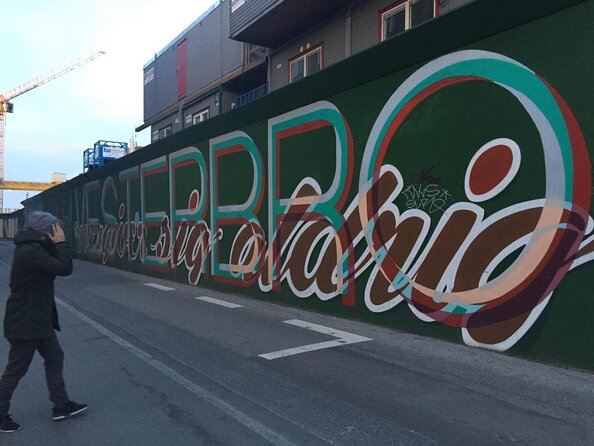
- A private route through two very different districts: Walk from Vesterbro’s working-class streets and wartime sites to Christianshavn’s canals, mansions, churches, and former industrial buildings.
- Strong social and political context: The walk covers overcrowded housing, homelessness services, the Danish resistance, the old red-light district, and Christiania.
- Personal guiding is the main value: Your guide can respond to your questions and interests instead of delivering a fixed group lecture.
- The Full Option adds food: A local tasting, drink, and lunch in a classic Danish restaurant are included only with the Full Option.
- Christiania is the final stop: The guide cannot accompany you inside, so you explore that part on your own.
- Plan for a long city walk: The tour lasts about 3 hours 30 minutes to 4 hours and continues in rain, with metro tickets included.
Why this route shows you a different Copenhagen

This is not a tour built around royal palaces and polished squares. It follows the city through places shaped by factory workers, sailors, soldiers, artists, homeless people, resistance members, and people who wanted to live outside normal rules.
That gives the walk a useful thread. You begin at Viktoriagade, where an old moat was covered and replaced by a street, then move through Vesterbro’s theaters, former butcher shops, modest housing, and wartime landmarks. Later, the mood changes in Christianshavn, where old merchant houses, naval buildings, canals, and churches reveal Copenhagen’s trading and military past.
I would choose this experience if you have already seen the standard center or if you want a guide to explain how Copenhagen’s neighborhoods changed over time. It is also a good pick for a private group that likes to ask questions. If you want a food tour, a museum tour, or a slow architectural walk with many interior visits, this may not be the right match.
A few more things to do in Copenhagen worth a look
- Private Walking Grand Tour of Copenhagen
★ 5.0 · 3,953 reviews - Politically Incorrect Private Highlights Walking Tour
★ 5.0 · 1,244 reviews - Bike Tour Copenhagen. Private Guide, Concierge Service, Small Grp
★ 5.0 · 416 reviews
Viktoriagade and Vesterbro’s changing face
The meeting point is Viktoriagade 8. The street sits on land that once formed part of Christian IV’s fortifications, protected by a moat. By the mid-20th century, the moat had become more like an open sewer, so the street was built over it.
The surrounding lots began to be sold in 1856. Several buildings were created for charitable purposes, including homes for officers’ widows. Numbers 8, 10, and 12 date from the mid-1800s and are protected buildings. This is a small opening stop, but it gives you a useful lesson: Copenhagen’s streets often cover earlier layers of defense, water, housing, and public need.
From here, the walk reaches Det Ny Teater. Opened in 1908, it was designed to provide a large theater while also creating a passage between Gammel Kongevej and what is now Vesterbrogade. You spend only about ten minutes here, so this is mainly an exterior stop and a quick piece of urban design history.
Værnedamsvej adds another layer. Its name comes from Werner Dam, an 18th-century beer collector who bought land here and opened a popular beer garden. The street was also called Slagtergaden, or Butchers’ Street, because of the number of butchers working in the area.
Saxogade, Skydemuren, and working-class life
At Saxogade, the story turns from street names to living conditions. In the early 1950s, residents sent a large protest letter about miserable housing. Many families lived in tiny one-room apartments, sometimes with as many as ten people sharing the space.
The point is not simply that the buildings were old. These homes belonged to a neighborhood first shaped by factory workers who had come from the countryside looking for better lives in the city. Housing reform mattered most to families with children, who had little space, privacy, or comfort.
Your guide can help connect this local story to the wider growth of Copenhagen. The short stop is more valuable if you ask how the neighborhood changed and what became of the old working-class population. The tour does not promise interior visits, so expect to learn from the street rather than from restored rooms.
Skydemuren, or the shooting-range wall, makes an unusual stop. Its castle-like wall was built as a bullet trap to protect people on Istedgade from projectiles fired from the Royal Danish Army’s shooting range. The former range is now Skydebanehaven.
The wall also creates the visual endpoint of Skydebanegade, a street lined with uniform, richly decorated houses. It is a good example of how a practical military structure became part of the city’s architecture. This is the kind of detail that is easy to miss if you walk through Vesterbro without a guide.
Istedgade and the Danish resistance
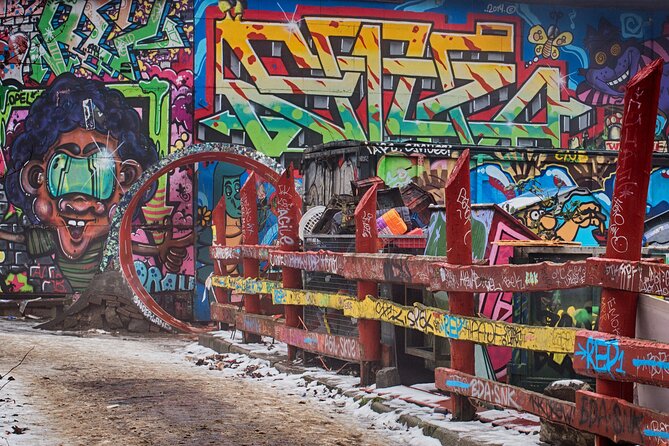
Istedgade is one of Vesterbro’s key streets. It takes its name from the 1850 Battle of Isted during the First Schleswig War, but its modern reputation comes from several different chapters.
During the Second World War, the street served as a refuge for the Danish resistance. Later, it became known for drug problems and for being part of Scandinavia’s largest red-light district. Those facts can sit uneasily beside one another, and that is precisely why the street is worth seeing with context.
At number 31, Stjerne Radio opened in 1942. Its operators, Carl Munck and J. K. Søndergård, transmitted the BBC’s English broadcasts through loudspeakers. The shop became an important part of the Danish resistance.
This stop gives the wartime story a human scale. Instead of hearing only about armies and official leaders, you see how a small business could help people receive news that authorities did not control. Allow about 15 minutes here, enough time for your guide to explain the site and answer questions.
Same base, a different kind of day out:
- Copenhagen: Canal Cruise with Guide
★ 4.6 · 9,115 reviews - Copenhagen: Hop-On Hop-Off Bus Tour with Boat Tour Option
★ 3.9 · 4,122 reviews - From Copenhagen: Lund and Malmö 2-Country Tour
★ 4.7 · 2,772 reviews - Copenhagen Highlights Walking Tour
★ 5.0 · 2,324 reviews
The Meatpacking District and old market buildings
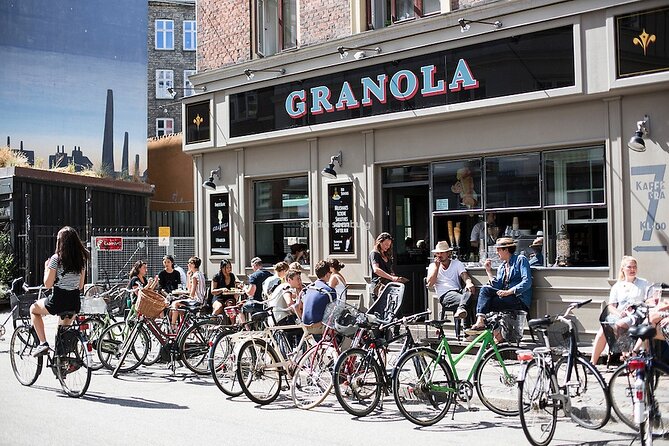
The route continues toward the Meatpacking District, now known for restaurants and nightlife. Its present-day use is only part of the story. The area once handled animals, hay, merchants, and the business that fed Copenhagen.
Oksnehallen belongs to the brown section of the Meatpacking District. Built in 1891, it housed merchant offices and could hold 1,600 cattle. The market remained active until the White Zone opened in the late 1950s.
You also visit Halmtorvet, Copenhagen’s former hay market. The market originally sat just inside the Western City Gate at what is now City Hall Square. It moved in 1888 to the area outside the new livestock market, which had opened in 1879.
On Wednesdays and Saturdays, several hundred loads of hay and straw could be traded and sent to stables around the city. Today, the square looks very different, so the guide’s explanation matters more than the view alone. You get a sense of the practical work that once took place here, before the area became a dining and nightlife district.
Churches and social care on Istedgade
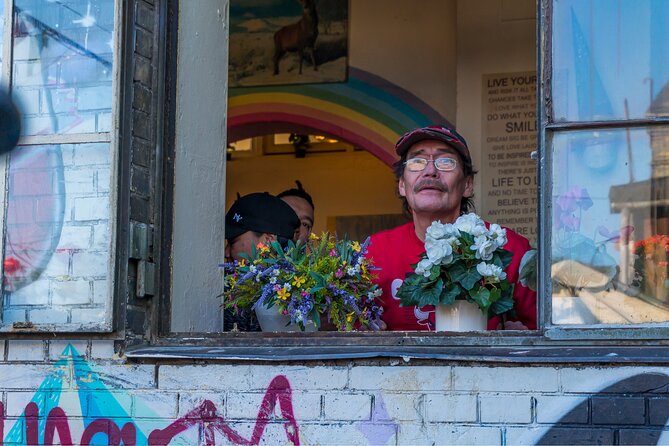
The tour does not present Vesterbro only as a place of nightlife or old industry. It also points to the institutions that have supported people in difficulty.
The Men’s Home for homeless people was established in 1910. It is a private organization supported by the Danish state, designed to help homeless and vulnerable people use their own resources, build stable lives, and take part in society.
Nearby, Maria Church opened in 1909. Today it provides shelter and support for homeless people, families in need, and socially marginalized groups. Its daily work includes spiritual and economic help for people such as undocumented immigrants, drug users, sex workers, and others whose lives are criminalized.
These are short stops, only about five minutes each, but they add social depth to the route. You are not simply seeing handsome facades. You are seeing how religious and civic institutions respond to problems that are still part of city life.
Lunch, tasting, and the value of the Full Option
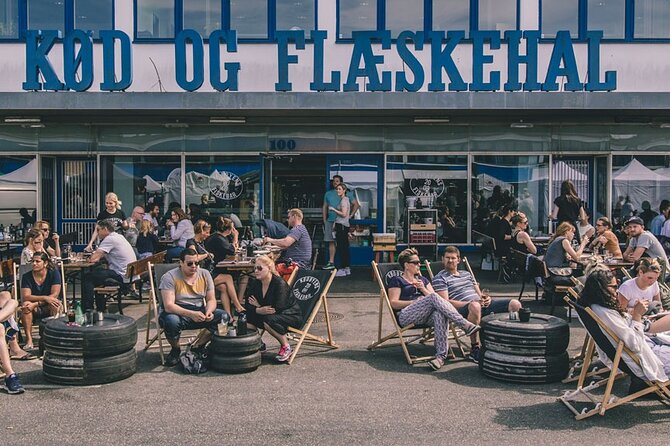
The Full Option includes lunch in a classic Danish restaurant, along with a local tasting and a drink. The tasting is a small part of the experience, not a full food tour, so set your expectations correctly.
This distinction matters because one person who booked the walk expected a larger food-focused experience and felt disappointed when the meal and drink were not part of the selected arrangement. The provider also explains that the tasting is included with the Full Option. Check exactly which option you are buying before you pay.
At $147.96 per person, the cost is easier to justify for a small private group that wants a guide’s full attention. It is harder to justify if you mainly want a basic orientation walk or if your group is large enough that a lower-cost shared tour would suit you.
The tasting can also give the middle of the tour a welcome pause. Still, lunch takes time, and the route already covers a lot of ground. If you have a cruise departure or a tight afternoon schedule, tell the guide at the start. One shortened tour lasted about three hours because the group chose to skip lunch and save time.
København H and the crossing to Christianshavn
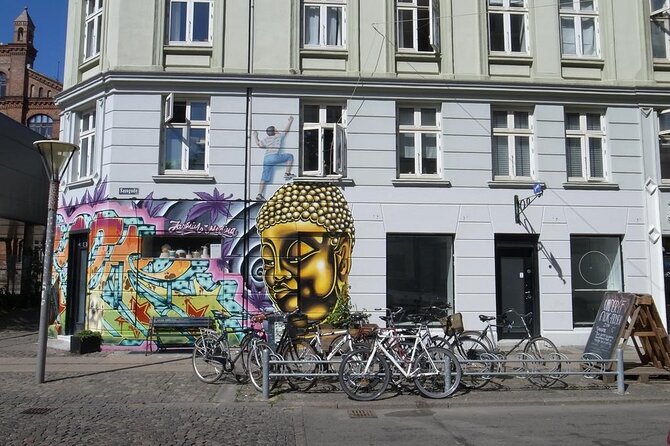
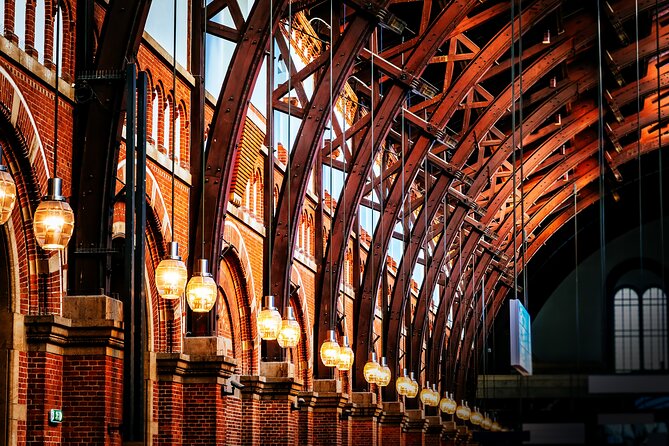
København H, Copenhagen Central Station, was built in 1911 and takes inspiration from the city hall style. It is Denmark’s largest railway station by size, with seven platforms and 13 tracks, although Nørreport has the highest daily passenger flow.
This is both a transport landmark and a practical transition point. Metro tickets are included, though one group completed the walk without needing to use the metro. The exact use depends on the pace, route, and choices made during your private tour.
The walk then crosses Knippelsbro, a 115-meter drawbridge linking Copenhagen with Christianshavn. The present bridge dates from 1937, while its name goes back to Hans Knip, who operated the bridge and collected tolls from ships in 1641. He reportedly lived with his family on the bridge.
The crossing marks a clear change in atmosphere. Vesterbro’s streets carry the weight of housing, industry, and social problems. Christianshavn brings canals, old warehouses, merchant wealth, naval buildings, and quieter residential streets.
Christianshavn’s churches, merchants, and shipbuilders
Christians Kirke is a Rococo church built between 1754 and 1759. It was first called Frederik’s German Church and served Copenhagen’s German-speaking congregation. The church is a reminder that the capital was tied to several language groups and trading communities.
At Strandgade 4, the route turns to industrial history. The building once housed the DieselHouse Museum, which has since moved to Copenhagen’s southwest district. Its story reaches back to B&W, founded in 1843 as a one-man smithing workshop and later one of Denmark’s largest workplaces.
B&W became a major symbol of Danish industry from 1865 to 1979. The site helps you see Christianshavn not just as a pretty canal district, but as a place where large numbers of people worked in shipbuilding and engineering.
Asiatisk Plads was once the base of the Danish Asia Company, which operated from 1732 to 1843. Today, the area houses the Ministry of Foreign Affairs and a convention center. The change from merchant company to government district reflects Copenhagen’s shift from trading power to modern administration.
Sankt Annæ Kirke and the nearby listed houses add a smaller architectural scale. Houses numbered 8 to 22 include remains of some of Copenhagen’s oldest homes, dating to about 1650. Number 14 is the best preserved.
Wildersgade is another quiet pleasure. The street dates from the founding period of Christianshavn, around 1617 to 1622. You see cobblestones, mansions, old houses, and warehouses from the 18th and 19th centuries.
The route also includes Wilders Plads, once a busy market square and now a restful place beside the water. Its marina is among the most expensive in Copenhagen and is reserved for yacht club members. Look for Wilders Plads 10, a two-story timber-framed building from 1736, originally used as a sailmaker’s workshop and home.
A large yellow Neoclassical building from 1754 to 1756 was once a naval hospice. It later housed the Danish Naval Museum until 2016. These stops are brief, so your guide’s explanation helps you notice details you might otherwise pass without a second look.
Our Saviour’s Church and the final approach
Church of Our Saviour is one of Christianshavn’s best-known landmarks. Its Baroque design is easy to recognize, especially the twisted spire with an outside spiral staircase leading toward the top.
The church remains an active parish church serving about 8,000 people. The tour does not list a climb or a guaranteed interior visit, so you should treat this as a stop for viewing and explanation rather than a tower experience.
The route also passes a former defense zone created under Christian IV. Its purpose was to complete the capital’s protective ring and guard against Swedish attack. This brings the walk back to the military foundations introduced at Viktoriagade.
Christiania: a self-guided finish
The final stop is Freetown Christiania, founded in 1971 by hippies who occupied former military land after the Danish army abandoned it. About 1,000 people live in the partially self-governed community, which covers roughly 34 hectares.
Christiania is one of Copenhagen’s most visited places, with about half a million visits each year. It is also a car-free area, and the community has its own rules and character.
There is an important practical limit: your guide is not allowed to enter Christiania with you. The tour ends at the entrance, and you explore the area independently. I see this as both a weakness and a useful warning. You do not get a guided explanation inside, but you do have the freedom to look around at your own pace.
Since Christiania is the endpoint, plan your next move before you begin. The listed end point is Freetown Christiania, not the original meeting point.
Who should book this private walk?
Book it if you want local context rather than a checklist of famous sights. The route suits curious first-time visitors who want to understand Copenhagen’s social history, as well as repeat visitors who have already covered the central squares and royal attractions.
It also suits couples, families, and small groups who value conversation. Guides including Alessandro, Grazi, and Karolina have been praised for personal attention, local stories, and adapting the walk to questions and interests.
You should think twice if you dislike long walks, need a fully indoor activity, or want a dedicated food experience. The tour continues in rain, most admission is to outdoor places, and the many short stops can feel rushed if you want extended visits.
Free cancellation is available up to 24 hours before the start time. Service animals are allowed, public transport is nearby, and most people can participate, but the route still involves several hours on city streets.
FAQ
How long does the tour last?
The private tour lasts approximately 3 hours 30 minutes to 4 hours. One group completed a shortened version in about three hours after choosing to skip lunch due to a cruise schedule.
Where does the tour begin?
It begins at Viktoriagade 8, 1620 Copenhagen, Denmark.
Where does the tour end?
The tour ends at Freetown Christiania in Copenhagen Municipality.
Is the tour private?
Yes. Only your group participates, with a local English-speaking guide.
Is food included?
A local tasting and a drink are included with the Full Option. Lunch in a classic Danish restaurant is also included only with the Full Option. The experience is not presented as a full food tour.
Does the guide enter Christiania?
No. The guide is not allowed to accompany you inside Christiania, so you explore that final stop independently.
Does the tour operate in bad weather?
Yes. The tour is not cancelled because of rain. Metro tickets are included, and the experience is offered in English.
Should you book it?
I would book this walk if you want Copenhagen explained through its working streets, old industries, social institutions, and independent communities. The route is unusually broad, and the private format lets you ask about the parts that catch your interest.
The price makes the most sense for a small group choosing the Full Option and using the guide’s time well. Before booking, confirm what is included in your selected option, bring shoes suited to several hours of walking, and allow time to explore Christiania on your own. If those details fit your plans, this is a strong choice for seeing a less polished but more revealing side of Copenhagen.
Just added in Copenhagen
- a day at North Zealand Castle Tour★ 4.5 · 19 reviews
- Copenhagen Walking Tour: Highlights and Hygge w/Lunch★ 5.0 · 272 reviews
- Exhibition – Home of Carlsberg★ 4.5 · 281 reviews
- The Six Forgotten Giants Trolls Hunt with Minibus★ 4.5 · 27 reviews
- The Hunt For The Six Forgotten Giants★ 5.0 · 45 reviews
- Politically Incorrect Private Hidden Gems Walking Tour★ 5.0 · 270 reviews
- THE TUBE – Copenhagen: an immersive Experience★ 4.0 · 124 reviews
- Malmö Full Day Private Trip, Sightseeing Tour & Lunch Option★ 5.0 · 93 reviews
Tours in Denmark, compared.
Highlights 3 Hour Bike Tour with a Local Guide
Read our review →
Hamlet and Sweden Tour – Two Countries in one day !
Read our review →
Copenhagen Sightseeing Classic Canal Tour With Live Guide
Read our review →
Kronborg, Frederiksborg Castle and Roskilde Tour
Read our review →Browse the lists this tour appears in