
Reviewed · TOURS IN DENMARK
Copenhagen: King’s Garden Outdoor Escape Room Game
The missing crown jewels turn Copenhagen’s King’s Garden into a phone-based detective case. You follow clues, solve puzzles, and help H.C. Andersen uncover what happened to the treasures usually kept at nearby Rosenborg Castle. It is a clever way to add a little purpose to a stroll through one of central Copenhagen’s prettiest public spaces.
I like the freedom to stop and restart the game, and I like that you can choose between two difficulty levels. The flat garden is easy to walk, the activity costs $17 per person, and a group of up to seven can play together. The main caution is that this is a self-guided game, not a city tour, and some of the phone puzzles may feel more like interruptions than clues.
Key points at a glance

- A crown-jewel mystery in King’s Garden: Your mission centers on the missing royal treasures connected to Rosenborg Castle.
- A smartphone-led walk of up to two hours: You solve each challenge on your own phone while moving through the garden.
- Two difficulty levels: Pick the setting that suits your group, then compete with other teams if you want extra pressure.
- A family-friendly group size: Up to seven people can play together, making this practical for families and small groups.
- A flat route with no live guide: Walking is straightforward, but you must navigate and interpret the game without personal help.
A detective case beside Rosenborg Castle

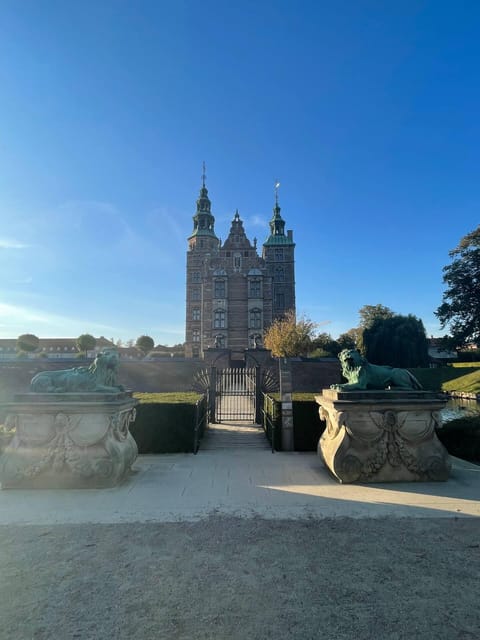
The story begins with a serious problem for the royal collection: the crown jewels are missing. They are normally kept at Rosenborg Castle, which you can see from King’s Garden, but the game shifts the action into the park. Your role is to investigate what happened and help save the future of the garden.
That setup gives the walk a clear purpose. Instead of simply wandering among lawns, statues, and paths, you look for the next clue and pay attention to your surroundings. The historical setting does some of the storytelling for the game. Rosenborg Castle provides the royal connection, while the garden supplies the places where the case unfolds.
H.C. Andersen is part of the adventure, too. You are asked to help the famous Danish writer as you work through the mystery. The information provided does not name a live performer or guide, so do not expect an actor waiting in the garden. Andersen is part of the game’s story, not a person leading your group.
This distinction matters. If you want a traditional guided visit with spoken stories about Copenhagen, this will feel limited. If you enjoy a puzzle with a setting attached, the format makes a familiar park more playful.
Other trips people book in Copenhagen:
- Copenhagen: Canal Cruise with Guide
★ 4.6 · 9,115 reviews - Copenhagen: Hop-On Hop-Off Bus Tour with Boat Tour Option
★ 3.9 · 4,122 reviews - Private Walking Grand Tour of Copenhagen
★ 5.0 · 3,953 reviews
What the walk through King’s Garden is like
The route takes up to two hours, although your actual pace will depend on how quickly your group solves each challenge. You walk through the garden while using your smartphone to receive tasks and work out answers.
The garden is flat, so you do not need to prepare for hills or a demanding hike. Comfortable shoes still make sense, especially if your group takes time over the puzzles or pauses to look at the statues. Bring clothing suited to the weather because this is entirely outdoors.
The garden is open from 8am to 7pm in summer and from 8am to 5pm in winter. Those hours shape your planning. A winter afternoon gives you less time before closing, while a summer visit allows more flexibility. The game is valid for two days, which means you have a window to use it rather than one fixed, continuous two-day experience. Check the available starting times when booking.
Your exact meeting point arrives by email after booking. Read that message before setting out. King’s Garden is large enough that arriving at a general park entrance may not put you beside the first clue.
Solving the missing crown jewels

The central task is a mix of observation, deduction, and phone-based brain games. You work as a team rather than following a guide from one attraction to the next. The goal is to find the answers that move the story forward and eventually solve the case.
That team format works best when everyone has a job. One person can read the instructions, another can study the surroundings, and another can enter answers or test solutions on the phone. With seven people, appointing one person to manage the phone helps prevent the group from becoming a committee of seven fingers poking at one screen.
The game offers two difficulty levels. That is useful for mixed groups, since children or casual players may want a gentler challenge while experienced puzzle fans may prefer a harder setting. The information does not explain the exact difference between the levels, so choose based on your group’s patience and puzzle habits.
You can also compete with other teams. This adds energy if your family or friends enjoy a race, but it is not essential to the experience. I would treat the competition as a bonus rather than the main reason to book. The setting and shared problem-solving are the real substance.
There is one important warning about the game design. Some tasks include small memory games on the phone. For people who enjoy quick digital challenges, these may be fine. For others, they can feel like filler that interrupts the detective story. If your group prefers physical clues, local history, and sightseeing, this phone-heavy approach may test your patience.
The garden and its statues
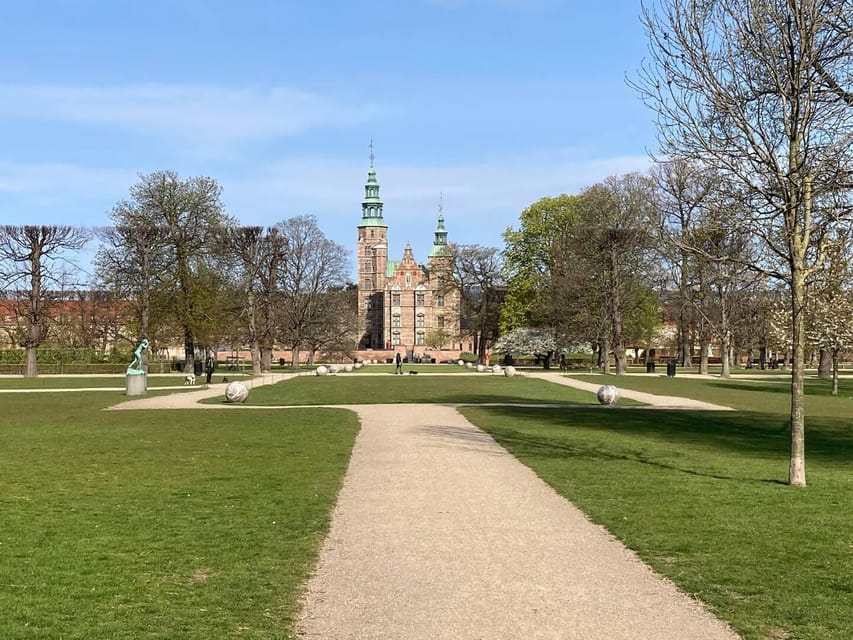
The garden is not just a playing field. It is also the place where you learn about the park and its famous statues as the case progresses. That gives the experience some cultural value beyond the puzzle itself.
Still, keep your expectations measured. This is an outdoor escape room, not a full historical tour of King’s Garden or Rosenborg Castle. The game can point your attention toward the garden’s features, but it does not replace a museum visit or a dedicated guide.
You also need to find your way through the park yourself. The game provides direction through the phone, but there is no live guide to orient you, explain a confusing clue, or give a spoken introduction. If you already know the garden, you may move around more easily. If you are visiting for the first time, allow a little patience at the start while you work out where you are.
That lack of guidance is the largest practical weakness. The experience depends on your phone, your group’s ability to follow instructions, and your willingness to solve navigation problems as part of the game. Some people will find that satisfying. Others may simply want the route marked clearly.
Same base, a different kind of day out:
- From Copenhagen: Lund and Malmö 2-Country Tour
★ 4.7 · 2,772 reviews - Copenhagen Highlights Walking Tour
★ 5.0 · 2,324 reviews - Copenhagen: Highlights 3 Hour Bike Tour with a Local Guide
★ 4.8 · 2,312 reviews - Hamlet and Sweden Tour – Two Countries in one day !
★ 5.0 · 2,223 reviews
What $17 per person buys you

At $17 per person, the price is reasonable for a two-hour group activity, especially if you divide the cost among family or friends and use the full route. You are paying for a self-guided puzzle experience in a central Copenhagen park, not admission to a major attraction.
The value depends on what you want from your afternoon. If you are looking for an inexpensive activity that gets everyone walking and talking, the price is fair. The garden itself is public, and entry to it is not the paid part of the experience. The fee covers the outdoor escape-room game on your smartphone.
Do not confuse the activity with a visit to Rosenborg Castle. Castle entry is not included. If you want to see the royal interiors or the crown jewels inside the castle, you need a separate ticket and a separate visit. The game uses Rosenborg as part of its story and setting, but it does not take you inside.
The lack of a live guide keeps the price below many guided Copenhagen activities. It also means you should judge the purchase by the quality of the game rather than by the amount of historical explanation. If your priority is personal storytelling, the money may be better spent on a guided castle visit. If your priority is a shared challenge, this is a more affordable option.
Who will enjoy this Copenhagen activity
I would recommend it most to families with children old enough to read instructions and work through simple logic problems, and to friends who like escape rooms. The flat paths make the physical side easy, while the team format gives everyone a reason to stay involved.
It can also work well as a lighter activity between museum visits. You can move at your own pace, stop the game, and continue later within the two-day validity period. That flexibility helps if rain, tired children, or a crowded schedule gets in the way.
Puzzle enthusiasts should know that this is not a room packed with physical locks and secret compartments. The experience takes place on a phone, and some of the challenges are memory games. If you expect the atmosphere and tactile surprises of a premium indoor escape room, lower your expectations.
It is also less suitable for someone who wants to see several parts of Copenhagen. The game remains in King’s Garden. It does not take you on a citywide route through different neighborhoods and major sights. That focused setting is convenient, but it limits the sightseeing.
Practical advice before you start

Charge your phone fully before arriving. The phone is the guide, game board, clue book, and answer sheet, so a low battery can end the activity early. Bring comfortable shoes and weather-appropriate clothing, even if the forecast looks friendly at breakfast.
Read the meeting-point email carefully. The exact starting place is sent after booking, and arriving at the wrong corner of the garden could waste time before the first puzzle begins.
If you are playing with a large group, remember the maximum is seven people at once. Two smaller teams can make the competition more lively, but the supplied details describe a maximum of seven for one group, so arrange bookings carefully if your party is larger.
I would also decide in advance how competitive you want to be. Racing other teams can make easy puzzles feel exciting, but rushing may cause you to miss the statues and garden details that give the route its sense of place. A relaxed group should treat the score as secondary.
The activity is wheelchair accessible, and the garden is flat. That makes the route easier physically, though the game still depends on moving around the park and using a smartphone. If anyone in your group needs specific access details, confirm them before setting out.
How the experience has performed for different groups

The strongest appeal is the combination of light exercise, shared problem-solving, and a beautiful outdoor setting. One Danish participant described the pleasure of getting excitement, information, and movement at the same time. That is a good description of the activity at its best: you are not sitting in front of a screen, but you are using one to make the park more active.
Another positive response described the game as fun and moderately tricky, with the garden itself praised as a beautiful place. That points to the right expectation. The puzzles are meant to be approachable rather than punishing, and the setting carries much of the charm.
The negative experiences are useful warnings. Some players expected a route through Copenhagen with several sights, as can happen with other city games. This activity does not do that. It stays in the park, and you may need to know the garden or pay close attention to the phone to find your way.
Other players found the story and tasks disappointing, especially the small memory games. One group stopped before finishing because the phone challenges became irritating. That is not a minor detail if your group prefers a strong narrative or traditional escape-room puzzles.
The overall rating is 3 out of 5 from 16 ratings, which fits the mixed picture. The setting and flexible format earn goodwill, but the self-guided navigation and phone-based tasks will not suit everyone. I would not book it blindly for a group with very different tastes. Agree first that everyone is happy with a park walk mixed with digital puzzles.
Booking, cancellation, and timing
You can cancel up to 24 hours before the activity for a full refund. There is also a reserve-now, pay-later option, which helps if your Copenhagen schedule is still shifting.
The booking information lists the location as the Zealand Region of Denmark, but the actual activity takes place in Copenhagen’s King’s Garden. The game is offered through EscapeTour and is played on your own smartphone.
Because there is no live guide, you do not need to coordinate with a person at each stop. You do need to check the garden’s opening hours and begin early enough to finish before closing, particularly in winter. The full walk can last up to two hours, so leave room for slow puzzle solving and pauses.
Should you book the King’s Garden game?
Book it if you want an affordable, family-friendly challenge in a flat central garden, and if your group is comfortable using a phone for clues and memory games. It is especially suitable for friends who enjoy friendly competition and families looking for something different from another museum.
Skip it if you want a guided introduction to Copenhagen, a route through several city neighborhoods, or entry to Rosenborg Castle. You should also think twice if phone puzzles quickly annoy your group.
My practical verdict is simple: treat this as a two-hour outdoor game with historical flavor, not as a full sightseeing tour. At $17 per person, it can be good value for the right group. The key is knowing that the crown-jewel case stays inside King’s Garden, and that your smartphone, not a human guide, leads the investigation.
FAQ
Where does the activity take place?
It takes place in King’s Garden in Copenhagen, in the Zealand Region of Denmark.
What is the mystery about?
You investigate the disappearance of the crown jewels, which are usually kept at Rosenborg Castle.
Can I see Rosenborg Castle during the activity?
You can see Rosenborg Castle from the garden, but entry to the castle is not included.
Is a live guide included?
No. The activity is self-guided and played on your smartphone.
How long does the walk take?
The walk can last up to two hours.
How many people can play together?
Up to seven people can play at once.
Can I choose the difficulty?
Yes. You can choose between two difficulty levels.
Is the garden difficult to walk through?
No. The garden is flat and described as easy to walk around.
What should I bring?
Bring comfortable shoes, weather-appropriate clothing, and a charged smartphone.
What are the garden opening hours?
King’s Garden is open from 8am to 7pm in summer and from 8am to 5pm in winter.
Just added in Copenhagen
- a day at North Zealand Castle Tour★ 4.5 · 19 reviews
- Copenhagen Walking Tour: Highlights and Hygge w/Lunch★ 5.0 · 272 reviews
- Exhibition – Home of Carlsberg★ 4.5 · 281 reviews
- The Six Forgotten Giants Trolls Hunt with Minibus★ 4.5 · 27 reviews
- The Hunt For The Six Forgotten Giants★ 5.0 · 45 reviews
- Politically Incorrect Private Hidden Gems Walking Tour★ 5.0 · 270 reviews
- Social Nightlife Crawl Copenhagen★ 5.0 · 164 reviews
- THE TUBE – Copenhagen: an immersive Experience★ 4.0 · 124 reviews
Tours in Denmark, compared.




Highlights 3 Hour Bike Tour with a Local Guide
Read our review →
Hamlet and Sweden Tour – Two Countries in one day !
Read our review →

Copenhagen Sightseeing Classic Canal Tour With Live Guide
Read our review →
Kronborg, Frederiksborg Castle and Roskilde Tour
Read our review →Browse the lists this tour appears in