
Reviewed · FOOD & DRINK
Food and Culture walk
Bergen’s food traditions are plain, practical, and closely tied to the sea. This three-hour walk connects a fish cake, dried cod, brown cheese, lamb or pork soup, and a small beer with the city’s working past. Ole, Frida, Serena, and Sabrina are among the guides praised for bringing those stories to life.
I like two things here: the walk gives you a quick orientation to Bergen, and the small group, capped at 15, leaves room for questions. I also like the local angle, including stops that may lead you away from the standard postcard route. The main caution is simple: this is a cultural walk with samples, not a large meal. Some portions are small, and the flavors may be more traditional than crowd-pleasing.
Key points to know before booking

- Fish Market beginning: Start near Torget with local food and a short introduction to Bergen’s coastal past.
- Bryggen at the center: Spend about 40 minutes around the Hanseatic Wharf, combining food with stories about trade, fires, royalty, and daily life.
- Traditional samples: Tastings can include fish cake, dried fish, brown cheese on a cinnamon roll, soup, warm apple drink with cream, and Norwegian beer.
- Local guides: Ole, Frida, Serena, Sabrina, Andrea, Diane, and Nina are among the guides associated with especially strong tours.
- Easy central walking: The route begins at the Tourist Information office at 12:30 pm and ends at Torget 6A.
- Best for curious eaters: Choose it for context and conversation, not if you want a full progressive lunch.
A food walk that doubles as your Bergen orientation
Bergen is easy to admire and surprisingly easy to misunderstand. The colorful wooden buildings of Bryggen are beautiful, but without context they can feel like a handsome stage set. This walk gives the buildings a human story through the food people stored, sold, preserved, and ate.
The experience lasts about three hours and stays in central Bergen. You walk between tasting stops, historic streets, market areas, and old gathering places. The pace is described as relaxed, with time to eat and look around rather than rush from one sample to the next.
That pace is a real strength. You can ask about Bergen’s past, get suggestions for the rest of your stay, and take in the setting. Guides such as Frida, who grew up in Bergen, and Sabrina, who is also local, have been praised for answering questions and taking participants away from the most obvious route.
The format also suits a first afternoon in town. You get your bearings around the Fish Market and Bryggen, then leave with ideas for places to revisit. One useful sign of the tour’s practical value is that some stops may be worth returning to for a proper meal later.
A few more things to do in Bergen worth a look
- Reykjavik Food Walk – Local Foodie Adventure in Iceland
★ 5.0 · 18,952 reviews - Reykjavik Food Lovers Tour – Icelandic Traditional Food
★ 5.0 · 1,012 reviews - The Copenhagen Culinary Experience Food Tour
★ 5.0 · 959 reviews
Meeting at the Fish Market
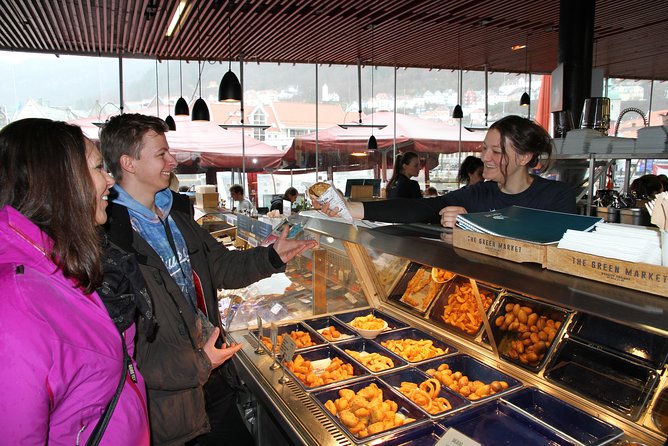
The walk starts at the Tourist Information office on Strandkaien at 12:30 pm. From there, the group reaches the Fish Market, one of the most natural places to begin a Bergen food tour.
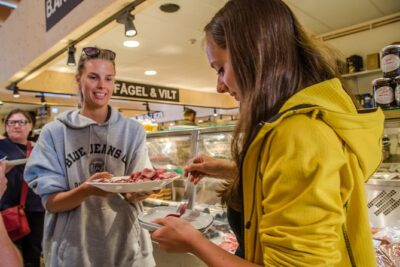
The first tasting is commonly a fish cake. This is not a fancy restaurant dish. It is a direct taste of the city’s coastal food tradition, and the guide uses it to explain how fish shaped Bergen’s economy and daily life.
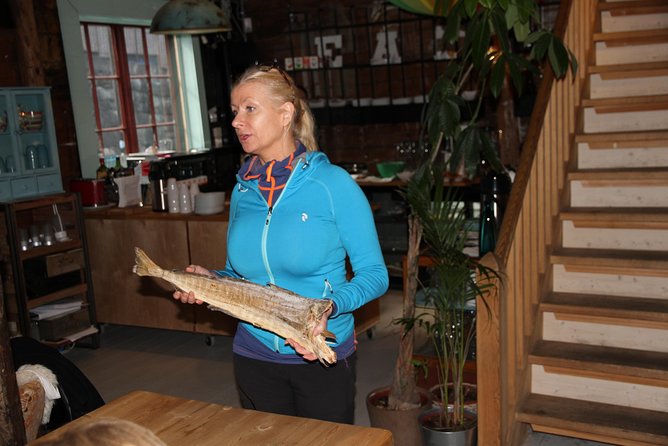
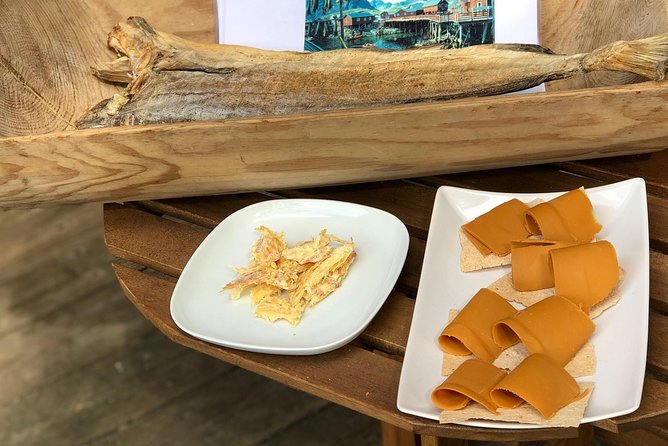
You may also taste dried cod or another small fish sample. Dried fish can be an acquired taste, especially if your idea of Norwegian food begins and ends with salmon. That is part of the point. The tour is interested in older foodways, including preservation methods that made sense before modern refrigeration.
The market stop is brief, listed at about 15 minutes. That makes it a useful introduction rather than a full market visit. If you want time to browse stalls, compare seafood prices, or choose fruit for later, plan to return on your own.
This is also where the tour’s value depends on your expectations. The Fish Market itself could easily fill an hour, but this walk uses it as a launch point. If you want a market-focused food crawl, you may find the stop too short. If you want a city walk where food opens the door to local history, it fits well.
Bryggen, Hanseatic trade, and food that traveled
The route continues to Bryggen, Bergen’s famous Hanseatic Wharf and a UNESCO World Heritage Site. The scheduled stop here lasts about 40 minutes, giving the guide time to explain the wooden buildings, the merchants who worked there, and the forces that shaped the city.
Food makes the history easier to grasp. Bergen was a major port, and fish was not just something to eat. It was a product to preserve, trade, transport, and exchange for other goods. A tasting of dried cod makes more sense when you understand the need to keep food stable across long journeys.
The guide may also connect the wharf with Bergen’s fires, military events, royalty, and the people who lived and worked in the city. Ole is often singled out for storytelling, while guides such as Andrea and Diane have been praised for making the city’s past clear and personal.
The storytelling can be the best part of the walk, but it can also be the part that tests your patience. One account found a long story about a prince too drawn out, while others loved the extended tales. Your ideal guide matters here. If you enjoy context and old stories, you will likely appreciate the pauses. If you want constant eating, you may feel the balance leans too far toward talk.
Bryggen is also a good place to watch your footing and dress for the weather. Bergen is famously wet, and the tour continues in rain. The walk is easy, but you will be outdoors for much of it, so waterproof clothing and shoes are sensible.
What you may actually taste
The food is traditional and varied in style, but it is not a feast. The exact selection can vary, yet the reported tastings give a clear picture of the experience.
You may encounter:
- Fish cake
- Brown cheese with a cinnamon roll or pastry
- Dried fish
- Lamb, veal, pork, or fish soup
- A small salad as an alternative to soup
- Warm apple juice with whipped cream, sometimes described as a liquid apple pie
- Norwegian beer in an old pub or cellar
The brown cheese and cinnamon roll are often the safest crowd-pleaser. Brown cheese has a sweet, caramel-like character that makes sense with pastry, and it gives you a taste that is distinctly Norwegian rather than a generic bakery sample.
The soup is more divisive. It may be based on lamb or fish, and it represents hearty older cooking rather than polished modern cuisine. Some people enjoy the rustic flavor and the story behind it. Others find it plain or unappealing. If you dislike lamb, fish, or strong traditional dishes, ask the guide what alternatives are available. A small salad has been offered to some participants who did not want the soup, but you should not book this expecting a menu of choices.
The warm apple drink with cream is another unusual stop. It is not apple pie in the usual sense, but a sweet drink meant to recall the dessert. Some people enjoy the novelty. Others may prefer a more conventional dessert.
The final beer is typically a small pour, around 50 milliliters in some accounts. It is more of a tasting and a way to finish the story than a full drink. The same applies to the apple juice, which has been described as a very small serving. If you arrive hungry, bring realistic expectations and plan another meal afterward.
Same base, a different kind of day out:
- From Bergen: The Original Fjord Cruise to Mostraumen
★ 4.7 · 8,440 reviews - Bergen: Mostraumen Fjord & Waterfall Cruise
★ 4.6 · 2,990 reviews - Bergen: Past & Present Small Group Guided Walking Tour
★ 4.9 · 1,609 reviews - Walking Tour in Bergen of the Past and Present
★ 5.0 · 1,575 reviews
From street food to an old pub
One appealing feature is the mix of settings. Food may come from street vendors, small local businesses, cafés, or a pub rather than from one formal restaurant. That gives the walk a more everyday feel and shows you how the city eats in different places.
The final stop has been described as an old pub or basement cellar, sometimes connected with a local ghost story. Here, the guide may point out old paintings, explain the building’s past, and tell a love story or haunted tale while you taste Norwegian beer.
That setting adds character, but it is not a substitute for a full pub visit. The beer pour is small, and the focus remains on the story. I like this ending because it gives the tour a social finish, but you may want to stay in the area afterward for a proper drink.
The route can also include places that are easy to miss when you are following a standard sightseeing map. One guide led the group to an old bathhouse turned neighborhood café, where soup was served. Another showed participants less obvious corners of Bergen. These details make the walk more useful than a simple checklist of Bryggen photo stops.
The guides shape the experience
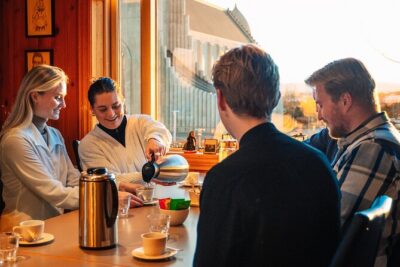
The strongest element is the guide. The company uses local guides, and the best accounts describe them as warm, personable, and happy to answer questions.
Ole is praised for strong historical storytelling and for making sure the group can hear him. Frida is described as a Bergen local with detailed knowledge and useful recommendations. Serena, also spelled Serina in some material, is praised for making the walk both educational and fun. Sabrina is noted for answering questions fully and showing less familiar parts of the city.
Other guides, including Andrea, Diane, Nina, and others, have also been associated with positive experiences. The style may differ from one person to another. Some guides spend more time on legends and long stories, while others keep the route moving.
The small group helps. With no more than 15 people, you have a better chance of hearing the guide and asking about food, architecture, or modern Norway. The group size also makes a café or pub stop feel more manageable than it would with a large coach tour.
There is one important qualification. A couple of accounts describe difficulty hearing or understanding the guide, and one person felt the historical explanations lacked depth. That does not mean every tour has this problem, but it is fair to say that the experience depends heavily on the individual guide, the group, and the noise level around each stop.
Is $123.78 a fair price?
At $123.78 per person, this is expensive if you judge it by the quantity of food alone. The samples can amount to a light lunch, and several portions are small. You may still need to buy a sandwich or arrange dinner afterward.
The price makes more sense if you value the guide and the city orientation. You are paying for three hours of walking, several tastings, local stories, access to places you might not notice alone, and the convenience of connecting food with Bergen’s past.
Compared with buying the same foods yourself, the difference is the interpretation. You can visit the Fish Market, order a fish cake, walk through Bryggen, and find a beer without a guide. What you cannot easily recreate is the sequence that explains why these foods matter and how the port shaped the city.
I would call the value good for a first visit if you enjoy history and want a gentle introduction to Bergen. I would call it weak if your main goal is to eat a large amount of food or sample a wide range of modern Norwegian cuisine.
Timing, access, and practical details
The tour begins at the Tourist Information office, Strandkaien 3, at 12:30 pm. It ends at Torget 6A, near the Fish Market, so you finish in a convenient central area.
The walk is close to public transportation, and most people can participate. Service animals are allowed. Since the route is outdoors and Bergen is known for frequent rain, carry a waterproof layer and wear shoes that are comfortable for several hours of walking.
The tour is offered in English and uses a mobile ticket. Confirmation arrives when you book. Free cancellation is available up to 24 hours before the start time. Changes or cancellations inside that 24-hour window are not accepted for a refund.
This experience is often booked well ahead, with an average booking lead time of about 75 days. That does not mean you must reserve that far out, but it is a useful warning for a popular travel period or a fixed cruise schedule.
Who should book this walk?
I would choose this tour for a first or second day in Bergen, especially if you want a friendly orientation before exploring alone. It suits people who enjoy stories, local food traditions, and a slow walk through the city.
It is also a good fit if you are curious about Norwegian food but do not know where to begin. The samples let you try fish, dried cod, brown cheese, soup, apple drink, and beer without committing to a full meal of unfamiliar dishes.
I would think twice if you need a substantial lunch, dislike fish and lamb, or prefer fast-paced sightseeing. You may also be disappointed if you expect a modern food tour built around restaurants and generous servings.
Should you book the Bergen Food and Culture Walk?
Book it if you want Bergen’s food explained, not simply served. The Fish Market and Bryggen give you the main sights, while the tastings show how fishing, preservation, trade, and old household cooking shaped the city.
Go in expecting samples rather than a banquet. If you arrive ready for a relaxed walk, a few unusual flavors, and a guide-led look at Bergen’s past, the $123.78 price can be justified. If you want value measured in ounces of food, spend your money on a market lunch and explore Bryggen on your own.
FAQ
Where does the Food and Culture Walk begin?
It begins at the Tourist Information office at Strandkaien 3, 5012 Bergen, Norway.
What time does the tour start?
The scheduled start time is 12:30 pm.
Where does the walk end?
The tour ends at Torget 6A, 5014 Bergen, Norway, near the Fish Market.
How long does the experience last?
The walk lasts about three hours.
What foods might be included?
Tastings may include fish cake, brown cheese with a cinnamon roll, dried fish, lamb or fish soup, warm apple juice with whipped cream, and a small Norwegian beer. The exact selection can vary.
How large is the group?
The maximum group size is 15 people.
Is the tour available in English and can I use a mobile ticket?
Yes. The experience is offered in English and accepts a mobile ticket.
More Walking Tours in Bergen
- City Walking Tour – Bergen On Foot
★ 5.0 · 436 reviews - Bergen: Sightseeing Walking Tour with Ferry Ride
★ 4.9 · 296 reviews - Walking Tour of Central Bergen
★ 5.0 · 46 reviews - Bergen: Nordnes Neighborhood Hidden Gems Walking Tour
★ 4.9 · 43 reviews
Just added in Bergen
- Walking tour: Medieval Spirit of Bergen + sweet Arctic gifts★ 5.0 · 17 reviews
- Walking Tour of Central Bergen★ 5.0 · 46 reviews
- Mountain Bike – Voss Storålsen★ 5.0 · 13 reviews
- Segway Night Tour of Bergen★ 5.0 · 46 reviews
- Bergen: Private Full-Day Roundtrip to Hardangerfjord with cruise★ 5.0 · 20 reviews
- 3-Hour Private Norwegian Hiking Experience with Local Guide★ 5.0 · 27 reviews
- Private tour to Sognefjord and Flåm from Bergen, 24 hr refundable★ 4.5 · 27 reviews
- Full Day Private Tour to Flam with Pick Up★ 5.0 · 14 reviews
Food & Drink, compared.
Reykjavik Food Walk – Local Foodie Adventure in Iceland
Read our review →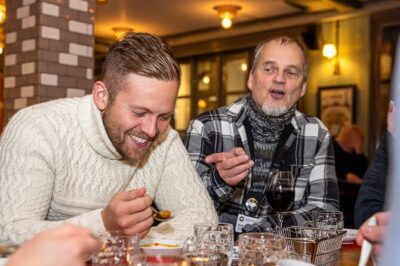
Reykjavik Food Lovers Tour – Icelandic Traditional Food
Read our review →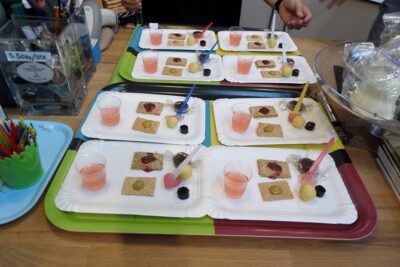
Copenhagen Culinary Food Tour with 6+ Tastings of Danish Classics
Read our review →
Copenhagen’s oldest and original food tour (Est. 2011).
Read our review →
Browse the lists this tour appears in