Reviewed · TOURS IN ICELAND
From Reykjavík: 7-Day Around Iceland Ring Road & Snæfellsnes
Iceland’s great strength is variety, and this seven-day route packs it in: erupting geysers, thunderous waterfalls, glacier ice, black beaches, lava fields, fishing villages, and the long sweep of the Ring Road. You’ll see far more than you could from Reykjavík on day trips, with six hotel nights and a small mini-bus carrying no more than 18 people.
I like the wide coverage and the chance to reach places such as Stuðlagil Canyon, Dettifoss, Jökulsárlón, and East Iceland without renting a car. I also like the Deluxe activities, especially Katla Ice Cave and Vök Baths, which add experiences beyond roadside viewpoints.
The trade-off is time. Iceland gives you a great deal to see, and the schedule can feel rushed in places. You’ll spend many hours on the road, and the Snæfellsnes day has few listed stops, so this suits you best if seeing the whole country matters more than lingering in one region.
Key points to know before booking
- Þingvellir to the South Coast on day one: The opening day delivers Iceland’s classic Golden Circle sights, then continues to waterfalls and Reynisfjara.
- Katla Ice Cave is a Deluxe inclusion: The cave sits beneath Mýrdalsjökull glacier and adds a guided glacier experience to the route.
- Jökulsárlón and Diamond Beach are major highlights: Icebergs in the lagoon and chunks of glacier ice on the shore make this one of the trip’s strongest days.
- Vök Baths break up the long drive east: The floating geothermal pools near Egilsstaðir give you a slower afternoon after several sightseeing stops.
- The group is limited to 18 people: You get a smaller vehicle and an English-speaking guide rather than a large coach.
- Winter and summer are not the same trip: Summer includes Borgarfjörður Eystri and puffins, while winter focuses on East Iceland’s fishing villages and offers fewer daylight hours.
A strong first day: Þingvellir, geysers, and the South Coast
Pickup begins in Reykjavík at 9 a.m., and the collection process can take up to 30 minutes. Be ready at the stated time, then settle into the mini-bus for a full day of major sights.
Þingvellir National Park is the first major stop. It is a UNESCO World Heritage site and one of Iceland’s most important places, both for its natural setting and its role in the country’s history. You’ll get an early look at the volcanic forces that shape the island before moving on to the famous Golden Circle.
At the Geysir geothermal area, Strokkur provides the action. This powerful geyser erupts at regular intervals, so you have a good chance of seeing boiling water shoot into the air during your stop. The ground here is hot, active, and marked by steaming vents and pools. Stay on the marked paths and keep your attention on the guide’s instructions.
Gullfoss is the next major sight. The waterfall drops in two stages into a deep gorge, and its scale changes with the weather and season. The route then shifts toward the South Coast, where Seljalandsfoss and Skógafoss offer two very different waterfall experiences.
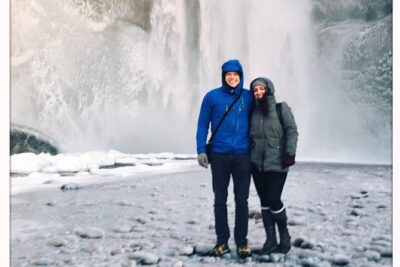
Seljalandsfoss is known for the path that can take you behind the falling water, though conditions can be wet. Skógafoss is broader and more forceful, with water dropping in a single curtain. If you want photographs, have waterproof outerwear handy. Iceland’s spray does not care about your camera budget.
The day finishes at Reynisfjara, a black sand beach framed by basalt columns and dramatic sea cliffs. It is one of Iceland’s most striking coastal stops, but it demands care. Waves can be dangerous, so stay well back from the water and follow your guide’s advice. You’ll then check into a South Coast hotel.
This is a packed opening day, but it makes sense for a first taste of Iceland. You begin with the country’s best-known sights and finish with the raw Atlantic coast.
A few more things to do in Reykjavík worth a look
Day two brings glacier ice and the country’s best-known lagoon
The second day heads through the village of Vík and along the South Coast toward the glacier country. Vík is small, scenic, and surrounded by black beaches and steep coastal scenery. It also gives you another look at the region around Reynisfjara from a different point on the route.
The Deluxe version includes the Katla Ice Cave tour. The cave is beneath the Mýrdalsjökull glacier, and its frozen formations offer a close view of Iceland’s glacial world. This is more than another waterfall viewpoint. You’re entering a natural ice setting, so expect the experience to depend on current conditions and the specialist tour arrangement.
After the ice cave, Fjaðrárgljúfur canyon adds a different kind of scenery. Its winding shape and unusual rock formations make it an appealing stop after the ice. The route then continues east to Jökulsárlón glacial lagoon.
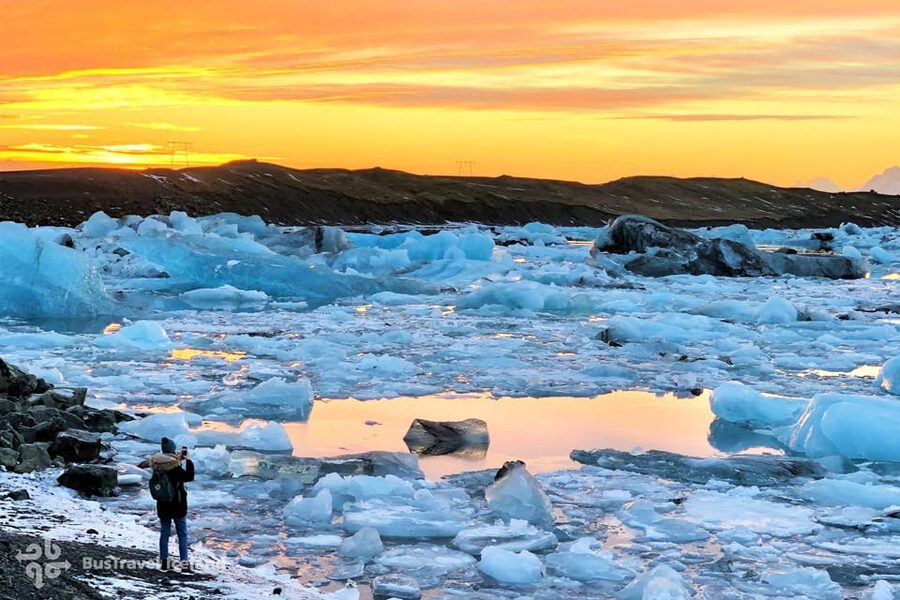
Jökulsárlón is one of the tour’s essential stops. Ice breaks away from the glacier and gathers in the lagoon before floating toward the sea. Nearby Diamond Beach gets its name from chunks of ice scattered across the dark shore. The contrast between black sand and clear ice is particularly memorable, and you’ll have two related sights in one area.
You’ll sleep in Höfn, a useful overnight point before the route turns into East Iceland. This is another long sightseeing day, but the stops are strong enough to justify the driving time. If you are choosing between the standard and Deluxe options, Katla Ice Cave is one of the clearest reasons to pay for the upgrade.
East Iceland slows the pace at Djúpivogur and Vök Baths
Day three moves into East Iceland, where the scenery feels quieter and the settlements are smaller. Djúpivogur is a fishing village, and the stop gives you a look at the coastal communities that are easy to miss if you only visit the Golden Circle and South Coast.
Lunch is in Egilsstaðir, the main service town in the east. The afternoon changes by season. In summer, the route heads to Borgarfjörður Eystri, known for puffin colonies. In winter, the tour visits East Iceland’s fishing villages instead. This difference matters if you are choosing dates around wildlife or daylight.
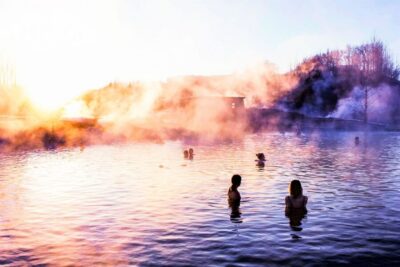
The Deluxe tour includes admission to Vök Baths near Egilsstaðir. After two busy days of roads, waterfalls, beaches, and glacier scenery, a geothermal soak is a welcome change of rhythm. Vök Baths are set in a lake, and the pools provide time to relax rather than collect another photograph.
You’ll then stay in Egilsstaðir. This day has a more local feel than the opening sections, with villages and eastern scenery replacing Iceland’s most famous attractions. It is also a useful pause in the itinerary. Without it, the Ring Road schedule would feel like one long sequence of viewpoints and vehicle time.
Stuðlagil and Dettifoss make day four the big geology day
Day four begins at Stuðlagil Canyon, famous for its tall basalt columns. The regular shapes of the rock show the power of Iceland’s volcanic past, while the canyon itself gives you a strong sense of scale. The itinerary includes a hike to the site, so wear shoes suitable for walking and keep your day pack light.
Dettifoss follows. It is described as Europe’s mightiest waterfall, and the name is justified by the force of the water pouring into the canyon. This is not a delicate waterfall stop. You’ll hear and feel its power before you fully take in the view.
At Námaskarð, the ground becomes hot and strange, with geothermal activity, steaming earth, and strong colors. Dimmuborgir then offers a maze-like field of lava formations. The name means dark fortresses, and the rock shapes give the area a more unusual mood than the open waterfall viewpoints.
The route continues to the Skútustaðagígar pseudocraters. These formations were created by steam explosions rather than true volcanic vents, making them a useful reminder that Iceland’s geology is not limited to lava cones and glaciers.
Goðafoss closes the day. The waterfall is broad, graceful, and easier to appreciate at a slower pace after the power of Dettifoss. You’ll spend the night in Akureyri, Iceland’s main northern town and a practical base for the next morning.
This may be the most varied day for geology. The drawback is that the number of stops leaves limited time at each one. I would treat the guide’s schedule as a framework, not expect long hikes at every location.
Same base, a different kind of day out:
- Reykjavik: Golden Circle Full-Day Tour with Kerid Crater
★ 4.8 · 24,485 reviews - Reykjavik Food Walk – Local Foodie Adventure in Iceland
★ 5.0 · 18,952 reviews - Iceland: Northern Lights Bus Tour from Reykjavik
★ 4.1 · 11,161 reviews - Reykjavík: South Coast Waterfalls, Black Sand & Glacier Tour
★ 4.8 · 11,030 reviews
Whale watching and northern history on day five
The Deluxe tour includes a whale-watching trip before lunch in Akureyri. The exact wildlife sightings are not guaranteed, but the activity gives the itinerary a change of pace and takes you onto the water rather than keeping you beside the road.
After lunch, the route visits Borgarvirki, an ancient volcanic plug that was used as a fortress during Iceland’s Viking era. It combines a geological formation with a piece of Icelandic history, giving your guide a chance to explain how people used the land as well as how the land was formed.
Hvítserkur is a distinctive rock formation rising from the sea. It is one of those stops where the view depends on weather, light, and your position along the coast. The next stop, Kolugljúfur, is a canyon named after the giantess Kola. Together, these places make the day feel less predictable than a standard route of famous waterfalls.
The overnight stay is in Laugarbakki. By this point, you will have crossed much of Iceland, but the schedule is still active. A whale-watching trip can also be affected by sea conditions, so consider this an included chance to get on the water, not a promise of a particular animal sighting.
Grábrók, Hraunfossar, and an Icelandic horse farm
The sixth day turns toward West Iceland and begins with a hike to the top of Grábrók, a well-known volcanic crater. The walk gives you a higher viewpoint and a close look at a volcanic feature rather than another waterfall from ground level.
Hraunfossar is one of the most unusual waterfalls on the route. Water flows through old lava fields and appears to emerge from the rock before dropping into the river below. It is gentler in appearance than Gullfoss or Dettifoss, and the layered lava makes the setting distinctive.
A stop at an Icelandic horse farm adds a cultural element. You’ll learn about the importance and character of Icelandic horses, which are part of the country’s identity and rural life. This is a welcome change from natural attractions and gives the tour more texture.
The final major stop is Deildartunguhver, Europe’s most powerful hot spring. It is a reminder that Iceland’s geothermal activity is not just something you see at tourist sites. The hot spring is also tied to everyday use, including heating, though the itinerary focuses on visiting the site.
You return to Reykjavík for the last night of the tour. This day is still full, but the mixture of crater, waterfall, farm, and hot spring makes it feel more balanced than the first few days.
Snæfellsnes closes the trip with a western-coast finale
The final day leaves Reykjavík for the Snæfellsnes Peninsula. The route is described as a journey along the western coast, with a broad mix of natural sights before returning to Reykjavík in the evening.
The itinerary does not list each Snæfellsnes stop, so you should not book this tour expecting a detailed, stop-by-stop peninsula guide from the information provided. What you can count on is a final day of coastal scenery and varied natural views, followed by a return to the capital.
This structure is practical if you want to finish in Reykjavík without arranging another hotel or transfer. It is less satisfying if Snæfellsnes is the main reason you want to visit Iceland, because the earlier Ring Road sections receive the more detailed treatment.
What the $2,168 price means
At $2,168 per person, the cost is substantial, but it covers six hotel nights, six breakfasts, hotel pickup and drop-off, an English-speaking guide, mini-bus transport, and sightseeing across the country. For a seven-day route around Iceland, those included basics remove a large amount of planning.
The price does not include lunch, dinner, international flights, airport transfers, or a single-room fee. You need to budget for meals every day beyond breakfast, plus any private-room supplement if you are traveling alone.
Check the exact booking category carefully. Katla Ice Cave, Vök Baths, and whale watching are listed as Deluxe inclusions. If the advertised price is tied to the Deluxe option, those activities form a meaningful part of the value. If you are comparing a lower-priced standard option, confirm which of them are excluded before paying.
The strongest financial argument is convenience. You avoid arranging a rental car, hotels in six locations, and the logistics of driving the Ring Road in changing weather. The weakest point is that you pay for a fixed schedule, so you cannot simply stay longer at Jökulsárlón or skip a stop that does not interest you.
Guides, vehicle size, and the pace of the road
The group is limited to 18 people, which is a useful middle ground. You get more personal contact than on a large coach, but you should not expect a private tour. The English-speaking guide handles the route, driving, and explanations.
Guides named for this tour include Dagur, Eddie, Siggie, and Starri. Dagur is described as giving high-quality explanations, while Starri is noted for an informed, witty style and clear enjoyment of sharing Iceland. The guide can shape the experience, especially on long driving stretches.
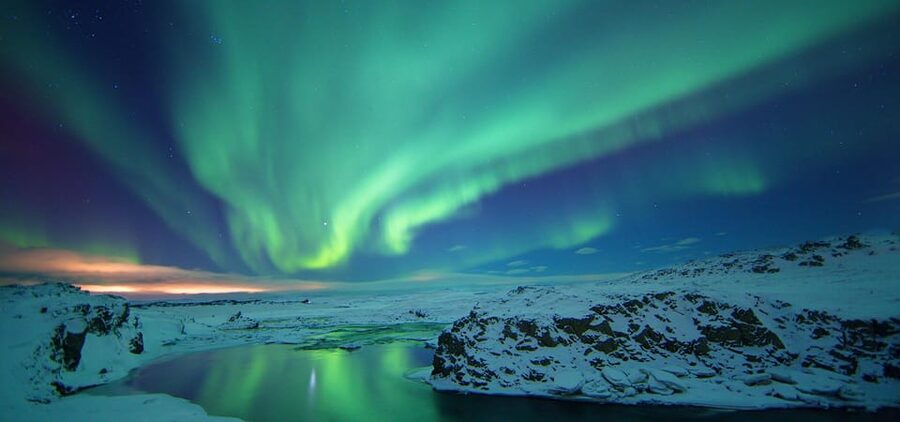
The mini-bus format makes the Ring Road possible in a small group, but it cannot change the basic distances. You’ll still spend plenty of time seated. The schedule also changes with the season. Winter brings limited daylight, though the route can offer a chance to see the Northern Lights in the evenings. Summer offers longer days and a visit to Borgarfjörður Eystri with puffins.
Pack for movement between wet waterfalls, windy beaches, geothermal areas, and cooler glacier conditions. Bring waterproof layers and walking shoes. The information provided does not specify a packing list, so check the operator’s current instructions before departure.
Who should book this Ring Road tour?
I would choose this tour if you want a broad first visit to Iceland and prefer a guide to handle the driving and hotel changes. It suits you if you value major sights, small-group transport, and a ready-made route over free time in one region.
The Deluxe version makes the most sense for you if Katla Ice Cave, Vök Baths, and whale watching are priorities. The added activities break up the sightseeing and give you three different ways to experience Iceland: under glacier ice, in geothermal water, and on the sea.
I would think twice if you dislike early starts, long drives, or fixed schedules. You should also consider a slower trip if your main goal is hiking, photography, or spending several days in one town. This route shows a great deal, but it does so at a brisk pace.
FAQ
How long is the tour?
The tour lasts seven days and includes six nights of hotel accommodation.
Where does the tour begin and end?
Pickup begins in Reykjavík, and the tour returns to Reykjavík. The final day visits the Snæfellsnes Peninsula before returning to the capital in the evening.
What time does pickup begin?
Pickup starts at 9 a.m. The pickup process can take up to 30 minutes, so you should be ready at 9 a.m.
How large is the group?
The tour is limited to 18 participants and uses a mini-bus.
Is a guide included?
Yes. An English-speaking professional guide is included.
Are meals included?
Six breakfasts are included. Lunch and dinner are not included.
What does the Deluxe Tour add?
The Deluxe Tour includes the Katla Ice Cave tour, admission to Vök Baths, and a whale-watching tour.
Is airport transfer included?
No. International flights and airport transfers are not included.
Should you book it?
Book this tour if you want to see Iceland’s major regions in one organized week, with hotels, transport, and a guide arranged for you. The combination of Jökulsárlón, East Iceland, Dettifoss, Goðafoss, Hraunfossar, and Snæfellsnes gives you a strong overview of the country.
I would choose the Deluxe option if the price difference fits your budget. Katla Ice Cave and Vök Baths add real variety, while whale watching gives the northern section a different feel. Just accept the central bargain: you will see a remarkable amount of Iceland, but you will rarely have the luxury of lingering.
Just added in Reykjavík
- From Reykjavik: Full-Day Horse Riding & Golden Circle Tour★ 3.7 · 81 reviews
- Reykjavik: Evening Icelandic Food and Drink Tour★ 4.9 · 66 reviews
- Hveragerdi: The Siggi Horse Riding Tour★ 4.8 · 13 reviews
- The Reykjavik Christmas Food Tour★ 4.8 · 19 reviews
- Reykjavik: Small-Group Snæfellsnes Day Trip★ 4.8 · 214 reviews
- The Golden Circle & Hop On – Hop Off Combo Deal★ 4.5 · 15 reviews
- Reykjavik: The Icelandic Sweet Tooth Tour★ 4.6 · 30 reviews
- Reykjavik: The Golden Circle Full-Day Tour★ 4.7 · 170 reviews
Tours in Iceland, compared.
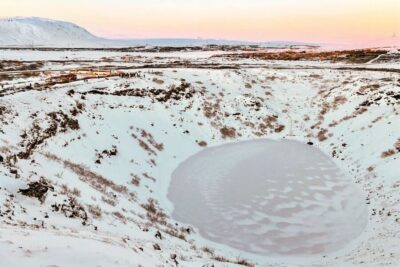
Golden Circle Full-Day Tour with Kerid Crater
Read our review →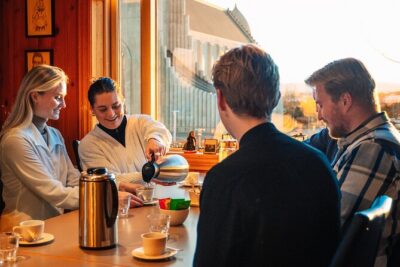
Reykjavik Food Walk – Local Foodie Adventure in Iceland
Read our review →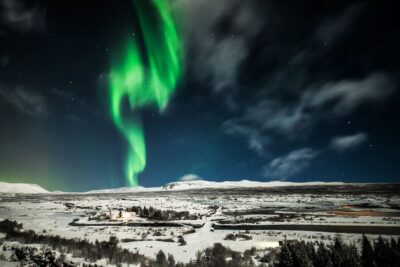
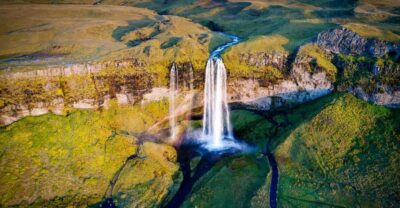
South Coast Waterfalls, Black Sand & Glacier Tour
Read our review →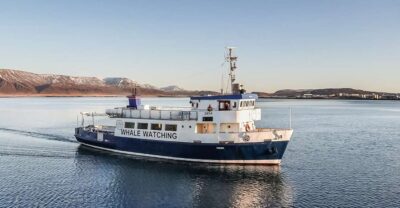
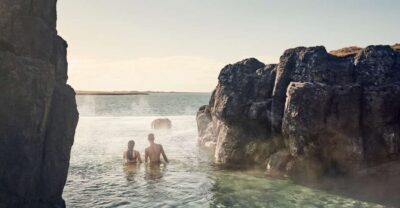
Sky Lagoon Entrance Pass With 7-Step Spa Ritual
Read our review →