
Reviewed · TOURS IN DENMARK
Good Morning, Copenhagen: Feel The Danish Hygge & Happiness
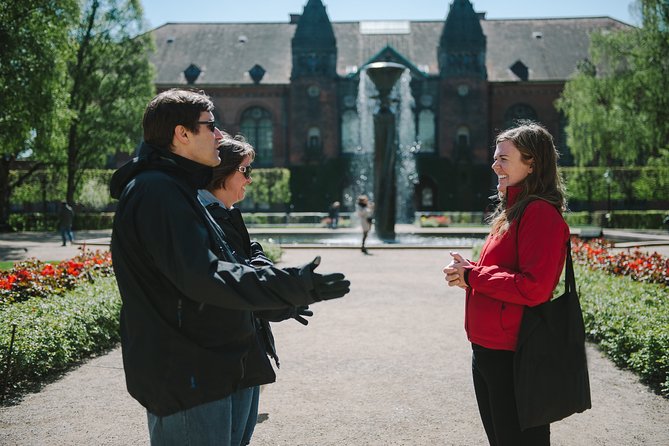
Copenhagen’s best introduction may not be a checklist of monuments. This small-group walk of no more than 10 people uses pastries, coffee, quiet lanes, and local stories to explain why Danish life places such value on comfort, trust, and time spent together. You’ll see major sights, but the real subject is how Copenhageners live.
I like the personal feel, especially with guides such as Therese, Oskar, Laura, Peter, and Karoline, who bring their own local knowledge and humor. I also like the mix of old streets and everyday treats, from Nyboder’s yellow houses to Danish pastries and chocolate-covered flødeboller.
The main drawback is focus. This is not a full historical tour, and the relaxed food stops can leave you wanting more time at certain sights. If you want detailed palace interiors or a complete account of Copenhagen’s past, choose a separate museum or castle visit.
Key points to know before booking
- Small groups make the walk personal: The maximum group size is 10, giving you room to ask questions and speak with the guide.
- Hygge is explained through daily life: You’ll learn about Danish customs, trust, welfare, religion, politics, and the idea of Jante.
- The food stops are part of the lesson: Expect a Danish pastry, flødeboller, and coffee or tea rather than a full meal.
- The route mixes famous sights with quiet lanes: Nyboder, Rosenborg Castle, Christiansborg Palace, Magstræde, and Pistolstræde all appear from the outside.
- The pace is easy but still covers ground: Allow about three and a half hours and wear comfortable shoes for cobblestones.
- It works best early in your visit: Your guide can offer suggestions for restaurants, shops, and further exploring at the end.
Why this Copenhagen walk feels different
Many city walks move from one famous building to the next, with a guide delivering dates and names as you hurry along. This experience takes another route. It asks you to notice the small details that make Copenhagen feel pleasant: a quiet lane, an old timber-framed house, a park bench, a shared sweet, or a warm drink taken without rushing.
That is the practical meaning of hygge here. It is not simply candles and wool blankets. It is a Danish habit of making ordinary time feel good, often through simple food, conversation, calm surroundings, and company.
The route lasts about three hours and 30 minutes. You’ll walk through the historic center, stop several times, and spend part of the morning tasting Danish specialties. The walk is offered in English, and the local guides are the heart of the experience. Guides named Therese, Oskar, Laura, Peter, Karoline, Sandra, Liva, Jacob, and others have led this route, each adding personal stories and different views of Danish life.
Other trips people book in Copenhagen:
- Copenhagen: Canal Cruise with Guide
★ 4.6 · 9,115 reviews - Copenhagen: Hop-On Hop-Off Bus Tour with Boat Tour Option
★ 3.9 · 4,122 reviews - Private Walking Grand Tour of Copenhagen
★ 5.0 · 3,953 reviews
Starting among Nyboder’s yellow houses
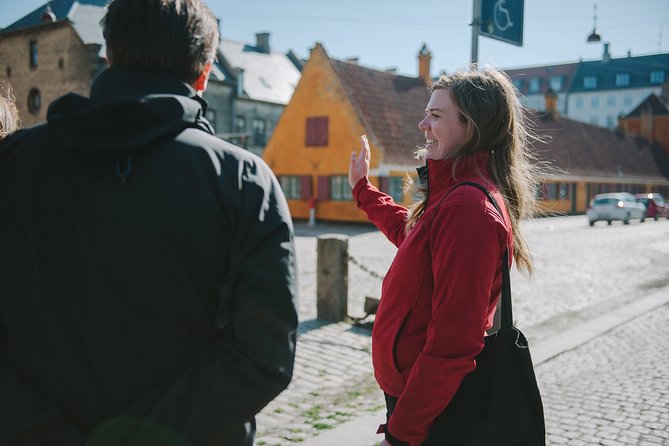
The morning begins near Nyboders Mindestuer and the distinctive yellow houses of Nyboder. These low buildings were created as housing for Danish naval personnel, and their uniform rows give you an immediate sense of Copenhagen’s older character.
You meet your guide and the rest of the group here. Because the group is capped at 10, this opening is more than a roll call. You can ask questions early, tell the guide what interests you, and settle into the pace before the walk gets going.
The opening stop is short, around 15 minutes, so do not expect an extended architectural study. Its value is the setting and the chance to hear local stories before moving into the city center. Your guide may explain how this part of Copenhagen once served the Danish navy and how the old district fits into the modern city.
This is also a good place to check your footwear and rain protection. Copenhagen weather can change quickly, and the tour continues in light rain unless conditions make walking unpleasant. An umbrella or rain jacket is sensible.
Cobblestones, timber houses, and a first taste
The route then moves through some of the oldest parts of Copenhagen. Streets such as Krusemyntegade offer the sort of quiet, irregular charm that is easy to miss if you stay on the main roads.
You’ll see cobblestones, timber-framed houses, and small green corners tucked among the city streets. The guide’s job here is less about rushing you toward the next landmark and more about showing you how atmosphere is created. A narrow street can feel more restful than a grand square, even when it is only a few minutes away.
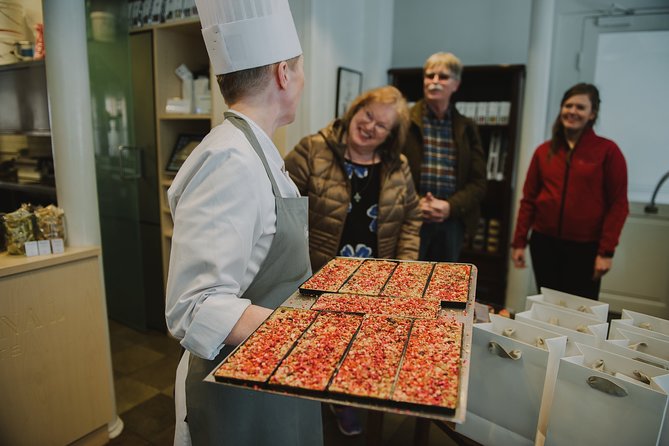
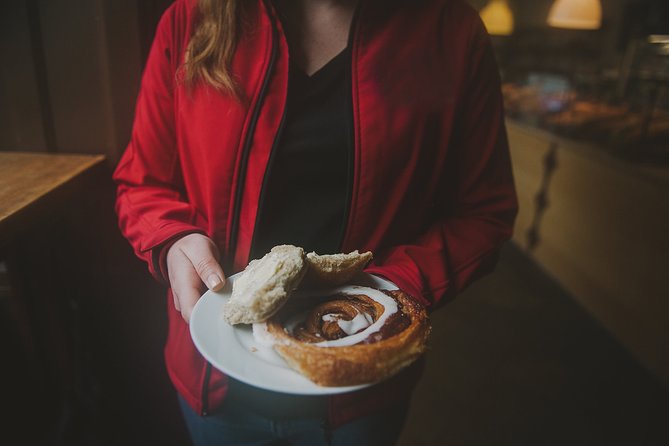
A Danish pastry follows. The food is not an afterthought or a generic snack. Pastries are tied to Danish childhood, family habits, weekends, and small breaks during the working week. Your guide uses the tasting to explain a familiar part of local life.
Do not book this expecting breakfast. The food is light and spread through the walk. One person described the treats as minimal but enjoyable, which is fair. You receive samples and drinks, not a substantial meal. If you need a hearty start to the day, eat something before meeting the group.
The King’s Garden and Rosenborg Castle
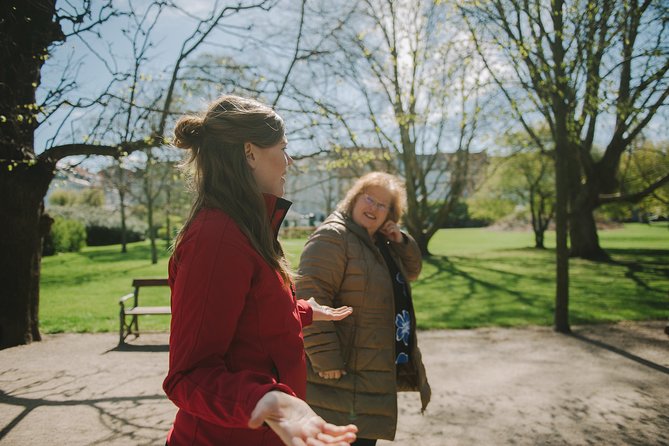
Kongens Have, or the King’s Garden, provides a welcome change from the hard surfaces of the city center. This broad public park sits beside Rosenborg Castle and gives the group room to slow down.
The park’s story includes royal ambition, mental illness, and tangled love affairs. Your guide uses that dramatic material to explain how a royal garden became one of the world’s early public parks. It is a lively way to connect power, public space, and Danish social life without turning the stop into a lecture.
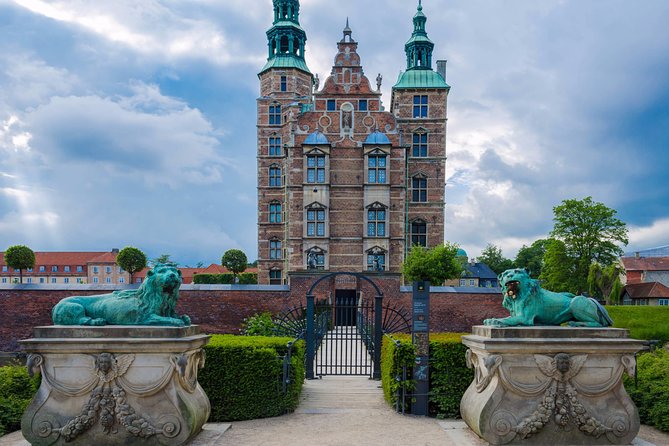
Rosenborg Castle is viewed from outside. You’ll hear about Christian IV, the king who built it in the 17th century, along with the ideas behind its compact design. The castle is attractive from the garden, but you should know that admission to the interior is not included because the tour does not go inside.
This distinction matters. If you want the crown jewels, royal rooms, or a long look at the castle’s collections, plan a separate visit. Here, Rosenborg is a visual stop and a story point, not a full castle tour.
The garden stop also helps explain the tour’s pace. You are walking steadily, but there are regular pauses. One guide, Peter, was especially appreciated for making the route comfortable for an 85-year-old participant. The walk is not described as strenuous, but cobblestones and several hours on foot still call for moderate fitness.
Same base, a different kind of day out:
- From Copenhagen: Lund and Malmö 2-Country Tour
★ 4.7 · 2,772 reviews - Copenhagen Highlights Walking Tour
★ 5.0 · 2,324 reviews - Copenhagen: Highlights 3 Hour Bike Tour with a Local Guide
★ 4.8 · 2,312 reviews - Hamlet and Sweden Tour – Two Countries in one day !
★ 5.0 · 2,223 reviews
Pistolstræde and the Danish flødeboller
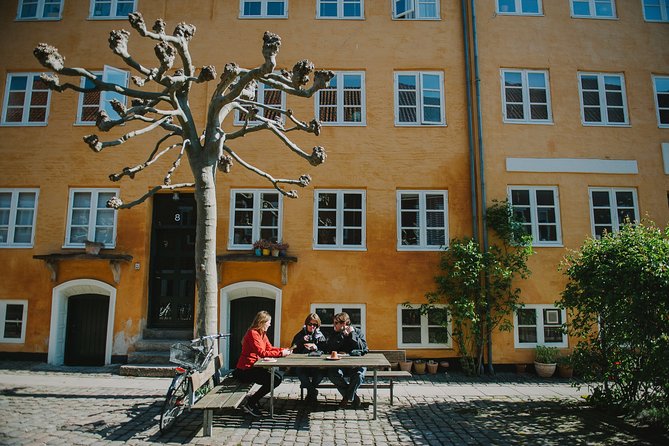
Pistolstræde is one of the route’s most appealing pauses. This tucked-away alley has old-world charm and a quieter mood than the nearby shopping streets.
Here, the guide brings out flødeboller, a Danish sweet made with a soft marshmallow-like center and a chocolate coating. It is often associated with childhood treats, and the stop gives your guide a natural way to discuss how familiar foods can carry memories across generations.
The setting matters as much as the sweet. You sit, take a break, and talk with the group rather than eating while marching to the next sight. That shared pause is a clear example of the tour’s idea of hygge.
The walk then contrasts this quiet lane with one of Copenhagen’s busy pedestrian streets. That change is useful. You feel how quickly the city’s mood can shift, from a secluded alley to a commercial thoroughfare full of movement and noise.
Some food-focused tours can feel staged. This one works best when you treat the tastings as conversation starters rather than the main event. The portions are small, but the stories and setting give them more meaning.
Nikolaj Kunsthal and Copenhagen’s view of religion
Nikolaj Kunsthal appears as an impressive church-like building with a striking spire. The guide asks you to look up, then explains that the building’s present role and appearance are not quite as simple as they first seem.
You’ll hear about Danish attitudes toward religion and how those attitudes fit into modern culture. This is not a formal visit to the art center, and you do not go inside. The stop is brief, about 15 minutes, with time for photographs and explanation.
A small detail adds to the experience: while the group looks at the building, the guide runs into a nearby shop to collect something for the next part of the route. That kind of practical, informal moment helps keep the walk from feeling overly scripted.
If your main interest is art, architecture, or religious history, the explanation may feel short. If you want a local perspective on how these subjects sit within Danish life today, it offers a useful glimpse.
Christiansborg and the ideas behind Danish happiness
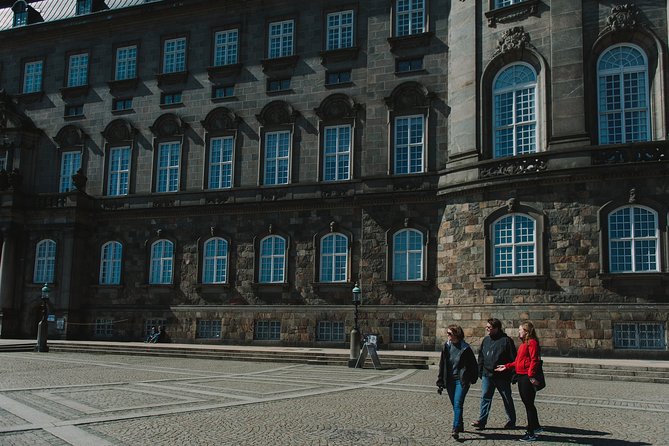
Christiansborg Palace is one of the most important stops because it shifts the discussion from buildings to society. The palace now houses Denmark’s parliament, and your guide uses the setting to talk about Danish politics, the welfare system, and public trust.
You’ll also hear about Jante, a Danish cultural idea that discourages people from acting superior or placing themselves above the group. The guide connects this to Denmark’s strong sense of trust and its repeated appearance near the top of international happiness rankings.
This section is valuable, but keep your expectations measured. The tour gives you an approachable introduction, not a full course in Danish government or social policy. One participant expected more emphasis on the reasons behind Denmark’s happiness and felt the tour focused more on general Copenhagen sightseeing. That is a fair caution.
Still, the discussion can help you interpret what you see during the rest of your visit. Danish happiness is not presented as constant cheerfulness. The point is closer to social security, trust in institutions, shared responsibility, and the ability to enjoy daily life without excessive display.
Christiansborg is viewed from outside, so anyone wanting palace rooms or parliamentary interiors will need another visit. The stop is about the ideas connected to the place.
Magstræde and a café finish
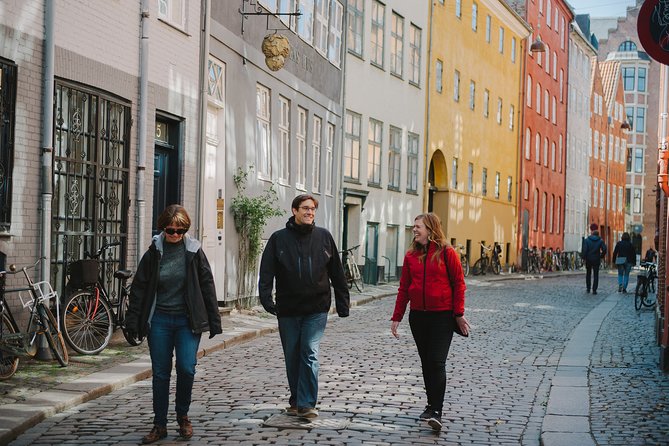
On the way back, the route passes along Magstræde, one of Copenhagen’s prettiest old streets. Its narrow shape and historic buildings make it a strong final street scene, especially after the larger scale of Christiansborg.
The walk ends in the city center on Læderstræde, an area lined with artisan shops. You settle into a café for coffee or tea, and the guide provides a small Copenhagen souvenir described as a sustainable slice of the city.
This final stop is where the tour’s theme makes the most sense. You have walked, talked, eaten small treats, and then stopped for a drink rather than rushing straight to the next attraction. It is a pleasant way to finish the morning, and the guide can offer one-on-one suggestions for lunch, restaurants, or places to visit later.
Several guides have been praised for useful recommendations after the walk. If you have a free afternoon, ask directly for help. This is one of the practical benefits of taking the tour early in your stay.
What the $82.23 price gets you
At $82.23 per person, this is not the cheapest way to see Copenhagen’s center. You are paying for a local English-speaking guide, a small group, several tastings, and a structured walk through central neighborhoods.
The value depends on what you want. If you mainly need a fast overview of major monuments, a less expensive general walk may do the job. If you value conversation, local customs, a calm pace, and food used to explain culture, the price is easier to justify.
The maximum group size of 10 is important. A larger group would make the personal questions and café conversation less appealing. Group discounts are available, which may help families or friends booking together.
You are not paying for entry to Rosenborg Castle, Christiansborg Palace, Nikolaj Kunsthal, or other buildings along the route. Those places are viewed from outside. Factor in separate admission costs if you plan to return indoors.
Who should book this experience
I would choose this walk for a first morning in Copenhagen, especially if you want help getting your bearings without spending the day inside museums. It suits couples, solo visitors, families with older children, and anyone who enjoys learning through food and conversation.
Children six to 11 can join at the listed child rate, and children under six can join free when the provider is told in advance. The relaxed structure also suits older participants who can manage several hours of walking, though the cobbles and weather deserve attention.
You may want a different tour if you need detailed chronology, long museum visits, or a serious food tour. The tastings are modest, and the history is selective. The strongest subject is Danish culture as lived today, with architecture and history used to support that theme.
Practical details for a smoother morning
The meeting point is Krokodillegade 21 in Copenhagen. The walk ends on Læderstræde in the city center, near artisan shops, so you are well placed to continue exploring afterward.
Wear shoes that handle cobblestones. Bring an umbrella or rain jacket, since much of the experience takes place outdoors. The tour is near public transportation, and service animals are allowed.
Confirmation arrives when you book. Free cancellation is available up to 24 hours before the start time. Changes or cancellations inside that 24-hour window are not accepted for a refund.
The provider does not permit people showing COVID-19 symptoms to take part. That is worth keeping in mind if you are arranging a tight schedule around other activities.
Should you book the Copenhagen Hygge and Happiness walk?
Book it if you want Copenhagen explained by a local voice rather than reduced to a list of sights. The small group, thoughtful guide, pastries, flødeboller, coffee, and quiet streets give you a friendly introduction to the city’s social habits.
Skip it if your priority is indoor access to castles, substantial food, or detailed Danish history. You will see important buildings from outside, and the tour sometimes covers ground at a brisker pace than the word hygge might suggest.
For most first-time visitors, I would take it near the beginning of a Copenhagen stay. You’ll leave with a better sense of where to wander, what to eat, and how Danish ideas about trust, modesty, and shared comfort shape the city.
FAQ
How long does the Good Morning, Copenhagen tour last?
The tour lasts approximately three hours and 30 minutes.
What language is the tour offered in?
The tour is offered in English with a native English-speaking guide.
How large is the tour group?
The group has a maximum of 10 people.
What food and drinks are included?
The tour includes a Danish pastry, flødeboller, and coffee and/or tea. Additional food and drinks are not included.
Does the tour enter Rosenborg Castle or Christiansborg Palace?
No. Rosenborg Castle, Christiansborg Palace, Nikolaj Kunsthal, the King’s Yellow Houses, and other listed buildings are experienced from the outside only.
Where does the tour begin and end?
It begins at Krokodillegade 21, 1326 København K, Denmark. It ends on Læderstræde in Copenhagen’s city center.
Is the tour suitable for children?
Yes. Children aged six through 11 can join at the listed child rate. Children under six may join free, but you must inform the provider when booking.
What should I wear for the walk?
Wear suitable footwear for walking and bring an umbrella or rain jacket in case of rain. A moderate level of physical fitness is recommended.
Can I cancel for a full refund?
Yes. You can cancel at least 24 hours before the start time for a full refund. Cancellations or changes made less than 24 hours before the experience are not accepted for a refund.
Just added in Copenhagen
- Copenhagen: City Highlights Guided Segway Tour★ 4.9 · 299 reviews
- Copenhagen: City Card with 40+ Attractions & Hop-On/Off Bus★ 4.2 · 403 reviews
- 2 Hour Copenhagen Segway Tour★ 5.0 · 404 reviews
- Copenhagen: Hard Rock Cafe with Set Menu for Lunch or Dinner★ 4.2 · 437 reviews
- Copenhagen: Best of Danish Pastry Tasting Tour★ 4.8 · 414 reviews
- Bike Tour Copenhagen. Private Guide, Concierge Service, Small Grp★ 5.0 · 416 reviews
- From Copenhagen: Round-Trip to Møns Klint and Forest Tower★ 4.6 · 439 reviews
- Copenhagen: 1.5-Hour City Highlights Bike Tour★ 4.6 · 477 reviews
Tours in Denmark, compared.
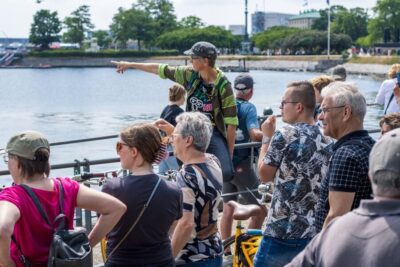
Highlights 3 Hour Bike Tour with a Local Guide
Read our review →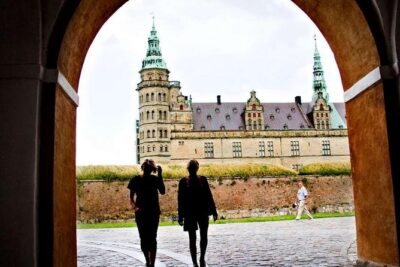
Hamlet and Sweden Tour – Two Countries in one day !
Read our review →
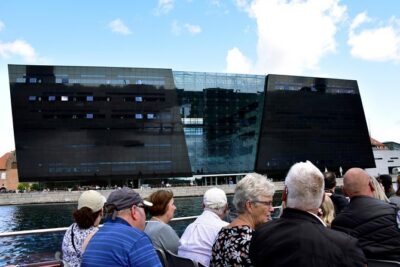
Copenhagen Sightseeing Classic Canal Tour With Live Guide
Read our review →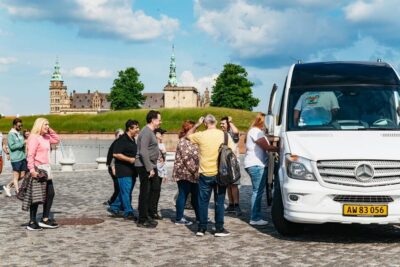
Kronborg, Frederiksborg Castle and Roskilde Tour
Read our review →Browse the lists this tour appears in