
Reviewed · WALKING TOURS
Odense: City walk – The new green Odense – City development
Odense is not simply presented as a fairy-tale city on this walk. You follow its recent transformation from industrial center to greener city, seeing the roads, buildings, harbor spaces, and new districts that reveal how the change happened. I like the honest focus on urban planning, and I like the chance to ask a local guide about Danish housing, education, transport, and daily life. The one drawback is clear: this is a discussion-heavy walk, not a classic sightseeing tour packed with famous monuments.
I also like the small-group format. Guides such as Jørn Asmussen, and on some outings Johan, bring personal insight and can adjust the conversation to your questions. You should be comfortable walking about 4 km, or roughly 5,500 steps, and give yourself two hours for a steady round trip through central Odense.
Key points to know before you book
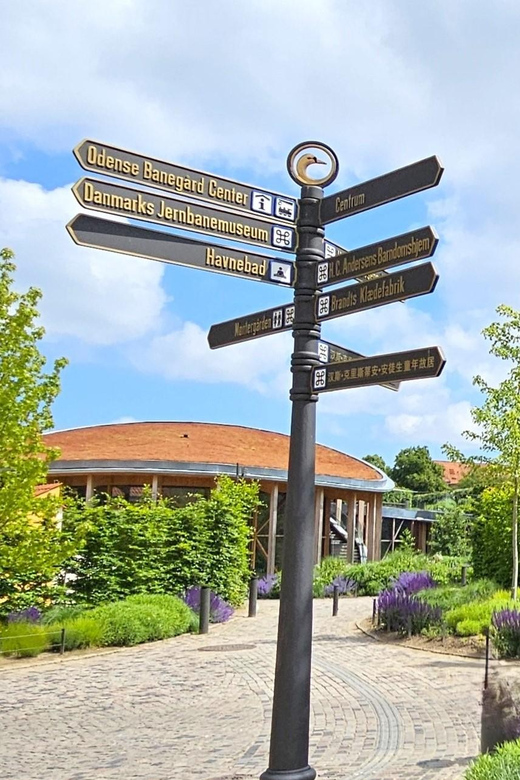
- A city tour about change: Follow Odense from its old center through the harbor and former industrial areas to newer urban districts.
- A local conversation, not a scripted monument tour: Ask about Danish education, housing, infrastructure, economics, and everyday life.
- A former six-lane road became public city space: See one of the clearest examples of Odense’s effort to reclaim the center for people.
- Small groups make a difference: The guide can answer questions and explain local decisions in more detail.
- English and German are available: The tour is offered with a live guide in either language.
- Plan for 4 km of walking: You will cover a fair stretch of central Odense, with no transport included.
Why this Odense walk feels different
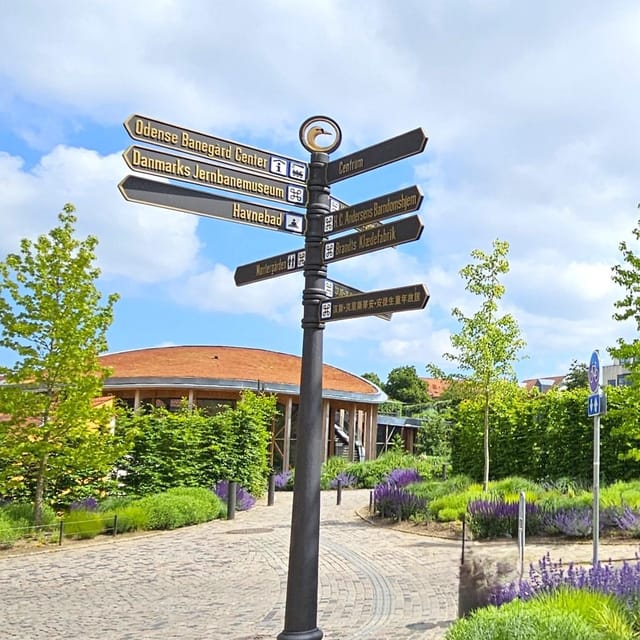
Many city walks help you place the postcard sights. This one helps you understand why Odense looks the way it does today. The subject is city development, with particular attention to the move away from heavy industry and traffic toward greener public spaces, new housing, and a more creative city center.
That gives you a useful second layer for your time in Odense. You will not only see an attractive street or a converted building. You will hear what came before it, what problem the change was meant to solve, and how the city hopes to shape its future.
The conversation reaches well beyond architecture. You can ask about how Denmark handles education, what daily life costs and feels like, how young people might find housing in central Odense, and how infrastructure affects city life. The exact conversation depends on your questions, but the format leaves room for more than a memorized list of dates.
I find that especially useful if you have already spent time exploring Odense on your own. The walk can connect separate impressions: the old center, the harbor, the former industrial zones, and the newer public areas. Instead of seeing them as unrelated parts of town, you begin to read them as stages in one long urban project.
A few more things to do in Denmark worth a look
- Private Walking Grand Tour of Copenhagen
★ 5.0 · 3,953 reviews - Copenhagen Highlights Walking Tour
★ 5.0 · 2,324 reviews - Politically Incorrect Private Highlights Walking Tour
★ 5.0 · 1,244 reviews
Starting at Overgade 3 in the old center
The meeting point is Overgade 3, on the pedestrian street or mall. Look for the small ruin, where the guide will wait with a KnowledgeWalks sign. It is a compact meeting area, so you should not have trouble finding the group.
Beginning here is a smart choice. You start in the older part of Odense, where the city’s established identity is easiest to sense, before walking toward the places that show its more recent direction. That contrast gives the rest of the tour a clear shape.
The guide sets the scene for the walk and introduces the main question: how does a city change when it wants to move beyond its industrial past? You will also get a chance to ask questions early, which helps you shape the conversation as the route continues.
The tour is available in English or German. If you prefer German, the named guide Jørn Asmussen has been praised for speaking it with excellent fluency. Another account identifies Johan as the guide, so the person leading your walk can vary by date. Either way, the small group gives you a better chance to talk directly rather than simply follow along at the back.
Albani Torv and the first look at city decisions
The first major stop is Albani Torv, where about 30 minutes are set aside for guided discussion. This is not just a quick pause for photographs. It is a place to begin looking at how public space, traffic, buildings, and pedestrian movement fit together.
You will hear more about the city’s planning choices and how those choices affect daily life. This is where the tour begins to show its main strength: the guide explains the practical reasons behind urban changes instead of asking you to admire them without context.
I would use this stop to ask about the balance between preserving the older city and making room for new needs. How does Odense keep its central area attractive while adding housing, improving movement, and making space for younger residents? The tour is designed for those questions.
Do not expect a formal museum-style presentation. The value comes from the guide’s explanations, local examples, and willingness to discuss topics that usually disappear from a standard sightseeing route. If you want only famous sights and short commentary, this section may feel too analytical. If you want to understand how a Danish city works, it gives you a useful start.
Donkey Republic and the role of getting around
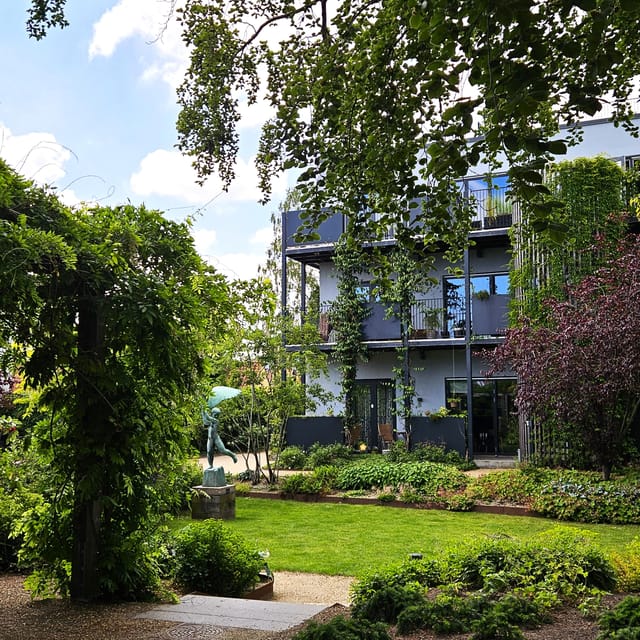
The next section takes you to Donkey Republic, with around 30 minutes of guided time. The stop brings transportation into the story of urban development.
The name is associated with bike sharing, and here it helps show how a city’s transport choices connect with its wider green ambitions. You can ask how people move through the center, how cycling fits into everyday life, and why infrastructure matters when a city tries to reduce the dominance of cars.
This is also where the walking format makes sense. You are not viewing Odense from a coach or rushing between isolated sights. You are moving through the same central spaces that residents use, seeing distances and connections on foot.
The tour also discusses the major transformation in the city center, including the area where a six-lane main road once cut through town. That detail gives you a strong sense of scale. The change was not simply a new building project. It altered how people experience the center and how different parts of the city connect.
You will want comfortable shoes here. Four kilometers over two hours is not a hard walk for most people, but it is more than a short stroll between monuments. The guide stops often enough for discussion, yet the route keeps moving.
Same base, a different kind of day out:
- Copenhagen: Canal Cruise with Guide
★ 4.6 · 9,115 reviews - Copenhagen: Hop-On Hop-Off Bus Tour with Boat Tour Option
★ 3.9 · 4,122 reviews - From Copenhagen: Lund and Malmö 2-Country Tour
★ 4.7 · 2,772 reviews - Copenhagen: Highlights 3 Hour Bike Tour with a Local Guide
★ 4.8 · 2,312 reviews
The Port of Odense and the city’s modern face
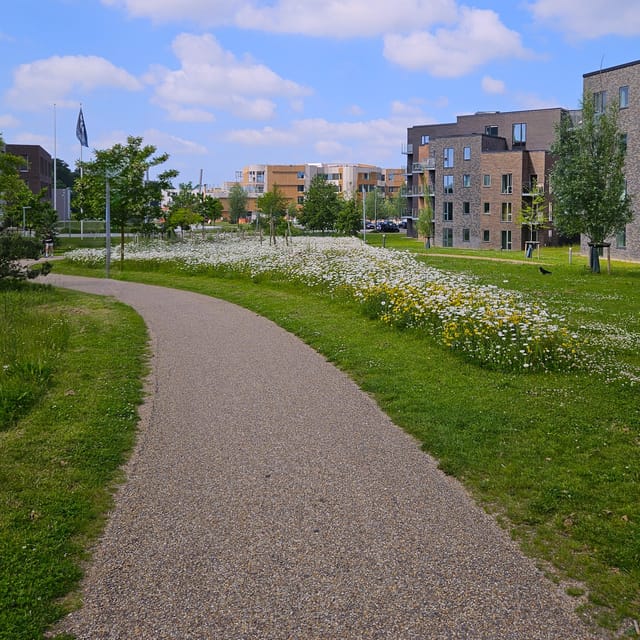
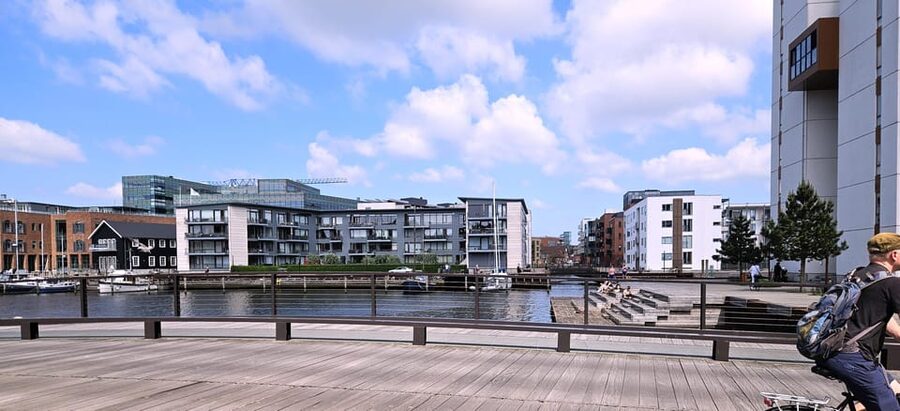
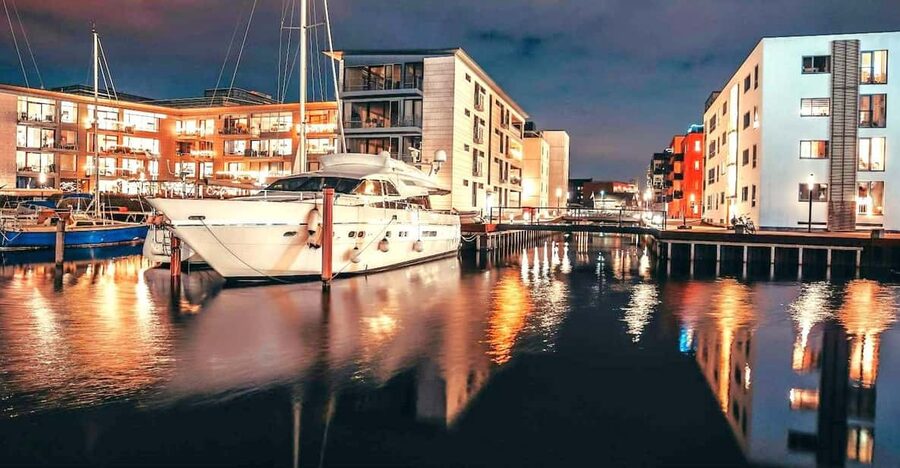
The Port of Odense receives another 30 minutes, making it one of the central parts of the experience. The harbor symbolizes the modern transformation of the city, and the route uses it to show how former working areas can take on new roles.
You will look at the port as part of a larger change from industrial Odense to a city that wants more green space, innovation, and creative activity. The guide explains what has changed and how new development is intended to support city life.
This is the point where the walk may be most useful for anyone curious about urban regeneration. You can ask what happens when industrial land lies close to the center, how new districts are planned, and how a city tries to attract young people without pushing them out through high housing costs.
The tour’s information about affordable housing is particularly relevant. It does not treat city development as a matter of handsome new buildings alone. It also asks who gets to live in the center and whether young residents can afford to remain part of city life.
The port may not appeal to you if you are looking for Odense’s most historic or picturesque corners. Its value is different. It shows how a city manages change, and the guide’s photographs of earlier conditions can make the contrast easier to understand.
Storms Pakhus and the social life of a new district
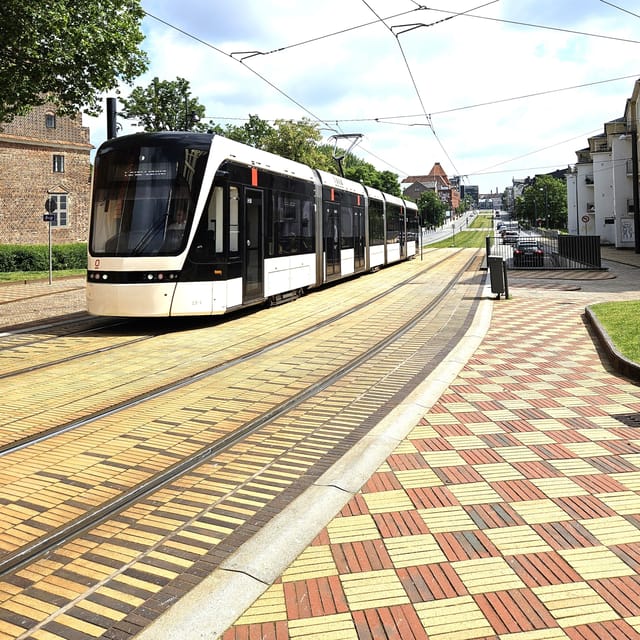
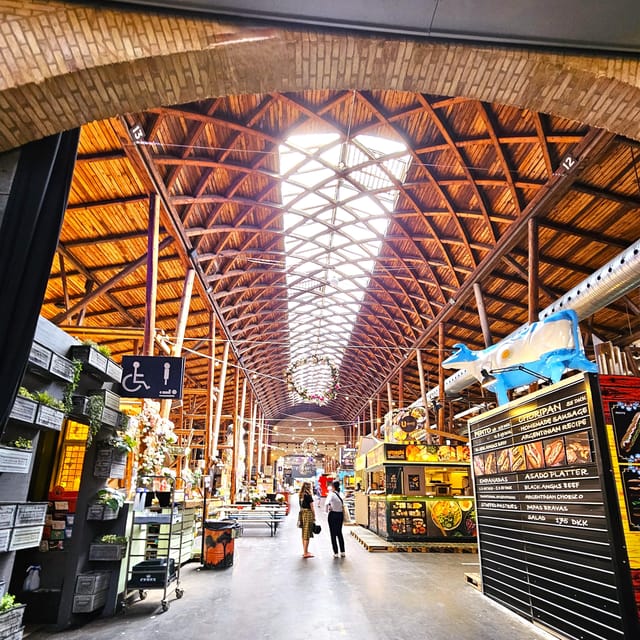
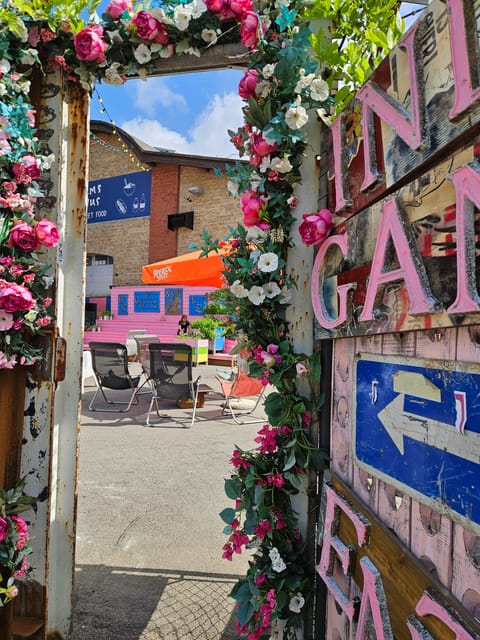
The route continues to Storms Pakhus, Odense Street Food, for about 15 minutes. This stop adds a social and everyday side to the development story.
A place such as this helps you consider what makes a new district feel lived in. Food, informal meeting places, and shared public areas can bring activity to a former industrial zone. The stop is brief, but it gives the discussion a practical human scale after the larger talk about infrastructure and planning.
You may find this one of the more relaxed parts of the walk. It is also a useful place to ask where local residents spend time, how new projects affect daily routines, and whether redevelopment creates spaces for a broad mix of people.
Keep in mind that the tour does not promise a food tasting or a meal. Storms Pakhus is part of the guided route, not a separate dining experience. If you want to eat there, treat that as an extra plan outside the two-hour walk.
H.C. Andersen Haven and the return through changed streets
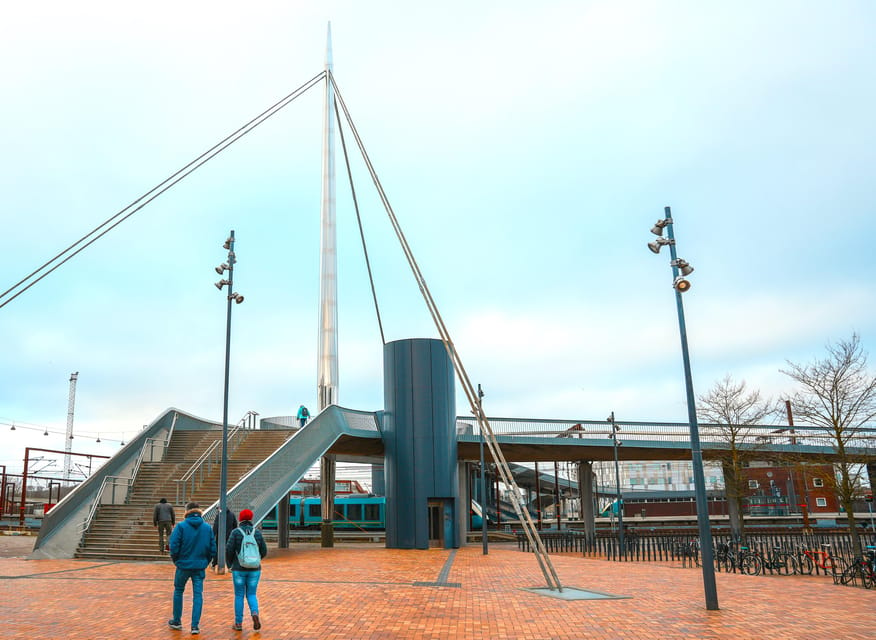
The final guided stop is H.C. Andersen Haven, with about 15 minutes of discussion. Its position near the old center helps complete the round trip and brings the modern planning story back into contact with Odense’s familiar identity.
The route then returns to Overgade 3. On this final stretch, you walk through a completed urban area that occupies the space where a six-lane main road once ran through the center. That before-and-after comparison is one of the clearest details to remember from the tour.
You can see how public space changes when traffic is reduced and the center is planned for people on foot. The guide’s older photographs add useful context, especially if the physical evidence of the former road is no longer obvious.
Ending where you began also makes the walk easy to fit into a day of sightseeing. You do not need to arrange a taxi or learn a new bus route back to the center. You are returned to the same pedestrian area where the tour started.
What the guide adds to the experience
The guide is the main reason to choose this walk over reading about Odense’s development on your own. The subject can sound dry on paper, but a local conversation brings out the decisions and disagreements behind the visible changes.
Jørn Asmussen is specifically associated with the tour, and the information provided also names Johan on one outing. You can expect English or German commentary, explanations of older and newer parts of the city, and time for questions.
The strongest part is the insider information. You hear about the city from someone who can connect planning decisions with ordinary life. That may include how young people find housing, how Danish institutions work, and how residents respond to changes in their surroundings.
One particularly useful feature is the use of historical photographs. Seeing what a street or district looked like before redevelopment makes the changes easier to grasp. You do not need to know much about urban planning beforehand. The guide explains the story in plain terms and can follow up when you want more detail.
The small group matters here. A large crowd would make a question-led discussion harder, while a smaller group lets the guide adjust the pace and subject. One outing had only two people, which allowed for a very personal conversation. You cannot assume every departure will be that small, but the experience is designed for limited numbers.
Is the $31 price good value?
At $31 per person, this is not the cheapest way to spend two hours in Odense. You can walk through much of the center without paying anything. The value comes from interpretation, access to a local guide, and the chance to understand changes that are not obvious from a map.
I consider the price fair if you enjoy city planning, Danish society, architecture, transport, or local politics. You are paying for a guided conversation across several parts of the city, not just a short introduction to the most famous sights.
The value is also stronger if you have already seen the old center. After a few days in Odense, the tour can bring the city into focus and explain how its separate areas relate to one another. If this is your first hour in town and you mainly want the essential historic sights, you may prefer a more traditional city walk first.
The tour also includes a local perspective that is difficult to reproduce with a guidebook. That is especially useful when the subject is current development. A printed history can explain what existed in the past, but a local guide can discuss how the city is trying to handle present-day needs.
Who should book this walk?
I recommend it most strongly to you if you ask why a city looks the way it does. It suits curious visitors who enjoy walking, conversation, and practical details about how people live.
You will likely get the most from it if you are interested in:
- Urban planning and greener city design
- Danish education and everyday life
- Housing for young people in city centers
- Transport, infrastructure, and public space
- Industrial conversion and new districts
- Local perspectives rather than standard sightseeing facts
Families with older children or teenagers may also find the subject useful, especially if they are interested in architecture, environmental issues, or how cities make decisions. The tour is less suitable for anyone who wants a relaxed, purely historic walk with little discussion.
You should also be comfortable standing and walking for two hours. The stated distance is about 4 km, or roughly 5,500 steps. There is no need to treat that as a strenuous hike, but good walking shoes will make the experience easier.
Booking details that matter
The tour lasts two hours and runs in a small group when that option is available. The meeting point is Overgade 3, 5000 Odense, beside a small ruin on the pedestrian street. Look for the KnowledgeWalks sign.
Live guiding is available in English and German. You can reserve now and pay later, and cancellation is allowed up to 24 hours in advance for a full refund. Check the available starting times when booking, since the exact schedule is not fixed here.
The tour returns to Overgade 3, making it simple to continue exploring central Odense afterward. Food and entry tickets are not listed as included, so plan any meal or attraction separately.
Should you book the New Green Odense walk?
Book it if you want to understand Odense beyond its old streets and famous associations. The combination of the harbor, former industrial areas, new districts, traffic changes, and local commentary gives you a clear picture of a city still deciding what it wants to become.
I would not choose it as your only Odense tour if you need a full introduction to historic landmarks. I would choose it after, or alongside, your own sightseeing, especially if you want to know how the city’s newer public spaces and buildings fit together.
For $31, the best reason to go is the guide-led conversation. You leave with more than a route through town. You leave with useful questions about housing, transport, education, and the choices that shape a city. That makes this a strong pick for a curious visitor who would rather understand Odense than simply photograph it.
FAQ
Where does the city walk begin?
The meeting point is Overgade 3, 5000 Odense, on the pedestrian street or mall. Look for the small ruin and the guide carrying a KnowledgeWalks sign.
How long is the tour?
The walk lasts two hours and covers about 4 km, or approximately 5,500 steps.
What languages are available?
The live guide offers the tour in English or German.
What places does the route visit?
The route begins at Overgade 3 and includes Albani Torv, Donkey Republic, the Port of Odense, Storms Pakhus, and H.C. Andersen Haven before returning to Overgade 3.
Is this a small-group experience?
Yes. A small-group option is available, giving you time to interact with the guide and ask questions.
Can I cancel or pay later?
You can reserve now and pay later. Cancellation is available up to 24 hours before the tour for a full refund.
Just added in Denmark
- a day at North Zealand Castle Tour★ 4.5 · 19 reviews
- Copenhagen Walking Tour: Highlights and Hygge w/Lunch★ 5.0 · 272 reviews
- Exhibition – Home of Carlsberg★ 4.5 · 281 reviews
- SUP – Stand Up Paddle – Kitesurfing – Wingfoil & Kitefoil courses★ 5.0 · 14 reviews
- The Six Forgotten Giants Trolls Hunt with Minibus★ 4.5 · 27 reviews
- The Hunt For The Six Forgotten Giants★ 5.0 · 45 reviews
- Politically Incorrect Private Hidden Gems Walking Tour★ 5.0 · 270 reviews
- Social Nightlife Crawl Copenhagen★ 5.0 · 164 reviews
Walking Tours, compared.

Reykjavik Food Walk – Local Foodie Adventure in Iceland
Read our review →
Reykjavík Small group Walking Tour – by CityWalk
Read our review →


Past & Present Small Group Guided Walking Tour
Read our review →
Walking Tour in Bergen of the Past and Present
Read our review →
Browse the lists this tour appears in