
Reviewed · PUFFIN WATCHING TOURS
Reykjavik: 1-Hour Puffin Watching Tour
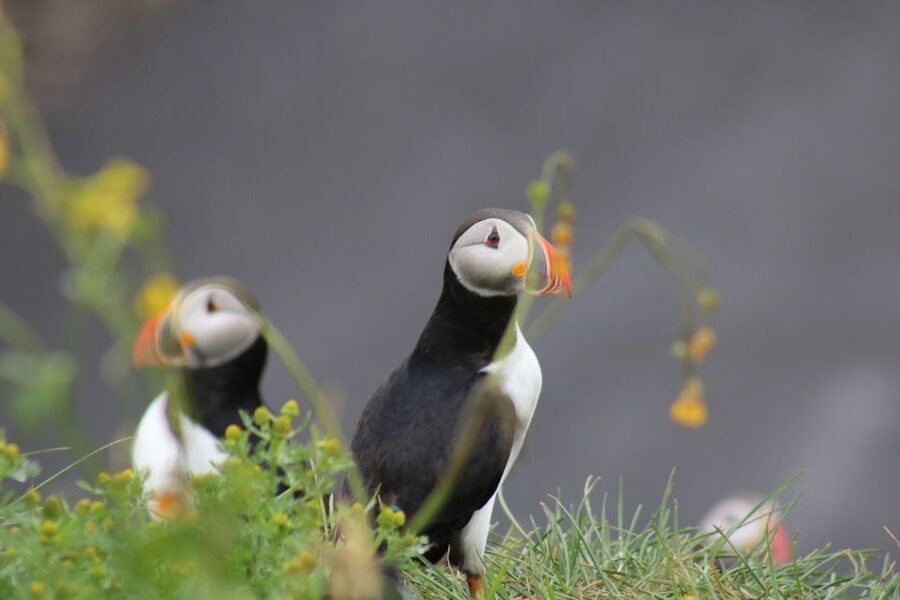
Puffins are small birds, but from a boat near Reykjavik they can fill the air, water, and rocky ledges around you. This short cruise takes you toward Akurey, Engey, or Lundey, where puffins breed alongside eider ducks, Arctic terns, guillemots, cormorants, fulmars, geese, and oystercatchers. The free binoculars matter, since even a nearby puffin is smaller than you may expect.
I like the tour’s easy downtown departure and its thoughtful cold-weather setup: warm overalls, raincoats, blankets, and onboard binoculars. I also like the careful approach to the islands, with the engines sometimes switched off so you can hear the birds. The main catch is that puffins are protected and the boat cannot always get as close as you imagine, especially at low tide or in poor weather.
Puffin watching at a glance
- Sail from Ægisgarður 5: The Elding ticket office sits about 300 meters from central Reykjavik.
- Visit one of three bird islands: The captain chooses Akurey, Engey, or Lundey based on tides and weather.
- Expect about 30 to 40 minutes near the birds: The rest of the trip is the ride out and back.
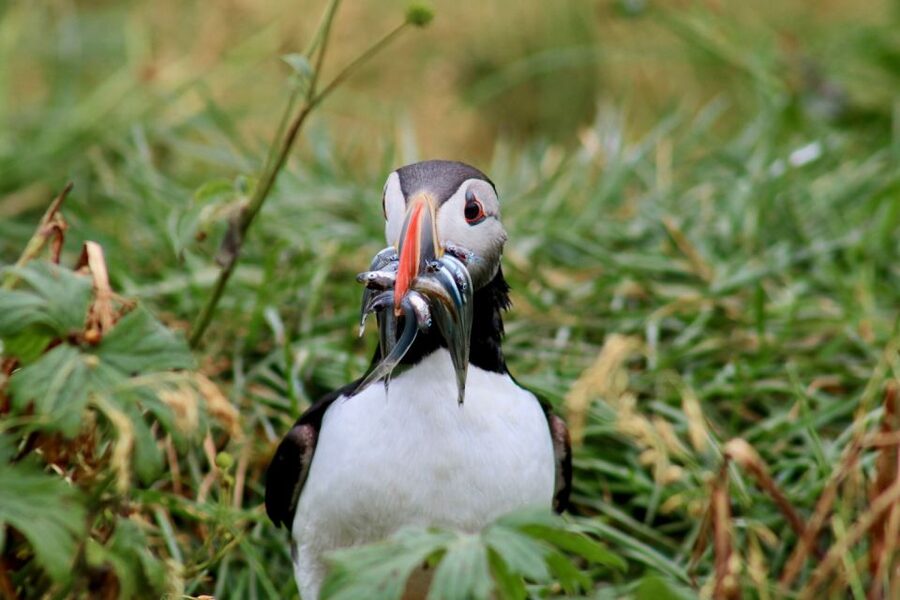
- Use binoculars for the real show: Puffins may look like dark specks to the naked eye.
- Watch more than puffins: Eider ducks, Arctic terns, guillemots, cormorants, fulmars, geese, and oystercatchers are all possible.
- Support responsible wildlife work: Ticket income contributes to summer research and wildlife protection projects.
A short cruise with a very Icelandic payoff
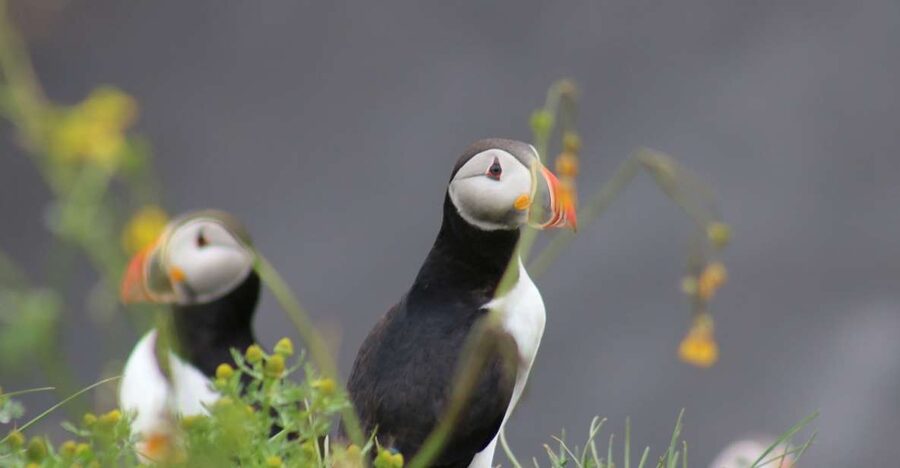
This is one of Reykjavik’s simplest wildlife outings. You walk from the city center to the harbor, board a comfortable yacht, and spend roughly an hour on the water. The route is short enough to fit before lunch, after a museum visit, or between other city plans.
The boat follows the coast and heads toward one of the small islands used by breeding seabirds. The exact island is not fixed. Akurey, Engey, and Lundey all offer bird habitat, and the crew chooses according to conditions. That flexibility is useful because tides affect how near the boat can get to the rocky shores.
The stated duration is one hour, with about 15 minutes each way and around 30 minutes viewing the island. Some departures run closer to 1 hour and 20 minutes, or even a little longer. I would leave extra time in your schedule, especially if you have a bus, flight, or restaurant booking soon afterward.
Other seabird trips from Reykjavík:
- Reykjavik: Puffin Watching Boat Tour
★ 4.6 · 1,052 reviews - Puffin Cruise with Expert Tour Guide from Reykjavik
★ 4.5 · 636 reviews - Reykjavik: Whales and Puffins Express Cruise Combo Tour
★ 4.3 · 442 reviews
Getting to the Elding departure point
Your meeting point is Ægisgarður 5, at Elding’s ticket office in the Old Harbour. From downtown Reykjavik, it is no more than a five-minute walk for most people. Arrive early, since the harbor area has the Whale Watching Centre, videos, skeleton displays, information boards, and a shop to browse before departure.
Parking can be difficult to find near the harbor. If you are staying in central Reykjavik, walking is the easier choice. You should also avoid high-heeled shoes and large bags, both of which are not allowed on the activity.
The harbor is exposed, and Icelandic weather can change fast. Wear layers and bring weather-appropriate clothing even if the city feels calm. The boat supplies raincoats, warm overalls, blankets, and sometimes motion sickness tablets, but you will be more comfortable if you arrive ready for wind and drizzle.
The boat ride out to the islands
The ride to the bird islands is part transport and part sightseeing. You get views back toward Reykjavik and out across Faxaflói Bay, with the boat providing a different angle on the city than you get from the streets.
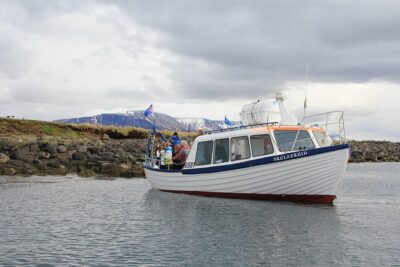
The vessel is large enough to feel steady and comfortable, yet small enough for you to move around and look for the best angle. Past departures have had small groups, including one group of about 12, which made it easier to shift around the boat without blocked views. Group size can vary, so do not assume every sailing will feel equally spacious.
If the sea is rough, the captain handles the conditions carefully, but this is still a boat trip in open water. One June departure had rough seas, while other outings were calm and smooth. If you are prone to motion sickness, sit where you feel most secure and ask the crew about available tablets.
What happens near Lundey, Akurey, or Engey
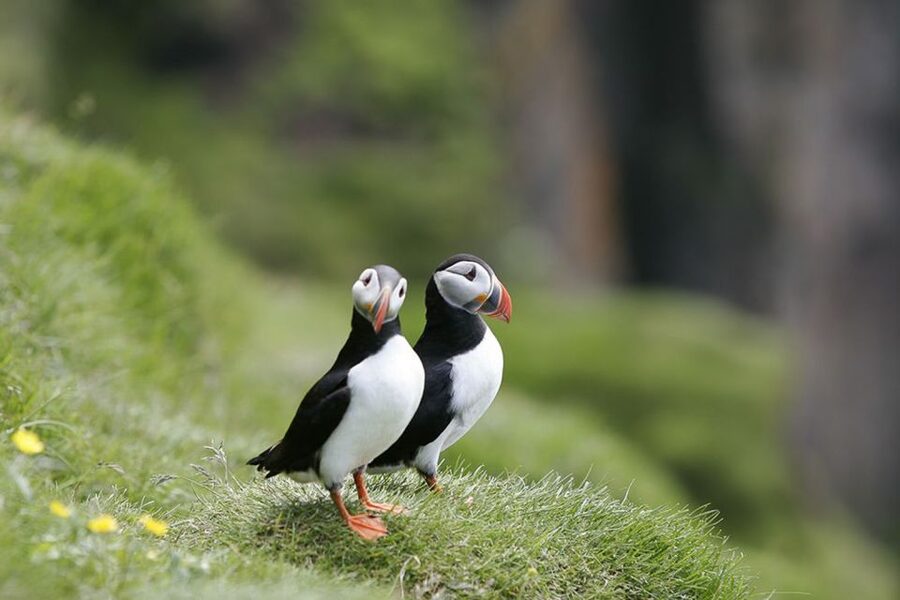
Once the boat reaches the chosen island, the captain circles the rocky shore and slows near the areas where puffins gather. You may see birds perched beside their burrows, sitting on the water, feeding, or flying low over the sea.
At times, the captain may turn off the engines. That quiet pause is one of the best parts of the experience. Instead of hearing only the boat, you can listen to the calls of the colony and watch the birds work around the rocks.
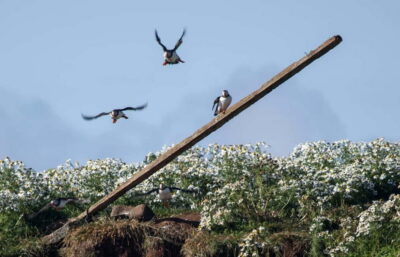
The puffins may be close enough to see with the naked eye, but binoculars give you the details: the bright breeding-season bill, pale face, black-and-white body, and quick movements. The bird’s famous color is seasonal, so timing matters. Early in the season, puffins are still arriving, while late-season trips can have fewer birds. Even then, sightings can be strong.
Tide makes a real difference. At low tide, the boat may not reach the island as closely as it can at high tide. If getting near the nesting ledges is your main goal, ask the ticket office which departure times coincide with higher water. This will not guarantee a perfect approach, but it is a sensible planning step.
A few more things to do in Reykjavík worth a look
- 1-Hour Helicopter Tour in Iceland: The Geothermal Tour
★ 4.9 · 263 reviews - Eidfjord: 1-Hour Fjord RIB Tour
★ 4.9 · 215 reviews - 1 Hour Copenhagen Segway Tour
★ 5.0 · 134 reviews - Rovaniemi: One Hour Husky Experience
★ 4.0 · 63 reviews
Puffins are not the only birds
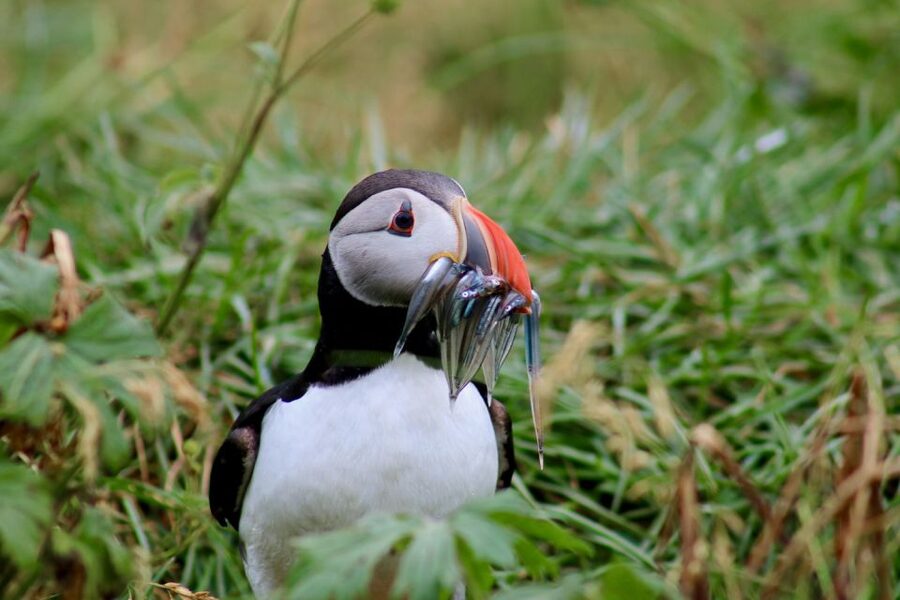
The islands support a busy mix of seabirds. You might see eider ducks, Arctic terns, guillemots, cormorants, fulmars, geese, and oystercatchers along with the puffins. Some outings have also produced seals, dolphins, or feeding gulls, though those sightings are not promised.
This variety gives the trip value even when puffins are less active. In dull weather, the birds can be harder to photograph, but the crew can still point out different species and explain what you are seeing.
The guide adds context about puffin life, including what the birds eat, how long they live, how many eggs they lay, how far they swim underwater, and which predators threaten them. Guide Frida received particular praise for making these details vivid and personal. Other guides, including Olivia, have also helped with local suggestions and bird photographs.
Binoculars, cameras, and realistic expectations
The onboard binoculars are not a minor extra. They are central to enjoying this trip. Puffins are much smaller than many first-time watchers expect, and the boat must keep a respectful distance from the breeding sites.
Most information says binoculars are available to borrow, and many departures hand them out near the island. A few past outings had limited access, so bring your own pair if you have one. A decent camera with a long lens helps, but even good equipment may struggle in gray light or when birds are moving.
A useful trick is to place a phone camera against the binocular eyepiece. With a steady hand, you may capture a better record than a phone pointed straight across the water. Guides sometimes take their own bird photographs and share them afterward, though delivery may take several days and should not be treated as guaranteed.
You will get the most from the tour if you enjoy watching behavior rather than chasing a perfect close-up. Seeing puffins fly in groups, bob on the water, or disappear into burrows can be more memorable than one sharp photograph.
Warm clothing and onboard comfort
Iceland’s summer weather is not always warm, especially on the water. The supplied warm overalls, raincoats, and blankets make this outing easier for visitors who did not pack serious outdoor clothing.
There is an indoor area and refreshments are available to buy. You can also warm up with seaman’s coffee, an appealing touch on a cold or wet day. Still, do not treat the provided gear as a reason to wear light clothing. Bring layers, and keep your camera protected from spray and rain.
The boat has room to move around, but you should expect other people to want the same good viewing positions. Keep your bag small and do not block passageways. A small camera pouch or daypack is more practical than luggage.
Is $66 good value?
At $66 per person, this is not a bargain-priced harbor ride. Iceland’s activity costs are high, and the tour is short. About half the time is spent traveling to and from the island, so you are paying for the boat, crew, guide, wildlife care, equipment, and a chance to see animals in their natural setting rather than at a captive attraction.
For a first puffin sighting, I consider the price reasonable. The warm gear and binoculars add real value, and the guide turns a quick boat trip into a proper wildlife outing. The ticket also supports summer research, environmentally responsible tourism, and organizations working to protect wildlife.
The value drops if you expect to step ashore or take frame-filling photographs of puffins perched beside you. You remain on the boat, and the distance varies with tide, weather, and the birds themselves. If you want a full-day wildlife expedition, this is too short. If you want a well-organized introduction during a Reykjavik stay, the compact format works well.
Best time to book
Puffin watching is a seasonal activity, and the birds are most associated with the breeding season. Early departures in May can still find puffins arriving, while July usually offers strong bird activity. August can still be worthwhile, though the season is later.
The time of day is less important than many people expect. One noon departure had plenty of puffins, despite concerns that midday would be poor. Tide and weather can have more effect on your view than the clock.
Book with a flexible plan if possible. You can cancel up to 24 hours before departure for a full refund, and the reserve-now, pay-later option lets you keep your plans open. Wheelchair users should note that this activity is not suitable for them.
Who should take this boat trip?
I would choose it for first-time puffin watchers, families who want a short outing, photographers who understand the limits of boat-based wildlife viewing, and anyone with only a day or two in Reykjavik. It also suits cruise passengers and visitors looking for a replacement when a longer island trip falls through.
You should think twice if you dislike cold, wind, or open water. You may also be disappointed if your main aim is a close land-based portrait. The birds are protected, and the responsible approach sometimes means keeping a greater distance than your camera would prefer.
Should you book the Reykjavik puffin tour?
Book it if you want an easy, environmentally responsible way to see puffins without leaving Reykjavik for a full day. The short sailing, helpful guides, borrowed binoculars, warm gear, and chance to see several seabird species make it a practical choice.
Before booking, check the season, ask about tide times, and pack for rain. If possible, bring your own binoculars and leave 20 to 30 extra minutes beyond the advertised hour. With those expectations in place, this is a worthwhile introduction to Iceland’s seabirds and a pleasant hour on the bay.
FAQ
Where does the puffin tour depart from?
It departs from Elding’s ticket office at Ægisgarður 5, 101 Reykjavik, in the Old Harbour. The office is about 300 meters, or a five-minute walk, from the downtown area.
How long does the tour last?
The listed duration is one hour, with about 15 minutes sailing out, 30 minutes viewing wildlife, and 15 minutes returning. Some departures may last around 1 hour and 20 minutes or slightly longer.
Which island will the boat visit?
The boat may visit Akurey, Engey, or Lundey. The captain selects the destination based on tides and weather conditions.
Are binoculars provided?
Yes. Binoculars are available to borrow onboard. Since puffins are small, bringing your own binoculars can still be useful if you have them.
What other birds might I see?
Possible sightings include eider ducks, Arctic terns, guillemots, cormorants, fulmars, geese, and oystercatchers. Seals and dolphins have also been seen on some trips, but they are not guaranteed.
What should I wear?
Bring weather-appropriate clothing and dress in layers. Warm overalls, raincoats, and blankets are available onboard, but the harbor and open water can still feel cold and windy.
Can I buy food or drinks on the boat?
Refreshments are available to purchase onboard. Seaman’s coffee may also be available to help you stay warm.
Is the tour suitable for wheelchair users?
No. The activity is not suitable for wheelchair users. High-heeled shoes, luggage, and large bags are also not allowed.
Just added in Reykjavík
- From Reykjavik: Full-Day Horse Riding & Golden Circle Tour★ 3.7 · 81 reviews
- Reykjavik: Evening Icelandic Food and Drink Tour★ 4.9 · 66 reviews
- Hveragerdi: The Siggi Horse Riding Tour★ 4.8 · 13 reviews
- The Reykjavik Christmas Food Tour★ 4.8 · 19 reviews
- Reykjavik: Small-Group Snæfellsnes Day Trip★ 4.8 · 214 reviews
- The Golden Circle & Hop On – Hop Off Combo Deal★ 4.5 · 15 reviews
- Reykjavik: The Icelandic Sweet Tooth Tour★ 4.6 · 30 reviews
- Reykjavik: The Golden Circle Full-Day Tour★ 4.7 · 170 reviews
Puffin Watching Tours, compared.
Original Big Whale Safari & Puffins by Speedboat
Read our review →
Puffin Cruise with Expert Tour Guide from Reykjavik
Read our review →
Big Whales & Puffins RIB boat tour from Húsavík
Read our review →
Browse the lists this tour appears in