
Reviewed · TOURS IN SWEDEN
Stockholm: Wildlife Safari
The best part of this Stockholm wildlife safari is that it feels like a real search, not a ride through a fenced animal park. As dusk settles, you move between forest roads, lakes, and known wildlife spots, watching for moose, deer, beavers, wild boar, birds of prey, and smaller animals.
I like the small group of no more than eight, and I like that the guide combines a short hike with van transfers. The campfire meal, Swedish coffee, and mud cake are also useful treats after time outdoors.
The main drawback is simple: wild animals set the schedule. You may see moose, or you may see only deer and tracks. Fog, snow, darkness, or quiet animals can change the outing, so book this for the forest experience as much as for a particular animal.
Key points
- Moose spotting after sunset: The evening timing gives you a chance to look for animals when they become active.
- Several sighting areas: The van helps cover more ground than a single forest walk.
- Real tracking on foot: Follow signs of wildlife during a guided hike near the forest and lake.
- Campfire cooking: Dinner includes eco food, Swedish cook-coffee, craft beer, and campfire mud cake.
- Small personal group: With up to eight participants, it is easier to ask questions and share the guide’s attention.
- Wildlife is never guaranteed: You might see moose, deer, boar, beavers, cranes, hares, or birds, but no animal is fed or lured into view.
Leaving Stockholm for the Swedish forest
The safari begins at the True Nature Sweden office at Urban Basecamp, Tideliusgatan 62, in Stockholm. From there, you board an air-conditioned van and leave the city for forested areas in Stockholm County.
That transfer matters. You are not confined to one trail or one viewing platform. The guide can use several roads and sighting spots, checking places where animals have recently been active. This gives you a better chance than simply walking into the woods and hoping for a moose.
The whole outing lasts about five hours. Since starting times change, check the schedule when you book. An evening departure is central to the experience because dusk and darkness are when many animals begin to move.
The van is practical rather than luxurious. It gets you from place to place and lets the guide cover more territory. If you are tired of museums, cafés, and city streets, the change of pace is welcome. You return to the same meeting point at the end.
A few more things to do in Sweden worth a look
- Tromso Snowshoeing – Valley, Fjord Views, Wildlife, Meal & Pickup
★ 5.0 · 398 reviews - From Svolvaer: Trollfjorden Wildlife RIB Cruise
★ 4.8 · 355 reviews - Tromsø: Winter Sea Kayaking Tour with Wildlife Sightings
★ 4.9 · 333 reviews
Searching for moose, deer, and wild boar
Moose are the headline animal here, and for good reason. Sweden’s king of the forest is large, quiet, and easy to miss among trees. A sighting can last only a short time, so you will want to keep your camera ready and listen closely to the guide.
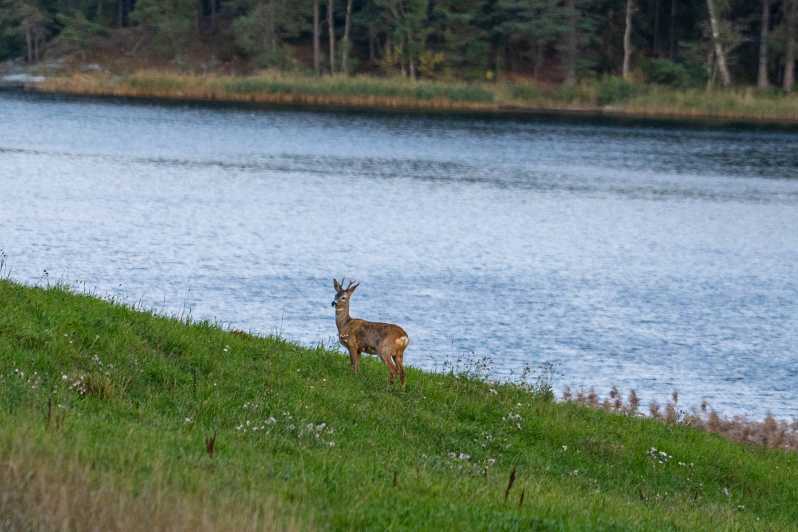
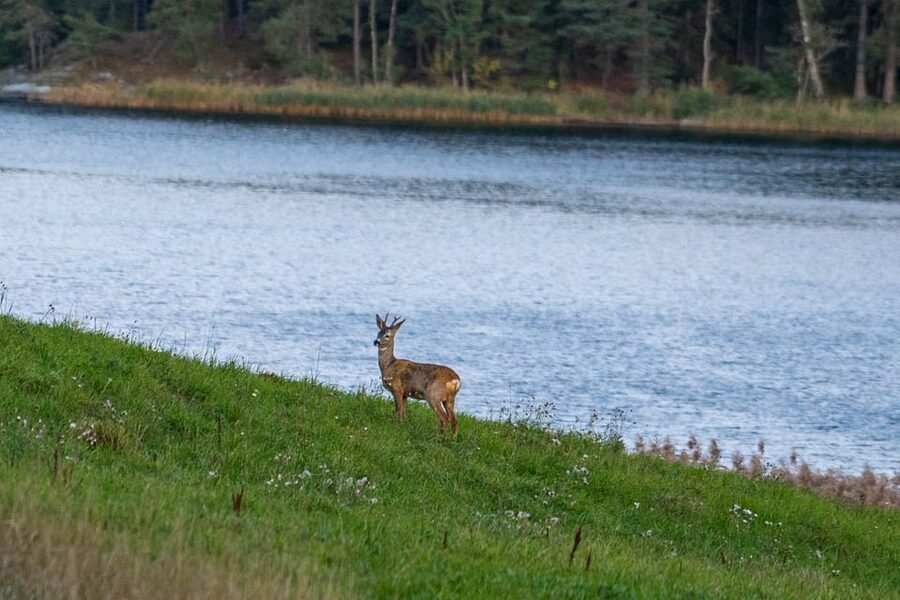
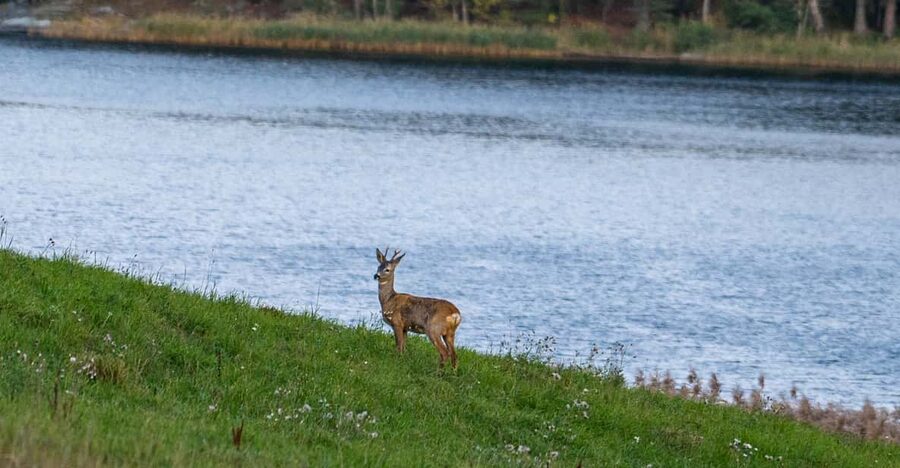
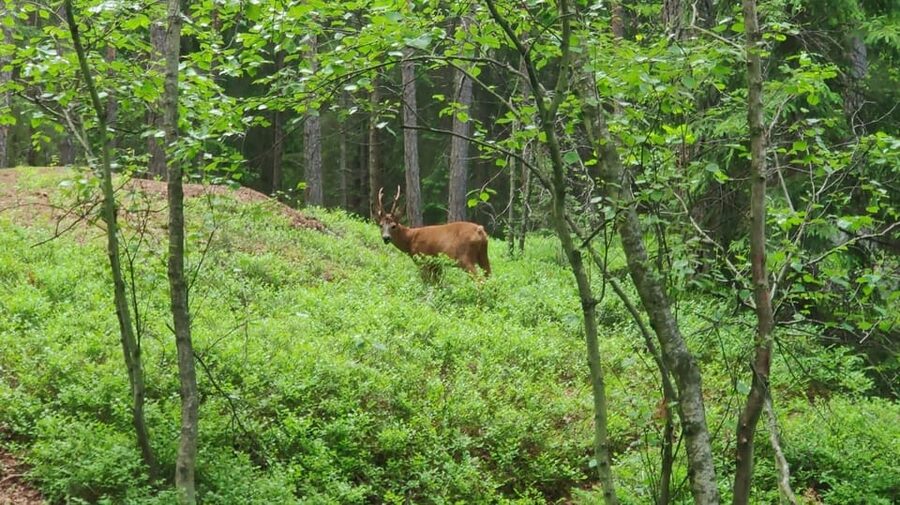
Deer are more commonly seen. The outing may include roe deer and fallow deer, along with wild boar, hares, foxes, cranes, geese, lapwings, and birds of prey. Beavers are another possible sight, especially around water, though you should not count on one appearing on cue.
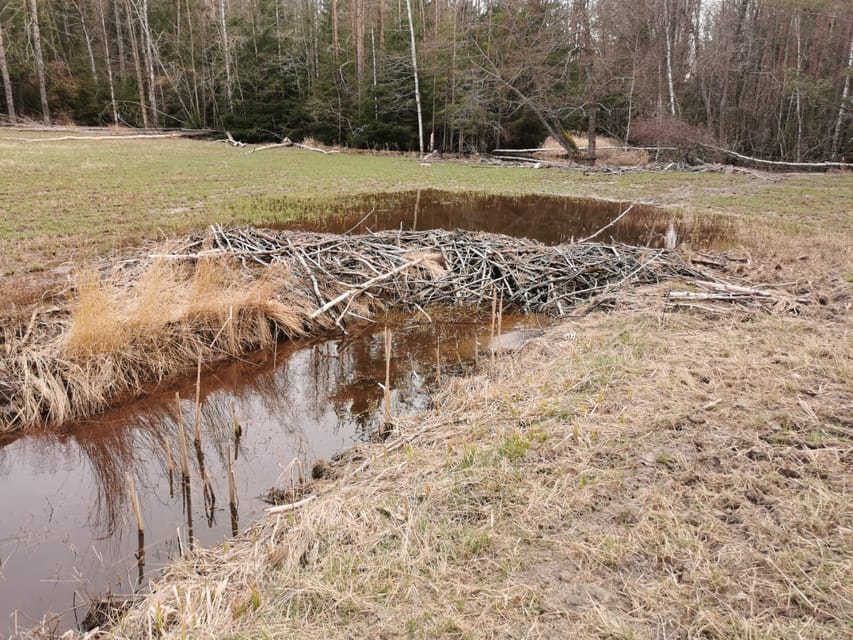
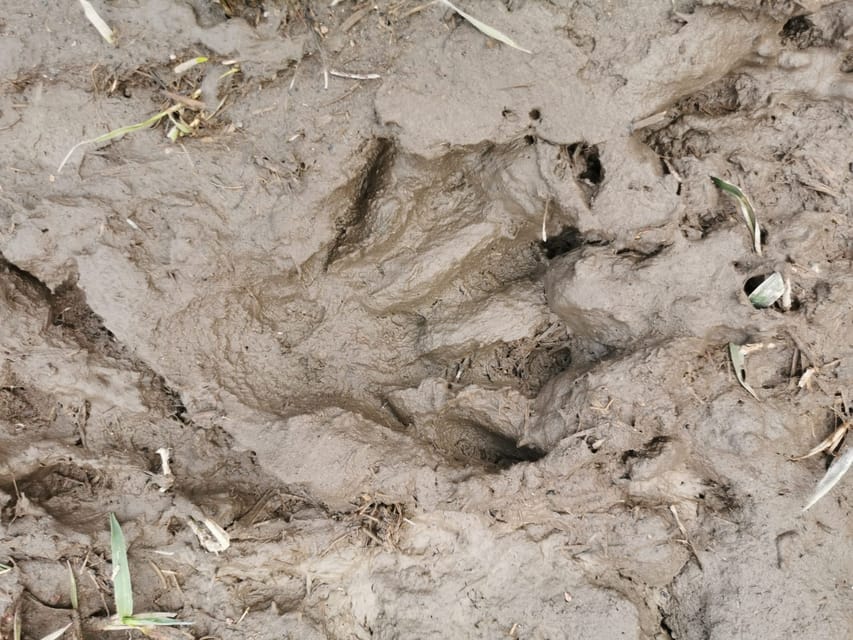
The guide points out more than animals. Look for tracks, feeding signs, droppings, nests, and other clues. Even when an animal stays out of sight, these details show you how the forest works. You may also spot signs of beavers or wild boar, wood ant hills, toads, wild salmon, and woodpeckers, depending on the season and location.
Wolves and lynx are mentioned as possible wildlife, but they are not guaranteed sightings. Treat them as lucky extras, not as part of the expected program. The same goes for eagles and other birds.
The most useful attitude is patience. You are not going to a zoo with a fixed display. The guide does not feed or attract the animals. That makes the encounter more authentic, but it also means that a five-hour safari can produce anything from several strong sightings to a quieter evening of deer, tracks, and forest scenery.
What the guided hike adds
At some point, you leave the van for a short hike. This is not presented as a demanding trek, but you still need proper hiking shoes or boots and clothing suited to the weather.
The walk gives the outing a different feel. From the van, you scan fields and forest edges. On foot, you slow down and notice smaller signs. Your guide may explain animal behavior, diet, habitat, and movement patterns while showing you how to read the ground.
You may also learn how to make a fire with a knife and flint. That small lesson connects the outing to older outdoor skills and gives you something hands-on to do while the forest grows dark.
A lake or nature reserve may form part of the walk. Some groups have enjoyed quiet time beside a lake, while winter outings can include snow and a frozen lake. These conditions depend entirely on the date, so do not book expecting a particular seasonal scene.
The hike is a good fit if you want more than wildlife photographs. It lets you experience the stillness of the Swedish woods. On the other hand, anyone looking for a long, strenuous hike should know that the activity is built around short walking sections and vehicle transfers, not an all-day trek.
Dusk, fog, and the large torch
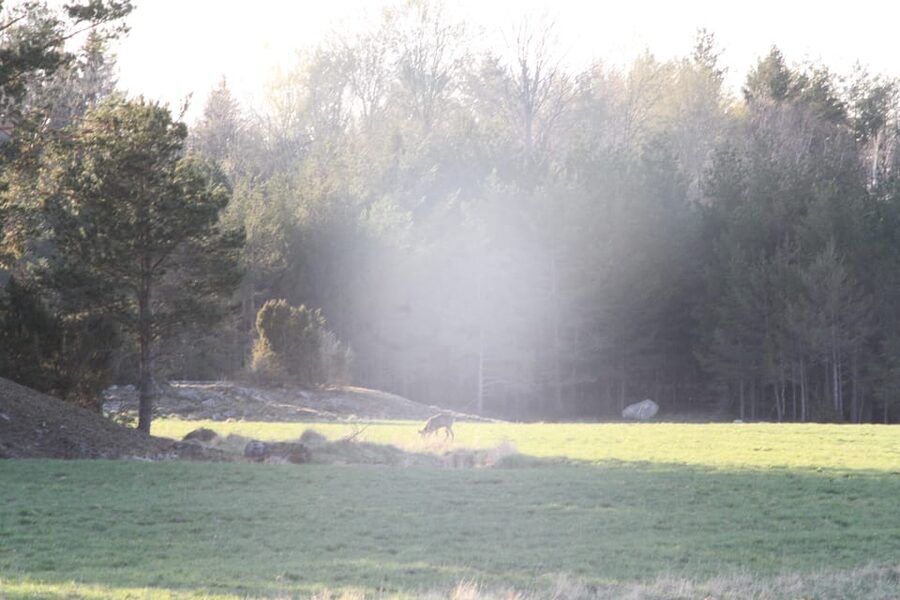
The changing light is part of the appeal. You begin with the softer colors of evening, then continue into darker conditions. The guide may use a large torch after sunset to scan the edges of the forest and open areas.
This can be exciting, but it also demands patience. You will not see every detail as clearly as you would in daylight. Fog can reduce visibility sharply. On one outing, thick fog hid much of the view, yet two moose appeared during the drive home. That is a useful reminder that the best moment may come when you least expect it.
Bring a camera, but do not make photography your only goal. Low light and moving animals can produce blurry pictures. Binoculars are supplied, so use them to watch behavior rather than simply trying to collect proof of every sighting.
The guide’s job is important here. Daniel, Andrew, Alex, Lucas, and Saga are among the guides associated with the experience, and the strongest outings depend on their ability to explain what you are seeing while keeping the group calm and observant. The guide also follows animal movement and chooses the spots to visit.
Same base, a different kind of day out:
- Stockholm: City Archipelago Sightseeing Cruise with Guide
★ 4.3 · 10,798 reviews - Stockholm: Skansen Open-Air Museum Admission Ticket
★ 4.5 · 3,427 reviews - Stockholm: Archipelago Boat Tour
★ 4.4 · 3,110 reviews - Stockholm: Highlights Boat Tour
★ 4.3 · 2,542 reviews
Campfire dinner, cook-coffee, and mud cake
The campfire meal gives the safari a warm center. Dinner is cooked outdoors and includes eco food, with ingredients arranged for a do-it-yourself wrap. You can also have hot drinks such as Swedish cook-coffee and hot chocolate.
There is craft beer listed with the food, while alcoholic drinks are otherwise not included. If you want alcohol beyond what is provided, plan for that separately. Campfire mud cake finishes the meal and adds a sweet touch to an otherwise practical outdoor dinner.
The meal is not a restaurant service, and that is part of the point. You eat outdoors, close to the fire, with the forest around you. It makes the evening feel less like a sightseeing product and more like a shared outdoor outing.
Food can also help with the timing. Wildlife watching involves pauses, slow drives, and stretches of quiet. A hot drink and dinner make those waiting periods comfortable. If you have dietary needs, the supplied details do not explain the available options, so ask the operator before booking.
A small group makes the difference
The group limit is eight people. That is one of the strongest practical features of the safari.
A small group means you can ask about tracks, plants, Swedish wildlife, or local culture without shouting over a large crowd. It also helps during sightings. When the guide stops the van or points toward the trees, fewer people are competing for the best view.
The group size can vary, of course. You might share the van with several other participants, or you might find yourself in a very small group. One outing had only two participants and a guide, creating a particularly personal experience.
Families can also consider this activity. Children have enjoyed walking in the woods, seeing deer, playing in snow, and crossing a frozen lake during a winter outing. Still, the five-hour length, evening timing, darkness, and need for weather-ready clothing may not suit every young child.
Is $151 a fair price?
At $151 per person, this is not a cheap add-on. The value comes from what is bundled into the price: return transportation from central Stockholm, a professional English-speaking guide, binoculars, a small group, several sighting areas, a guided hike, campfire cooking, eco food, drinks, and dessert.
You are also paying for local planning. The guide tracks animal movement and knows where wildlife is often active. That does not guarantee a moose, but it is more useful than choosing a random forest trail on your own.
The price makes the most sense if you value the full evening: the van ride, forest walk, wildlife education, fire-making, dinner, and quiet time outdoors. If your only goal is to photograph a moose, the cost may feel high because nature may not cooperate.
The experience has a rating of 4.4 from 83 reviews, which suggests a strong record without implying perfection. The most praised parts are the guides, the personal group size, the campfire meal, and the sense of being away from the city. The usual limitation is not poor service. It is the uncertainty of wildlife.
What to bring and how to prepare
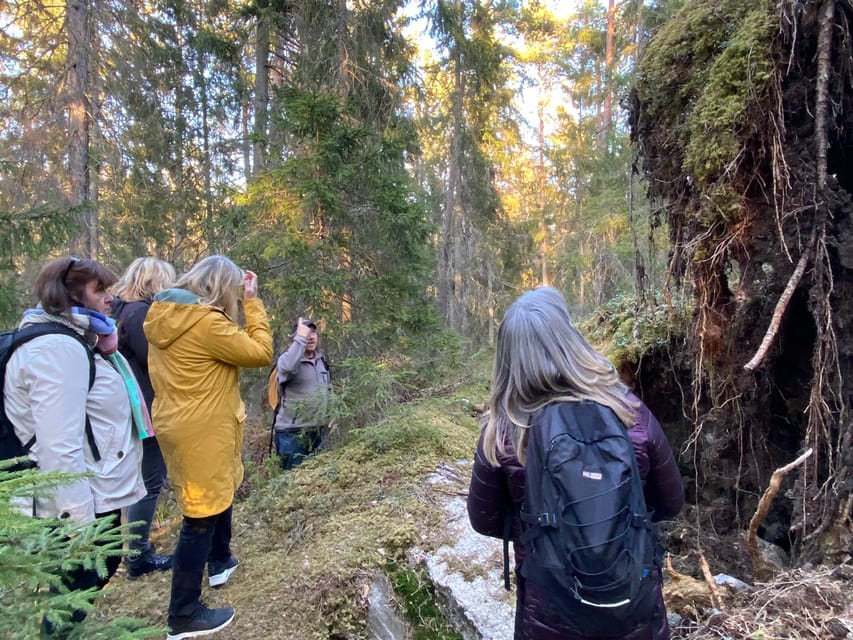
Wear hiking shoes or boots with good grip. The route can include forest paths, damp ground, snow, or other changing conditions, and ordinary city sneakers may not be comfortable.
Bring weather-appropriate clothing and a daypack. Evening conditions can feel colder once you stop moving, especially beside a lake or campfire. A camera is worth bringing, but keep it ready for quick sightings.
You should also bring realistic expectations. You may see moose, deer, beavers, cranes, hares, wild boar, or birds. You may instead spend much of the evening learning to read tracks and enjoying the forest. Neither outcome means the safari failed.
Cancellation is free up to 24 hours before the activity, and you can reserve now and pay later. That flexibility helps when your Stockholm schedule is still taking shape. The activity is conducted in English.
Who should book this safari?
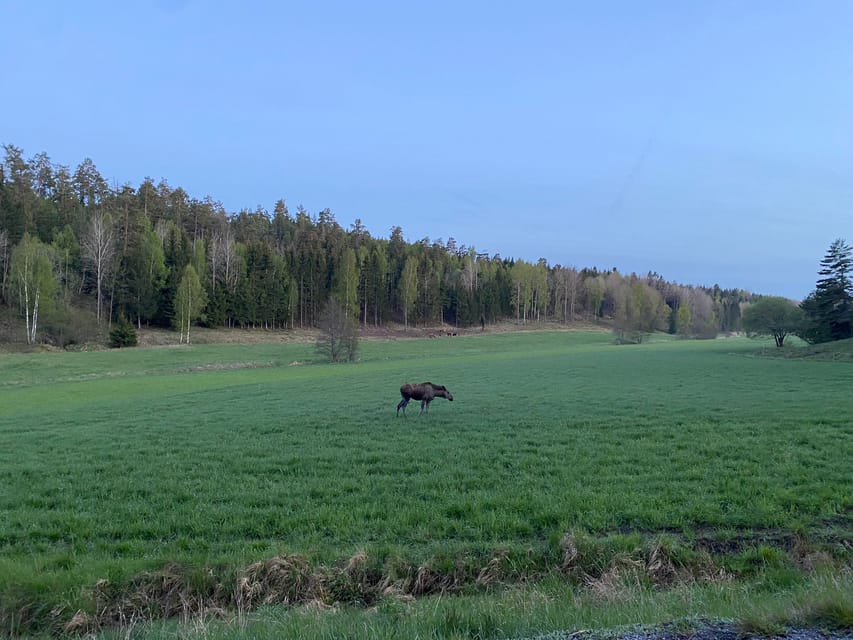
I would choose this outing if you want a break from Stockholm’s urban sights and enjoy the idea of watching nature without a fixed script. It suits couples, families with older children, solo visitors, and anyone who prefers a small group to a large coach tour.
It is especially good for people who enjoy natural history, photography, quiet walks, and informal outdoor meals. You do not need to be an expert. The guide explains animal behavior, habitat, diet, and tracking in a way that gives the forest more meaning.
I would think twice if you need guaranteed sightings, dislike evening outings, or are uncomfortable with cold, darkness, fog, or uneven ground. The experience also may not be right if you want a demanding hike, since the van does much of the distance work.
Should you book it?
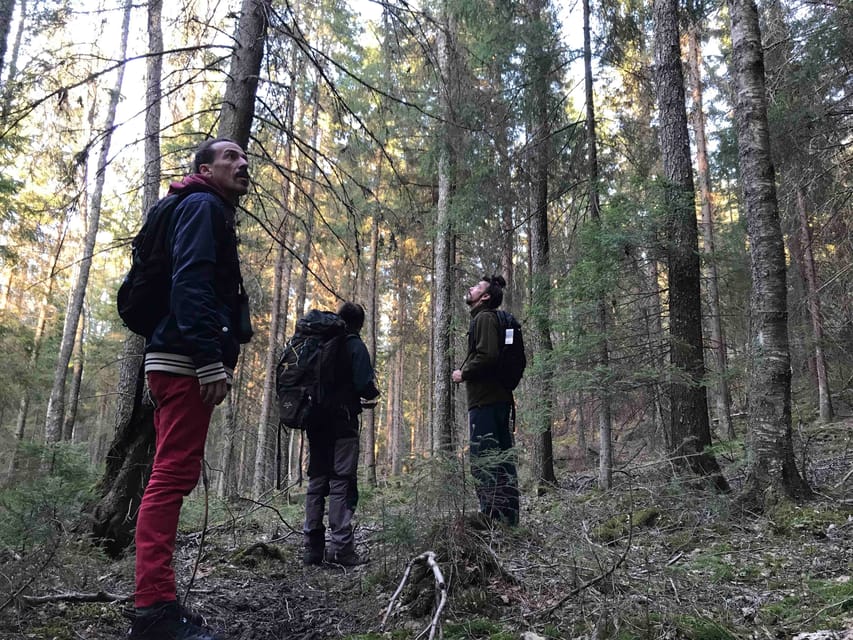
Book this Stockholm wildlife safari if you can accept uncertainty and want a genuine evening in Swedish nature. The strongest reasons are the small group, the mix of van scouting and walking, and the campfire meal with Swedish coffee and mud cake.
Do not book it as a guaranteed moose tour. Book it for the chance of seeing a moose, deer, wild boar, beaver, or bird in the wild, while learning how to notice the signs they leave behind. If you are lucky, two moose may appear through the fog on the ride home. If not, the forest, fire, and quiet still give you a memorable change from city sightseeing.
FAQ
Where does the Stockholm wildlife safari begin?
It begins at the True Nature Sweden office at Urban Basecamp, Tideliusgatan 62, 118 69 Stockholm.
Where does the activity end?
The safari ends back at the same meeting point.
How long does the safari last?
The activity lasts five hours. Starting times vary, so check availability when booking.
What animals might I see?
Possible sightings include moose, roe deer, fallow deer, wild boar, beavers, foxes, hares, cranes, birds of prey, geese, lapwings, woodpeckers, wolves, lynx, and eagles.
Are animal sightings guaranteed?
No. Wildlife is unpredictable, and the animals are not fed or attracted to the viewing areas.
Is transportation included?
Yes. Transportation by air-conditioned vehicle is included, with van transfers between several wildlife sighting spots.
What food and drinks are included?
The experience includes campfire cooking, eco food, craft beers, Swedish cook-coffee, and campfire mud cake. Personal alcoholic drinks are not included.
What should I bring?
Bring a camera, hiking shoes or boots, weather-appropriate clothing, and a daypack.
Just added in Sweden
- Walk Malmö with an audio guide★ 3.5 · 31 reviews
- Malmö Walking Tour: Explore Top Sights & Hidden Gems★ 4.0 · 23 reviews
- Old Town Helsingborg: Exploration Game and Self-Guided Tour★ 3.5 · 23 reviews
- Malmo Bike Rental★ 5.0 · 19 reviews
- Malmo Walking Tour, 3 hours (small group)★ 4.5 · 26 reviews
- Snowshoe up a Mountain★ 5.0 · 19 reviews
- Full-Day Reindeer Tour with Pickup in Kiruna★ 5.0 · 85 reviews
- Guided Tour to Icehotel and Jukkasjärvi★ 5.0 · 28 reviews
Tours in Sweden, compared.

City Archipelago Sightseeing Cruise with Guide
Read our review →

Stockholm Pass: Save up to 50% – Includes Vasa Museum Ticket
Read our review →
The Original Stockholm Ghost Walk and Historical Tour – Gamla Stan
Read our review →Browse the lists this tour appears in