
Reviewed · FOOD & DRINK
Vesterbro Tour With Beer & Pub Visits – Max 10 People
Vesterbro’s best stories are told over a beer, not behind a museum label. This three-hour walk moves from the old working-class pubs of Istedgade to Mikkeller’s polished craft beer room, with street art, royal oddities, and the Meatpacking District along the way.
I like the small group limit of 10, which gives guides such as Kenneth, Oskar, Liva, and Lucas room to talk with you rather than recite a script. I also like the sharp contrast between a traditional Danish brown bar and Mikkeller, the local brewery that helped reshape Copenhagen’s beer culture.
The main drawback is the first pub. Indoor smoking may be part of the old bar atmosphere, and some people find it unpleasant, especially anyone with asthma. The meeting point in front of Copenhagen Central Station can also take a little care to find, so arrive early.
Key points at a glance
- Three very different drinking stops: Expect one traditional Danish beer and two craft beers, with the bars chosen to show how Vesterbro has changed.
- A neighborhood tour first: The focus is local life, social history, and urban change, not technical brewing lessons.
- Small groups capped at 10: You get a more personal walk and a better chance to ask questions.
- The old and new Vesterbro: Istedgade, working-class pubs, graffiti, green public spaces, and the Meatpacking District all fit into one route.
- A useful finish near dinner: The tour ends near Halmtorvet and the Meatpacking District, surrounded by restaurants, bars, and evening activity.
- Smoking is a real consideration: The traditional pub may allow indoor smoking, so plan accordingly.
Why Vesterbro makes such a good beer walk
Vesterbro is one of Copenhagen’s most interesting neighborhoods because its identity is not polished away. Near the Central Station, you can still trace the area’s working-class roots, its former reputation for prostitution and drug use, and its later change into one of the city’s most popular places for food, design, nightlife, and local living.
This tour uses beer as the thread connecting those stories. You are not simply moving from bar to bar. Your guide explains why certain pubs mattered to workers, how public planning changed the streets, and how new breweries and creative businesses found a home among older buildings.
That balance is the tour’s strongest feature. If you want a serious lesson in hop varieties, fermentation, or brewing equipment, this is not the right choice. If you want to understand how Copenhagen’s people and neighborhoods changed while tasting good beer, it makes much more sense.
The 3 p.m. starting time is useful. You walk in daylight, stop for drinks in the afternoon, and finish in time to choose your own dinner nearby. At $72.59 per person, the price is not cheap for three included beers. Its value depends on how much you want the guiding and local context. You are paying for a hosted neighborhood experience, not just three drinks.
A few more things to do in Copenhagen worth a look
- Party Pub Crawl Copenhagen
★ 5.0 · 868 reviews - Copenhagen: Guided Party Pub Crawl with 4 Shots and 1 Drink
★ 4.6 · 603 reviews - Politically Incorrect Beer Walk
★ 5.0 · 516 reviews
Starting at Central Station and Istedgade
The meeting point is Reventlowsgade 7, directly in front of Copenhagen Central Station and the old gates that once marked an entrance to Copenhagen. Your guide arrives about 10 minutes before the scheduled 3 p.m. start.
This is an important moment to get right. One person found the meeting place hard to identify, so I would not wait until the last minute. Look for your guide before the start time, and contact the operator promptly if you cannot make contact when the walk is due to begin.
The opening 15 minutes set up Vesterbro’s story. Your guide explains how the area’s identity formed, giving you a useful frame for everything that follows. Guides such as Kenneth, Oskar, Liva, and Lucas have been praised for being friendly, funny, and easy to talk with, though the exact guide depends on the date.
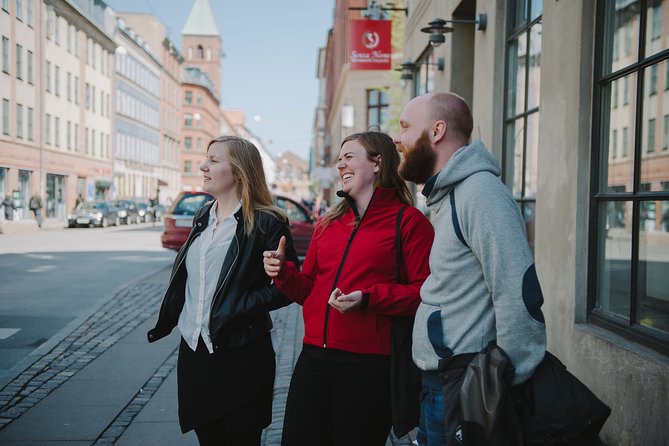
From there, you walk along Istedgade, once known as Copenhagen’s red light district. The street is safe to visit today, but its rougher past remains part of its character. The guide explains how Copenhagen has tried to preserve parts of that identity while making the area safer and more livable through public programs.
You spend only a few minutes on this formal stop, but the story continues as you walk. This is a good example of the tour’s method: short pauses at important places, followed by conversation on the way to the next bar.
Freddy’s and the old brown bar tradition
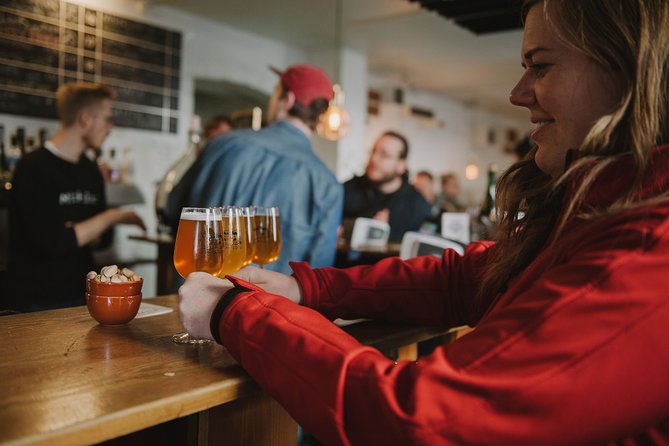
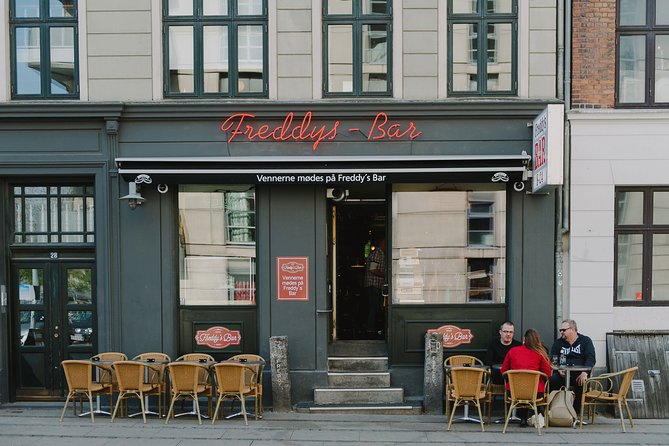
Freddy’s is the first drinking stop, and it provides the tour’s clearest look at an older Copenhagen pub. You have a traditional Danish beer, usually described as a classic pilsner, while your guide explains the role these bars played in working life.
The point is not that the beer is rare. The point is the room. These pubs were places where Carlsberg workers and other working-class residents could meet after work, talk, and maintain local connections. Your guide brings that social side to life, showing why a simple neighborhood bar could matter so much.
This is also where you encounter the main warning. Indoor smoking may be allowed, and the smoke can be noticeable. The smoky atmosphere is part of the cultural contrast the tour is trying to show, but that does not make it comfortable for everyone. If you have asthma or strongly dislike smoke, ask your guide about outdoor seating or prepare for a short stay.
Several people have enjoyed Freddy’s enough to return later, which tells you something about the bar’s appeal. Still, I would treat it as a historical and social stop rather than expect a sleek, smoke-free tasting room.
The Meatpacking District and Vesterbro’s new face
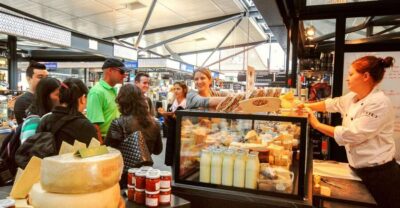
After the first beer, you walk through Copenhagen’s Meatpacking District. The old buildings now hold restaurants, bars, shops, and creative businesses, and the area has received design recognition for its updated use of historic industrial spaces.
The guide takes you through all three sections of the district and explains how the buildings were used before their present life. This is one of the most useful parts of the walk because it shows urban change in a physical way. You see older structures remain in place while their purpose shifts.
The tour ends nearby, so you can return later for dinner or an evening out. That makes the route practical for a first afternoon in Copenhagen. Instead of leaving you on the far side of town, it places you in an area where you can easily continue the night.
Same base, a different kind of day out:
- Copenhagen: Canal Cruise with Guide
★ 4.6 · 9,115 reviews - Copenhagen: Hop-On Hop-Off Bus Tour with Boat Tour Option
★ 3.9 · 4,122 reviews - Private Walking Grand Tour of Copenhagen
★ 5.0 · 3,953 reviews - From Copenhagen: Lund and Malmö 2-Country Tour
★ 4.7 · 2,772 reviews
Viktoriagade and the details most people walk past
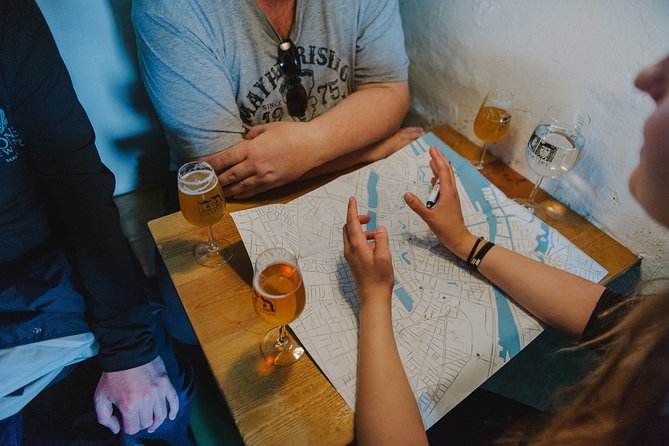
Viktoriagade is a brief stop, but it carries a lot of local meaning. The street may look ordinary at first, yet it represents Vesterbro’s rebellious and sometimes chaotic past. If the guide has a pen, you may be invited to add your own small drawing to a permitted spot.
This is a modest detail, not a major landmark. That is exactly why it works. The tour pays attention to neighborhood symbols that you could easily miss if you explored Vesterbro only through its restaurants and bars.
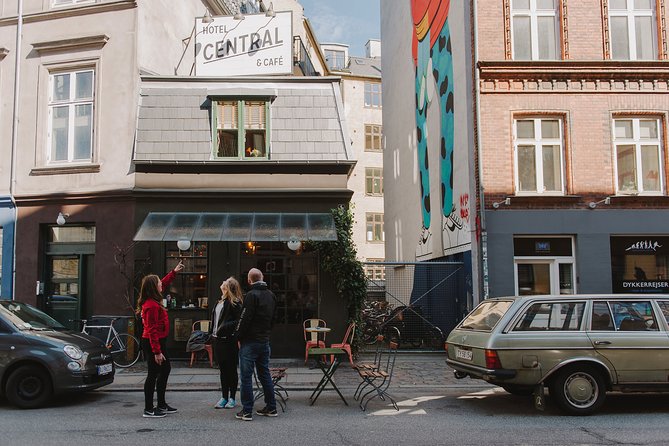
As you continue, your guide points out the New Theatre and a small architectural detail marking the transition from Vesterbro toward Frederiksberg. Another stop involves a charming little building with an upper floor and one window, connected to a local story.
The supplied route does not give every detail of these stories in advance, which is part of the fun. You are encouraged to look more carefully at buildings that might otherwise seem unimportant.
Mikkeller and Copenhagen’s craft beer shift
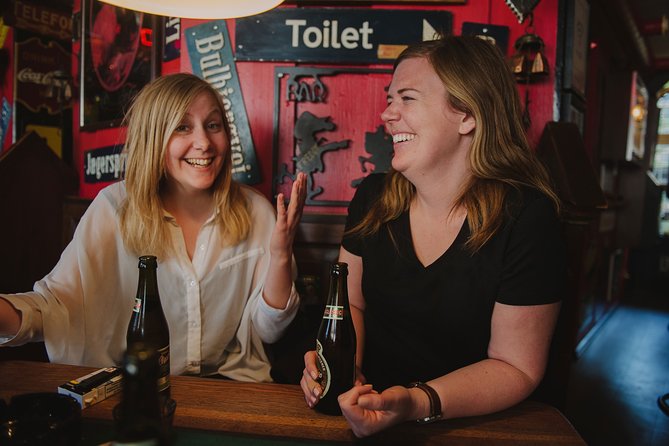
Mikkeller provides the strongest visual and cultural contrast with Freddy’s. You sit in a minimal, modern bar and hear the dramatic story of two siblings who turned a shared interest in beer into a major brand.
This is where you receive one of the two craft beers included in the price. You may also have the chance to taste one of the four early beers associated with Mikkeller’s rise, depending on the guide and the current selection.
The stop is less about brewing technique than about Copenhagen’s changing relationship with beer. The traditional pub represents routine, work, and community. Mikkeller represents experimentation, design, and a newer city culture that has helped make Copenhagen a major destination for craft beer.
If you want detailed explanations of the brewing process, this stop may feel light. The guide can help you choose a beer and explain the place’s importance, but the tour’s main subject is the people and neighborhood behind the drink.
Westend graffiti and Skydebanehaven

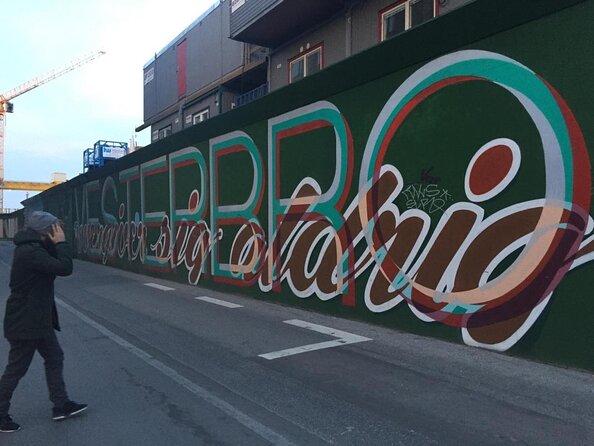
The walk continues into the French Quarter around Westend. Here, you see graffiti works approved by the municipality. Your guide explains why sanctioned spaces matter in a historic city where street art can easily conflict with older buildings and public rules.
This stop adds a useful layer to the tour. Vesterbro’s story is not only about pubs and redevelopment. It is also about how a city gives room to informal art while protecting its older streets.
Next comes Skydebanehaven, reached through a gate that may make you expect a castle. There is no castle, but there is a park, playground, and an unusual wall connected to the area’s royal past.
Your guide explains how the site was once used and why the wall was built. You also learn the origin of the Danish phrase To Shoot the Parrot, which comes from this place. It is the kind of odd local fact that stays with you because it is tied to a specific corner of the city.
Sønder Boulevard and the final beer
The route then reaches Sønder Boulevard, another clear example of Vesterbro’s renewal. In the late 1990s, changes to public planning helped turn an area that had been polluted and heavily trafficked into a greener place for relaxation.
You see how Copenhagen made room for leisure and public life without erasing the neighborhood’s past. The open spaces also give the walking portion a welcome change of pace after the denser streets.
The final beer stop is Fermentoren Beer Bar if the weather makes an outdoor stop unsuitable. It combines the homely feeling of the first pub with the broad craft beer selection of the second. The taps change weekly, and you can ask for help choosing or use the bar’s dice if the choices feel overwhelming.
You receive the second craft beer included in the tour here. Depending on the exact route and weather, the final drink may instead be served outdoors at another suitable stop. The important point is that the tour aims to finish with a local bar rather than a formal tasting room.
You may stay on after the tour, and the guide can suggest dinner nearby. Since the ending point is Halmtorvet 27E, close to the Meatpacking District, you are well placed for the rest of the evening.
What the beer package is really worth
The tour includes one traditional Danish beer and two craft beers. Additional drinks and food cost extra, as do tips and any dinner afterward.
At first glance, $72.59 may seem high for three beers. I would not book this simply to save money on drinks. Copenhagen bars are not usually a bargain, and the included beverages do help offset the cost, but the real product is the three-hour conversation and route.
The price makes more sense if you value:
- A local English-speaking guide
- A small group capped at 10 people
- Access to traditional pubs you might not enter alone
- Context about Vesterbro’s social and urban change
- Personal suggestions for the rest of your Copenhagen visit
The price makes less sense if you mainly want a long tasting session or technical brewing information. One person also felt the experience was expensive for walking around and having three beers, so it is fair to keep expectations in check.
Who should book this walk
I would recommend it to adults who want a relaxed introduction to Vesterbro and enjoy learning through conversation. It works especially well early in a Copenhagen visit because the guide can give you suggestions for restaurants, bars, and other places to explore afterward.
It is also a good fit for solo visitors. The small format makes it easier to talk with the guide and other people in the group. Several guides, including Kenneth and Oskar, have been praised for making solo participants feel included.
Beer fans will enjoy the range from pilsner to craft beer, but you do not need to be a serious beer enthusiast. One person who does not usually like beer still had a good time because the history, stories, and company carried the experience.
You should reconsider it if you are under 18, since no one under that age is permitted. Comfortable walking shoes are sensible, though the walking is moderate rather than strenuous. Bring an umbrella or rain jacket, and remember that weather can affect the final stop.
Should you book the Vesterbro beer tour?
Book it if you want local stories with your beer, especially the contrast between an old brown bar and modern craft beer culture. The guides are the main reason this experience works, and names such as Kenneth, Oskar, Liva, Lucas, and Kim appear repeatedly in the tour’s strongest moments.
Skip it if you want a brewery tour, a smoke-free tasting room, or the lowest possible price for three drinks. The indoor smoking at Freddy’s is the clearest concern, and the meeting point needs a little planning.
For the right visitor, this is a lively, useful introduction to a Copenhagen neighborhood that keeps its rough edges while making room for new ideas. You finish with beer in hand, dinner choices nearby, and a much clearer sense of why Vesterbro feels the way it does.
FAQ
How long does the Vesterbro beer tour last?
The tour lasts approximately three hours.
What time does the tour start?
The scheduled start time is 3 p.m.
Where does the tour begin?
It begins at Reventlowsgade 7, 1651 København, Denmark, in front of Copenhagen Central Station.
Where does the tour end?
It ends at Halmtorvet 27E, 1700 København, Denmark, near the Meatpacking District.
How many people can join the tour?
The group has a maximum of 10 people.
What beers are included?
The tour includes one traditional Danish beer and two craft beers.
Is food included?
No. Food, additional drinks, dinner after the tour, and personal souvenirs are not included.
Is the tour offered in English?
Yes. It is led by an English-speaking guide.
Can anyone under 18 join?
No. Passengers under 18 are not permitted.
Is smoking possible during the tour?
Yes. The traditional pub may allow indoor smoking, and some of the route’s purpose is to show the contrast between old brown bars and newer venues. Outdoor seating may be available at some stops.
What should I wear or bring?
Wear comfortable footwear for walking and bring an umbrella or rain jacket if rain is possible.
Can I cancel for a full refund?
Yes, if you cancel at least 24 hours before the local start time. Cancellations or changes made less than 24 hours before the start are not refunded or accepted.
Just added in Copenhagen
- a day at North Zealand Castle Tour★ 4.5 · 19 reviews
- Copenhagen Walking Tour: Highlights and Hygge w/Lunch★ 5.0 · 272 reviews
- Exhibition – Home of Carlsberg★ 4.5 · 281 reviews
- The Six Forgotten Giants Trolls Hunt with Minibus★ 4.5 · 27 reviews
- The Hunt For The Six Forgotten Giants★ 5.0 · 45 reviews
- Politically Incorrect Private Hidden Gems Walking Tour★ 5.0 · 270 reviews
- Social Nightlife Crawl Copenhagen★ 5.0 · 164 reviews
- THE TUBE – Copenhagen: an immersive Experience★ 4.0 · 124 reviews
Food & Drink, compared.
Reykjavik Food Walk – Local Foodie Adventure in Iceland
Read our review →
Reykjavik Food Lovers Tour – Icelandic Traditional Food
Read our review →
Copenhagen Culinary Food Tour with 6+ Tastings of Danish Classics
Read our review →
Copenhagen’s oldest and original food tour (Est. 2011).
Read our review →
Browse the lists this tour appears in