
Reviewed · VIKING HISTORY TOURS
Reykjavik Walking Tour – Walk with a Viking
Reykjavík is compact, but its stories are not. This walking tour links Viking settlement remains, Iceland’s parliament, a duck-filled lake, the Old Harbour, Harpa Concert Hall, and Hallgrímskirkja in one useful introduction. I especially like the small maximum group of 12, which makes it easier to ask questions, and the way guides such as Bo, Einar, Ester, and Dúi bring in folklore, politics, volcanoes, food, and daily life instead of sticking to old dates.
I also like the easy walking pace. The route has frequent stops, mostly flat streets, and one small hill near the end. You get practical ideas about restaurants, shops, and places to revisit. The tradeoff is that many stops are viewed from outside, and the two-hour schedule leaves little time for extended museum visits. Arrive five minutes early, and double-check the meeting point, since Reykjavík’s squares can confuse map apps.
Key points at a glance
- A compact first look at Reykjavík: Cover central landmarks from Ingólfstorg to Hallgrímskirkja in about two hours.
- A genuinely small group: The tour accepts no more than 12 people, allowing time for questions and conversation.
- More than Viking stories: Expect Icelandic folklore, political history, modern city life, volcanoes, food, and local customs.
- A useful route for your first day: Finish near Hallgrímskirkja, with restaurant and sightseeing suggestions for the rest of your stay.
- Mostly easy walking: The pace is relaxed, with frequent stops, though you should dress for wind, rain, snow, or cold.
- A guide-led introduction, not a museum tour: The Settlement Exhibition is seen briefly, but admission is not included.
Why this route works on your first day
I like starting in Reykjavík with a walking tour because the city makes more sense once you know how its center fits together. This route begins at Ingólfstorg and ends at Hallgrímskirkja, crossing the old center, the parliament district, the waterfront, the main shopping street, and a residential hill.
That gives you more than a string of photo stops. You learn where the harbor sits in relation to downtown, how the older streets connect with newer reclaimed land, and which areas deserve a return visit. Several people specifically used the tour at the start of their Iceland trip and found it helpful for planning the days ahead.
The guide is an important part of the experience. The company’s local guides include Bo, Einar, Ester, Dúi, Magnús, Óli, Robyn, and Stefán, though your guide will depend on the departure. Their styles vary. Some use humor and folklore, one guide was praised for singing at Harpa, and another took photos and sent them to the group later in the day.
The best guides connect the past to ordinary life. You might hear about hidden people and elves alongside Icelandic politics, schools, food, volcanoes, and current issues. That broad mix is a strength. If you want only Viking history, this tour will give you more than that.
Other Norse history stops around Reykjavík:
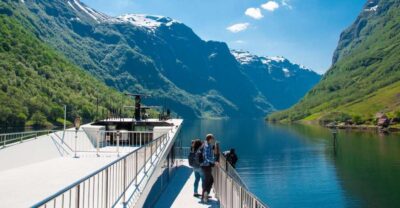
- Bergen: Viking Village, Nærøyfjord Cruise & Flåm Railway
★ 4.8 · 1,047 reviews - Stockholm: The Viking Museum Exhibition and Viking Ride
★ 4.5 · 667 reviews - Oslo: Viking Planet Entry Ticket
★ 4.4 · 603 reviews
Meeting at Ingólfstorg and finding the group
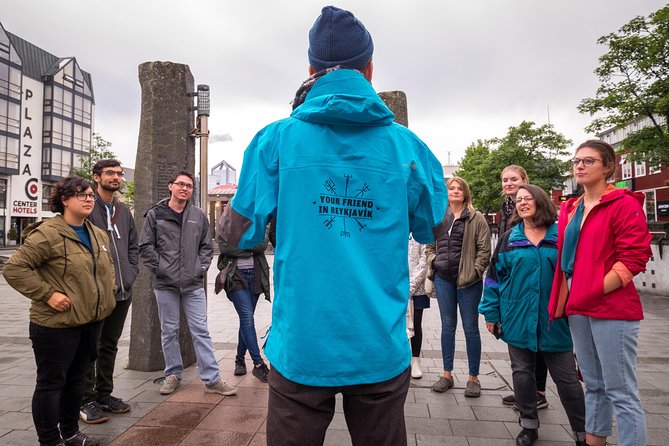
The walk begins at Ingólfstorg, the square by two stone pillars more than three meters high. The meeting point is in front of Center Hotels Plaza at Aðalstræti 6, close to the beginning of Austurstræti.
Your guide usually wears a light blue jacket marked Your Friend in Reykjavik on the back. Be there five minutes before the start. One practical warning matters here: map applications can send you to the wrong square, and another square also has two columns. Check the address before leaving your hotel.
This is a central meeting point, close to public transportation and easy to reach on foot from much of downtown. Hotel pickup is not included, so plan your own way there.
Aðalstræti and Reykjavík’s earliest chapters
The first section moves through Aðalstræti, home to Reykjavík’s oldest house. The building gives the guide a natural opening to explain how the city grew from a small settlement into Iceland’s capital.
You should expect a short stop rather than an in-depth architectural visit. The point is to place the modern streets around you in time. The older building can be easy to miss when you are surrounded by newer shops and hotels, so having someone explain its importance adds value.
The nearby Settlement Exhibition is another key piece. Beneath the city streets, the museum preserves the remains of a Viking longhouse. The tour pauses by the site for about five minutes, but admission is not included, and this is not a full museum visit.
If the settlement story catches your interest, you can return later and pay to explore the exhibition properly. That makes the brief stop useful without turning the walk into a museum schedule.
Austurvöllur, City Hall, and Icelandic democracy
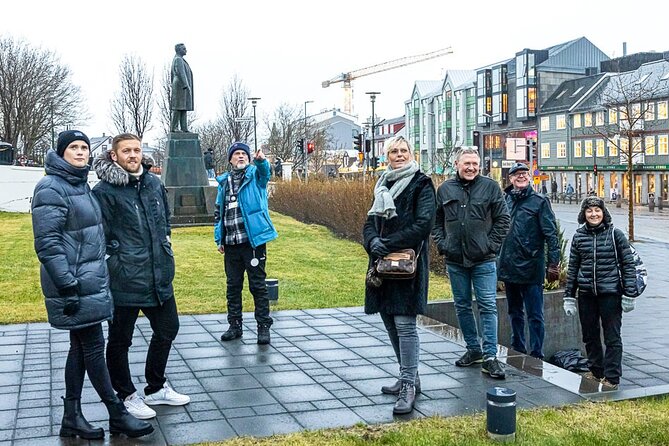
At Austurvöllur Square, the route shifts from early settlement to the daily life of central Reykjavík. Cafés and historic buildings surround this open space, and it is a good place to notice how locals use the city center.
From there, the walk passes Reykjavík City Hall and continues toward Alþingi, Iceland’s Parliament. This is one of the route’s strongest history sections. Alþingi traces its roots to the Viking Age and the year 930, so the guide can connect Iceland’s early political gatherings with the country’s present democratic system.
The tour does not promise a formal parliamentary visit. You may see the building and hear about its role, but the stop is short and admission is not part of the experience. That limitation is worth knowing if you want to see the interior or attend a council session.
Still, I find this part valuable because it gives the Viking theme some context. Iceland’s past is not presented as a costume show. The guide links settlement, lawmaking, protest, and modern public life.
A few more things to do in Reykjavík worth a look
- Reykjavik Food Walk – Local Foodie Adventure in Iceland
★ 5.0 · 18,952 reviews - Reykjavík Small group Walking Tour – by CityWalk
★ 5.0 · 5,076 reviews - Reykjavik: Guided Foodie Walking Tour with 6 Tastings
★ 4.9 · 1,645 reviews - Reykjavik Folklore Walking Tour: Meet the Elves, Trolls & Ghosts of Iceland
★ 4.5 · 702 reviews
Lake Tjörnin and the quieter side of town
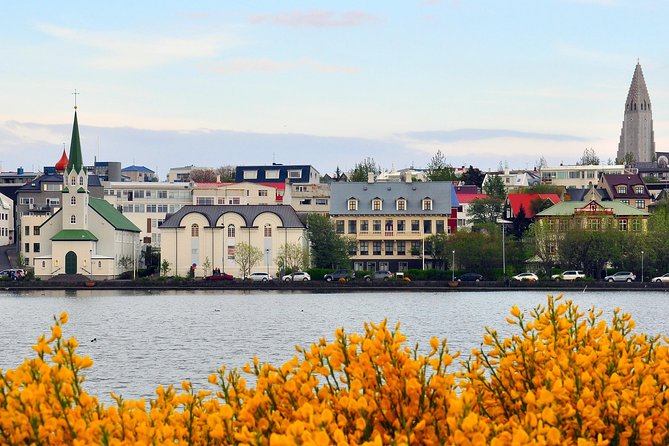
Lake Tjörnin offers a pause from streets and buildings. The small urban lake sits beside paths, benches, bridges, and city architecture reflected in the water. Ducks, gulls, and other waterfowl add movement, even when the weather is gray.
The stop lasts about 15 minutes, making it one of the longer pauses. You have time to take photos, watch the birds, and hear how Reykjavík combines city life with open outdoor spaces.
The lake is also a useful pacing break. This is a walking tour, not a bus tour, and stopping somewhere calm keeps the route from feeling like a march between landmarks. If you have limited mobility, ask yourself how comfortable you are on outdoor paths and changing surfaces, although the tour information says most people can participate.
The oldest graveyard and a quieter historical note
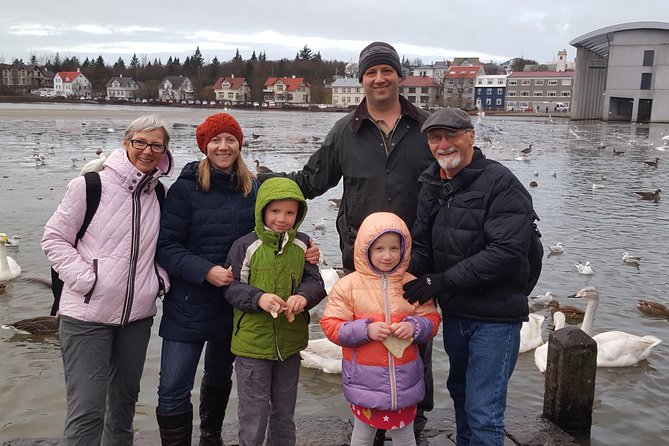
Kirkjugarðurinn Suðurgötu, described as Iceland’s oldest graveyard, brings a more reflective mood. Weathered gravestones and quiet paths offer a glimpse into the people who shaped the country’s past.
This is not a dramatic attraction, and that is part of its appeal. The stop gives the tour a human scale. Instead of focusing only on famous buildings and national symbols, you get a reminder that Reykjavík’s story also belongs to ordinary residents.
The guide may keep this stop brief, but it can be one of the more memorable sections for anyone interested in local history, family names, or the way a city preserves its past.
The Old Harbour and Reykjavík’s working waterfront
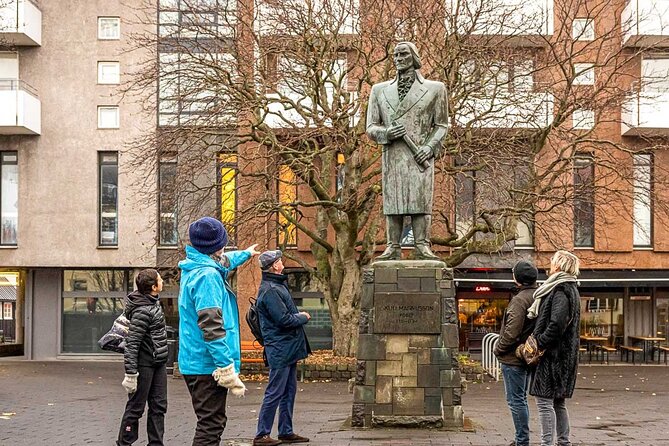
At the Old Harbour, the route opens toward boats, waterfront restaurants, shops, and the sea. The harbor blends Reykjavík’s fishing past with its present-day dining and tour activity.
This is a good place to ask your guide for practical advice. The tour includes recommendations on places to eat and shop, and several guides have been praised for giving useful suggestions for later in the trip. Food and drinks are not included, so use this part of the walk to note places you might return to.
The harbor is also one of the better photo stops. You can see colorful buildings, boats, and the changing light over the water. Weather matters here. Wind can make the waterfront feel much colder than the city streets, so bring a proper outer layer even on a mild-looking day.
Harpa’s glass walls and a touch of performance
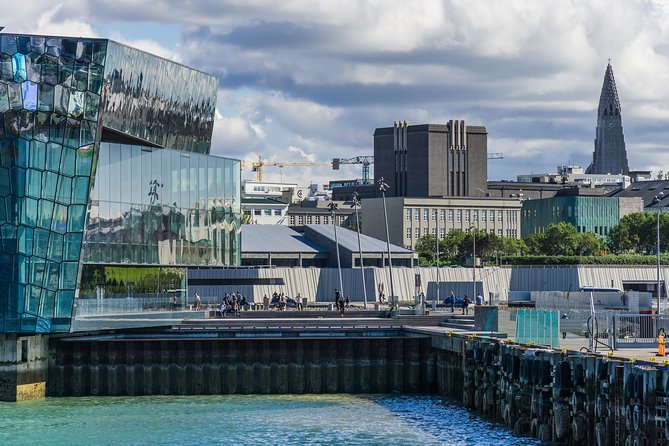
Harpa Concert Hall is one of Reykjavík’s most striking modern buildings. Its glass exterior takes on different colors and patterns as light changes, creating a sharp contrast with the older streets and harbor nearby.
The stop lasts about ten minutes and is free. You will learn about the building and may step inside, but this is not a concert ticket or guided architectural tour. One guide was known for singing inside the music hall, an unexpected detail that shows how much the individual guide can shape the stop.
Harpa is a good example of the tour’s range. In one morning or afternoon, you move from Viking remains to a modern concert hall built around glass, color, music, and technology.
Laugavegur and the practical side of Reykjavík
Laugavegur is Reykjavík’s main shopping street, lined with cafés, restaurants, and independent shops. The stop is short, about five minutes, but the guide’s advice can help you decide where to return after the tour.
I would pay attention here to suggestions about food and shopping rather than trying to browse during the walk. The group needs to keep moving, and the full route still has Hallgrímskirkja ahead.
This is also where the tour feels most useful for a first visit. A guide can point out areas you might otherwise pass without noticing, then explain which streets are best for a relaxed meal, a coffee, or a little shopping.
Arnahöll and the final climb to Hallgrímskirkja
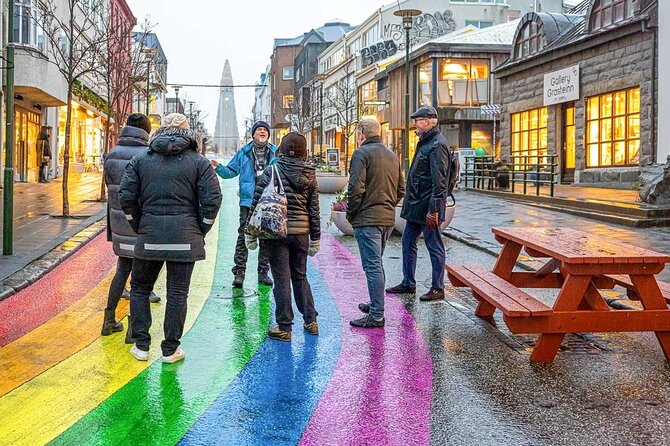
Near the end, the route reaches Arnahöll, a hill with views over central Reykjavík. You can look across colorful rooftops toward Hallgrímskirkja and out to distant mountains.
There is one small hill on the route, but the overall pace is described as easy and most of the walk is on flat ground. The viewpoint gives you a satisfying sense of where you have been. After walking through the center and along the waterfront, you can see Reykjavík as a whole rather than as separate streets.
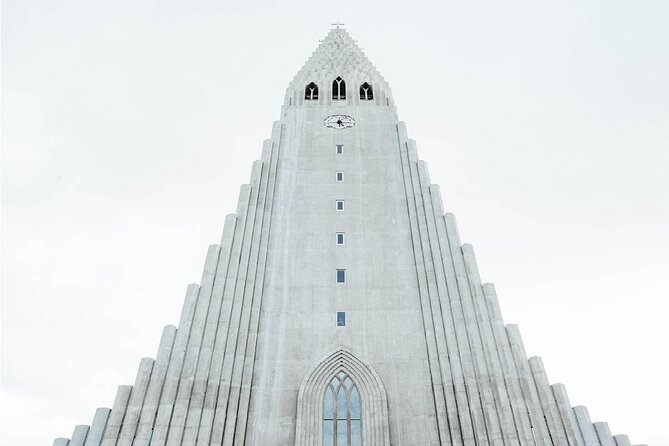
The final stop is Hallgrímskirkja, the city’s famous church and one of Iceland’s most recognizable buildings. The guide shares stories about its unusual design, size, and place in the city. You may hear a few playful tales as well as the basic facts, since the company aims for an entertaining style.
The tour normally ends at the church or at the nearby sculpture garden of Einar Jónsson. That is a useful finish. You can take more photos, visit the church on your own, or continue exploring the sculpture garden.
What the two-hour format really gives you
The route lists many stops, but most are short. That means you get a broad orientation rather than long time at each site. You will see a lot of Reykjavík, hear the main stories, and collect ideas for later.
The format works best if you want a city overview. It is less suitable if you prefer to enter every building, read every display, or linger at one landmark. The Settlement Exhibition is the clearest example: you see the site and hear about it, but admission is extra and the visit is brief.
The pace has received strong praise. Guides make frequent stops, and people with different walking speeds can usually keep up. One caution is sound. Most comments describe guides who speak clearly, but one person found a guide too soft-spoken at times. In a group of 12, stand close enough to hear, especially near traffic or wind.
Price, group size, and weather
At $55.63 per person, this is not the cheapest way to walk around Reykjavík, but the price is reasonable if you use the tour as a city orientation. You are paying for a local guide, a planned route, historical context, and practical advice, not for admissions, food, or transport.
The small group is the main value. With no more than 12 people, the guide can answer questions and adjust the conversation. That matters in Reykjavík, where the best part of a city walk is often the local explanation rather than the sight itself.
The tour is offered in English and uses a mobile ticket. It runs in all weather, so wear waterproof clothing and shoes with a good grip. The provider also notes that poor weather can lead to cancellation, with a different date or full refund offered. Children must be with an adult, service animals are allowed, and most people can take part.
Free cancellation is available up to 24 hours before the start time. Changes or cancellations inside that window are not accepted for a refund.
Who should book this Reykjavík walk?
I would choose this tour if you are visiting Reykjavík for the first time, especially if you can schedule it near the start of your stay. The route helps you understand the center, and the food and shopping suggestions can shape the rest of your plans.
It also suits you if you enjoy stories more than a silent sightseeing circuit. The best parts reach beyond Viking settlers into folklore, volcanoes, politics, modern Icelandic life, and local humor.
You may want a different experience if you dislike outdoor walking in uncertain weather, need long indoor visits, or want a specialist tour focused only on architecture, food, or archaeology. In that case, this walk is a starting point rather than a complete study of Reykjavík.
Final verdict
I would book Walk with a Viking as an early Reykjavík activity. The route is well chosen, the group is small, the pace is manageable, and the guides add the local detail that is hard to get from a map.
Go in expecting a lively overview, not a series of full museum visits. Wear weatherproof clothes, confirm Ingólfstorg carefully, and save a little time afterward for Hallgrímskirkja, the Einar Jónsson sculpture garden, or a return to the Old Harbour. At this price, the tour earns its place as a practical first look at Iceland’s capital.
FAQ
How long is the Reykjavik Walking Tour?
The tour lasts approximately two hours.
Where does the tour begin?
It begins at Ingólfstorg, by the two stone pillars in front of Center Hotels Plaza at Aðalstræti 6. The listed meeting address is Hlöllabátar, Ingólfstorgi 1, Reykjavík.
Where does the tour end?
The tour usually ends at Hallgrímskirkja Church or at the nearby Einar Jónsson sculpture garden.
How many people can join the tour?
The maximum group size is 12 people.
Is admission to the Settlement Exhibition included?
No. The tour passes the Settlement Exhibition, but admission is not included.
What should I wear?
Dress appropriately for the weather. The tour operates outdoors in all weather conditions, including rain, snow, and wind.
Can I cancel for a full refund?
Yes. You can cancel at least 24 hours before the start time for a full refund. Cancellations or changes made less than 24 hours before the tour are not accepted for a refund.
Just added in Reykjavík
- Reykjavík/Hella: Landmannalaugar Highlands Full-Day Trip★ 4.3 · 28 reviews
- Whale Watching in Reykjavik by Speedboat★ 4.8 · 77 reviews
- Reykjavik: Midnight Sun Whale Watching Tour★ 4.6 · 286 reviews
- Midnight Sun ATV Adventure from Reykjavik★ 5.0 · 112 reviews
- From Reykjavik: Landmannalaugar & Háifoss Waterfall Tour★ 4.8 · 314 reviews
- Airport Express Shared Departure Transfer from Reykjavik Hotels to Keflavik Airport★ 4.0 · 386 reviews
- Airport Transfer in Iceland from Reykjavik City to Keflavik Airport with Hotel Pick Up★ 4.0 · 332 reviews
- Small Group Husky Sledding Tour from Capital Region★ 5.0 · 171 reviews
Viking History Tours, compared.
Viking Village, Nærøyfjord Cruise & Flåm Railway
Read our review →

Aarhus Walking Tour: From Viking Village to Metropolis
Read our review →Browse the lists this tour appears in