
Reviewed · WALKING TOURS
Kristiansand: Guided Cultural Walking Tour
Kristiansand’s best feature is its compact, orderly center, still shaped by the grid laid out when Danish King Christian IV founded the city in 1641. I like the way this tour connects harbor views and local history in one walk, and I like that it reaches Posebyen, a protected quarter of old wooden homes that is easy to miss if you simply follow the main shopping streets.
The two-hour route also gives you a useful first look at Christiansholm Fortress, the Otra River, the city beach, and the cathedral. The main caution is the guide quality: some departures have been warm and personal, even with just one guest, while other feedback describes the guiding as thin or unprofessional. Arrive early, wear good shoes, and be ready to continue on your own if the walk ends ahead of schedule.
Key points to know before you book
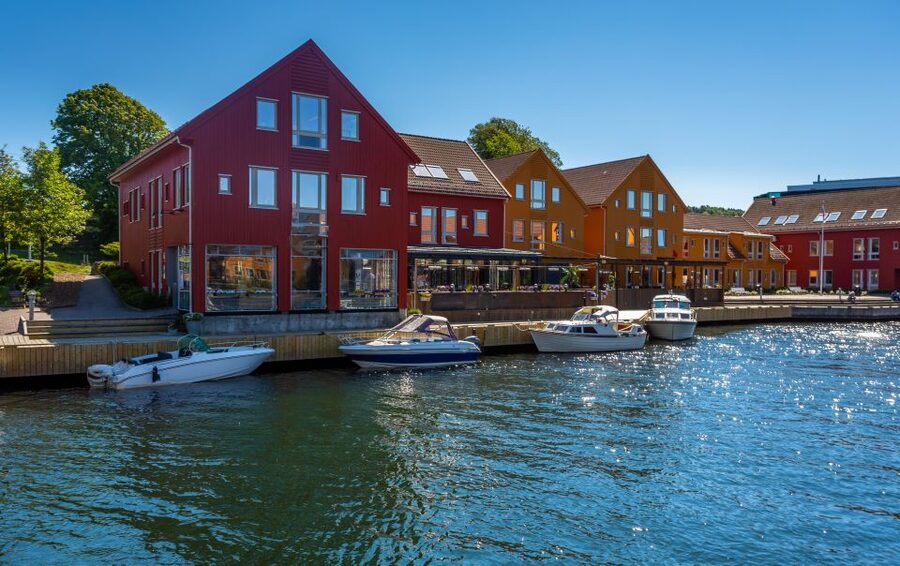
- Posebyen is the tour’s most distinctive stop: See one of Northern Europe’s largest collections of traditional low wooden houses.
- The route begins at the cruise terminal: Meet outside by the souvenir store, where a representative holds a Kristiansand Tours sign.
- You get both sea and river views: The walk follows the coast toward Christiansholm Fortress, then continues beside the Otra.
- The center is easy to understand on foot: Kristiansand’s original grid makes the city simple to navigate after the tour.
- Small groups can change the experience: A departure has operated with only one guest, making it friendly and personal but also shorter than expected.
- This is an all-weather walk: The tour runs rain or shine, and it is not suitable for people with mobility impairments.
A two-hour introduction to Kristiansand
At $125 per person, this is not a bargain-priced city stroll. You are paying for a live English-speaking guide and a planned route that brings together several parts of central Kristiansand in a short period.
That price makes the most sense if you are arriving by cruise ship, have only a few hours in town, or want local context before exploring independently. If you already enjoy reading a map and walking at your own pace, you can see many of these sights without a guide. The value here depends on the person leading the walk and how much detail you want along the way.
The city itself helps the tour. Kristiansand was founded as a trading and defensive center, and its original grid remains at the heart of town. Streets are relatively straightforward to follow, so you should come away with a practical sense of where the harbor, old quarter, cathedral, beach, river, and main square sit in relation to one another.
The advertised duration is two hours, but a very small group can finish sooner. One recorded departure with only two people ended around 11 a.m., after which the participants continued independently. That is not necessarily a problem if you want a quick orientation, but it matters when you are judging the price.
A few more things to do in Norway worth a look
- Bergen: Past & Present Small Group Guided Walking Tour
★ 4.9 · 1,609 reviews - Walking Tour in Bergen of the Past and Present
★ 5.0 · 1,575 reviews - Oslo: Best of Oslo Walking Tour
★ 4.5 · 458 reviews
Starting at Fiskebrygga and the cruise terminal
The meeting point is outside the cruise terminal, beside the souvenir store. Look for a representative holding a sign marked Kristiansand Tours. This is useful for cruise passengers, since you do not need to make your way across town before the walk begins.
From the meeting point, the route heads toward Fiskebrygga, the local fish market. The harbor area gives you an immediate sense of Kristiansand’s connection to the water, trade, and coastal life.
This first section is also a practical way to get your bearings. You begin close to the port, then move toward the waterfront rather than straight into the commercial center. I like that choice because it introduces the city through its working and maritime side before turning inland to older neighborhoods.
The available information does not promise a food tasting or a market visit, so think of Fiskebrygga as a place to see and understand rather than a scheduled dining stop. If you want to eat seafood or browse on your own, ask the guide for suggestions after the tour.
Walking the coast to Christiansholm Fortress
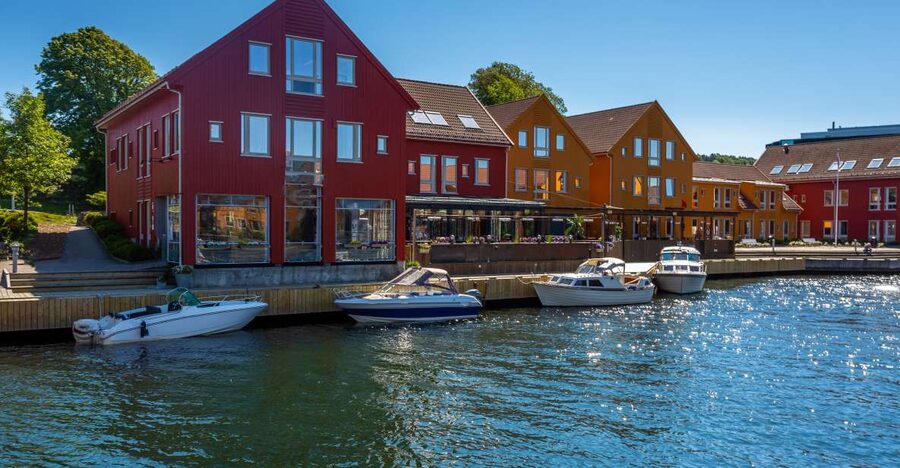
From Fiskebrygga, you follow promenade paths along the oceanfront and marina toward Christiansholm Fortress, also called Christiansholm Festning. The route then passes the city beach and continues alongside the Otra River.
This is one of the strongest parts of the walk for anyone who wants scenery without leaving the center. You get open views across the water, boats in the marina, the beach, and the point where the river meets the coastal setting. It is a welcome change from a standard street-only city tour.
Christiansholm Fortress adds a defensive chapter to the walk. Kristiansand was not founded only as a trade town. Its location also mattered for protection, and the fortress reflects that role.
The fortress stop is best understood as part of the city’s wider story rather than a long museum visit. The tour information does not describe an interior visit or extended time inside the fort, so you should expect to see the site and hear about its place in Kristiansand’s past.
The waterfront paths may be pleasant and easy for many walkers, but the tour is not listed as suitable for people with mobility impairments. The route includes several changes in setting and can involve uneven outdoor surfaces, so comfortable shoes are essential. Since it runs rain or shine, a waterproof layer is sensible in Norway.
From the beach and Otra River into old Kristiansand
After the beach and riverfront, the walk turns toward the older part of town. This is where the architecture changes noticeably.
You will begin to see more traditional wooden buildings, lower rooflines, and a different feel from the waterfront and central streets. That change is valuable because it lets you read Kristiansand through its buildings. The city is not one continuous historic district. Its character shifts as you move from harbor to fortress, from water to old homes, and then toward the square.
The Otra River is another useful reference point. Even after the guided walk, it can help you understand the shape of the center. If you decide to explore alone afterward, the riverfront and the original street grid give you simple landmarks to use.
This section is not about covering a large distance. It is about seeing how a small city developed around trade, defense, water, and residential life. A good guide can make those connections clear. A less effective guide may simply point out buildings without adding much context, which is the chief risk at this price.
Same base, a different kind of day out:
- From Bergen: The Original Fjord Cruise to Mostraumen
★ 4.7 · 8,440 reviews - Tromsø: Reindeer Sledding & Feeding with a Sami Guide
★ 4.8 · 6,417 reviews - Stavanger: Scenic Fjord Cruise to Lysefjord and Preikestolen
★ 4.6 · 5,791 reviews - Oslo: Scenic Fjord Cruise with Audio Guide Commentary
★ 4.5 · 5,375 reviews
Posebyen, Kristiansand’s wooden neighborhood
Posebyen is the most memorable stop on the route. The name translates directly as Bagtown, and the guide is expected to explain the different theories behind it.
The quarter contains one of Northern Europe’s largest collections of traditional low-built wooden houses. That is a meaningful reason to take this tour rather than rely only on a map. Posebyen is not just an old street or a single photogenic building. It is a neighborhood with a consistent scale and material that gives you a clearer sense of earlier Kristiansand.
I like the contrast here. The harbor and fortress show the city from the water, while Posebyen shows how people lived in the older town. Small boutiques and cafes are moving into some of the old buildings, bringing new activity without erasing the area’s modest wooden character.
Keep your expectations realistic. The tour does not promise entry into private homes, museums, or shops. You will walk through the neighborhood, look at the buildings, and hear about the area from your guide.
This is also the part where a strong guide matters most. Posebyen can be admired without much explanation, but its name, layout, building traditions, and changing local life give the stop more meaning. If your guide is open to questions, ask about the name and how the old buildings are being used today.
The City Square and Kristiansand Cathedral
The final major section leads toward the City Square, where Kristiansand Cathedral is located. This brings the tour back to the civic center after the more relaxed streets of Posebyen.
The square gives you a sense of the city’s formal side. The cathedral provides a clear landmark, and the surrounding grid helps explain how the center was planned from the beginning. By this point, you will have seen several distinct parts of Kristiansand rather than only the most obvious port area.
The walk does not include a stated cathedral interior visit, so do not book it expecting a long church tour. You should expect to see the cathedral as part of the city-center route and receive information from the guide.
Once the guided portion ends, you can either walk back with the guide to the starting point or continue exploring independently. That flexibility is useful. You might return to the harbor, spend more time in Posebyen, follow the river, or ask for recommendations on where to eat and what to see next.
What the guide adds, and where the tour can fall short
The experience is conducted in English, with a live guide rather than an audio recording. That gives you a chance to ask questions and adjust your focus. A small group can make the walk feel personal, and one departure had only a single participant who found the friendly guide made the experience enjoyable.
Small numbers can have a downside, too. A two-person walk ended relatively quickly, leaving plenty of time for independent sightseeing but less guided time than the full two hours might suggest. If you value a long, detailed lecture, ask questions as you go and make clear that you would like the full route and plenty of explanation.
The feedback is mixed enough that I would not treat the guide as a guaranteed strength. Some guests found the walk friendly and informative, while other experiences were described as lacking content, with a guide unable to answer many questions. The overall rating is 4.3 from 40 reviews, which suggests the tour often works well but is not uniformly excellent.
That makes your expectations important. This is best booked as a convenient orientation with local commentary, not as a specialist history seminar. If you happen to get a particularly good guide, Posebyen and the fortress will gain much more depth. If the commentary is basic, you will still have seen the main central sights and can use the route to explore further by yourself.
Is $125 a fair price?
At $125, the tour offers convenience more than admission value. The listed inclusion is the guide, and there are no stated museum tickets, meals, transport, or special activities.
For a cruise passenger, the price may be reasonable because the meeting point is by the terminal and the route covers much of the center in two hours. You avoid planning a route around the harbor, fortress, beach, river, old quarter, square, and cathedral. You also get the chance to ask for local recommendations before setting off on your own.
For an independent budget-conscious visitor, the price is harder to justify. Kristiansand’s center is compact, and the grid makes self-guided walking manageable. You can still see the main public areas without paying for a guide, though you will miss the explanations and the convenience of a ready-made route.
I would book this at full price if you have limited time, want English commentary, and prefer a structured first walk. I would skip it if your main goal is an in-depth guided history experience or if $125 is a major part of your daily budget.
Who will get the most from this walk?
This tour suits first-time visitors who want a quick introduction to Kristiansand. It is especially practical for people arriving at the cruise terminal, since the meeting point is close and the route stays in the central area.
It also fits visitors who enjoy architecture and town planning. Posebyen gives you traditional wooden buildings, while the central grid helps explain the city’s original design. The coast, marina, beach, river, fortress, and cathedral add variety without requiring transport.
You should be comfortable walking outdoors for two hours and wearing supportive shoes. The tour runs in all weather, and it is not suitable for people with mobility impairments.
Families and casual sightseers may appreciate the mix of water, open paths, old houses, and city landmarks. History specialists may want more depth than the tour always provides. If you want the best possible experience, arrive with a few questions about Christian IV, the fortress, Posebyen’s name, and the wooden buildings.
Should you book the Kristiansand walking tour?
Book it if you want a convenient first look at the city, especially from a cruise ship, and if the combination of Posebyen, waterfront views, and Christiansholm Fortress appeals to you. The route covers a lot of ground in a short time and finishes near the cathedral and City Square, with the option to keep exploring.
Think twice if you expect a full two hours of detailed history every time or if $125 feels steep for a walk with no admissions included. The guide can make the difference, and the mixed feedback means you should see this as a useful orientation rather than a guaranteed masterclass.
For most first-time visitors with limited time, I would book it for the route and convenience, then plan to continue independently afterward. Ask the guide for specific recommendations before you part ways. That final bit of local advice may be as useful as the walk itself.
FAQ
How long does the Kristiansand cultural walking tour last?
The tour is scheduled for two hours. Very small groups may finish sooner, so you should allow extra time afterward if you want to explore the city independently.
Where does the tour meet?
Meet outside the cruise terminal, beside the souvenir store. A representative holds a sign marked Kristiansand Tours.
What language is the tour conducted in?
The tour is conducted in English with a live guide.
Which main sights are included?
The route includes Fiskebrygga, Christiansholm Fortress, the oceanfront and marina, the city beach, the Otra River, Posebyen, the City Square, and Kristiansand Cathedral.
Does the tour visit Posebyen?
Yes. Posebyen is a protected traditional neighborhood with one of Northern Europe’s largest collections of traditional low-built wooden houses.
Is the cathedral interior included?
The tour takes you to the City Square, where the cathedral is located. The provided information does not specify an interior visit.
What should I bring?
Bring comfortable shoes. The walk takes place outdoors and runs rain or shine, so weather-appropriate clothing is also sensible.
Is the tour suitable for people with mobility impairments?
No. The tour is listed as unsuitable for people with mobility impairments.
Just added in Norway
- Unknown war. Oslo and Norway during 1940-45★ 5.0 · 74 reviews
- The Viking Planet Museum – Mini Group (4 adults)★ 4.0 · 16 reviews
- Oslo Winter Highlights Bike Tour★ 5.0 · 36 reviews
- The Ultimate Study of the Human Form at Vigeland’s Sculpture Park with a Local★ 4.0 · 14 reviews
- The Viking Planet Museum Ticket★ 4.0 · 197 reviews
- The Essential Oslo Private Walking Tour★ 5.0 · 79 reviews
- The Ultimate Norwegian Skiing Experience★ 5.0 · 16 reviews
- Central Oslo Guided Walking Tour with Local Guide★ 4.5 · 278 reviews
Walking Tours, compared.

Reykjavik Food Walk – Local Foodie Adventure in Iceland
Read our review →
Reykjavík Small group Walking Tour – by CityWalk
Read our review →



Past & Present Small Group Guided Walking Tour
Read our review →
Walking Tour in Bergen of the Past and Present
Read our review →
Browse the lists this tour appears in