
Reviewed · TOURS IN NORWAY
Unknown war. Oslo and Norway during 1940-45
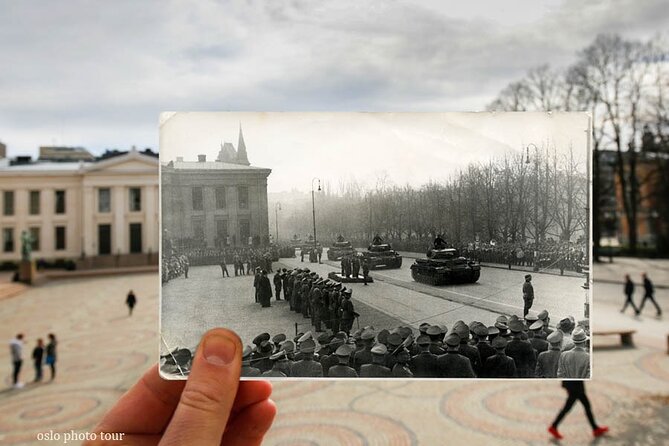
Oslo’s wartime story comes alive when you stand in today’s tidy city center and compare it with photographs from the German occupation. Guide Rami carries a collection of period images, showing you the same buildings and streets during 1940 to 1945. I like the way this turns a standard city walk into a visual history lesson, and I like that the focus includes ordinary life as well as resistance figures and military events.
The private format is another strong point. Your group can ask questions, adjust the pace, and focus more on resistance work, Norwegian politics, or daily life under occupation. The main limitation is the outdoor format: rain or cold can make the 2.5-hour walk harder, and some travelers found it a little difficult to hear every word while walking.
Key points to know
- Period photographs at the exact locations: Rami uses old images to connect wartime events with the streets and buildings around you.
- A private group of up to five: The price is for the group, not each person, making it better value when shared.
- A useful route through central Oslo: The walk links the Royal Palace, Karl Johans gate, Parliament, University Square, Nationaltheatret, and Akershus Fortress.
- A clear focus on the 1940 to 1945 occupation: You learn about German control, Norwegian resistance, and the effect of the war on daily life.
- A practical finish near the Resistance Museum: The tour ends at Akershus Fortress, so you can continue with a museum visit if you wish.
- Weather matters: Bring an umbrella or suitable outdoor clothing, since the experience can be canceled in poor weather.
Oslo’s occupation told from the pavement
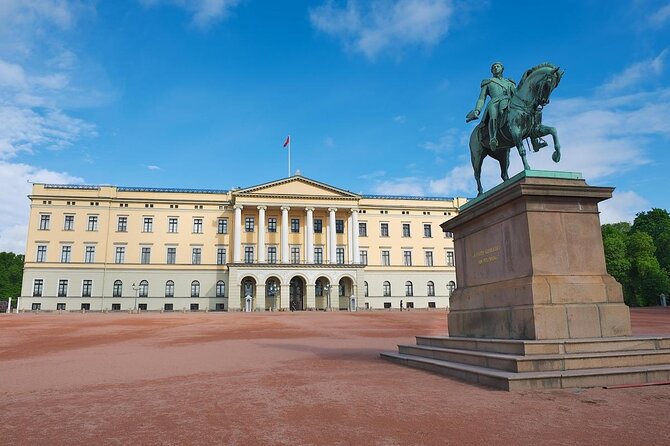
This is not a general sightseeing walk with a few wartime facts added at the end. The whole route looks at Oslo through the years when German forces occupied Norway, beginning in 1940 and continuing until liberation in 1945.
That focus gives familiar sights a different meaning. The Royal Palace is no longer just an elegant landmark. Karl Johans gate becomes a setting for political control, public life, and wartime events. The Nationaltheatret area connects with Gunnar Sønsteby, one of Norway’s best-known resistance figures.
I like this kind of walking tour because the subject stays tied to real places. You are not sitting in a lecture room looking at a timeline. You are moving through the city, stopping at sites where events took place, while Rami uses photographs to show what stood there during the war.
The experience is especially useful if you already have some interest in World War II but know less about Norway’s role. Several people who had studied the broader war still found new material here, particularly about the occupation, the resistance movement, and Norway’s contribution to the defeat of Nazi Germany.
Other trips people book in Oslo:
- Oslo: Scenic Fjord Cruise with Audio Guide Commentary
★ 4.5 · 5,375 reviews - Oslo Nature Walks: Island Hopping Tour
★ 4.8 · 2,713 reviews - Oslo: 100% Electric Oslofjord Sightseeing Cruise
★ 4.4 · 2,041 reviews
Meeting at Karl Johan’s monument
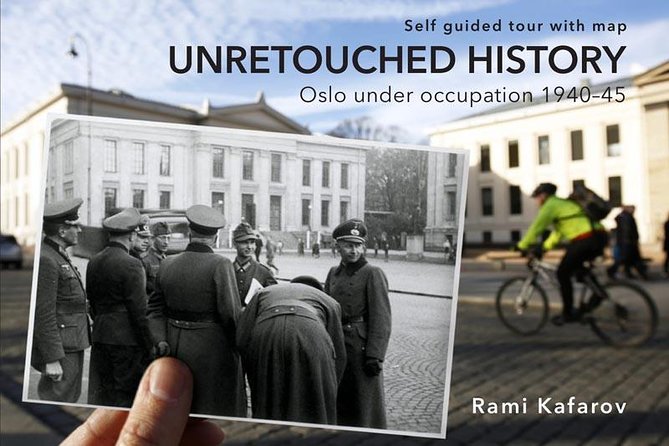
The walk begins at Karl Johan-monumentet in central Oslo, near the Royal Palace and the upper end of Karl Johans gate. This is a sensible starting place because the street leads directly through the city’s historic center.
Rami’s opening discussion gives you the setting for the rest of the walk. He explains how Norway fitted into the war and why Oslo mattered during the occupation. His approach is described as factual and balanced, which helps when discussing a difficult period involving collaboration, resistance, political pressure, and civilian hardship.
The meeting point is easy to pair with other central Oslo sights. If you are arriving by train, exploring the main shopping street, or visiting the palace area, you can arrange the tour around time in the center. The walk ends at Akershus Fortress, so it also works well as a link between western central Oslo and the harbor-side fortress.
The Royal Palace and Karl Johans gate
The Royal Palace is the first listed stop, with about ten minutes allocated there. The ticket is not included, and the tour appears to use the palace area as an outdoor historical stop rather than as an interior visit.
That distinction matters. You should not book this expecting a palace tour. The value here is the location and the story attached to it. Rami’s photographs help you see how official buildings and public spaces looked during the occupation, while his commentary places the palace within Norway’s wartime political story.
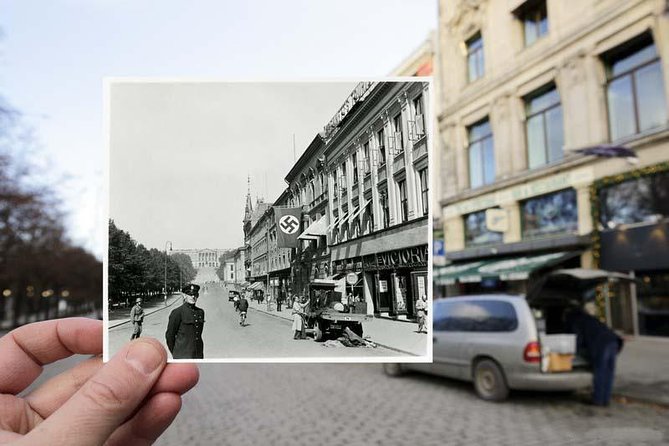
Karl Johans gate receives another ten-minute stop, although the guide may pause at several points along the street. This is one of the most useful parts of the route because a major public avenue can reveal how occupation affected everyday city life.
You might hear about public displays of authority, the way the occupying power used central Oslo, and the response of Norwegians living under that control. The exact emphasis can change because this is a private tour. If you are most interested in civilian life, ask Rami to spend more time on that rather than moving quickly through military events.
Parliament and the political story
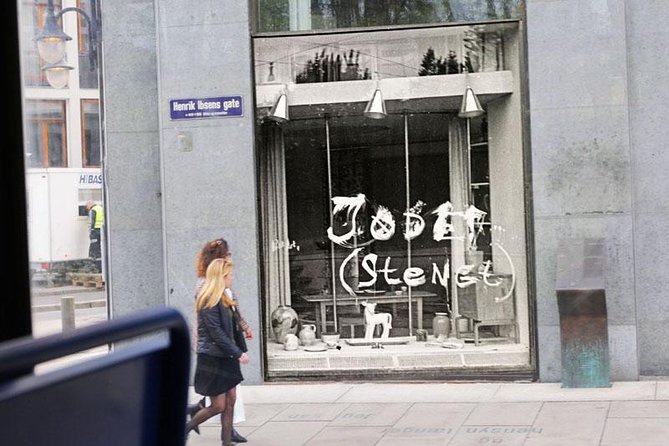
The Norwegian Parliament is next, with roughly ten minutes planned. Again, this is an exterior stop, and admission is not included.
The Parliament area adds political context to the walking route. Norway’s wartime story was not only about soldiers and sabotage. It also involved national leadership, occupation policy, public institutions, and the difficult choices facing people under German rule.
This is where the tour can help correct a common gap in World War II sightseeing. Many people know the broad outline of the conflict but have less sense of what occupation meant for a smaller European country. Rami connects the political setting with the personal stories that make the subject easier to follow.
The short stop times in the itinerary should not be read as strict lecture limits. Since the tour is private, the guide can answer questions and adjust the balance. Still, two and a half hours goes quickly, so you may need to choose your priorities rather than expect every subject to receive equal detail.
Same base, a different kind of day out:
- Oslo: Fjord Evening Cruise with Shrimp Buffet
★ 4.5 · 1,956 reviews - Oslo: 3-Hour Highlights Bike Tour
★ 4.8 · 1,609 reviews - Oslo: 24 or 48-Hour Hop-On Hop-Off Sightseeing Bus Ticket
★ 4.1 · 1,470 reviews - Oslo: Guided Sightseeing Fjord Cruise on Premium Silent Boat
★ 4.7 · 1,390 reviews
Stortorvet and University Square
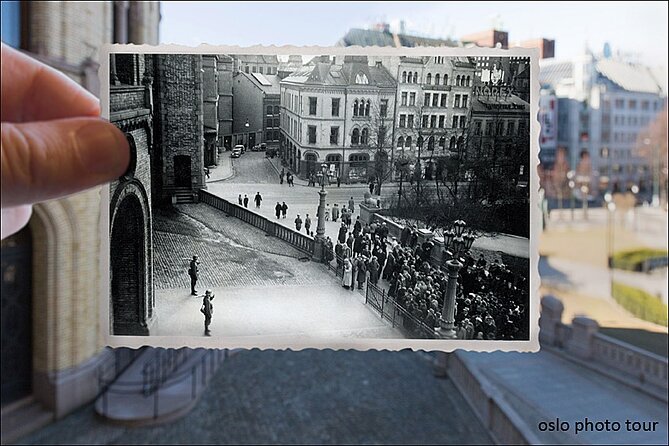
The walk continues to Stortorvet, the market square, with free admission. This stop brings the subject closer to public life and the ordinary city.
A market square is useful for understanding occupation at street level. Here the story can move away from government buildings and resistance leaders and toward the atmosphere of the city itself. Rami’s strength is his use of photographs, which lets you compare the present square with wartime Oslo.
University Square and the University of Oslo’s Faculty of Law follow. This stop is also free and adds an important connection to education, institutions, and civic life.
The tour does not treat the war as a series of isolated battles. It shows how the occupation reached into public spaces and institutions. That wider approach is one reason I would recommend this walk to someone who wants more than a list of dates and names.
You should also expect to walk and listen at the same time. One family found that older members had some trouble catching every word while moving through the city, although Rami clarified points and answered questions. If hearing clearly is important for your group, ask him to pause fully at each stop rather than continuing to speak while walking.
Nationaltheatret and Gunnar Sønsteby
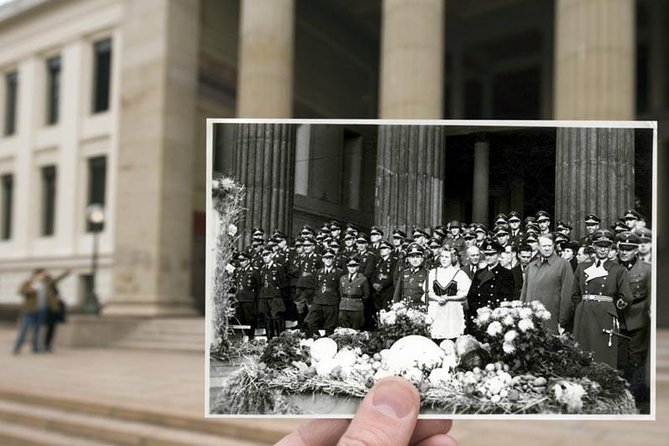
Nationaltheatret is another ten-minute stop, and the route includes the Gunnar Sønsteby monument. The theater area gives the tour a strong connection to organized resistance.
Sønsteby was a major Norwegian resistance figure, and the monument provides a physical point for discussing people who opposed the occupation. Rami’s photographs are particularly useful here because you can see how the place looked during the war and compare it with the modern city around you.
The stop also helps keep the story grounded. Resistance history can become abstract when presented only through names and operations. Seeing a monument and standing in the same city center where people worked, met, protested, and took risks makes the subject easier to picture.
If you have watched films such as The King’s Choice or Nr. 24, the background may help you follow the tour. You do not need to see them first, but some preparation could make the political and resistance stories easier to connect.
Walking into Akershus Fortress
The final destination is Akershus Fortress, where the tour ends near the Norway’s Resistance Museum. This is the natural climax of the route. The fortress is one of Oslo’s major historic sites, and its location gives the tour a strong sense of place.
Admission to the fortress is listed as not included, so check your plans if you want to explore any paid areas afterward. The tour itself ends nearby, rather than functioning as a guided museum visit.
That arrangement is useful. You can take the walking tour first, then continue at the museum with more time for exhibits. One good plan is to book the walk early enough that you can visit the museum afterward, but the advertised schedule should be checked before you finalize the day.
The fortress also makes the tour convenient for cruise passengers or anyone with limited time in Oslo. The route begins in the central city and ends at a major attraction, so you get both a focused history lesson and a useful introduction to central Oslo.
What the photographs add
The photographs are the feature that gives this tour its particular character. Rami does not simply describe how Oslo looked during the occupation. He shows images from the actual places where you are standing.
That visual comparison can be more effective than a long explanation. A present-day street may look calm and ordinary, but a period photograph can reveal uniforms, signs, crowds, damage, or wartime activity that is no longer visible.
The photographs also support the guide’s neutral presentation. The tour is not built around dramatic claims. It uses places, images, and documented events to explain what happened.
I would still keep your expectations realistic. A private photo collection cannot turn every stop into a full museum exhibit. Some locations may receive only a short explanation, especially if your group asks to cover a wide range of subjects. The best experience comes when you tell Rami what matters most to you.
Private format and group value
The tour costs $307.50 for a private group of up to five people. For five people, that works out to $61.50 each. For two people, the effective cost is $153.75 per person, and a solo booking would carry the full group price.
That makes this a stronger value for a family or small group than for one person. You are paying for a private guide, not simply a place on a large scheduled walk. The ability to ask questions and adjust the focus adds real value for people with a particular interest in Norwegian resistance, political history, or daily life during the occupation.
The price does not include admission tickets listed for the Royal Palace, Nationaltheatret, or Akershus Fortress. Several stops are outdoor locations, and Stortorvet and University Square are free. Confirm any admission plans before booking so the total cost does not surprise you.
The advertised duration is about two hours and thirty minutes. That is enough time for a clear introduction to the subject and a useful walk through the center, but not enough for an exhaustive study of every wartime event in Oslo.
Who will enjoy this walk
I would choose this tour for:
- A family with different ages and a shared interest in World War II
- Anyone who wants to understand Norway’s role in the conflict
- Visitors who prefer a private guide to a large group
- Cruise passengers seeking a focused introduction to Oslo
- People who enjoy learning through photographs and real locations
- Repeat visitors who have already seen Oslo’s general sights
It is also suitable for people who do not normally seek out military history. The route doubles as a central Oslo walking tour, and the guide connects the wartime story with Norwegian culture and the city itself.
You may want a different experience if you dislike walking outdoors, want a detailed museum presentation, or prefer a broad tour covering all of Oslo’s major attractions. This walk has a clear subject, and that focus is its strength.
Timing, weather, and cancellation details
The advertised operating schedule is Monday through Thursday from 9:00 a.m. to 4:00 p.m., with availability shown through August 12, 2026. Confirmation is provided within 48 hours of booking, subject to availability.
The experience requires good weather. If poor conditions cause cancellation, you are offered another date or a full refund. That policy is worth noting because the entire route is outdoors.
Bring an umbrella if rain is in the forecast, and dress for a cool or wet Oslo day. The walk has been enjoyed in cold weather, but comfort will affect how much attention you can give to the stories.
Free cancellation is available up to 24 hours before the start time. Changes or cancellations inside that window are not accepted for a refund. Service animals are allowed, and the activity is described as suitable for most people.
Should you book this Oslo history tour?
Book it if you want Oslo’s World War II story tied to real streets, buildings, and photographs. Rami’s personal collection of period images is the key reason to choose this experience over a standard city walk, and the private format lets you shape the conversation around your interests.
I would especially recommend it for a group of three to five, since the fixed price becomes much better value. Plan to continue at the Resistance Museum after the walk, bring weather protection, and ask for pauses if anyone in your group has trouble hearing while walking.
Skip it if you want a full interior tour of the Royal Palace or Akershus Fortress, or if you are looking for a general overview of Oslo without a World War II focus. For history-minded visitors, though, this is a thoughtful way to see the city and understand what occupation looked like at street level.
FAQ
Where does the tour begin?
The tour begins at Karl Johan-monumentet in Sentrum, Oslo, near the Royal Palace and Karl Johans gate.
Where does the tour end?
It ends at Akershus Fortress, near Norway’s Resistance Museum.
How long does the tour last?
The tour lasts approximately two hours and thirty minutes.
How many people can join the private tour?
The price covers one private group of up to five people.
What language is the tour offered in?
The tour is offered in English.
Is the price per person?
No. The listed price is $307.50 per group of up to five people.
Are admission tickets included?
Admission is not included for stops where tickets may apply, including the Royal Palace, Nationaltheatret, and Akershus Fortress. Stortorvet and University Square are listed as free stops.
Does the tour operate in bad weather?
The experience requires good weather. If it is canceled because of poor weather, you are offered a different date or a full refund.
What is the cancellation policy?
You can cancel up to 24 hours before the start time for a full refund. Cancellations or changes made less than 24 hours before the start time are not accepted.
Just added in Oslo
- The Viking Planet Museum – Mini Group (4 adults)★ 4.0 · 16 reviews
- The Viking Planet Museum Ticket★ 4.0 · 197 reviews
- Oslo Winter Highlights Bike Tour★ 5.0 · 36 reviews
- The Ultimate Study of the Human Form at Vigeland’s Sculpture Park with a Local★ 4.0 · 14 reviews
- The Essential Oslo Private Walking Tour★ 5.0 · 79 reviews
- The Ultimate Norwegian Skiing Experience★ 5.0 · 16 reviews
- Central Oslo Guided Walking Tour with Local Guide★ 4.5 · 278 reviews
- Snowshoe Tour in Winter Wonderland – Oslo★ 5.0 · 41 reviews
Tours in Norway, compared.

Reindeer Sledding & Feeding with a Sami Guide
Read our review →
Scenic Fjord Cruise to Lysefjord and Preikestolen
Read our review →
Scenic Fjord Cruise with Audio Guide Commentary
Read our review →

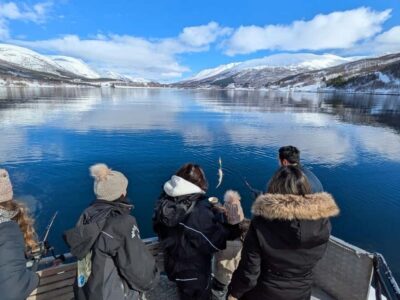
Tromsø’s Top-Rated Fjord & Fishing Cruise – All-Inclusive
Read our review →
Fjords and Sommarøy Islands Tour with Salmon Picnic
Read our review →Browse the lists this tour appears in