
Reviewed · WALKING TOURS
Oslo: Best of Oslo Walking Tour
Oslo’s story is written across a compact central area, and this tour ties the pieces together on foot. In two hours, you move from the Nobel Peace Center and Karl Johan Street to Christiania, the Opera House, Akershus Fortress, City Hall, and Aker Brygge. Guides such as Amelia, Anastasia, Olaf, Oliver, and Judit have been praised for clear storytelling, humor, and useful local suggestions.
I like the strong first-day orientation and the way the walk mixes royal, political, maritime, and everyday Oslo. I also like the included sightseeing app, which gives you a prepared audio route after the guide has gone home. The main drawback is pace: two hours covers a lot, but nearly every stop is a pass-by rather than an interior visit, and winter snow or rain can make the walk harder.
Best of Oslo Walking Tour: Key Points
- A compact route with big-name sights: See Parliament, the Royal Palace, Oslo Cathedral, the Opera House, Akershus Fortress, City Hall, Aker Brygge, and Tjuvholmen.
- History with a human touch: Learn about Christiania, Oslo’s changing name, the Nobel Peace Award, and the city’s Tiger City nickname.
- English or German commentary: Choose your language when booking.
- Useful first-day activity: Guides provide orientation plus suggestions for cafés, museums, restaurants, ferries, and later walks.
- Extra exploring after the tour: Scan the voucher’s QR code to access the sightseeing app and its audio-guided routes.
- Good value for central sightseeing: At $38 per person, the tour is most useful if you want context and direction, not entry to museums or attractions.
Why Two Hours Works Well in Central Oslo
I like this tour because it gives you a working map of Oslo without asking for a full day. The route links the city center, waterfront, old Christiania, and the western end of Karl Johan Street. You get enough context to decide where you want to return, while still having the rest of your day free.
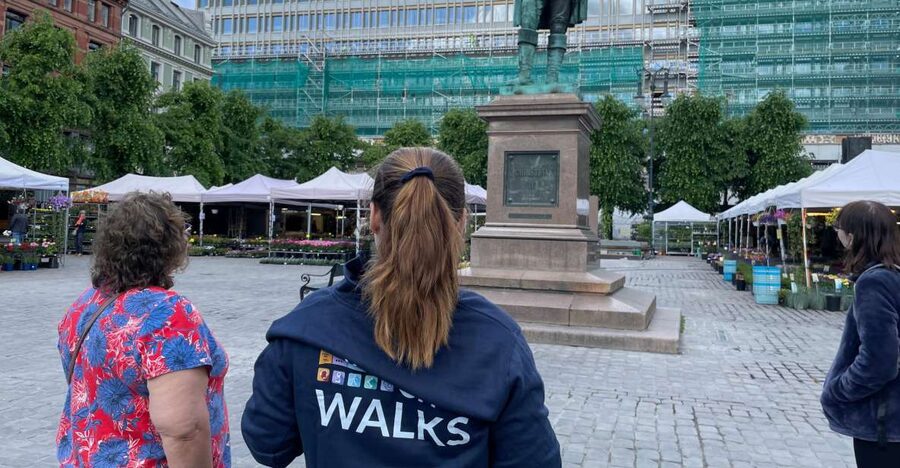
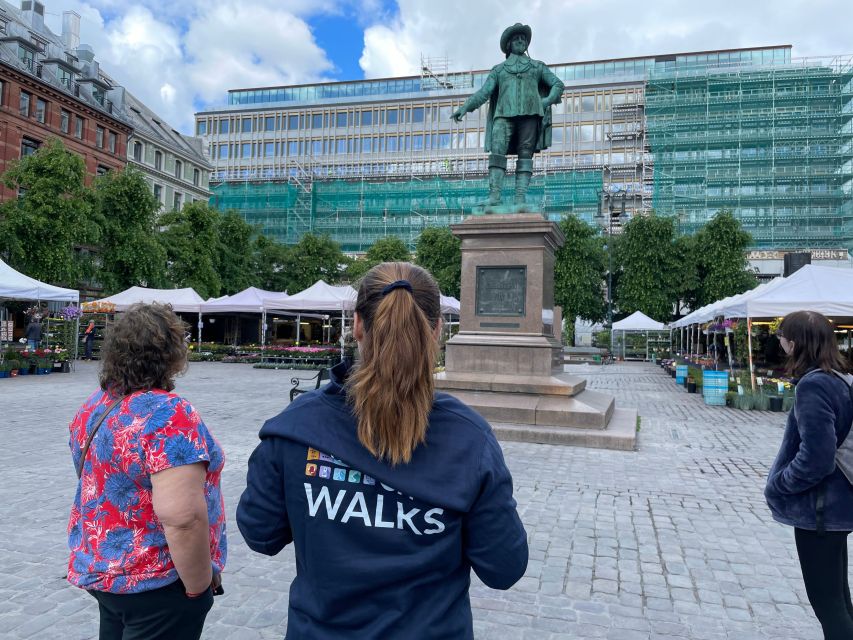
The walk begins at one of two points, depending on your language selection. English participants meet near the statue of P.A. Munch by the Faculty of Law entrance at University Aula, Karl Johan Street 47. German participants meet at the Nobel Peace Center at Brynjulf Bulls plass 1. Arrive about five minutes early, since a central city walk can move off quickly.
The tour is offered in English or German, and the live commentary is the heart of the experience. Guides including Amelia, Olaf, Oliver, Anastasia, Judit, and Minji have been praised for explaining Oslo clearly, answering questions, and keeping a sensible pace. One group also received earpieces, a useful touch when the party was larger.
You should expect a shared walking tour rather than a private outing. The precise group size can vary, so your experience may feel intimate or more social. The route is generally manageable, but winter conditions matter. Snow and uncleared sidewalks made the walk difficult for one wheelchair user, even though the guide tried to help.
A few more things to do in Oslo worth a look
- Oslo: Guided Walking Tour of Central Oslo
★ 4.7 · 438 reviews - Oslo: Historic Myths & Legends Evening Walking Tour
★ 4.8 · 408 reviews - Reykjavik Food Walk – Local Foodie Adventure in Iceland
★ 5.0 · 18,952 reviews
Nobel Peace Center and University Aula
The starting choices frame Oslo in two different ways. The Nobel Peace Center points you toward the city’s international role and the Nobel Peace Award, the only Nobel prize awarded outside Sweden. University Aula places you near Karl Johan and the civic heart of the capital.
From the beginning, the guide gives you more than a list of buildings. You hear why certain institutions matter to Norway and how the capital’s public spaces reflect its government, monarchy, culture, and national identity. This is one reason I would book the walk early in your stay. The information helps you make sense of later visits to museums and civic buildings.
Karl Johan, Parliament, and the Grand Hotel
The route passes along Karl Johan Street, Oslo’s main ceremonial and shopping thoroughfare. Along the way, you see the Norwegian Parliament, the Grand Hotel, the National Theater, the University of Oslo, and Karl Johan’s monument.
This stretch is useful because it connects several key parts of Norwegian public life. The Parliament gives the tour a political anchor, while the Grand Hotel and National Theater show the more formal, cultural side of the city. The guide also explains Oslo’s nickname, the Tiger City, which is tied to the capital’s symbolic identity.
Do not expect a long stop at each building. The route is designed for outside views and explanation, so you will want to return independently if a particular place catches your attention. The benefit is range. You see more in two hours than you would by stopping for a full visit at only one or two attractions.
Oslo Bazaars, GlasMagasinet, and Oslo Cathedral
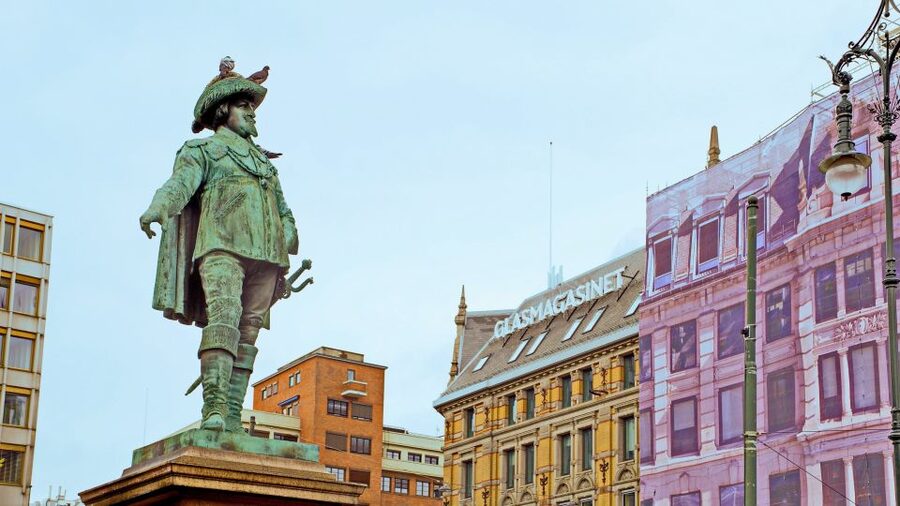
The walk then moves through the Oslo Bazaars and past GlasMagasinet Stortorvet, bringing you into a more everyday part of central Oslo. These stops help break up the grand national buildings with places connected to shopping, city life, and the ordinary rhythm of the center.
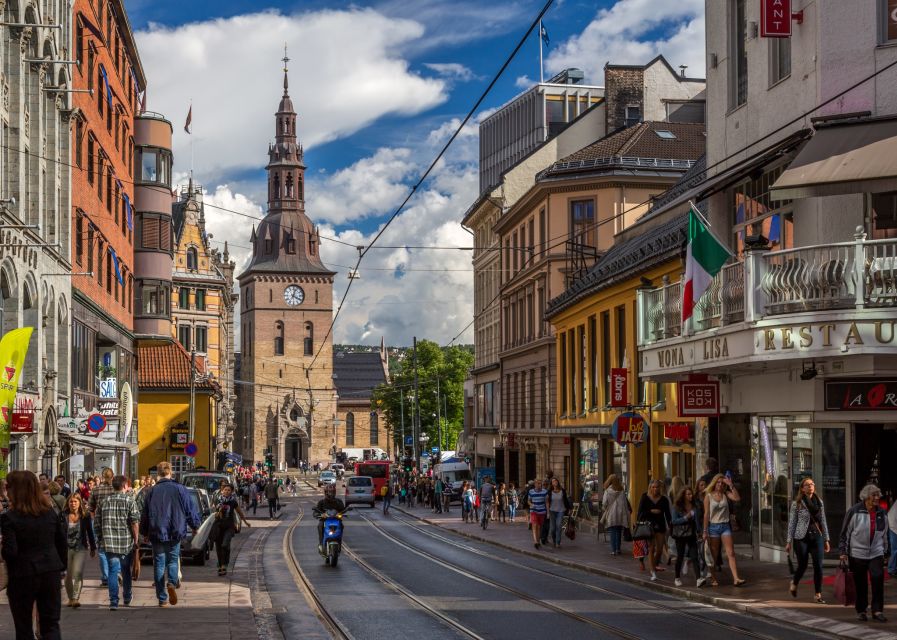
Oslo Cathedral adds a strong historical and architectural point. It sits close to the main street and makes an easy reference point for finding your bearings later. The tour also includes the Fire Tower and the second City Hall area among its named sights, giving you more local details than a simple route between postcard landmarks.
This part of the walk is especially helpful if you are staying in central Oslo. You can identify cafés, streets, and squares you may want to revisit, and the guide can point out places for coffee or food. Colin specifically appreciated a café suggestion for coffee and cinnamon buns, so it is worth asking your guide for current recommendations.
Same base, a different kind of day out:
- Oslo: Scenic Fjord Cruise with Audio Guide Commentary
★ 4.5 · 5,375 reviews - Oslo Nature Walks: Island Hopping Tour
★ 4.8 · 2,713 reviews - Oslo: 100% Electric Oslofjord Sightseeing Cruise
★ 4.4 · 2,041 reviews - Oslo: Fjord Evening Cruise with Shrimp Buffet
★ 4.5 · 1,956 reviews
From the Opera House to the Water
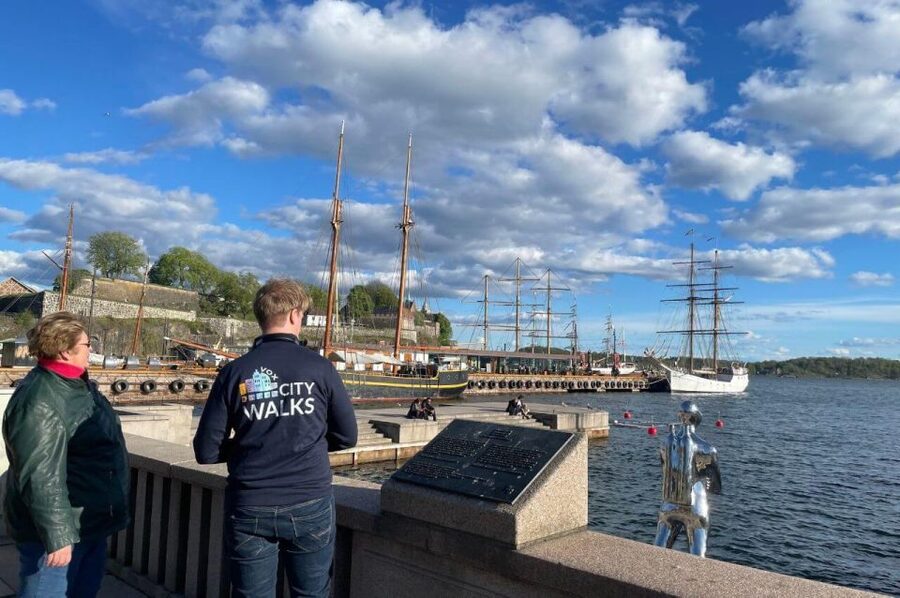
The Norwegian Opera House is one of the tour’s most recognizable visual stops. Its shape and waterfront setting make it easy to understand why it is described as a pearl on the water. The route gives you time to see it from outside and to understand how the newer waterfront fits into Oslo’s older center.
You also pass KOK Oslo Sauna at Langkaia, an example of the city’s modern waterfront culture. No sauna session is included, but the stop helps show how Oslo uses the harbor for leisure as well as transport and commerce.
The walk’s waterfront section is refreshing, though it may feel exposed in bad weather. Rain, hail, and snow did not stop previous tours, but you should dress for the forecast. A waterproof layer and shoes with a good grip will make the experience much easier than relying on a city umbrella and smooth soles.
Christiania Torv and the Old City Center
Christiania Torv is one of the most important historical stops. Here, the guide explains Christiania, the original city center, and why Oslo has changed its name several times over the last 300 years.
This is where the walk becomes more than a checklist of sights. Oslo’s identity is tied to rebuilding, renaming, royal influence, and the shift between old and new parts of the city. The guide uses the streets and squares to show how the capital developed rather than presenting history as a string of dates.
The area called Kvadraturen is also part of the route. Its orderly street plan gives you a different feel from the grand avenue of Karl Johan. You pass Anatomigården and Gamle rådhus, or the old town hall, adding smaller architectural details to the better-known landmarks.
Akershus Fortress and Ceremony Pier
Akershus Fortress gives the tour a strong historic and waterfront setting. The walk passes by rather than offering entry, so you should not expect a full fortress visit during the two-hour route. Still, seeing its walls and position beside the harbor helps explain Oslo’s strategic importance.
The Ceremony Pier provides another useful viewpoint toward the water and civic center. Depending on the guide and conditions, this section can feel like a pause between old Oslo and the newer harbor districts. It also gives you a sense of how close the major central sights are to one another.
I would treat the fortress as a marker for a later visit. If you have time, return when you can explore at your own pace. The walking tour gives you context first, which can make an independent visit more meaningful.
City Hall, Aker Brygge, and Tjuvholmen
Oslo City Hall is one of the route’s major civic landmarks. The guide explains its place in modern Oslo and connects it with the nearby Nobel Peace Center and Ceremony Pier. You also pass the Oslo Second City Hall, adding another layer to the city’s public architecture.
From there, the route heads toward Aker Brygge, an alternative quarter with restaurants, bars, waterfront spaces, and modern buildings. This is a useful change of mood after the older streets and formal institutions. If you are choosing where to spend the evening, the guide’s local suggestions here can save you some guesswork.
The final area is Tjuvholmen, another modern waterfront district. It gives the walk a clear ending: you have crossed from the historic center to a newer part of Oslo shaped by dining, design, and life beside the fjord. The tour returns to Universitetsplassen or the Nobel Peace Center, depending on the arrangement for your departure.
What the Guides Do Best
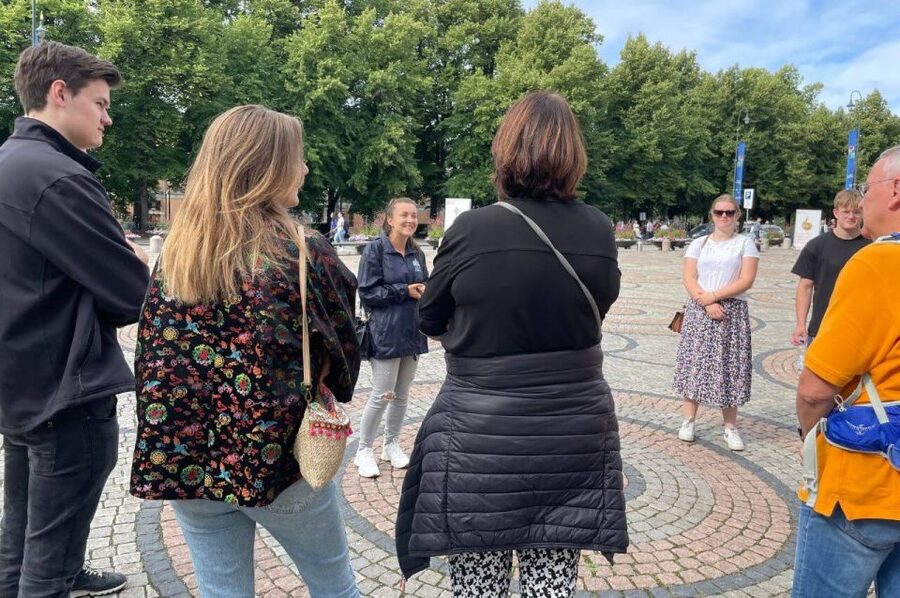
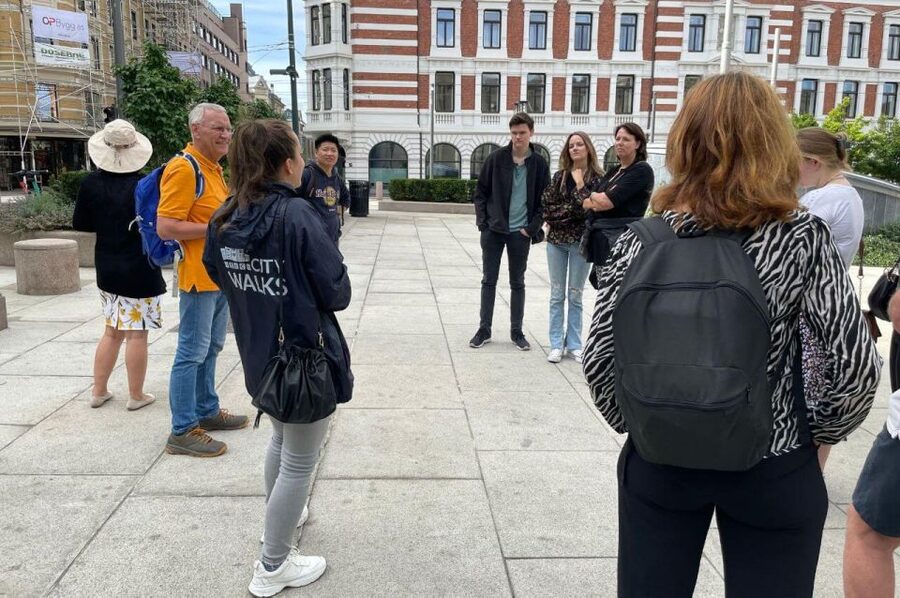
The strongest part of this experience is the human explanation between the stops. The guides are not simply moving you from one building to the next. They explain political changes, Norwegian culture, the city’s past, and how people use Oslo today.
Olaf has been praised for humor and stories about both Oslo and Norway. Amelia has been described as warm, clear, and responsive to questions. Anastasia has earned praise for lively storytelling and good English, while Oliver is noted for local recommendations and a friendly manner. Judit and Minji also received strong marks for clear explanations and thoughtful pacing.
That range matters because a walking tour can easily become a speech delivered at the group. Here, the best experiences appear to come when the guide responds to questions and adjusts examples to the group. You should feel free to ask about museums, ferries, cafés, restaurants, and the city’s political system.
The Included App and Independent Exploring
After the guided walk, scan the QR code on your voucher to access the sightseeing app. It includes audio-guided routes through more of Oslo, with sights such as Frogner Stadion, Trinity Church, Grensen, Karl Johan’s monument, and Aamodt Bridge.
I see the app as a useful bonus rather than a reason to book the tour by itself. The guide gives you live answers and a sense of place. The app then lets you continue exploring when you want, at your own speed, without paying for another guided walk.
You will need to handle transport and attraction admissions separately. Public transportation tickets and entry to museums or other sights are not included. Since the main tour stays outdoors and passes by the attractions, budget extra if you plan to go inside the Opera House, fortress, museums, or other buildings.
Is $38 a Fair Price?
At $38 per person, this is fair value if you want an informed introduction to Oslo and practical advice for the rest of your visit. You are paying for two hours of live commentary, a planned route through many central sights, and access to the audio app.
The price is less attractive if you only want photographs of buildings or prefer to explore alone. Oslo’s center is walkable, and you can pass several of these sights without a guide. The value comes from the explanation, the historical connections, and the chance to ask questions.
The tour is particularly useful for first-time visitors, solo visitors who want company, couples starting a city break, and anyone arriving with limited time. It also suits people who like to orient themselves before choosing museums and neighborhoods for a longer visit.
Practical Details Before You Book
Choose English or German at checkout and check the meeting point carefully. The English meeting point is by P.A. Munch’s statue at University Aula, while the German meeting point is at the Nobel Peace Center.
Wear comfortable shoes and prepare for rain, snow, or wind. The walk continues in poor weather, and winter sidewalks may not be fully cleared. The route includes many outdoor pass-bys, so the experience depends on being comfortable outside for two hours.
Cancellation is free up to 24 hours before departure, and you can reserve now and pay later. Availability and starting times vary, so check the schedule for your date. The tour lasts about two hours and returns to Universitetsplassen or the Nobel Peace Center.
Should You Book the Best of Oslo Walk?
Book it if you want a clear introduction to Oslo before choosing how to spend the rest of your visit. The route covers an unusually broad mix of sights, and the guides add the stories that make Parliament, Christiania, the Opera House, Akershus Fortress, and Aker Brygge fit together.
Skip it if you want interior visits, a private guide, or a slow photographic walk. At $38, the tour earns its price through explanation and orientation, not admissions.
For most first-time visitors, I would schedule it on the first or second day, preferably when you still have time to follow up on the guide’s suggestions. The included app extends the benefit, and the combination of live stories, central landmarks, and practical advice makes this a sensible way to get your Oslo bearings.
FAQ
How long is the Best of Oslo Walking Tour?
The guided walk lasts approximately two hours.
What languages are available?
The tour is offered in English or German. You select your preferred language at checkout.
Where does the English tour meet?
The English tour meets near the statue of P.A. Munch by the Faculty of Law building entrance at University Aula, Karl Johan Street 47.
Where does the German tour meet?
The German tour meets at the Nobel Peace Center at Brynjulf Bulls plass 1.
Where does the tour finish?
The drop-off points are Universitetsplassen and the Nobel Peace Center. The exact arrangement can depend on the option booked.
Are attraction admission fees included?
No. The tour passes by the listed sights, and entry to attractions is not included.
Is public transportation included?
No. You need to pay separately for any public transportation you use.
How do I access the sightseeing app?
Scan the QR code on your voucher to access the app and its audio-guided walking routes.
Can I cancel the booking?
Yes. You can cancel up to 24 hours in advance for a full refund. You can also reserve now and pay later.
Just added in Oslo
- Akerselva River: Urban Paddling Adventure Kayak Tour★ 4.3 · 29 reviews
- Oslo Sea Kayak Tour “Fjord City”★ 4.5 · 39 reviews
- Oslo: Historic Myths & Legends Evening Walking Tour★ 4.8 · 408 reviews
- Oslo: Guided Walking Tour of Central Oslo★ 4.7 · 438 reviews
- Oslo: Sightseeing with Holmenkollen Ski Jump & Vigeland Park★ 4.5 · 451 reviews
- City Sightseeing Oslo Hop-On Hop-Off Bus Tour★ 3.0 · 455 reviews
- The Fram Museum Admission Ticket★ 4.5 · 490 reviews
- Oslo: Fjord Mini Cruise by Wooden Sailing Ship★ 4.5 · 503 reviews
Walking Tours, compared.

Reykjavik Food Walk – Local Foodie Adventure in Iceland
Read our review →
Reykjavík Small group Walking Tour – by CityWalk
Read our review →

Past & Present Small Group Guided Walking Tour
Read our review →
Walking Tour in Bergen of the Past and Present
Read our review →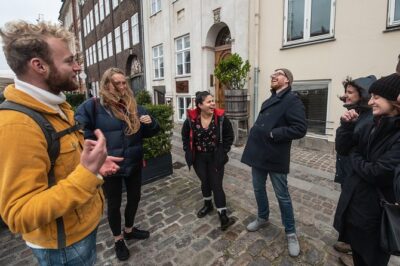
Browse the lists this tour appears in