
Reviewed · FJORD CRUISES
Exclusive Private Cruises on the Oslo Fjord
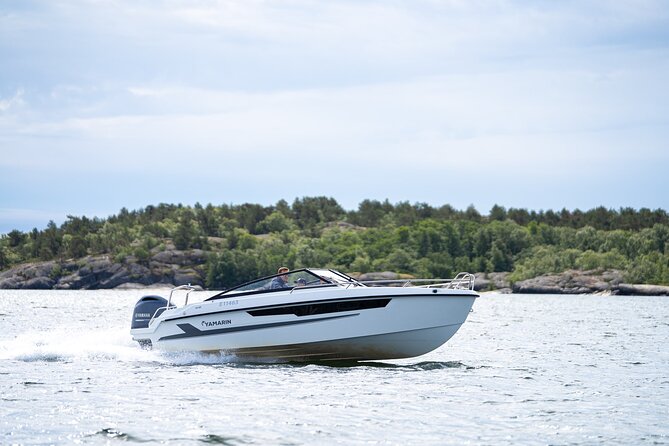
Oslo reveals its best side from the water, and this private powerboat cruise gets you into narrow inlets, sheltered bays, and island channels that a standard city tour cannot reach. You see the Opera House, Akershus Fortress, and Barcode skyline from fresh angles, then move into the quieter summer waters used by Oslo residents.
I like the flexible route and the close look at local life around Middagsbukta, where boats gather for swimming, music, picnics, and lazy afternoons. I also like the captain’s focus on Oslo’s geography and history, including the islands at the fjord entrance and Dyna Lighthouse. The main consideration is price: $1,600.20 is a serious outlay unless you fill most of the seven seats.
Key points to know before booking
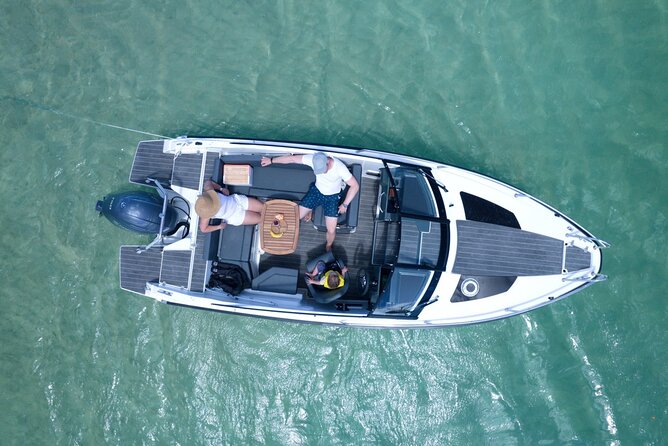
- Private powerboat for up to seven: Your group has the boat to itself, with no strangers shaping the pace or route.
- A three-hour core route: The cruise covers major landmarks, islands, bays, Ormøya, Paddehavet, and Dyna Lighthouse.
- Local summer life at Middagsbukta: Expect a popular anchoring and swimming area where Norwegians gather on the water.
- A flexible itinerary: The route can be tailored, and longer versions of roughly four to six hours are available.
- A guide who explains Oslo from the fjord: The captain covers local geography, history, and the character of the water around the capital.
- Weather matters: Poor conditions can lead to a new date or a full refund, so keep your schedule flexible.
Why Oslo Fjord is the real attraction
Oslo sits at the head of a long fjord, but the city can feel surprisingly separate from the water when you explore it on foot. A cruise changes that at once. The shoreline becomes the center of the trip, and every turn gives you a different view of the capital.
This is not only a sightseeing ride past a few famous buildings. The route moves through open water, narrow passages, sheltered coves, and island channels. You get the grand city view, but you also see the small-scale Oslo that exists beyond the central waterfront.
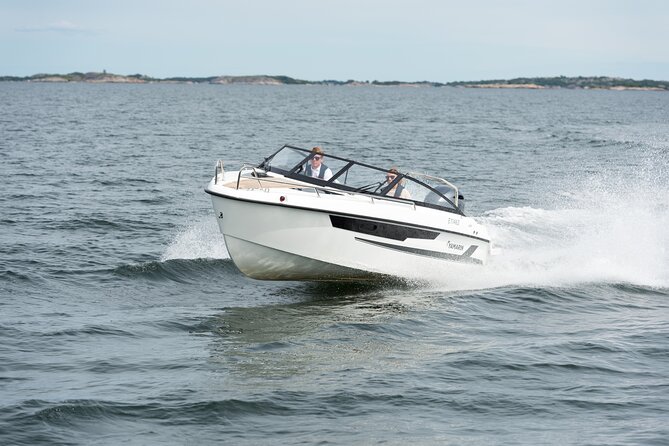
The powerboat is important here. You cover more water than you would on a slow harbor ride, which allows the captain to reach Ormøya, Ulvøya, the entrance to Bunnefjorden, and the islands near the fjord’s mouth during the standard route. At the same time, the ride keeps the group close to the water rather than behind a large tour boat’s windows.
I would choose this experience for a first or second day in Oslo if you want to understand the city’s setting quickly. The views help you place the waterfront landmarks, while the islands explain why the fjord is such a large part of everyday summer life.
More Fjord Cruises in Oslo
- Oslo: Scenic Fjord Cruise with Audio Guide Commentary
★ 4.5 · 5,375 reviews - Oslo: Fjord Evening Cruise with Shrimp Buffet
★ 4.5 · 1,956 reviews - Oslo: Guided Sightseeing Fjord Cruise on Premium Silent Boat
★ 4.7 · 1,390 reviews
The first views: Opera House, fortress, and Barcode
The cruise gives you a front-row view of several of Oslo’s most recognizable buildings. The Oslo Opera House is especially effective from the water, where you can take in its angular form as part of the wider waterfront rather than as an isolated building.
Akershus Fortress provides a different sort of view. From the fjord, its position beside the harbor becomes clear. You see why this site mattered for Oslo’s defense and why the waterfront has shaped the city for centuries.
The Barcode skyline adds a modern counterpoint. Its narrow high-rises create one of Oslo’s most distinct city views, and seeing them from the water gives you a better sense of the capital’s recent growth.
This part of the cruise is ideal for photographs. You can frame old stone defenses, modern architecture, and the water in a single outing. The tradeoff is that the boat does not replace a walking visit. You see these landmarks from outside, so plan separate time if you want to tour the fortress or Opera House.
Hovedøya, Dyna Lighthouse, and the island route
The route passes several islands, including Hovedøya, one of the best-known islands in the inner Oslo Fjord. The point is not simply to tick off names on a map. The captain uses the waterways to show how close Oslo’s city life is to quiet island spaces.
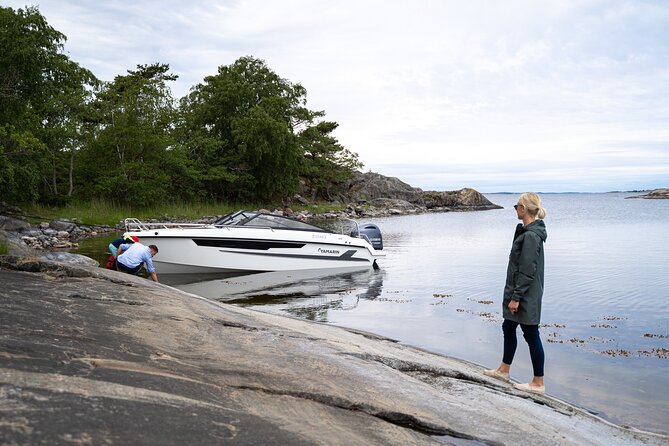
You pass through narrow inlets and sheltered bays, where the view changes quickly. One moment you are looking back toward the city. A few minutes later, the buildings give way to rocks, trees, small coves, and open water.
Dyna Lighthouse is a highlight because the powerboat can bring you close to it. This gives you a more intimate view than a distant harbor cruise usually allows. If your group wants to stop for food, the route can include a nearby restaurant accessible only by boat, though the provided details do not specify the restaurant or whether a meal is included.
The lighthouse also shows why a private trip can be worth considering. You are not tied to a large boat’s fixed route, and the group can discuss what it wants to see. Still, you should confirm your preferred stops and timing when booking, especially if the restaurant option matters to you.
Ormøya, Ormsund Bridge, and Paddehavet
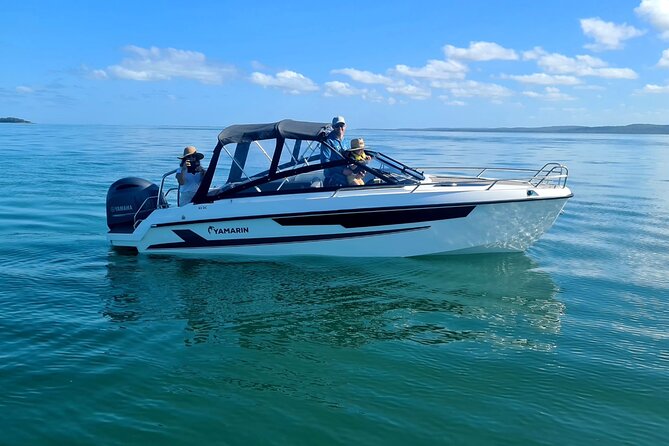
The cruise then moves around Ormøya, under Ormsund Bridge, and into Paddehavet. This section shifts attention away from central Oslo and toward the city’s seaside neighborhoods.
From the water, you see Nordstrand and Ulvøya, along with some of Oslo’s most desirable waterfront homes. The view gives you a different understanding of the city. Oslo’s relationship with the fjord is not limited to public monuments and tourist sites. Homes, swimming places, boat routes, and summer retreats all crowd the shoreline.
Going under Ormsund Bridge is a small but memorable part of the route. It gives the cruise a sense of movement and variety, rather than keeping you on a broad stretch of open water. Paddehavet adds another sheltered section where you can look back toward the coast from a less familiar angle.
You may find this part more interesting than the famous buildings if you like seeing how a city actually lives. It is also the section where the private format helps most, since your group can ask about the neighborhoods and spend more time on views that appeal to you.
More time on the water around Oslo:
- 2-Hour Oslo Fjord Sightseeing Cruise by Sailing Ship
★ 4.0 · 694 reviews - Oslo: Grand City Sightseeing Tour by Bus with Fjord Cruise
★ 4.6 · 647 reviews - Oslo Combo Tour: Grand City Tour and Oslo Fjord Cruise
★ 4.5 · 555 reviews - Oslo: Fjord Mini Cruise by Wooden Sailing Ship
★ 4.5 · 503 reviews
Bunnefjorden and Skjælsholmene bird sanctuaries
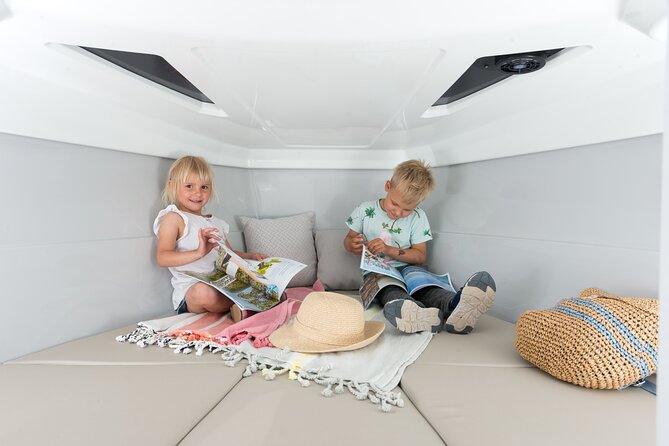
At the entrance to Bunnefjorden, the boat reaches the bird sanctuaries of Skjælsholmene. This is a quieter part of the trip and a useful break from the city-focused views.
The sanctuaries offer a chance to watch bird life from the water. The exact species and viewing conditions will depend on the day, so you should not treat this as a dedicated bird-watching tour. It is better understood as one element of a wider fjord trip, adding nature to the architecture, history, and local boating scenes.
After this stop, the boat picks up speed as it heads back into Oslo Fjord. That change of pace helps the route feel like a proper cruise rather than a slow circuit around the harbor.
The bird sanctuaries also underline the value of a guide who can explain geography. The fjord is not just open water between Oslo and the sea. Its islands, channels, protected areas, and inlets all have different uses, and the route lets you see several of them in one outing.
Historical islands at the entrance to Oslo Fjord
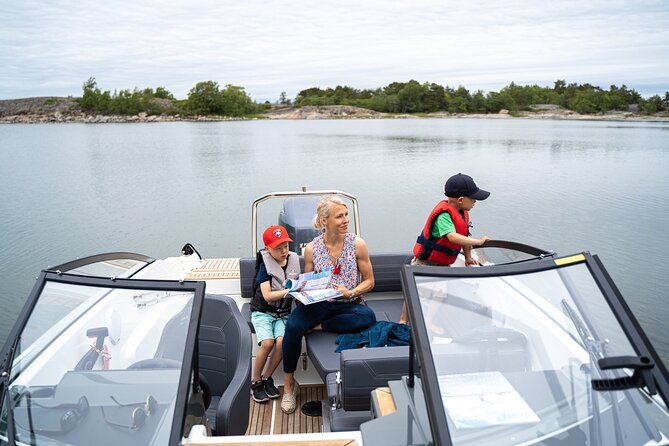
The islands near the entrance to Oslo Fjord carry an important part of the area’s past. Your guide explains their history while you pass them from the boat.
The details provided do not identify each historical island by name, so you should ask the captain to point out the specific sites during the cruise. That is one advantage of having a live guide rather than relying on a recorded commentary. You can ask about the islands in front of you and connect the story to the view.
This portion of the trip is especially useful if you want more than photographs. The captain is described as explaining both the geography of Oslo Fjord and the spirit of Norway, giving the ride a wider local context. The historical commentary is part of what makes the experience feel like a guided outing instead of a private boat hire with no interpretation.
Middagsbukta and Oslo’s summer routine
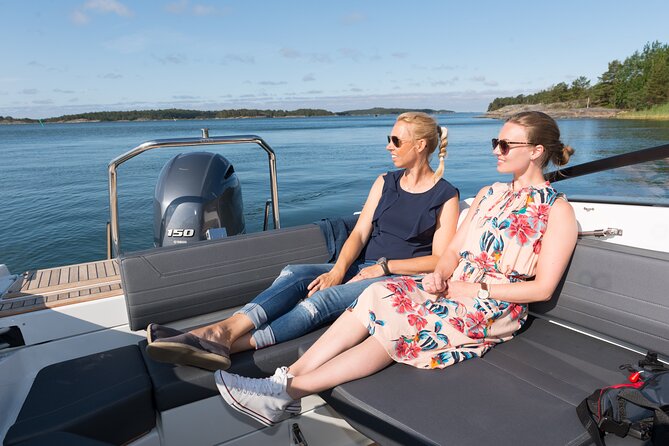
Middagsbukta is the route’s clearest look at local life on the water. It is a popular anchoring and swimming spot, where people gather with all kinds of boats to play music, dance, picnic, and swim.
You can spend about 40 minutes here, and that pause matters. Without it, the cruise would be a sequence of passing views. At Middagsbukta, you get time to watch how Oslo residents use the fjord when the weather is warm.
This is also where the tour feels least like a standard sightseeing circuit. You are not only looking at monuments. You are seeing a public summer space, with boats gathered for recreation and social time.
The experience depends heavily on weather and season. The information supplied does not promise a particular level of activity on every departure, so you should think of Middagsbukta as a chance to see local boating culture, not a guaranteed party scene. On a quiet day, the anchorage may still be pleasant, but the atmosphere will naturally vary.
What the private format is worth
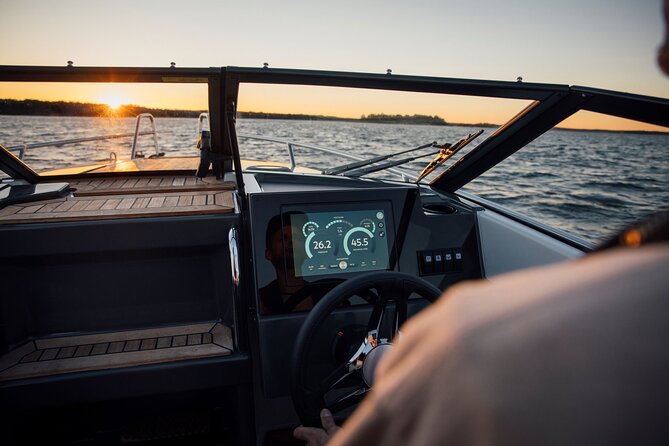
The full price is $1,600.20 per group of up to seven people. If seven people share the cost, it works out to roughly $229 per person. A smaller group pays much more per person, so the value depends on how many seats you fill.
For a group of friends or family, the price buys privacy, a flexible route, and a boat focused only on your party. You do not have to fit into a large group’s schedule, and you can discuss your preferences with the captain. That flexibility is the main reason to choose this over a standard shared cruise.
The duration is listed at roughly three to six hours. The core sightseeing route takes about three hours, while longer trips allow more time for stops, custom requests, or a slower pace. I would choose the three-hour version if you mainly want city views and a broad look at the fjord. A longer option makes more sense if your group wants time at Middagsbukta, a restaurant stop, or additional cruising.
The tour is booked an average of 46 days in advance, which suggests that you should not leave it until the last moment, especially if you need a particular date or want to travel with a full group.
Practical details for comfort and planning
The experience is offered in English and uses a mobile ticket. Confirmation comes at booking. Service animals are allowed, the departure area is near public transportation, and most people can participate.
The biggest practical factor is the weather. This is an open-water activity, and poor conditions can cause cancellation. If that happens, you are offered another date or a full refund. I would avoid placing this cruise on the final few hours of your Oslo stay, since a weather change could remove your only chance to go.
Free cancellation is available if you cancel at least 24 hours before the start time. Changes or cancellations made less than 24 hours ahead are not accepted and are not refunded. Cutoff times use local Oslo time.
Ask about your preferred route before departure if you have a specific priority. The advertised route includes the city landmarks, islands, Ormøya, Paddehavet, Bunnefjorden, bird sanctuaries, Middagsbukta, and Dyna Lighthouse, but the tour can also be tailored. A short conversation early on helps the captain balance speed, stops, photographs, and sightseeing.
Who will get the most from this cruise
I would recommend this for families, couples traveling with friends, and small groups who value privacy. It is also a strong choice for photographers, since the boat reaches several viewpoints that are hard to connect on foot in a single morning or afternoon.
It suits you if you want both Oslo’s landmarks and its everyday waterfront. The route does not focus only on the city center. You see residential shoreline, summer islands, bird sanctuaries, historic islands, and a popular swimming anchorage.
You may want a different option if your budget is tight, your group has fewer than four people, or you prefer a slow, fully sheltered sightseeing boat. The price is difficult to justify for one or two people unless a private boat and a tailored route are especially important to you.
The ride is also weather-dependent, and the powerboat format is about covering the fjord and getting close to the scenery. If you want a formal meal, long island walks, or a full museum visit, you will need to arrange those separately.
Should you book Exclusive Private Cruises on the Oslo Fjord?
Book it if you can fill much of the seven-person capacity and want Oslo explained through its water routes, islands, and summer life. The strongest parts are the private format, the range of scenery, the 40-minute stop at Middagsbukta, and the close approach to Dyna Lighthouse.
I would choose the three-hour cruise for a first look at Oslo Fjord, then ask about extending it if your group wants a restaurant stop or extra time in the coves. If your budget allows it and the forecast is good, this is one of the more personal ways to understand why Oslo belongs to its fjord.
FAQ
How long does the Oslo Fjord cruise last?
The experience lasts approximately three to six hours. The main sightseeing route is described as a three-hour cruise, with longer options available.
How many people can join the private cruise?
The boat accommodates one private group of up to seven people. Only your group participates.
What landmarks can I see from the water?
The route includes views of the Oslo Opera House, Akershus Fortress, and the Barcode skyline.
Which islands and coastal areas are included?
The cruise can pass Hovedøya, Dyna Lighthouse, Ormøya, Ulvøya, the islands near the entrance to Oslo Fjord, and the bird sanctuaries of Skjælsholmene. It also travels around Nordstrand and through Paddehavet.
Does the cruise stop at Middagsbukta?
Yes. The route includes about 40 minutes at Middagsbukta, a popular anchoring and swimming area.
Can the itinerary be changed?
Yes. The cruise can be tailored to your group’s wishes and ideas.
Is the tour offered in English?
Yes. The experience is offered in English.
What happens if bad weather cancels the cruise?
If poor weather causes cancellation, you can choose another date or receive a full refund. You can also cancel for a full refund if you do so at least 24 hours before the experience starts.
Just added in Oslo
- Unknown war. Oslo and Norway during 1940-45★ 5.0 · 74 reviews
- The Viking Planet Museum – Mini Group (4 adults)★ 4.0 · 16 reviews
- The Viking Planet Museum Ticket★ 4.0 · 197 reviews
- Oslo Winter Highlights Bike Tour★ 5.0 · 36 reviews
- The Ultimate Study of the Human Form at Vigeland’s Sculpture Park with a Local★ 4.0 · 14 reviews
- The Essential Oslo Private Walking Tour★ 5.0 · 79 reviews
- The Ultimate Norwegian Skiing Experience★ 5.0 · 16 reviews
- Central Oslo Guided Walking Tour with Local Guide★ 4.5 · 278 reviews
Fjord Cruises, compared.
Scenic Fjord Cruise to Lysefjord and Preikestolen
Read our review →
Scenic Fjord Cruise with Audio Guide Commentary
Read our review →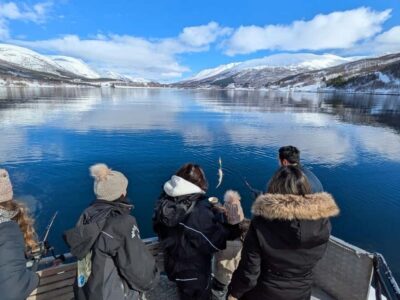
Tromsø’s Top-Rated Fjord & Fishing Cruise – All-Inclusive
Read our review →
Fjords and Sommarøy Islands Tour with Salmon Picnic
Read our review →
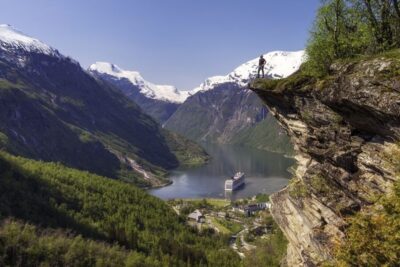
Dalsnibba, Flydalsjuvet, Eagle Bend & Fjords Tour
Read our review →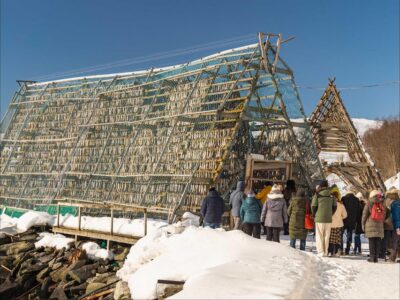
Arctic Fjord Cruise With Stop On Land At Fish Racks
Read our review →Browse the lists this tour appears in