
Reviewed · WALKING TOURS
Free City Walking Tour in Oslo
Oslo’s best introduction may be a walk that links its bold modern buildings with royal, political, and Nobel history. This route moves from the Tiger statue and Opera House to Akershus Fortress, City Hall, the Royal Palace, and Parliament, giving you a useful picture of central Oslo in about 90 minutes.
I like the local stories about daily Norwegian life, not just dates and monuments. I also like the route’s easy pace and clear meeting point at the Tiger sculpture, with guides including Zoe, Nicholas, Nikola, Yellena, and Mia. The main drawback is that a few stops are brief, so the amount of detail can depend on your guide and the group’s walking speed.
Key points at a glance
- Central Oslo in 90 minutes: See the main sights between the railway station, waterfront, palace, and Parliament.
- A strong first-day activity: Use the walk to get your bearings before choosing museums and neighborhoods to explore on your own.
- A mix of old and new Oslo: Compare the Opera House and Bjørvika redevelopment with Akershus Fortress and the Royal Palace.
- Guides shape the experience: Zoe, Nicholas, Nikola, Yellena, and Mia are among the named guides associated with the tour.
- Free-tour pricing needs planning: The listed price is $3.45, but one review advises expecting a tip of about $10 per person.
- Small enough to stay manageable: The group limit is 30 people, though that can still feel busy at popular public sights.
A useful first walk through central Oslo
I see this tour as an orientation walk rather than a deep study of Oslo. You will not enter every museum or spend long periods inside each landmark. Instead, you move from one important place to the next while your guide explains the city’s history, royal family, culture, and everyday habits.
That format works well when you arrive in Oslo with limited time. It also helps you decide where to return later. You might pass the Munch Museum and want a longer visit, spot the National Museum near Aker Brygge, or note the palace and fortress as places to explore at a slower pace.
The route finishes near the Norwegian Parliament on Karl Johans gate, about a 10-minute walk from the starting point. That makes the tour practical for a first morning, especially if you want to continue along Oslo’s main central street afterward.
A few more things to do in Oslo worth a look
- Oslo: Best of Oslo Walking Tour
★ 4.5 · 458 reviews - Oslo: Guided Walking Tour of Central Oslo
★ 4.7 · 438 reviews - Oslo: Historic Myths & Legends Evening Walking Tour
★ 4.8 · 408 reviews
What the $3.45 price really means
The listed price is unusually low for a guided city walk, but this follows the familiar free-tour model. The amount paid at booking is small, and gratuities are part of the expected cost. One detailed comment suggests budgeting about $10 per person for a tip, so I would include that in your actual sightseeing budget.
That still gives you good value if the guide is lively and well prepared. A private tour would cost much more, while an unguided walk would not give you the same running explanation of Norwegian politics, royal life, art, and city planning.
The value depends on how much you use the information. If you simply want photographs of the Opera House and Royal Palace, you can see those places without a tour. If you want context and a clear route through central Oslo, the small upfront cost and customary tip make more sense.
The experience is highly rated overall, with a 4.8 score from 91 reviews and 93 percent recommending it. Still, the price does not guarantee a particular guide or speaking style. Some guides are praised for humor and detail, while one experience was described as too focused on walking and not focused enough on explanation.
Meeting the guide at the Tiger sculpture
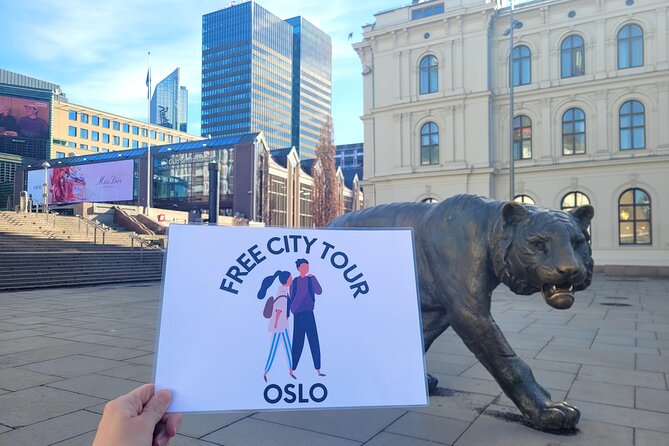
The tour begins at The Tiger, the large sculpture outside Oslo Central Station at Jernbanetorget. It is an easy landmark to find, and the location is close to public transportation. Your mobile ticket should be ready when you arrive, and confirmation is provided at booking.
The first eight minutes serve as the gathering point and opening introduction. This is where your guide sets the tone, explains the route, and begins placing Oslo in context. With a maximum of 30 people, the group should remain reasonably manageable, though a full departure can still require you to stay close to the guide.
Arrive ready to walk for the full 90 minutes. The route is not difficult to understand, but there is enough movement between sights that comfortable shoes matter. One positive detail from the feedback is the easy walking pace noted with Zoe as guide. Another account praised Nikola for taking his time despite chilly weather.
Weather deserves attention. Oslo can feel cold even during a pleasant-looking day, and the route includes open waterfront areas. Bring a layer and something waterproof if the forecast is uncertain.
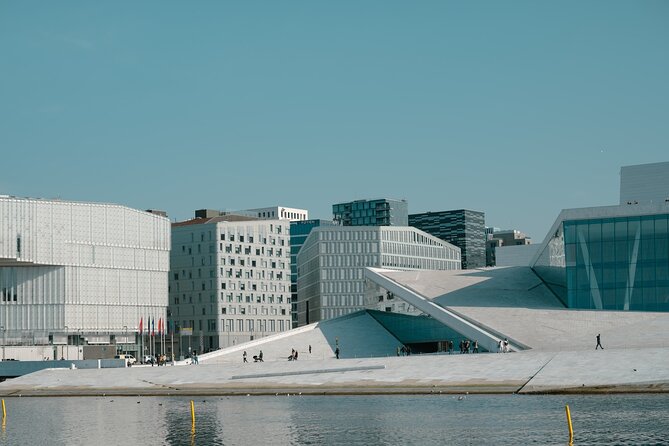
Opera House, Bjørvika, and Oslo’s new face
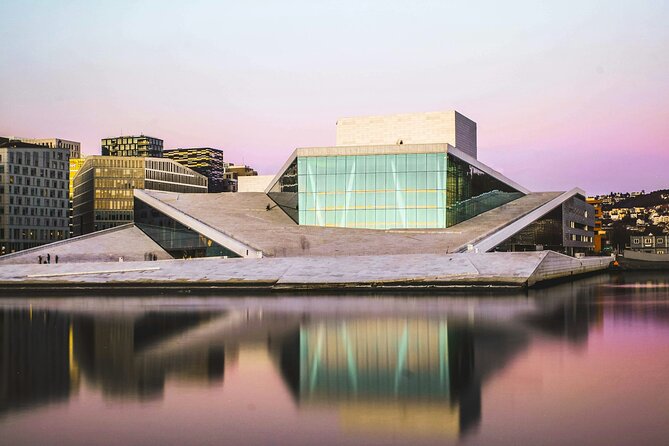
The Oslo Opera House is the first major sightseeing stop, with about 10 minutes devoted to the building and the surrounding Bjørvika area. The discussion also includes the Public Library, the Munch Museum, and Sørenga.
This is an effective opening because you see a newer side of Oslo before turning to the city’s older core. The Opera House is not treated as an isolated building. It is part of a changing waterfront district, and your guide connects it with nearby cultural buildings and the redevelopment around Bjørvika.
You will likely hear about the Public Library and Munch Museum as points of interest rather than enter them. That is useful if you are planning your own visits, but do not expect time for an exhibition or a full architectural tour.
The route also passes the small stock exchange described as the smallest in the world. It is a quick curiosity rather than a major stop, yet details like this can make a city walk more memorable. The short timing means you should listen closely, since the guide may move on before you have much time to look around.
Same base, a different kind of day out:
- Oslo: Scenic Fjord Cruise with Audio Guide Commentary
★ 4.5 · 5,375 reviews - Oslo Nature Walks: Island Hopping Tour
★ 4.8 · 2,713 reviews - Oslo: 100% Electric Oslofjord Sightseeing Cruise
★ 4.4 · 2,041 reviews - Oslo: Fjord Evening Cruise with Shrimp Buffet
★ 4.5 · 1,956 reviews
Kvadraturen and Christiania Square
The walk then reaches Kvadraturen, Oslo’s historic center, with about seven minutes at Christiania Square. This neighborhood adds older urban character to the modern buildings along the harbor.
The contrast is one of the route’s strengths. Within a short distance, you move from contemporary cultural projects to the part of the city connected with earlier Oslo, also known historically as Christiania. Your guide uses the square to explain how the city developed and how its name and center changed over time.
Seven minutes is enough for a concise explanation and a quick look, but not enough to explore the neighborhood in detail. I would treat this stop as a preview. If historic streets and older buildings interest you, note the area and return later with more time.
Akershus Fortress and Alfred Nobel
Akershus Castle and Fortress is one of the most important stops, with about eight minutes devoted to the site. The route includes a story about Alfred Nobel, which connects the fortress area to the Nobel Peace Center visited later.
The fortress gives the walk a stronger sense of place. From here, you get a different view of Oslo and the waterfront, and the setting helps explain the city’s strategic and political past. The guide’s account of Nobel adds a human story to what could otherwise be just another old stone building.
The timing indicates a stop and explanation, not a full visit to every part of the complex. The admission is listed as included for this stop, but you should not assume the tour includes a lengthy interior visit or separate museum access. The walk keeps moving.
This is also one point where the walking portion matters. Some of the route’s appeal comes from crossing between landmark areas and seeing how they relate to one another. If you prefer sitting indoors with long historical talks, this format may feel brisk. If you like learning while moving, the fortress is a rewarding part of the route.
Aker Brygge, the Nobel Peace Center, and the waterfront
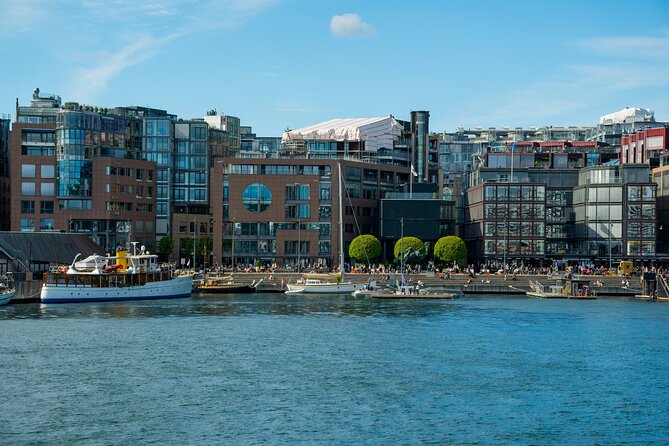
The tour continues toward Aker Brygge, with attention to the National Museum and Nobel Peace Center. The stop lasts about seven minutes.
Aker Brygge is useful for understanding Oslo’s waterfront as a public and cultural area. The National Museum and Nobel Peace Center give your guide two strong subjects: Norwegian art and design on one side, and international peace work linked to the Nobel tradition on the other.
You will have time to identify these places and hear why they matter, but not to visit their galleries. I like this arrangement for a first walk because it lets you make better choices later. You can decide if the National Museum or Nobel Peace Center deserves part of your own schedule instead of wandering in without a plan.
The waterfront setting also gives the walk a visual break from streets and government buildings. Depending on the weather and group pace, this may be one of the more pleasant parts of the route.
City Hall and the civic heart of Oslo
Oslo City Hall, or Rådhuset, receives about 10 minutes. This is one of the longer stops and a good place for your guide to explain how the city presents itself through public art, civic buildings, and the Nobel Peace Prize ceremony.
The building is closely tied to Oslo’s public identity, so this stop helps connect the city’s political life with the international role of the Nobel Peace Prize. You are also near several other major sights, making City Hall a useful anchor for later sightseeing.
A longer explanation here gives the guide room to tell a story rather than simply name the building. Several of the strongest comments about the tour praise guides for making Oslo’s culture and history easy to follow without becoming dull. That is the kind of stop where the guide’s personality matters most.
Nationaltheatret and Henrik Ibsen
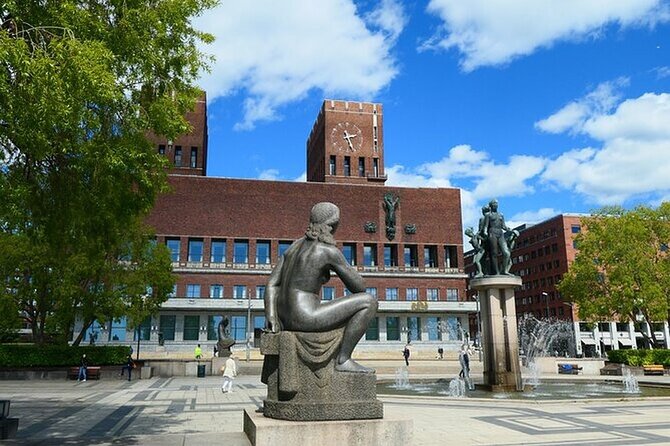
The route then reaches Nationaltheatret, with about six minutes devoted to Henrik Ibsen. This adds literature and theater to the tour’s mix of royal, political, military, and architectural subjects.
Ibsen is an important name in Norwegian culture, and the theater provides a concrete setting for discussing his place in the country’s artistic life. The stop is short, so expect a focused introduction rather than a detailed biography.
This variety is one reason I would schedule the tour early in your Oslo visit. In one morning, you receive pointers to museums, public buildings, royal sites, Nobel history, and national literature. You can then choose which themes deserve more time.
The University Aula and Munch’s paintings
The University Aula is a brief four-minute stop, but it has a distinctive link to Edvard Munch. Your guide explains that Munch painted here, giving you a quick connection between Oslo’s university setting and its best-known artist.
Do not expect a museum visit or a long look at the art. The value is in the connection. If you later visit the Munch Museum, this stop gives you another place in the city tied to his work.
Four minutes can feel short, especially if the group needs to gather and cross a street. Keep your attention on the guide and ask questions when there is a natural pause. This is one of the stops where a lively guide can make a small detail stick.
The Royal Palace and Norway’s royal family
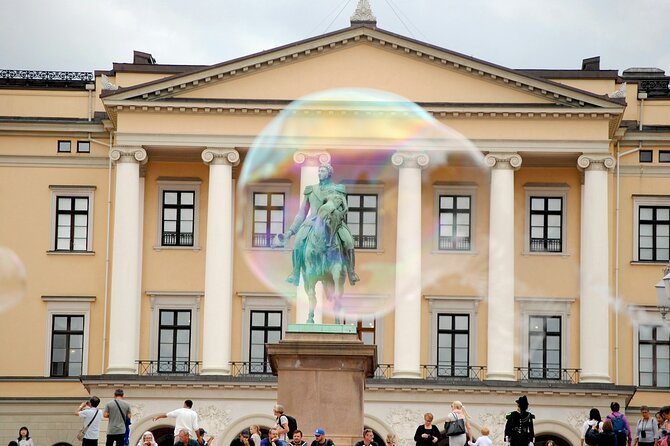
The Royal Palace gets about eight minutes and is one of the clearest highlights for first-time visitors. The guide tells stories about the Norwegian royal family and helps explain the palace’s role in modern Norway.
The stop is more about the institution and its place in Norwegian life than a palace interior tour. You will learn how the royal family fits into the country’s public identity, while seeing the building from the outside.
I like that the tour places the palace after the Opera House, fortress, museums, and civic buildings. By then, you have seen several parts of Oslo’s public life, so the royal stop feels like part of a larger picture rather than an isolated monument.
Parliament and the final stretch
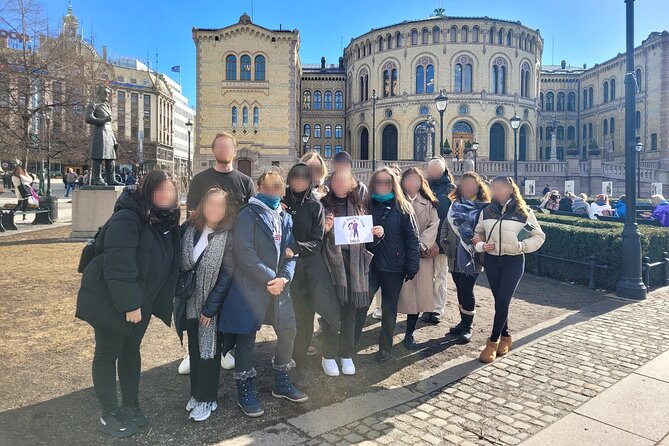
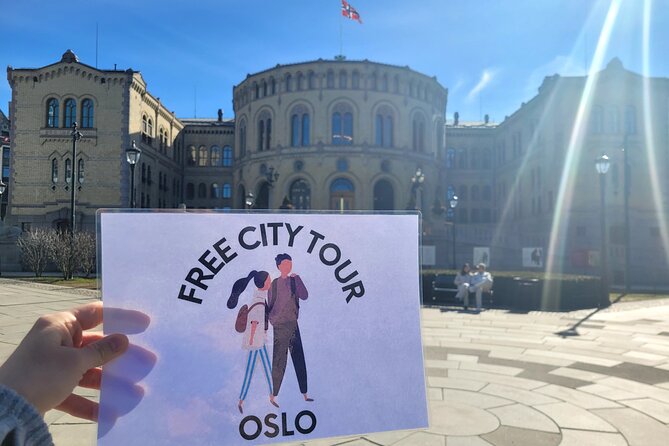
The final stop is the Norwegian Parliament on Karl Johans gate, with about eight minutes for the explanation. This brings the walk back to national government and provides a natural ending after the royal family and City Hall.
The finish is convenient. You are close to the center of Oslo, and the tour ends at Karl Johans gate 22. From there, you can continue on foot, find food, return toward the station, or revisit one of the places introduced earlier.
Because the end is only about 10 minutes from the Tiger sculpture, you are never stranded far from the starting area. That is useful if you have a train connection or need to collect luggage nearby.
Guide style, group size, and what to expect
The named guides connected with this experience include Zoe, Nicholas, Nikola, Yellena, and Mia. The strongest pattern is a friendly, entertaining approach with clear explanations and local perspective. Nicholas is praised for covering the city in 90 minutes while answering questions, while Yellena is described as fun and approachable.
The group limit is 30 people. That is not an intimate private walk, but it is smaller than many large city tours. Stay near the guide, especially at the Opera House, waterfront, and busy central streets.
The guide makes a real difference. Some people want a steady stream of history, while others prefer a quicker overview with more time spent walking. One lower-rated account felt there was more walking than talking, while other feedback praised the tour for being full of humor and useful information. I would book this knowing that the guide’s individual style affects the balance.
Most people can participate, and service animals are allowed. The tour is near public transportation. Free cancellation is available if you cancel at least 24 hours before the start time. Cancellations within 24 hours are not refunded, and the activity may be changed or refunded if its minimum group size is not reached.
Who should book this Oslo walk
I would choose this tour if you are visiting Oslo for the first time, have only a day or two, or prefer to learn a city by walking through it. It suits adults, families, and mixed-age groups who can manage 90 minutes on foot and want a broad introduction rather than a specialist museum visit.
It is especially useful at the beginning of a trip. You can mark the Opera House, Munch Museum, National Museum, Nobel Peace Center, fortress, and palace for later visits. The route also helps you understand distances in the city center.
You may want something else if you dislike group tours, want long stops at each sight, or hope to enter multiple attractions. The tour is an outside overview with short explanations, not a series of guided interior visits.
Should you book the Free City Walking Tour in Oslo?
Yes, if you want a low-cost introduction to central Oslo with history, royal stories, culture, and an easy route between major sights. The Opera House, Akershus Fortress, City Hall, Royal Palace, and Parliament give you a strong first look at the city, while the smaller details about Ibsen, Munch, Nobel, and the stock exchange add character.
Book it early in your stay, wear comfortable shoes, and budget for a tip of about $10 per person in addition to the $3.45 booking price. Go in expecting a brisk overview, not a full museum tour. If your guide is as engaging as Zoe, Nicholas, Nikola, Yellena, or Mia, you will finish with a useful map of Oslo in your head and several good ideas for the rest of your visit.
FAQ
Where does the tour start?
The tour starts at The Tiger sculpture near Jernbanetorget, at 0154 Oslo, Norway. The statue is close to Oslo Central Station and public transportation.
Where does the tour end?
The tour ends near the Norwegian Parliament at Karl Johans gate 22, 0026 Oslo. The finish is about a 10-minute walk from the Tiger sculpture.
How long does the tour last?
The tour lasts approximately 1 hour and 30 minutes. The individual sightseeing stops are short, with additional time used to walk between locations.
What sights are included?
The route includes the Opera House, Kvadraturen and Christiania Square, Akershus Castle and Fortress, Aker Brygge, City Hall, Nationaltheatret, the University Aula, the Royal Palace, and the Norwegian Parliament. It also includes stories about the Public Library, Munch Museum, Nobel Peace Center, Bjørvika, Sørenga, and Alfred Nobel.
How many people can join the tour?
The maximum group size is 30 people.
What is the cancellation policy?
You can cancel at least 24 hours before the start time for a full refund. Cancellations or changes made less than 24 hours before the start time are not refunded or accepted.
Just added in Oslo
- Unknown war. Oslo and Norway during 1940-45★ 5.0 · 74 reviews
- The Viking Planet Museum – Mini Group (4 adults)★ 4.0 · 16 reviews
- The Viking Planet Museum Ticket★ 4.0 · 197 reviews
- Oslo Winter Highlights Bike Tour★ 5.0 · 36 reviews
- The Ultimate Study of the Human Form at Vigeland’s Sculpture Park with a Local★ 4.0 · 14 reviews
- The Essential Oslo Private Walking Tour★ 5.0 · 79 reviews
- The Ultimate Norwegian Skiing Experience★ 5.0 · 16 reviews
- Central Oslo Guided Walking Tour with Local Guide★ 4.5 · 278 reviews
Walking Tours, compared.

Reykjavik Food Walk – Local Foodie Adventure in Iceland
Read our review →
Reykjavík Small group Walking Tour – by CityWalk
Read our review →

Past & Present Small Group Guided Walking Tour
Read our review →
Walking Tour in Bergen of the Past and Present
Read our review →
Browse the lists this tour appears in