
Reviewed · VIKING HISTORY TOURS
From Stockholm: Viking Culture Guided Tour with Transfer
The most rewarding part of this six-hour trip is that Viking history is not locked away in a museum. You walk among real rune stones, burial grounds, and old roadworks north of Stockholm, then finish in Sigtuna, a small town with church ruins and wooden houses.
I like the mix of archaeology and countryside, and I like that guides such as Gabriel, Eric, Calle, Charlotte, and Nadia have brought humor and clear answers to the subject. The main drawback is pace: six hours passes quickly, and Sigtuna’s 45-minute walk leaves limited time for an unhurried lunch or independent exploring.
Key points at a glance
- Broby bro reveals Viking burial customs: Walk through an Iron Age and Viking grave field where people were buried more than 1,000 years ago.
- Estrid gives the past a human face: Learn how a 60-year-old woman’s skeleton helped tell the story of one Viking-era life.
- Jarlabanki’s causeway shows Viking power: See a 150-meter bridge linked to an ambitious 11th-century nobleman.
- An ancient council site explains society: Hear how local communities governed themselves before modern Sweden existed.
- Sigtuna adds town life to the day: Explore Sweden’s oldest still-existing town, with bay views, wooden houses, and church ruins.
- Pickup makes the outing easy: Hotel, cruise, accommodation, and central station pickup are included, along with transport back to central Stockholm.
Why this tour works beyond Stockholm
Stockholm gives you museums, palaces, and handsome waterfront streets. This tour gives you something different: the places where early Swedish society actually operated. You leave the city in a minivan and reach open countryside, grave fields, old roads, and a small historic town.
That change of setting matters. Viking history can feel vague when it is reduced to helmets, ships, and dramatic battle stories. Here, the evidence is quieter and more useful. A rune stone, a burial mound, or a bridge tells you about family, status, religion, travel, and power.
The guides also place Viking life within the wider story of Sweden. Eric, for example, has been praised for connecting the Viking period with later Swedish history and modern life. Calle has been especially good at answering questions about Swedish culture as well as the past.
This is a learning tour rather than a costumed show. You will not be handed a theatrical version of the Vikings. Instead, you will hear how historians and museums use physical remains to work out what happened.
Other Norse history stops around Stockholm:
- Stockholm: The Viking Museum Exhibition and Viking Ride
★ 4.5 · 667 reviews - From Stockholm: Uppsala and Sigtuna Viking Sites Tour
★ 4.7 · 157 reviews - Stockholm: Sigtuna and Uppsala Viking History Day Tour
★ 4.7 · 41 reviews
Broby bro and the story of Estrid
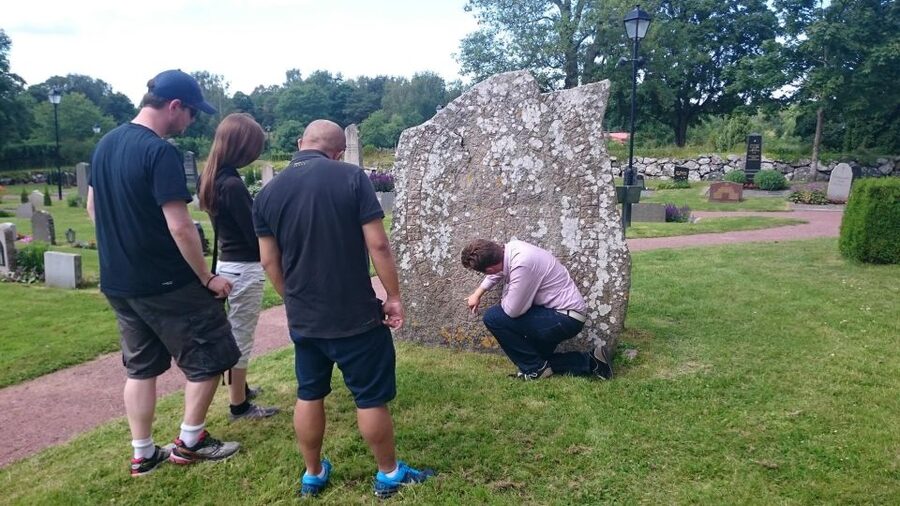
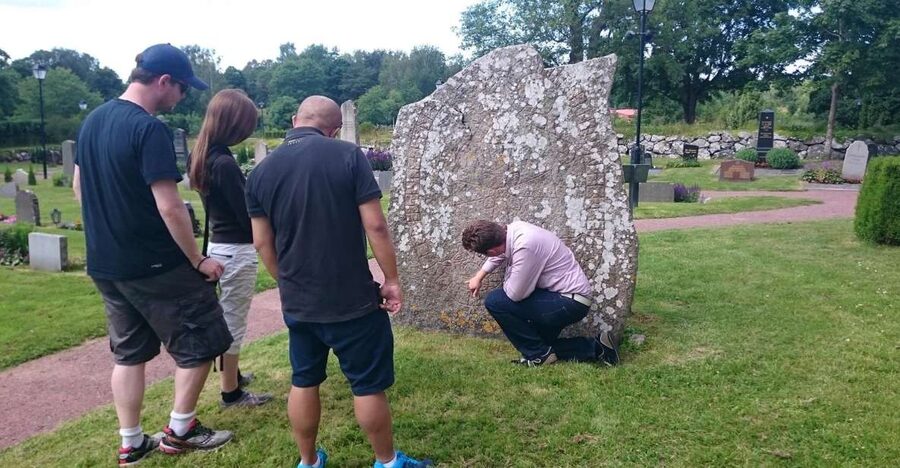
The first major stop is Broby bro, a grave field used during the Iron Age and Viking period. People were buried here more than 1,000 years ago, and you can walk through the site with the guide while learning about burial customs and pagan beliefs.
The setting is important. You are not simply looking at an object behind glass. The graves remain in the place where the community used them, which makes the explanation of burial traditions easier to picture. Your guide discusses how a person might have been laid to rest and what those practices reveal about Viking ideas of death and the afterlife.
The most personal story here is Estrid’s. In 1995, archaeologists found the skeleton of a woman estimated to have been about 60 years old. She had been buried in a Christian part of the grave field, and researchers used the evidence to identify her and reconstruct parts of her life.
Estrid is a useful counterweight to the usual Viking image of young male warriors. Her story brings attention to women, age, family, belief, and the changes taking place as Christianity spread. Listen closely here, since the value of the stop comes mainly from the guide’s interpretation rather than from a large collection of visible objects.
The ground can be a little uneven, so wear shoes that can handle lightly rugged paths. There is not a great deal of walking, but this is not a fully paved museum visit.
Jarlabanki’s 150-meter causeway
Next comes Jarlabanki’s Causeway, an 11th-century bridge or road crossing associated with Earl Jarlabanki. The causeway stretches about 150 meters and offers a clear example of how roads and communication worked in the Viking Age.
The story attached to Jarlabanki is entertaining. He is presented as a powerful and rather boastful man who wanted people to notice his influence. His construction project was not just useful infrastructure. It also sent a public message about wealth, authority, and control.
I like this stop because it moves the discussion away from swords and raids. Building and maintaining a road required organization, labor, and resources. A causeway tells you that Viking society depended on movement, trade, messages, and people who could command work.
The site also helps explain how a landowner could display power without a modern monument or official title. Your guide can use the bridge to show how status was made visible to everyone passing through the area.
Photo opportunities may require a little patience. One practical point from the tour experience is that guides sometimes speak in front of runes or buildings, which can make it harder to take pictures while the explanation is under way. Pay attention first, then ask for a moment to photograph the stone or structure.
The Viking council site
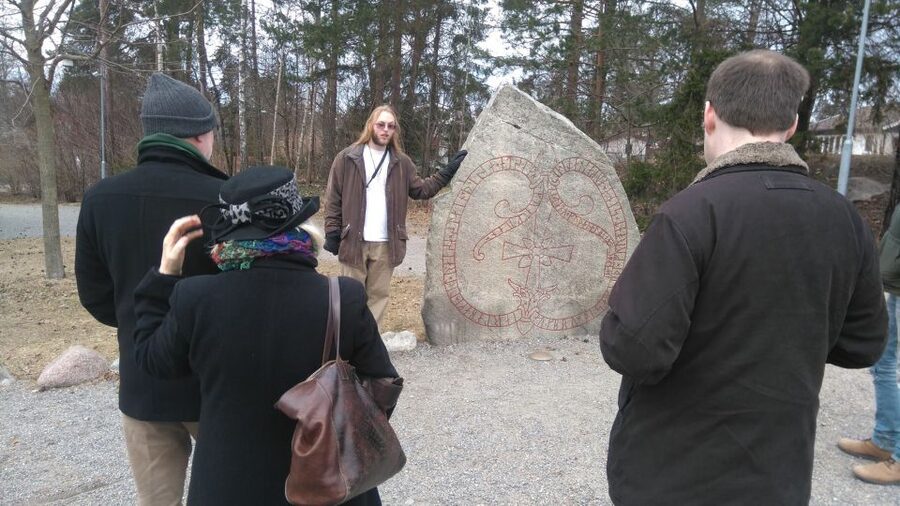
The itinerary continues to a Viking council site preserved in its original location. This is where the tour shifts from individual status to community rule.
Your guide explains how people gathered, made decisions, and handled disputes. The site helps you understand that Viking communities were not simply loose bands of raiders. They had systems of authority, expectations, and public meetings, even though their society was very different from modern democratic government.
This stop is especially useful if you want a more rounded view of Viking life. The tour deals with religion, burial, transport, family, leadership, and law rather than presenting a single heroic version of the past.
The interpretation matters more than the physical remains. Do not expect a rebuilt assembly hall or a large ruin. Much of what you gain comes from standing in the setting and listening as the guide explains how the site functioned.
A few more things to do in Stockholm worth a look
- Arlanda Airport Bus Transfer Departure
★ 3.5 · 497 reviews - Reykjavik: Sky Lagoon Admission with Transfer
★ 4.8 · 2,388 reviews - Reykjavík: Golden Circle Minibus Tour & Blue Lagoon Transfer
★ 4.9 · 546 reviews - Arlanda Airport Bus Transfer Arrival
★ 3.5 · 490 reviews
Sigtuna, Sweden’s oldest existing town
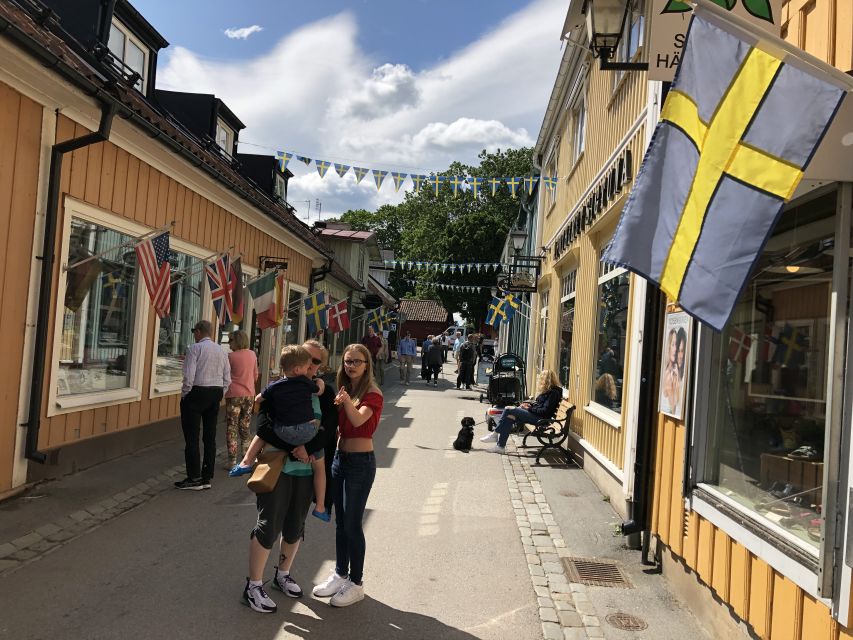
The final major stop is Sigtuna, a small town of about 8,000 people and Sweden’s oldest still-existing town. After quiet archaeological sites in the countryside, Sigtuna gives you streets, houses, a waterfront, and a sense of ordinary town life.
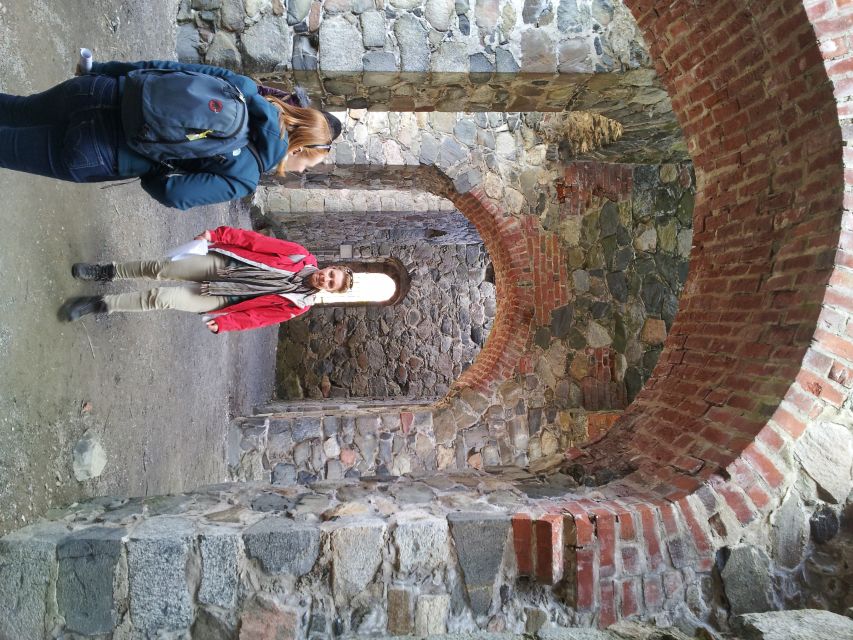
The guided walk lasts about 45 minutes. You can expect views of Sigtuna Bay, streets lined with 18th-century wooden houses, and the remains of romantic 12th-century church ruins. The town also has the Sigtuna Museum, which holds more material connected with the area’s past.
Sigtuna is often the most visually pleasing part of the day. The walk gives you a break from standing beside grave fields and roadside remains, and the bay adds a calm finish. If the schedule permits, walking down toward the water is worthwhile. It is quieter there than on the main streets.
There is a tradeoff. Sigtuna is a popular historic stop, so it can feel more tourist-oriented than the rural archaeological sites. The 45-minute walk is enough to get your bearings and see the main sights, but not enough for a long museum visit, extended shopping, and a leisurely meal.
Lunch is not included. A guide can recommend a restaurant, and vegetarian dishes are available at the restaurant used during the excursion. Bring a little flexibility: traffic, weather, and the interests of the group can affect the exact amount of free time.
A guide-led lesson, not a staged Viking show
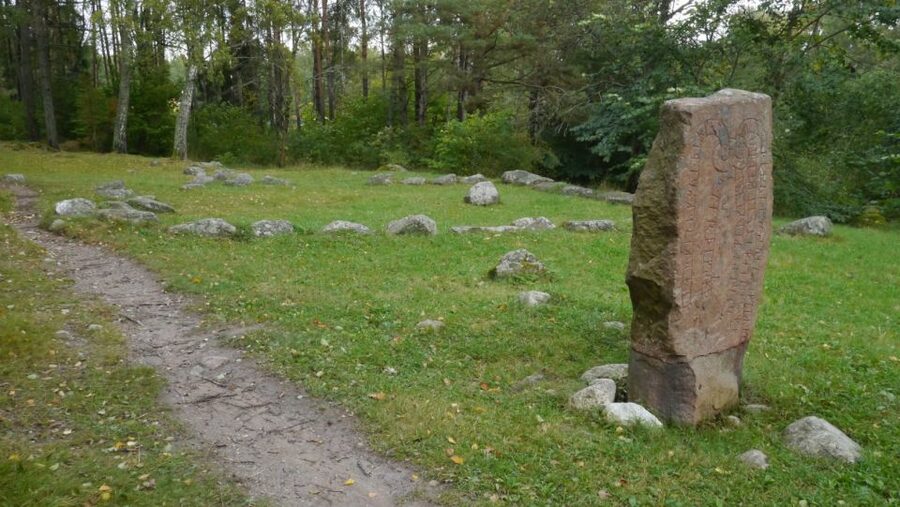
The guide is central to this experience. The sites are meaningful, but many are modest. Without explanation, a rune stone or grassy burial field may be easy to miss.
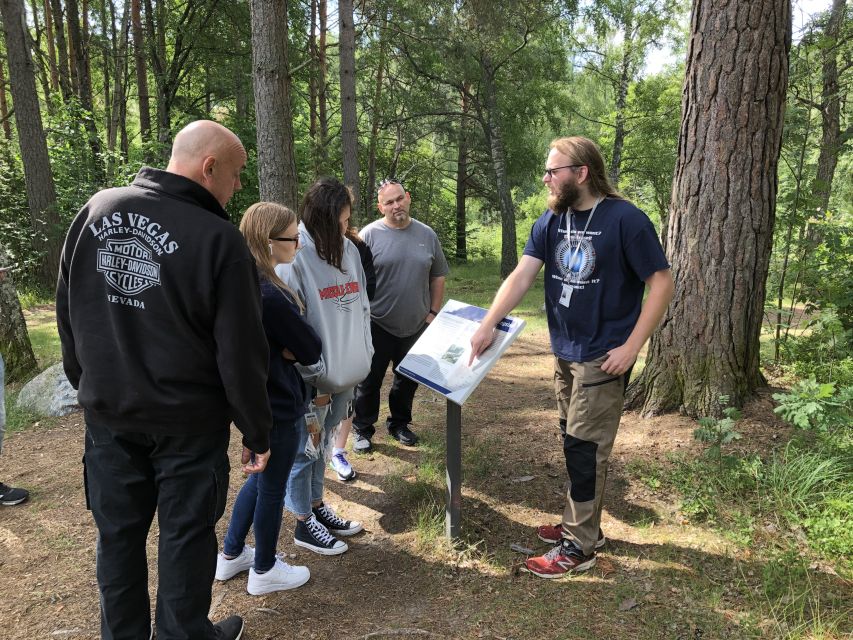
The strongest guides combine local history with a relaxed manner. Gabriel has been described as funny and generous with question time. Eric has connected Viking material with Swedish history and modern life. Charlotte has made the subject approachable and personal, while Quentin adapted the route around poor weather and helped with a convenient drop-off.
You are not guaranteed a particular guide. Names associated with this experience include Gustav, Angelina, Calle, Bianca, Gabriel, Eric, Charlotte, Nadia, Quentin, Jonathan, and Lena-Marie. The consistent theme is an English-speaking guide who can explain the sites and respond to questions.
This also means your experience may vary a little by guide. One guide may spend longer on archaeology, another on Swedish culture, and another on myths and religion. If you have a particular interest, ask questions early. The guides have been described as open to questions, and this tour is better when you take part rather than simply listen from the back of the van.
Transport, timing, and pickup details
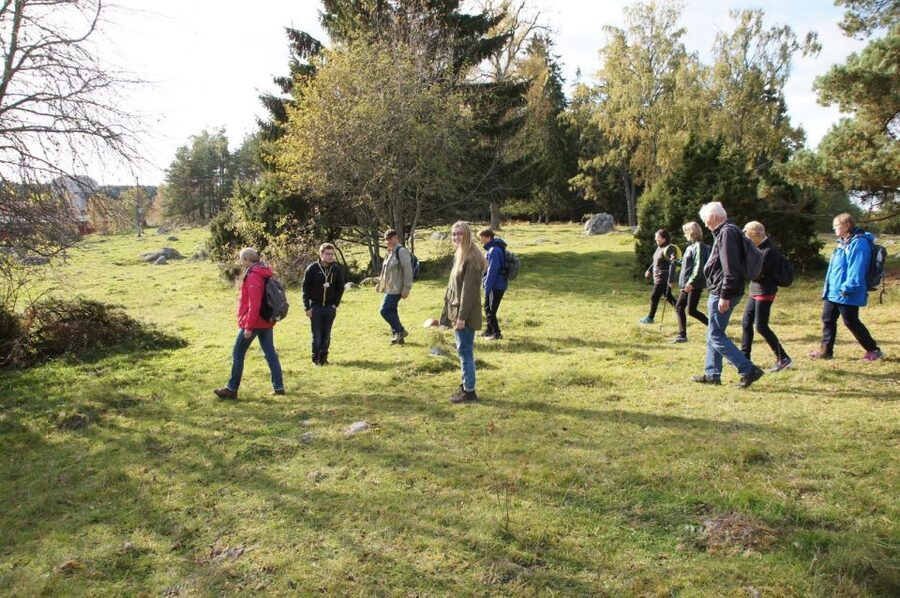
The tour lasts six hours and begins with pickup at a centrally located hotel, Stockholm Central Station, harbor, or other accommodation. Pickup can begin anywhere from zero to 60 minutes before the stated start time, so keep your phone available and allow room in your morning plan.
Transport is by minivan. That is a practical advantage over arranging several separate train and bus connections to rural sites. You return to your hotel, and the guide can also drop you at a location in central Stockholm.
Morning traffic can cause delays, particularly during rush hour. Do not schedule a tight museum reservation, airport transfer, or train immediately after the stated end time.
Weather matters. Stockholm winters can be harsh, with temperatures often around 0 C, or 32 F. Wear layers and solid walking shoes in any season. Some terrain is lightly rugged, and the tour includes outdoor stops even when the main focus is cultural.
The activity is not suitable for children under six or people over 90. The walking is limited rather than strenuous, but the outdoor ground and weather still deserve consideration.
Is the $193 price fair?
At $193 per person, this is not a cheap countryside outing. The price includes hotel or harbor pickup, transport, a driver-guide, and six hours of access to several sites that are awkward to connect independently.
I think the value is strongest if you have only a few days in Stockholm, want to see more than the city center, and care about context. The guide saves you the work of researching scattered archaeological sites and turns places that could seem ordinary into readable pieces of Swedish history.
The value is weaker if you mainly want free time in Sigtuna, a long museum visit, or a relaxed lunch. You are paying for a guided route and transport, not for extensive time at each stop. Lunch is extra, and the itinerary keeps moving.
For a solo visitor or a couple without a car, the convenience helps justify the cost. Families with young children may find the archaeology talk-heavy, while visitors already planning a longer Viking museum visit might prefer a simpler day trip to Sigtuna.
Who should book this outing?
I would choose this for you if you want to understand Viking society beyond popular myths. It suits history fans, first-time visitors to Sweden, and anyone who wants a half-day in the countryside without renting a car.
It also works well for cruise passengers or people staying near central Stockholm, since pickup and drop-off reduce the need to plan local transport. The combination of outdoor sites and a historic town gives the day enough variety to keep it from feeling like one long lecture.
I would think twice if you dislike guided pacing or need a flexible schedule. The six-hour route has several stops, and you cannot linger indefinitely at Broby bro, the causeway, or Sigtuna. The experience depends on listening, walking a little, and accepting that traffic or weather may shift the timing.
Final call: a smart choice for Viking context
Book this tour if you want the physical setting of Viking-era Sweden, not just an exhibit about it. Broby bro provides burial customs and Estrid’s story, Jarlabanki’s causeway shows public power and communication, the council site explains local rule, and Sigtuna adds town life and attractive views.
Skip it if your priority is a slow lunch, extensive shopping, or a full day at one museum. For most visitors with limited time, though, the route offers a useful balance of countryside, archaeology, Swedish culture, and comfortable transport. Bring good shoes, leave space in your schedule, and use the guide’s question time well.
FAQ
How long does the Viking Culture Guided Tour last?
The tour lasts six hours, including transportation between Stockholm, the countryside sites, Sigtuna, and the return to Stockholm.
Where can pickup take place?
Pickup is included from centrally located hotels, Stockholm Central Station, cruise locations, and other accommodations. Pickup times can begin from zero to 60 minutes before the scheduled start.
Is lunch included?
No. Lunch is not included in the price. A restaurant with vegetarian dishes is available, and the guide can recommend a place to eat.
What language is the tour conducted in?
The live guided tour is conducted in English.
What should I wear and bring?
Wear comfortable walking shoes and clothing suited to the weather. Some sites include lightly rugged terrain, and Stockholm winters can be cold, often around 0 C, or 32 F.
Can I cancel the booking?
You can cancel up to 24 hours before the tour for a full refund. The activity also allows you to reserve now and pay later.
Is the tour suitable for all ages?
The tour is not suitable for children under six or people over 90. It includes outdoor walking on some lightly rugged ground, although the total amount of walking is not large.
Just added in Stockholm
- Stockholm: Winter City Kayaking Tour★ 5.0 · 16 reviews
- Welcome to Stockholm: Private Tour with a Local★ 4.5 · 291 reviews
- Stockholm: The Skansen Aquarium Entry Ticket★ 4.6 · 83 reviews
- Stockholm: Top Highlights Bike Tour★ 4.3 · 243 reviews
- Stockholm: Self Guided GPS Bike Tour★ 4.2 · 38 reviews
- Stockholm: Sunset Hike in Tyresta National Park with Meal★ 4.8 · 126 reviews
- Stockholm: Sunset Kayak Tour in the City + Swedish Fika★ 4.8 · 31 reviews
- Stockholm Royal Palace Museums Gamla Stan Skip-the-line Tour★ 4.8 · 18 reviews
Viking History Tours, compared.

Viking Village, Nærøyfjord Cruise & Flåm Railway
Read our review →

Full-Day; Castle, Palace, Cathedral & Viking ships Tour
Read our review →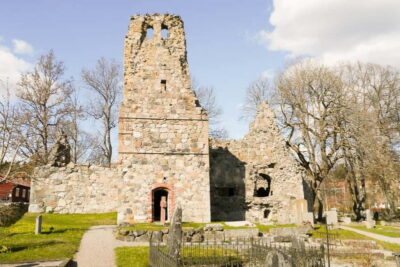
Stockholm Viking History Full Day Tour to Sigtuna + Uppsala
Read our review →
Viking Ship Sailing Experience and Sightseeing Trip
Read our review →Browse the lists this tour appears in