
Reviewed · WALKING TOURS
Myths and Legends: An Oslo Walking Discovery
Oslo’s old center becomes much more interesting when you hear the stories behind its stone walls. This two-hour evening walk links Viking beliefs, ghostly tales, local superstitions, and the city’s oldest streets, with a major stop at Akershus Castle and Fortress.
I like the friendly storytelling and the compact route. Guides such as Marija, Maria, and Ihor have been praised for making history funny, clear, and easy to remember. I also like that the tour reaches corners of Oslo you might skip on your own. The main drawback is the title: the stories are more cultural and entertaining than truly dark, and one guide was so eager to begin that some people had trouble keeping up.
Key points to know before booking
- Viking beliefs give the walk its theme: You learn how Norse people understood the world around them, not just a list of dates and rulers.
- Akershus Fortress gets the most time: The 50-minute stop combines imposing medieval architecture with tales of ghosts and past events.
- The route stays in central Oslo: City Hall, Christiania Torv, Kvadraturen, and the cathedral are all part of one walk.
- The group is limited to 16 people: That is a useful size for a story-led tour, though you still need to stay close to the guide.
- The mood is more curious than frightening: Expect folklore, superstition, and entertaining legends, not a full horror walk.
- The $42.98 price pays for context: You are paying for a guide who connects ordinary streets and buildings to Oslo’s past, not for admission tickets.
Oslo’s myths begin near City Hall

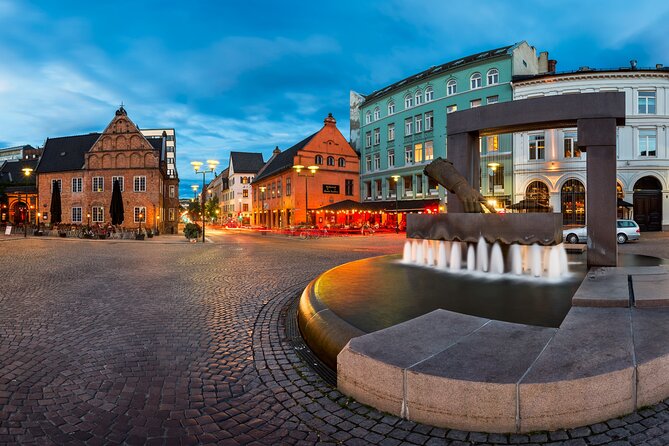
The tour starts at Fridtjof Nansens plass 8 at 6:00 pm, close to Oslo City Hall. That timing works well if you want to see the central city after the main sightseeing rush, though you should arrive ready to walk rather than treating this as a slow dinner-hour outing.
At City Hall, the guide begins outside with Viking beliefs and the Norse understanding of the world. This is a smart opening because it gives the rest of the tour a framework. Ghosts, signs, warnings, and old customs make more sense once you have some idea of the beliefs that shaped medieval Scandinavian life.
The stop lasts about 15 minutes. Since it is an exterior visit, you are not paying for entry or waiting in a museum line. You will instead use the building and surrounding public space as a setting for the story. That keeps the opening brisk, but it also means this is not a City Hall interior tour.
I like this first section because it promises more than a standard architectural walk. You are not only looking at buildings. You are being asked to think about how people once explained danger, luck, nature, and the unknown.
A few more things to do in Oslo worth a look
- Oslo: Best of Oslo Walking Tour
★ 4.5 · 458 reviews - Oslo: Guided Walking Tour of Central Oslo
★ 4.7 · 438 reviews - Oslo: Historic Myths & Legends Evening Walking Tour
★ 4.8 · 408 reviews
Christiania Torv adds ghosts and old superstitions
From City Hall, the walk continues to Christiania Torv, where the focus shifts to ghostly apparitions and protective superstitions. The stop takes about 20 minutes, enough time for several short stories without turning the whole experience into a theatrical scare show.
This is likely the part that gives the tour its strongest folklore flavor. You hear about signs people believed could warn them of bad luck, along with local ideas intended to keep misfortune away. These details are valuable because they show how superstition could shape ordinary choices and behavior.
Keep your expectations in check. If you are looking for gruesome tales or a night of pure horror, this tour may feel too mild. One person found the stories interesting but not as dark as expected. That is a fair warning. The appeal here is cultural curiosity, not shock value.
The guide’s delivery matters a great deal at this stop. Marija and Maria have been praised for warmth, humor, and an ability to keep the stories moving. Ihor was also described as enthusiastic and informed, although his energy could sometimes get ahead of the group. Stay near the guide and avoid drifting behind when the next story begins.
Akershus Fortress is the main event
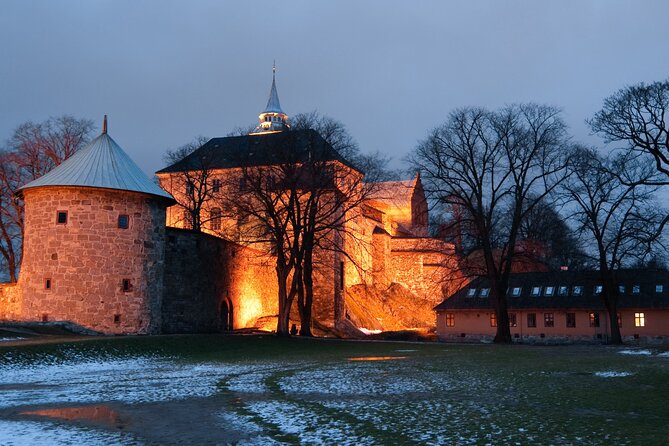
Akershus Castle and Fortress receives about 50 minutes, by far the longest stop. This is the heart of the route, both for the architecture and for the tales connected to the fortress.
The fortress dates from the late 13th century, and its imposing appearance gives the stories a strong setting. You can take in defensive walls and old stone structures while hearing about ghosts associated with Akershus. The combination of physical place and legend is what makes this part more memorable than hearing the same story in a modern meeting room.
The tour description says the architecture has remained unchanged since construction in the late 13th century. That detail gives you a sense of why the site carries such weight. You are not simply viewing a reconstructed attraction. The fortress itself is the backdrop for centuries of Norwegian power, fear, confinement, and ceremony.
Because the stop lasts nearly an hour, this is where the guide can provide more than quick facts. You have time to look, listen, ask questions, and connect the fortress to the beliefs discussed earlier. The best guides on this walk appear to be strong storytellers, and the praise for Marija, Maria, and Ihor points to that being a major part of the experience.
There is one practical point to remember. This is a walking tour, and Akershus is a large historic site. The information provided asks for a moderate level of physical fitness, so comfortable shoes are sensible. You should also be ready to stand outdoors while listening.
Kvadraturen reveals Oslo’s older street plan
The route then moves through Kvadraturen, Oslo’s oldest neighborhood area, for about 20 minutes. This section is less about one dramatic monument and more about the small clues found in the street pattern and buildings.
You will hear about hidden secrets and see a blend of medieval and classic architecture. That makes Kvadraturen a useful contrast to Akershus. The fortress gives you a concentrated historic site, while this neighborhood shows how the past survives in the ordinary city around you.
I especially like this kind of stop because it changes how you walk through central Oslo afterward. A street can look like a simple route between attractions until a guide explains why its buildings, layout, or name matter. You may not remember every detail, but you gain a better eye for the city.
The 20-minute timing keeps the pace moving. It also means you should not expect a detailed architectural lecture on every building. The guide is using the neighborhood to support the legends and stories, not offering a specialist course in urban design.
Same base, a different kind of day out:
- Oslo: Scenic Fjord Cruise with Audio Guide Commentary
★ 4.5 · 5,375 reviews - Oslo Nature Walks: Island Hopping Tour
★ 4.8 · 2,713 reviews - Oslo: 100% Electric Oslofjord Sightseeing Cruise
★ 4.4 · 2,041 reviews - Oslo: Fjord Evening Cruise with Shrimp Buffet
★ 4.5 · 1,956 reviews
Oslo Cathedral closes the walk with a grand finish
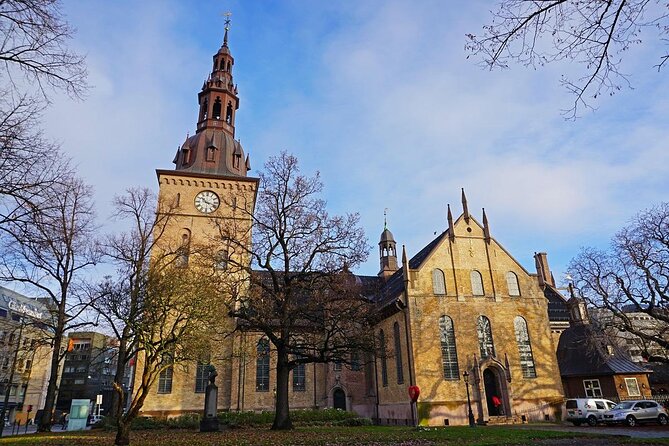
The final stop is Oslo Cathedral at Stortorget Square. The cathedral dates to 1697 and is known for Baroque decoration and tall spires. The visit is outside only, so you will view the building from the square rather than tour the interior.
This is a fitting ending because the cathedral gives the walk a strong visual finish. After Viking beliefs, ghosts, superstitions, fortress stories, and old streets, you arrive at a major central landmark with a clear connection to Oslo’s religious and civic past.
The tour ends on Karl Johans gate near the cathedral, at Stortorvet. That location is practical. You finish in the center rather than at a remote edge of town, with the main central street nearby. The ending also makes it easy to continue your evening in central Oslo, though the experience itself does not include a meal or another organized activity.
The cathedral stop lasts about 15 minutes. As with City Hall, the outside-only format keeps the tour focused and avoids entry arrangements. If seeing the interior is important to you, you will need to plan that separately.
What the guides do best
The strongest part of this experience is the human delivery. The best comments focus on guides who are warm, funny, energetic, and able to make information stick. One guide was praised for explaining the meaning of statues and parts of Norwegian life, while another made the stories relatable and held the group’s attention.
That is important on a myths-and-legends walk. A dry list of folklore facts would not carry you from one street to the next. You need a guide who can explain why a story mattered and place it in a wider part of Norwegian culture.
The guides named in the supplied feedback include Marija, Maria, and Ihor. The names may reflect different tour dates, so you should not assume a particular person will lead your departure. What you can reasonably expect is an English-speaking guide with a story-led approach.
There is also a small pacing issue to consider. One enthusiastic guide sometimes began speaking before everyone had caught up. In a group capped at 16, that problem may be manageable, but you should still stay close and speak up if you miss part of a story.
Is $42.98 a fair price?
At $42.98 per person, this is not the cheapest way to walk around central Oslo. But the price is easier to justify if you value interpretation rather than simply reaching the sights.
There are no admission tickets included because the listed stops are viewed from outside or visited as public areas. You are paying mainly for about two hours of guiding, storytelling, route planning, and local context. If you would otherwise stroll past City Hall, Christiania Torv, Akershus, Kvadraturen, and Oslo Cathedral without knowing what connects them, the guide adds real value.
The tour also reaches several places in one outing. You do not need to organize separate visits to the fortress and old central streets, and you get a single narrative linking them. That is useful early in an Oslo stay because it helps you understand the city before returning to places on your own.
The value is weaker if you already know Oslo’s history or mainly want a frightening ghost tour. It is also less appealing if you prefer long interior visits, since City Hall and the cathedral are outside-only stops and the fortress visit is centered on storytelling and architecture.
Who will enjoy this Oslo walk most?
I would recommend the tour to first-time visitors who want a gentle introduction to Oslo’s past, especially if you enjoy folklore, old buildings, and stories about how people made sense of the world.
It should also suit families with older children and teenagers who might lose interest during a conventional history lecture. The ghost stories and superstitions add a hook, while the guide’s humor keeps the material from feeling too formal.
Couples and solo visitors can also get a lot from the small-group format. A maximum of 16 people is large enough to feel social but small enough for a guide to address the group directly.
You should think twice if you want a genuinely sinister experience. The stories can be eerie, but the overall tone is friendly and educational. You should also reconsider if standing and walking for two hours is difficult, since a moderate fitness level is requested.
Service animals are allowed, and the starting point is near public transportation. The tour is offered in English and uses a mobile ticket, making it a straightforward choice for visitors who want an English-language activity in central Oslo.
Timing, pace, and practical planning
The tour begins at 6:00 pm and lasts about two hours. That makes it easy to pair with daytime sightseeing, but you should leave enough time to reach Fridtjof Nansens plass 8 before the start.
The route ends near Oslo Cathedral on Karl Johans gate, not back at the starting point. Plan your evening around that finish. The central location is convenient, but you should not assume that transport back to your lodging will be arranged for you.
Because the experience is outdoors, conditions can affect your comfort. The supplied information does not specify weather arrangements, so dress for an Oslo evening and choose shoes suitable for walking and standing. Keep your phone charged for the mobile ticket, and stay with the group around the fortress and busy central streets.
Demand appears steady, with bookings made about 38 days ahead on average. That does not guarantee every date will sell out, but it is a good reason to reserve ahead if your Oslo schedule is fixed.
Free cancellation is available if you cancel at least 24 hours before the start time. Changes or cancellations made inside that window are not accepted for a refund, so check your plans before the final day.
Should you book Myths and Legends: An Oslo Walking Discovery?
Book it if you want a lively introduction to Oslo through stories, especially if Akershus Fortress, Viking beliefs, and local folklore sound more appealing than a standard sightseeing circuit.
The tour’s best qualities are its route, its small group size, and its guides’ storytelling. Marija, Maria, and Ihor are praised for making the material friendly and memorable, with enough humor to keep the walk from feeling like school.
Skip it if you expect a dark, frightening ghost tour or extensive interior access. The stories are more entertaining than terrifying, and City Hall and Oslo Cathedral are outside-only stops.
For most first-time visitors with two free evening hours, I think the experience offers a useful and enjoyable look at central Oslo. Just arrive ready to walk, stay close to the guide, and treat the myths as a window into Norwegian culture rather than a promise of horror.
FAQ
How long does the Oslo walking tour last?
The tour lasts approximately two hours.
What time does the tour begin?
It starts at 6:00 pm.
Where does the tour start?
The meeting point is Fridtjof Nansens plass 8, 0160 Oslo, Norway.
Where does the tour end?
The tour ends at Stortorvet, near Oslo Cathedral and Karl Johans gate.
Is the tour offered in English?
Yes. The experience is offered in English.
How large is the group?
The tour has a maximum of 16 participants.
Does the tour enter Oslo City Hall?
No. The City Hall stop is outside only.
Does the tour enter Oslo Cathedral?
No. The cathedral stop is outside only.
Can I cancel for a full refund?
Yes, if you cancel at least 24 hours before the experience start time. Cancellations made less than 24 hours in advance are not refunded.
Just added in Oslo
- Unknown war. Oslo and Norway during 1940-45★ 5.0 · 74 reviews
- The Viking Planet Museum – Mini Group (4 adults)★ 4.0 · 16 reviews
- The Viking Planet Museum Ticket★ 4.0 · 197 reviews
- Oslo Winter Highlights Bike Tour★ 5.0 · 36 reviews
- The Ultimate Study of the Human Form at Vigeland’s Sculpture Park with a Local★ 4.0 · 14 reviews
- The Essential Oslo Private Walking Tour★ 5.0 · 79 reviews
- The Ultimate Norwegian Skiing Experience★ 5.0 · 16 reviews
- Central Oslo Guided Walking Tour with Local Guide★ 4.5 · 278 reviews
Walking Tours, compared.

Reykjavik Food Walk – Local Foodie Adventure in Iceland
Read our review →
Reykjavík Small group Walking Tour – by CityWalk
Read our review →



Past & Present Small Group Guided Walking Tour
Read our review →
Walking Tour in Bergen of the Past and Present
Read our review →
Browse the lists this tour appears in