
Reviewed · CYCLING TOURS
Oslo: 3-Hour Highlights Bike Tour
Oslo reveals itself quickly from a bicycle. In three hours, you can roll from the harbor to Akershus Fortress, pause at City Hall, follow Karl Johans Gate, visit the Royal Palace, and reach Frogner Park without spending the day waiting for buses. I like the easy route and the mix of big sights with ordinary city streets, parks, and waterfront paths.
I also like the guides’ personal touch. Patrick, Shaf, Lucia, Andreas, Austra, and others are praised for clear stories, humor, and practical food advice. The main drawback is that this is as much a sightseeing tour with bike rides between stops as it is a serious cycling outing. If you want nonstop pedaling, you may find the frequent pauses a little long.
Key Points at a Glance
- A 7.5-mile-style city route: Most of the ride is flat, with one reported estimate of about 600 feet of total climbing.
- Oslo’s main sights in one morning: You visit the fortress, City Hall, Royal Palace, Frogner Park, and Tjuvholmen.
- A smart first-day activity: The route helps you get your bearings and choose places to revisit later.
- Comfortable bikes and safety gear: City bikes, helmets, and gloves when needed are included.
- Winter riding is available: Spiked tires help with snow and ice, but winter tours suit experienced cyclists aged 12 and older.
- English-speaking guides: The strongest part of the experience is the human touch, with history, jokes, local tips, and steady group leadership.
Why a Bicycle Is a Good Way to See Oslo
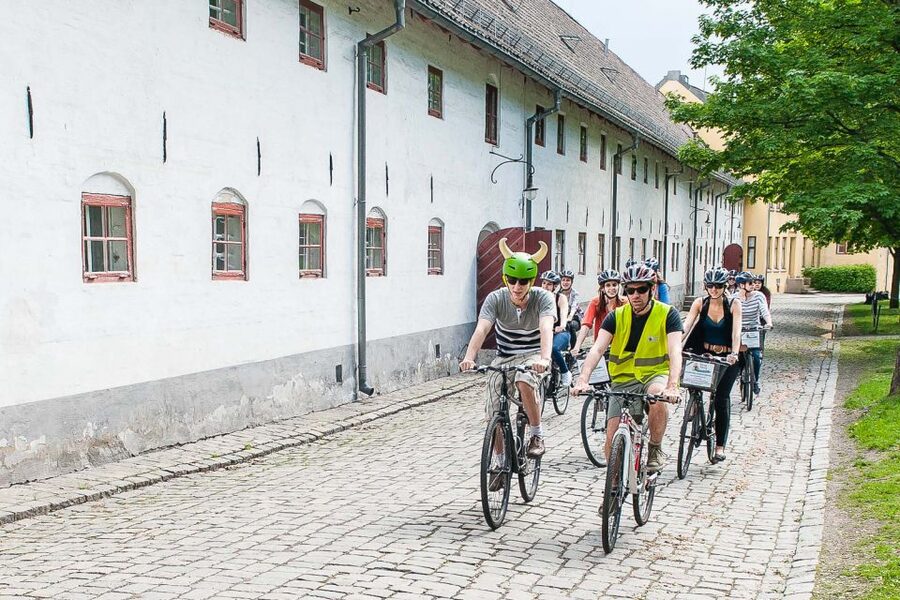
Oslo is well suited to a city bike tour. The center is compact, the route uses car-free paths where possible, and the ride links districts that would feel scattered on foot. You get a look at the harbor, formal boulevards, palace gardens, residential streets, public parks, and the fjord in one outing.
At $62 per person, this is not the cheapest way to see Oslo. Still, the price covers three hours, a maintained comfort bike, helmet, guide, and gloves when conditions call for them. For a first visit, the value comes from the ground you cover and the time you save. A walking tour would take longer to reach Frogner Park, while a bus tour would give you less contact with the streets and paths between the sights.
I would use this as an opening activity, especially if you have only one day in Oslo or are stopping from a cruise ship. You will learn the layout of central Oslo, hear suggestions for bars and restaurants, and mark places worth returning to after the bike is back in the shop.
The pace is intended to be easy. You should be comfortable riding in a city, stopping often, and handling short stretches near pedestrians. The tour is not designed for someone with mobility limitations, and the operator specifically recommends winter departures only for people with cycling experience.
Other rides around Oslo:
- Oslo Highlights Bike Tour
★ 5.0 · 979 reviews - Copenhagen: Highlights 3 Hour Bike Tour with a Local Guide
★ 4.8 · 2,312 reviews - Copenhagen: 3-Hour City Highlights Bike Tour with Guide
★ 4.7 · 1,239 reviews
From Nedre Slottsgate to the Oslo Waterfront
The meeting point is Nedre Slottsgate 4J, in the middle of downtown Oslo. It is about 5 to 10 minutes on foot from the central railway station, City Hall, and many central hotels. The shop sits between Karl Johans Gate and Akershus Fortress, so you begin close to several of the day’s main sights.
You select a comfort city bike and helmet before setting off. The bikes have received strong praise for their condition, and one rider noted that staff took time to find the right bicycle. An e-bike upgrade has also been available to at least some participants, which could help if you are less confident on hills, though you should check availability when booking.
The opening ride toward the waterfront takes about five minutes. This is a useful warm-up rather than a major sightseeing section. The group gets moving through the center before reaching the harbor and the pedestrianized City Hall Square.
City Hall and the Nobel Peace Prize Setting
City Hall Square gives you one of Oslo’s most recognizable urban views. The red-brick City Hall is the site of the annual Nobel Peace Prize ceremony, and the stop gives your guide room to explain its role in Norwegian public life.
You can expect about 20 minutes here, including a photo stop and a short visit. That is enough time to take in the building and hear the main story, but not enough for a full interior tour. The benefit is variety: you are not locked inside one attraction, and you keep moving through the city.
From City Hall, the route follows car-free paths beside the Oslo Fjord. This is one of the most pleasant parts of the ride. Look across the harbor toward islands and forested hills, and pay attention to how quickly Oslo shifts from formal city center to open water and green slopes.
The fjord views also show why the bicycle works better here than a standard sightseeing vehicle. You can stop for a picture without dealing with a large bus, then continue at street level along the waterfront.
Akershus Fortress and Its Ramparts
Akershus Fortress is the tour’s main historical stop. Its walls combine medieval and Renaissance construction, and its position above the harbor explains its long importance to Oslo.
You leave the bicycles for a roughly 30-minute guided visit and walk along the ramparts. This is a meaningful pause rather than a quick photograph. From the fortifications, you get views back toward the harbor and City Hall, along with a clearer sense of Oslo’s old defensive edge.
The walking section does involve uneven ground and some climbing around the fortress area. If you have trouble walking or standing for a half hour, this stop may be tiring. For most people, though, it breaks up the cycling well and gives the tour a strong historical center.
The guide’s storytelling matters here. Shaf, Patrick, Andreas, and other guides have been singled out for combining facts with humor and local observations. The best guides do not simply name the buildings. They help you understand how the fortress fits into Oslo’s past and present.
A few more things to do in Oslo worth a look
- Akureyri: 3-Hour Classic Whale Watching Tour by Ship
★ 4.6 · 3,000 reviews - Copenhagen Highlights 3 Hour Bike Tour with local Guide
★ 5.0 · 1,125 reviews - Reykjavik: the Original 3-Hour Whale Watching Tour
★ 4.5 · 908 reviews - 3-hour Copenhagen City Highlights Bike Tour
★ 5.0 · 757 reviews
Karl Johans Gate, Parliament, and the Royal Palace
After the fortress, you ride along Karl Johans Gate, Norway’s best-known boulevard. This section takes about 10 minutes and passes several national landmarks, including Parliament, the National Theater, and the University.
The boulevard is not a long cycling challenge, but it gives you a useful visual line through the center. You see how Oslo’s political, academic, and cultural institutions gather along one major avenue. Pedestrians can make some sections busier, so stay close to the group and follow the guide’s signals.
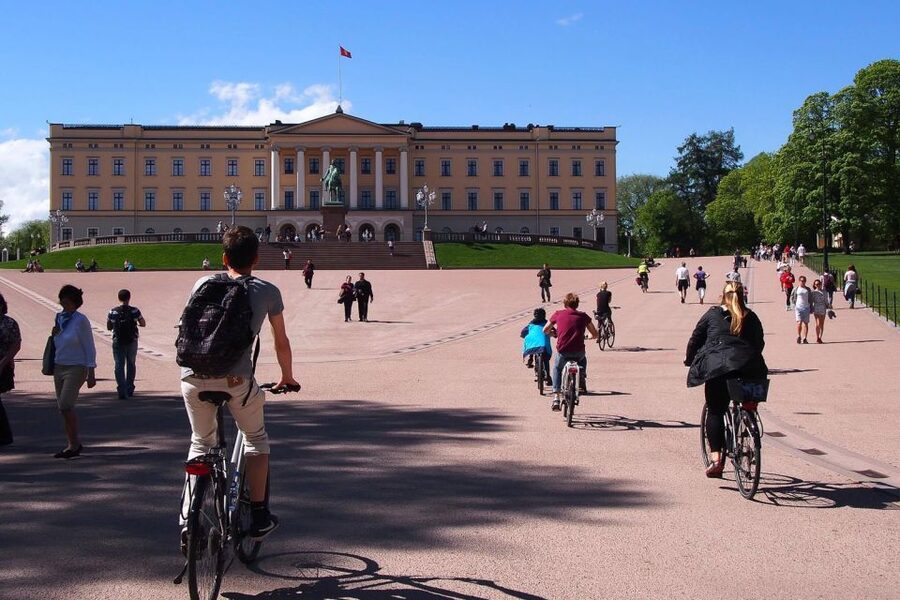
The Royal Palace is next. You stop for photographs and sightseeing, with about 15 minutes at the palace area. The building remains the home of Norway’s current royal family, and the surrounding grounds offer a calmer setting after the city traffic and harbor paths.
A downhill ride through the palace gardens follows. This is one of the easier and more enjoyable stretches, though you should still control your speed and watch for pedestrians. The route uses the palace area as a bridge between central Oslo and Frogner rather than treating the palace as a long interior visit.
Frogner Park and the Vigeland Sculptures
The ride continues through the neoclassical Frogner neighborhood before reaching Frogner Park. The park is one of the tour’s largest stops, with around 30 minutes for a guided visit, sightseeing, and photographs.
Many people know this area as Vigeland Sculpture Park. You get a short introduction and time to look around, but the stop is not a substitute for a full park visit. If the sculptures are high on your Oslo list, plan to return later with more time. The tour gives you a strong first look and helps you understand where the park is located.
I like this part because it changes the tone of the morning. You have seen the fortress, official buildings, palace grounds, and harbor. Here, the focus shifts to public art and park space. It also lets you experience a neighborhood that is easy to miss if you stay only around the railway station and waterfront.
The route then passes Frogner Church and continues by bicycle for about 15 minutes. This is a quieter section, with the guide still pointing out details along the way. It is also where the tour feels most like a ride through Oslo as a resident might use it, rather than a string of famous monuments.
The Downhill Run to Tjuvholmen
After Frogner Park, the route heads downhill toward the Oslo Fjord. The descent is welcome after the distance covered, but you should not expect a completely hill-free ride. One detailed trip account estimated about 600 feet of total elevation gain across roughly 7.5 miles, so the route is gentle rather than perfectly flat.
The final major stop is Tjuvholmen, where you pause for about 15 minutes. The area includes a striking building constructed over the fjord and offers another angle on Oslo’s relationship with the water. It is a good contrast with Akershus Fortress: one stop looks back to defensive history, while Tjuvholmen shows the city’s newer waterfront side.
The last ride passes through Aker Brygge, a pedestrian shopping and dining district, before returning to the shop. The location is useful after the tour. You are close to the harbor, central restaurants, Karl Johans Gate, and the fortress, so you can continue exploring without first arranging transport.
What the Guides Add to the Morning
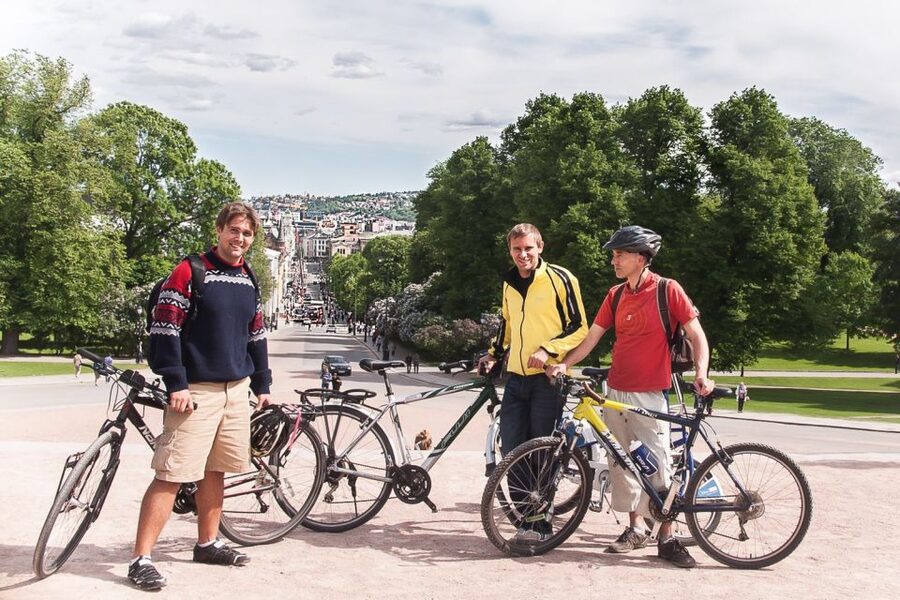
The route is set, but the guide can change the feel of the tour. The strongest accounts describe guides who keep the group together, answer questions, explain local history, and offer restaurant suggestions for later.
Patrick is praised for jokes, facts, and food recommendations. Shaf is described as a polished guide with strong local knowledge and enthusiasm for outdoor life. Lucia is noted for holding a steady pace, while Andreas is praised for warmth, humor, and clear instructions. Austra, Kat, Laura, Martin, and other guides also receive strong marks for safety and engaging explanations.
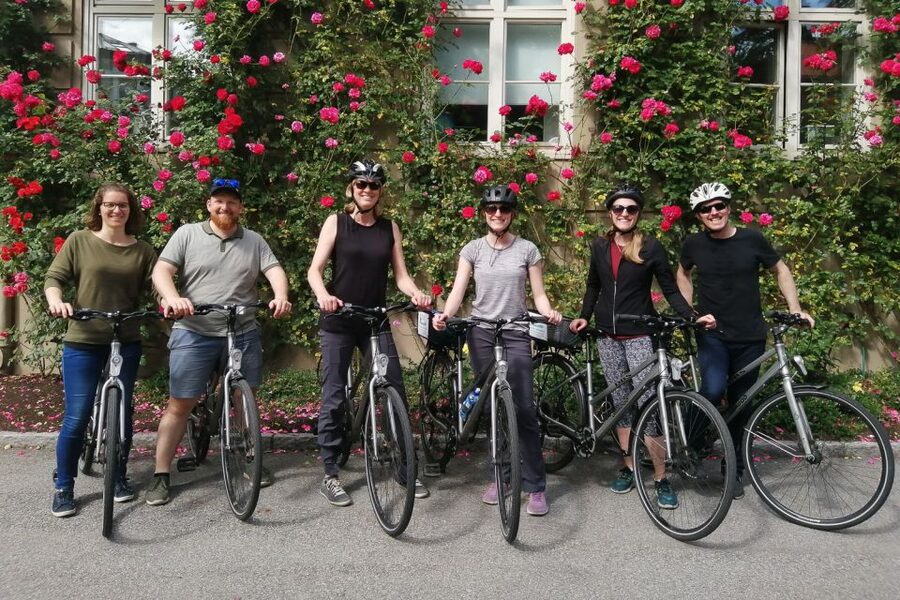
A small group makes a real difference. One rider described a group of only five, which made it easy to stay together. Group size can vary, so do not assume every departure will be that intimate. Still, the guide is expected to keep an eye on the rear of the group and manage ordinary problems, such as a puncture, without derailing the tour.
The most useful guide behavior is practical. You learn where you may want to eat, which sights deserve a longer visit, and how the central districts connect. That information can be worth as much as the formal commentary.
Pace, Cycling Conditions, and Seasonal Changes
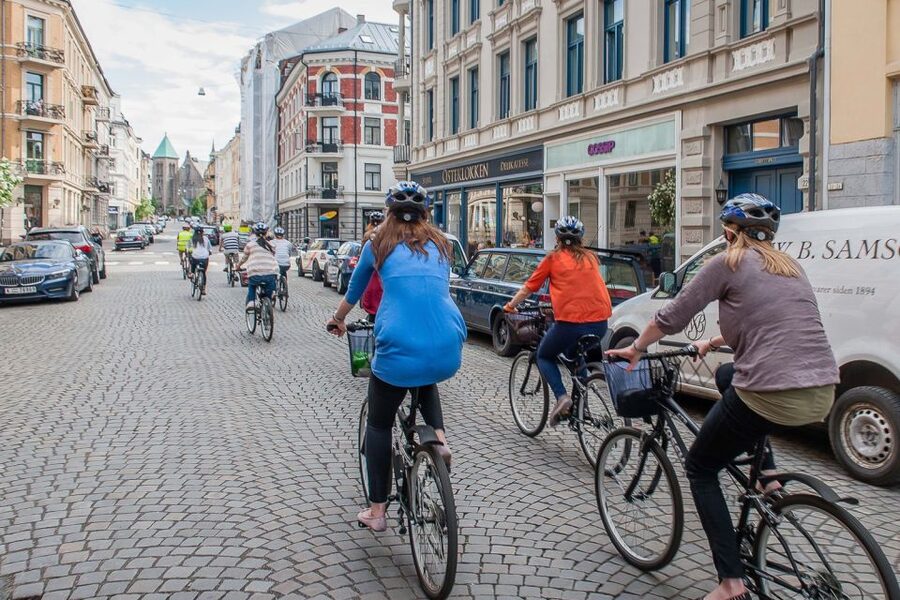
The tour is described as an easy ride, and most of it is flat. You will still ride near pedestrians, navigate some busier sections, and handle a few short climbs. Basic city cycling confidence is more important than athletic fitness.
The frequent stops suit first-time visitors who want photos and background at each place. They may frustrate you if your main goal is exercise. Some participants would prefer more active cycling and shorter explanations, while others value the pauses. I would choose this tour for sightseeing first and cycling second.
Tours run in rain or shine. Rain ponchos are sold at the starting point, but you should bring water and dress for changing weather. Food is not included, and there is no stated meal stop, so eat beforehand if you need a full breakfast.
Winter tours from November 1 through February 28 use bikes with spiked tires. Routes and stops may change with snow, ice, Christmas markets, and other seasonal conditions. The winter version is available only to people over 12 and is recommended for experienced cyclists. Snow-covered Oslo can be appealing from a bike, but this is not the season to learn city cycling.
Who Should Book This Oslo Bike Tour?
I would choose this tour if you want to see the main sights in one morning, prefer active sightseeing, and feel comfortable on a bicycle. It is particularly useful for cruise passengers, first-time visitors, couples, families with cycling children, and anyone who wants an overview before exploring Oslo on foot.
It is less suitable if you dislike riding near pedestrians, need a fully accessible activity, or want long visits inside museums and historic buildings. It also may not satisfy strong cyclists looking for a workout or a route far beyond the city center.
The 4.8 rating from 1,609 bookings reflects the tour’s main strengths: a useful route, good equipment, friendly guides, and a relaxed pace. The price is fair if you value covering a lot of ground with a local escort. It is less compelling if you plan to rent a bike anyway and would rather stop whenever you like.
Final Verdict: A Strong First Morning in Oslo
I would book this tour early in an Oslo visit, especially for a short stay. You see the harbor, fortress, City Hall, palace, Frogner Park, and Tjuvholmen without spending hours walking between them.
The best reason to book is not speed alone. It is the combination of clear orientation, personal stories, and easy outdoor movement. Just remember that the three hours include many sightseeing stops, bring water, prepare for rain, and leave extra time later if you want to explore Frogner Park or the fortress in detail.
FAQ
Where does the Oslo bike tour start?
It starts at Nedre Slottsgate 4J in central Oslo, between Karl Johans Gate and Akershus Fortress.
How long does the bike tour last?
The tour lasts three hours.
What sights are included?
The route includes Oslo Fjord, Akershus Fortress, City Hall, Karl Johans Gate, the Parliament area, the National Theater, the University, the Royal Palace, Frogner Park, Frogner Church, Tjuvholmen, and Aker Brygge.
Is the tour conducted in English?
Yes. The tour has a live English-speaking guide.
What equipment is included?
A comfort city bike and helmet are included. Gloves are provided when necessary.
Is food included?
No. Food and water are not included. You should bring water.
Does the tour operate in bad weather?
Yes. Tours run rain or shine, and rain ponchos are available for purchase at the starting point.
Is the route flat?
Most of the route is flat and uses city paths, parks, and pedestrian areas. There are a few more challenging sections and some elevation.
Are winter departures available?
Yes. From November 1 through February 28, bikes are equipped with spiked tires and the route may change to suit snow, ice, markets, and other seasonal conditions.
Can children join the winter tour?
The winter tour is available only to people over 12 and is recommended for those with cycling experience.
Just added in Oslo
- Akerselva River: Urban Paddling Adventure Kayak Tour★ 4.3 · 29 reviews
- Oslo Sea Kayak Tour “Fjord City”★ 4.5 · 39 reviews
- Oslo: Historic Myths & Legends Evening Walking Tour★ 4.8 · 408 reviews
- Oslo: Guided Walking Tour of Central Oslo★ 4.7 · 438 reviews
- Oslo: Sightseeing with Holmenkollen Ski Jump & Vigeland Park★ 4.5 · 451 reviews
- City Sightseeing Oslo Hop-On Hop-Off Bus Tour★ 3.0 · 455 reviews
- Oslo: Best of Oslo Walking Tour★ 4.5 · 458 reviews
- The Fram Museum Admission Ticket★ 4.5 · 490 reviews
Cycling Tours, compared.
Highlights 3 Hour Bike Tour with a Local Guide
Read our review →
Bike Tour Copenhagen. Private Guide, Concierge Service, Small Grp
Read our review →Browse the lists this tour appears in