
Reviewed · WALKING TOURS
Oslo: City Highlights Walking Tour
Oslo’s story becomes much clearer when you walk it in sequence, from the medieval walls of Akershus Fortress through the old street plan of Kvadraturen and onward to the glass-and-marble Opera House. This tour connects those pieces in two hours, then finishes with a view toward the Royal Palace.
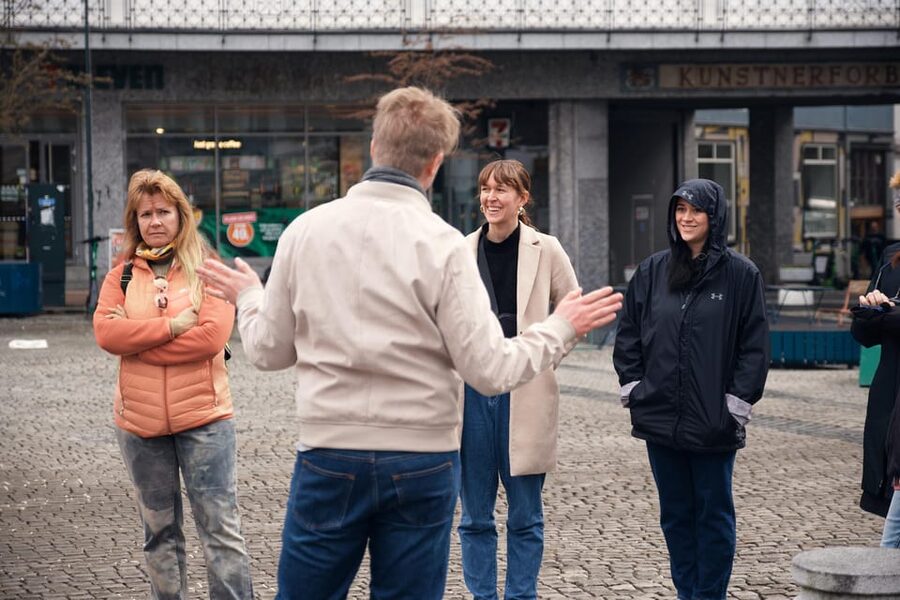
I like the German-language guiding, especially if you want more than a quick list of sights. I also like the route’s mix of old and new Oslo: fortress, cathedral, Parliament, theater, university, and fjord. The main catch is pace. Two hours covers a lot of ground, so you will stop for explanations and photos, but this is not a slow museum-style walk.
Key points at a glance
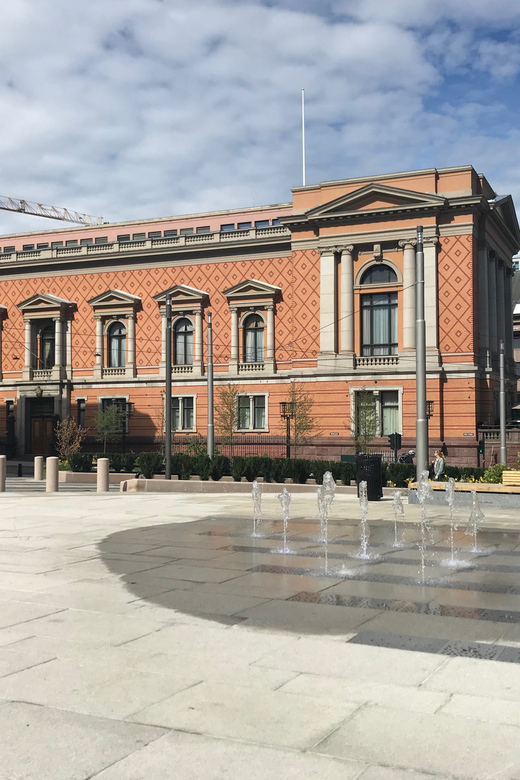
- A clear old-to-new route: Begin near the Nobel Peace Center, see Akershus and Kvadraturen, then reach the Opera House and Karl Johan Street.
- German-speaking guide: The tour is conducted in German, with guides including Emily, Anna Marie, Maria, and Olav among those who have led it.
- Useful city orientation: You finish near the University of Oslo with a view of the Royal Palace, giving you a good mental map for later exploring.
- History beyond buildings: Expect discussion of Norway’s ties with Denmark and Sweden, the country’s languages, government, districts, and Oslo’s growth from Viking times to today.
- A real walking commitment: The route lasts two hours and requires a moderate amount of walking, though it is wheelchair accessible.
- Good weather planning matters: The tour normally runs in rain, snow, and cold, except in severe storms, so dress for Oslo rather than for the forecast alone.
From the Nobel Peace Center to Oslo’s historic core
The meeting point is near the entrance of the Nobel Peace Center, a convenient place to begin in central Oslo. From here, your guide sets the story in motion by placing the city’s main landmarks in their historical order.
That opening matters. Oslo can feel like a collection of separate sights if you see the Opera House, fortress, palace, and shopping street in random order. A walking tour gives you the connecting lines, showing how the city moved from a fortified medieval settlement to a 19th-century capital and then to a modern fjord city.
The guide also adds useful context about daily life. The tour is not limited to architecture and dates. You may hear about Norwegian culture, the languages used in Norway, the country’s relationships with Denmark and Sweden, and the way different parts of Oslo developed. One particularly useful theme is the city’s growth from Viking-era roots to its present form.
The walk is conducted in German. That makes it a practical choice for German-speaking visitors who want a full explanation rather than a short English-language overview or a self-guided route. The actual guide can vary, but named guides such as Emily, Anna Marie, Maria, and Olav have led tours covered by the experience.
A few more things to do in Oslo worth a look
- Oslo: Best of Oslo Walking Tour
★ 4.5 · 458 reviews - Oslo: Guided Walking Tour of Central Oslo
★ 4.7 · 438 reviews - Oslo: Historic Myths & Legends Evening Walking Tour
★ 4.8 · 408 reviews
Akershus Fortress and Oslo’s medieval beginnings
Akershus Fortress is one of the strongest early stops because it gives Oslo a physical sense of age. The fortress sits above the harbor area and points back to the city’s medieval origins. From the streets below, you get a better feel for why this spot mattered: it helped protect the settlement and controlled an important waterfront position.
You should expect to pass by the fortress rather than spend the tour touring every interior room. That is both a strength and a limitation. You get the setting, the outline of the fortress, and the historical explanation without using the whole two-hour walk inside one attraction. If Akershus interests you, make a note to return on your own with more time.
This stop also helps explain the contrast that runs through the entire route. Oslo’s old center is not frozen in the past. Medieval military history sits close to modern public buildings, waterfront design, cafés, and streets used by people going about their day.
Christiania Torv and the original Kvadraturen
From the fortress area, the route continues toward Christiania Torv and Kvadraturen. This is where the city’s early street plan becomes easier to understand.
Kvadraturen refers to the grid-like district that formed part of Oslo’s rebuilt center. Its name points to the shape of the streets, and the area gives you a useful look at the planned city that followed earlier settlement patterns. Christiania Torv adds another layer, connecting the modern name Oslo with the period when the city was known as Christiania.
This part of the walk rewards attention to small details. It is not necessarily the loudest or most dramatic stop, but it explains why the center looks the way it does. Your guide can turn blocks, squares, and older façades into clues about fires, rebuilding, royal power, trade, and urban planning.
I would pay close attention here if you plan to explore independently afterward. The district helps you understand where Oslo’s historic center begins and why the city does not feel like one continuous old town. The experience gives you a framework for later walks, especially if you want to compare the older streets with the newer waterfront.
The Opera House and Oslo’s modern waterfront
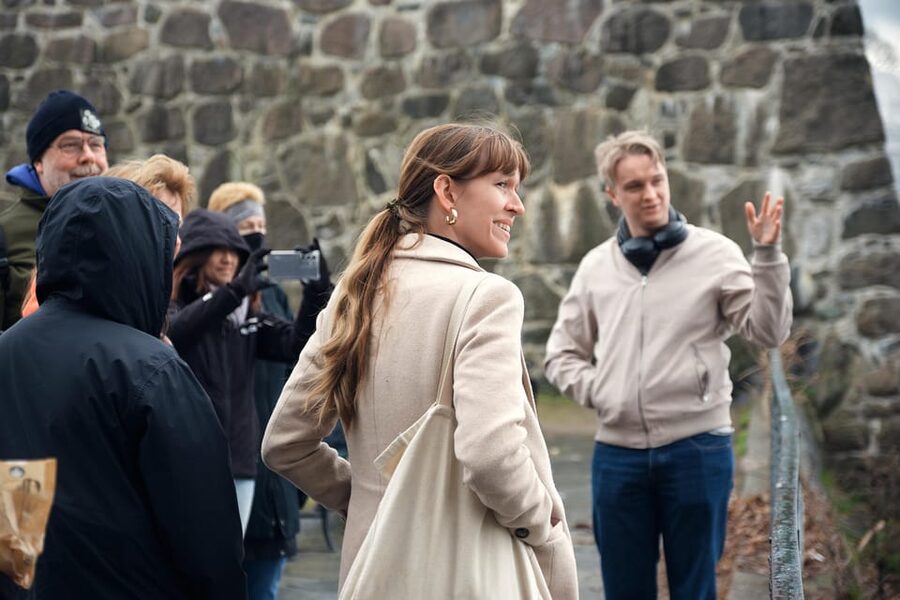
The shift to the Oslo Opera House is one of the route’s most effective changes of mood. After fortifications and old street grids, you reach a building that represents modern Oslo beside the fjord.
The Opera House is especially good for photographs. Its striking exterior and waterfront setting provide a strong contrast with Akershus Fortress. The tour gives you time to see the building as part of the city rather than as an isolated concert venue. Your guide can explain how Oslo’s newer identity developed around the harbor and public spaces.
Do not expect an extended architectural tour or an indoor performance visit. The value here is the view, the contrast, and the way the building fits into the larger story. You will want a camera ready, but keep the pace in mind. One useful improvement would be a clear photo pause after each explanation. A participant found that the guide sometimes moved on quickly, making it awkward to stop for pictures.
That is a fair practical warning. You can take photographs, but tell your guide if you need a moment. Staying near the group is important on a walking route with several stops.
Same base, a different kind of day out:
- Oslo: Scenic Fjord Cruise with Audio Guide Commentary
★ 4.5 · 5,375 reviews - Oslo Nature Walks: Island Hopping Tour
★ 4.8 · 2,713 reviews - Oslo: 100% Electric Oslofjord Sightseeing Cruise
★ 4.4 · 2,041 reviews - Oslo: Fjord Evening Cruise with Shrimp Buffet
★ 4.5 · 1,956 reviews
Karl Johan Street and the city’s public face
The walk then turns toward Karl Johan Street, Oslo’s main thoroughfare. This is the part of the route where the city feels most like a capital. The street links important institutions and public spaces, so it is a natural place to discuss Norway’s government, culture, and civic life.
You pass Oslo Cathedral, which gives the route another architectural and religious reference point. The cathedral is not presented as a long interior visit, so consider this a first look and return later if you want more time inside.
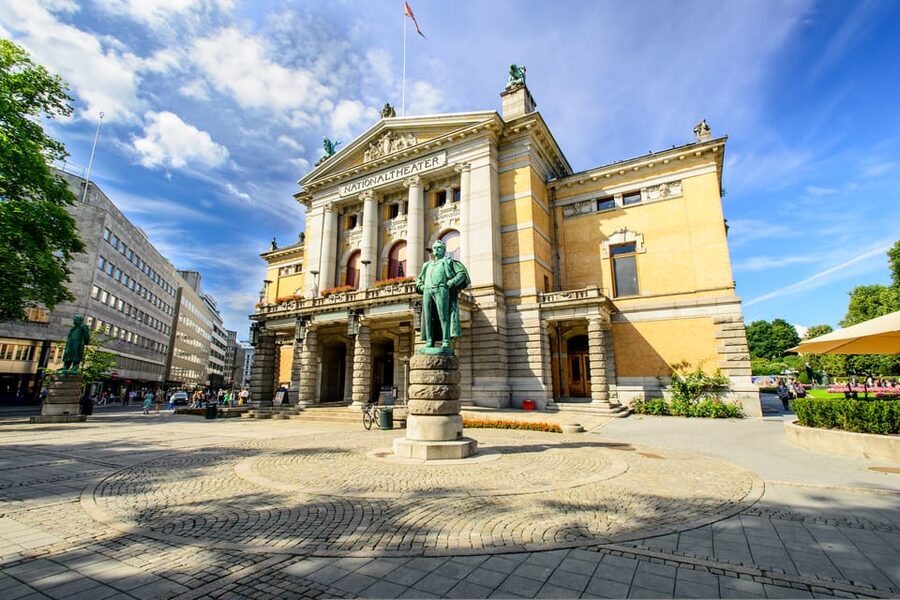
The Parliament building follows, bringing national government into the story. This is a useful stop for anyone who wants to understand how the city functions today, not just what it looked like in earlier centuries. The tour also passes the National Theater and the historic Aula of the University of Oslo.
The University Aula adds a cultural note to the final stretch. Along with the theater and Parliament, it shows how Karl Johan Street gathers education, government, performance, and public life along one central route. You are not simply walking down a shopping street. You are crossing Oslo’s main civic corridor.
Several people found the guide’s explanations strong on history, government, culture, and architecture. That mix is one of the tour’s best qualities. If you ask questions, the guide may also discuss subjects beyond the buildings directly in front of you, including Oslo’s districts and life in Norway.
Ending near the University and Royal Palace view
The tour finishes near the University of Oslo, with a picturesque view toward the Royal Palace. This is a sensible ending because it leaves you in a central area with a clear sense of direction.
The palace view also ties together the city’s 19th-century development. By this point, you have moved from medieval defense to planned streets, national government, culture, university life, and royal symbolism. The route does not require you to memorize every date. Instead, it shows how the main parts of central Oslo relate to one another.
This final location is useful for the rest of your day. You can decide which sights deserve a longer visit, return to the fortress, spend more time by the Opera House, or continue along Karl Johan Street. One participant who stayed several days found that the tour made it much easier to keep a sense of direction afterward. That is exactly the practical benefit I want from a first city walk.
How the two-hour pace feels
Two hours is long enough to create a useful overview but short enough to fit into a busy Oslo schedule. It works well on a first day, during a short stay, or at the start of a longer visit when you want to choose later stops.
The route covers many landmarks, so you should expect a steady pace. You will walk between sites, listen to explanations, and have chances for photographs, but there is no promise of extended free time at each stop. If you move slowly, need frequent breaks, or want to enter every building, this may feel rushed.
The amount of walking is described as moderate, and the tour is wheelchair accessible. Still, accessible does not mean effortless. Oslo’s streets, weather, and the length of the route can affect your comfort. Ask about any specific access needs when booking, since the available information confirms accessibility but does not describe every surface or entrance.
The weather is another real factor. The tour usually goes ahead in rain and snow, with cancellation reserved for severe storms. A winter participant completed the walk after several days of snow, and another joined on a very cold day when the guide stopped at markets for a warm chocolate. That makes the activity possible in poor weather, but you should wear proper shoes, a warm layer, and rain protection rather than hoping for ideal conditions.
What the guiding adds

The guide is the main reason to choose this over a map and a self-guided walk. A map can show you where Akershus, the Opera House, and Karl Johan Street are. It cannot easily explain how Denmark, Sweden, language, government, urban growth, and architecture fit into one short route.
The strongest guiding style here appears to combine facts with conversation. Emily has been described as energetic and well prepared. Anna Marie made a cold winter walk enjoyable and included a warm stop. Maria brought a strong grasp of Oslo’s past, while Olav was praised for friendly explanations even in rain and snow.
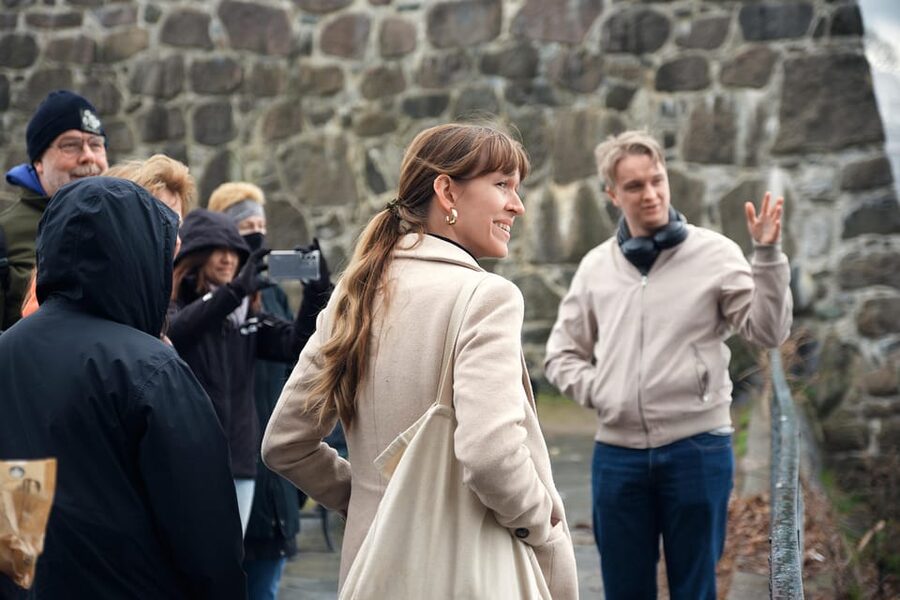
Guides can vary, so do not expect the exact same personality each time. The core advantage remains the German-language interpretation and the chance to ask questions as you go. One private-feeling departure had only one participant, allowing every question to be answered in detail. Group size can differ, so you should not book expecting a private tour, but a smaller group may create that feel.
The only repeated practical concern worth noting is the balance between talking and stopping. If you want photographs, say so. Also plan your restroom needs before the walk ends. One participant found the suggested public toilet unpleasant and chose to use a café instead. That is easy to manage, but it is better to know before you start.
Is $37 a fair price?
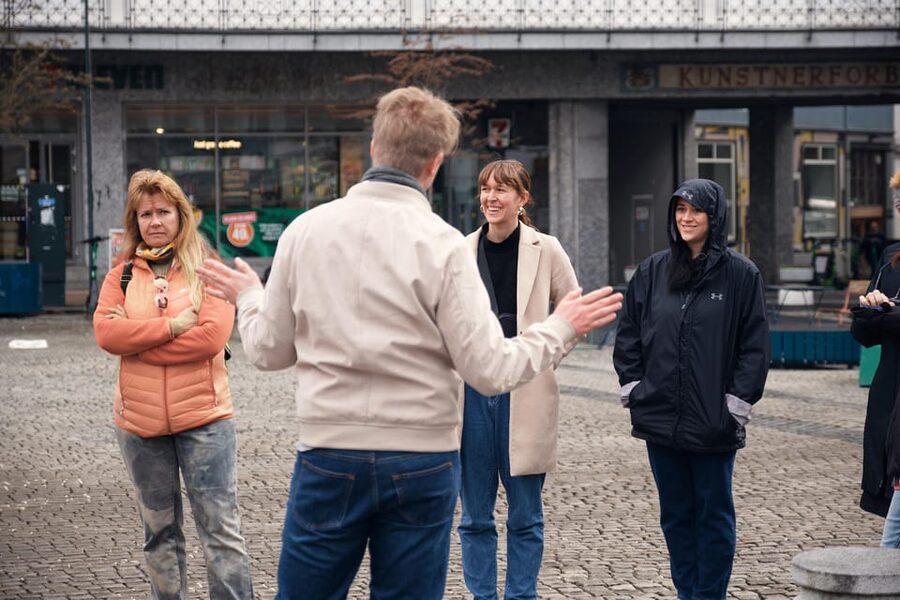
At $37 per person, this is a reasonable price for a two-hour guided introduction, especially if German is the language in which you absorb history best. You are paying for a live guide, a planned route, and explanations that connect many major sights without requiring separate admission fees.
The value is highest for a first visit. In two hours, you see enough of central Oslo to decide where to return, and you gain a working map of the city. The value is lower if you already know the center well or want interior visits, long photo stops, or detailed treatment of one site.
The booking terms also reduce the risk. You can cancel up to 24 hours ahead for a full refund, and you can reserve without paying immediately. The tour runs for two hours, but starting times depend on availability, so check the schedule that fits your day.
Who should book this Oslo walk?
I would choose this tour if you:
- Want a German-language introduction to Oslo.
- Have one day or less in the city.
- Prefer history explained in context rather than a list of dates.
- Want to see both the old center and the modern waterfront.
- Need help getting your bearings before exploring alone.
- Are comfortable walking outdoors in changing weather.
I would look elsewhere if you want a slow architecture tour, a long visit inside Akershus Fortress, or a route built around food and shopping. This is a city overview with a strong historical and civic focus.
My take: a smart first walk in Oslo
Book the Oslo City Highlights Walking Tour if you want the city to make sense quickly, especially in German. The route links Akershus Fortress, Christiania Torv, Kvadraturen, the Opera House, Karl Johan Street, Parliament, the National Theater, the University Aula, and the Royal Palace view in a logical two-hour sweep.
Its best feature is not any single building. It is the connection between them. You see how Oslo grew, how its center was planned, and how the waterfront now shares attention with the old capital.
Bring warm or waterproof clothing, keep a little space in your schedule for photos, and tell the guide when you need a pause. At $37, it is a practical way to get your bearings and decide how to spend the rest of your time in Oslo.
FAQ
Where does the Oslo City Highlights Walking Tour meet?
Meet your guide near the entrance of the Nobel Peace Center in Oslo.
How long does the walking tour last?
The tour lasts two hours.
What language is the tour conducted in?
The live tour guide speaks German, and the walking tour is conducted in German.
Which main sights are included?
The route passes Akershus Fortress, Christiania Torv, the Kvadraturen district, Oslo Opera House, Karl Johan Street, Oslo Cathedral, the Parliament building, the National Theater, the University of Oslo’s Aula, and the Royal Palace view.
Is the tour wheelchair accessible?
Yes, the activity is listed as wheelchair accessible. A moderate amount of walking is still required.
What happens if the weather is bad?
The tour normally runs in rain, snow, and cold weather. It is not canceled for ordinary bad weather, except in severe storms, so dress appropriately and check the forecast.
Just added in Oslo
- Unknown war. Oslo and Norway during 1940-45★ 5.0 · 74 reviews
- The Viking Planet Museum – Mini Group (4 adults)★ 4.0 · 16 reviews
- The Viking Planet Museum Ticket★ 4.0 · 197 reviews
- Oslo Winter Highlights Bike Tour★ 5.0 · 36 reviews
- The Ultimate Study of the Human Form at Vigeland’s Sculpture Park with a Local★ 4.0 · 14 reviews
- The Essential Oslo Private Walking Tour★ 5.0 · 79 reviews
- The Ultimate Norwegian Skiing Experience★ 5.0 · 16 reviews
- Central Oslo Guided Walking Tour with Local Guide★ 4.5 · 278 reviews
Walking Tours, compared.

Reykjavik Food Walk – Local Foodie Adventure in Iceland
Read our review →
Reykjavík Small group Walking Tour – by CityWalk
Read our review →


Past & Present Small Group Guided Walking Tour
Read our review →
Walking Tour in Bergen of the Past and Present
Read our review →
Browse the lists this tour appears in