
Reviewed · MUSEUMS
Reykjavik: Saga Museum Entry Ticket
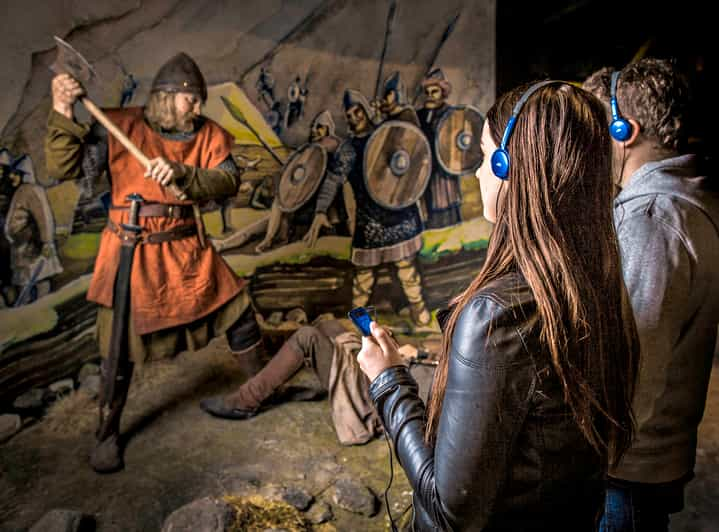
The Saga Museum turns Iceland’s early history into a walk-through story, using 20 lifelike wax scenes rather than glass cases filled with old objects. Your audio guide leads you from the first settlers through the Viking age, the founding of Iceland’s Parliament, the civil war, and the Reformation.
I like the clear 35-minute route and the chance to hear the stories in seven languages. I also like the costume area at the end, where you can dress as a Viking and handle authentic-style clothing and weapons. The main drawback is the museum’s small size, and the timed movement through the scenes can leave you waiting for the next section.
Key points to know before you go
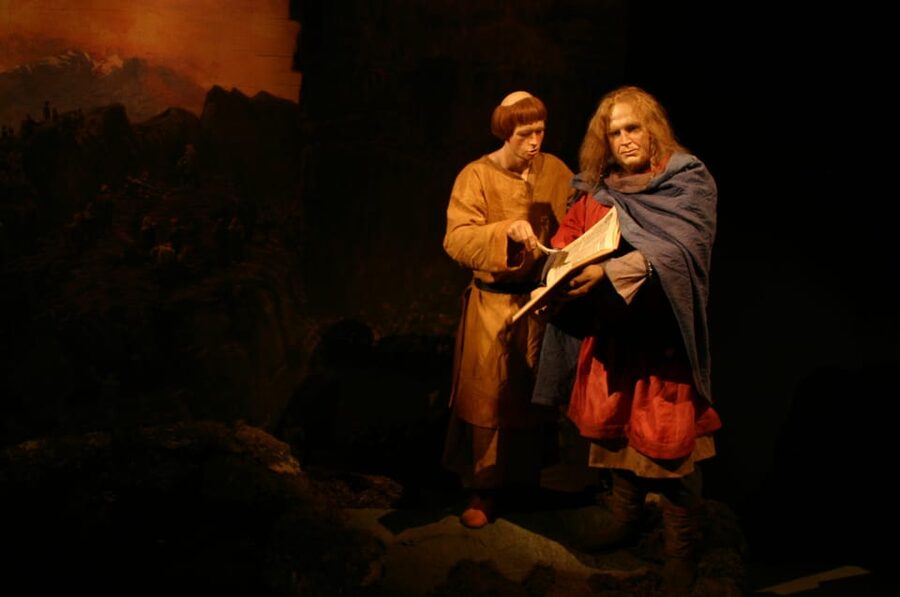
- Twenty wax scenes tell Iceland’s story: The displays focus on major events from settlement to the Reformation.
- A 35-minute audio tour guides the visit: English, German, French, Spanish, Russian, Swedish, and Icelandic are available.
- The Viking costume area is part of the fun: After the historical route, you can dress up and pose with Viking equipment.
- The museum is small but focused: You get a tidy introduction to Icelandic history rather than a full-day museum visit.
- It is at Grandagarður 2: Look for the Viking-on-horseback statue outside the white building, next to the entrance shared with Matur og Drykkur.
- The $33 price needs some thought: It can suit visitors who enjoy storytelling and theatrical displays, but history buffs wanting a large museum may find it expensive.
A short route through Iceland’s first centuries
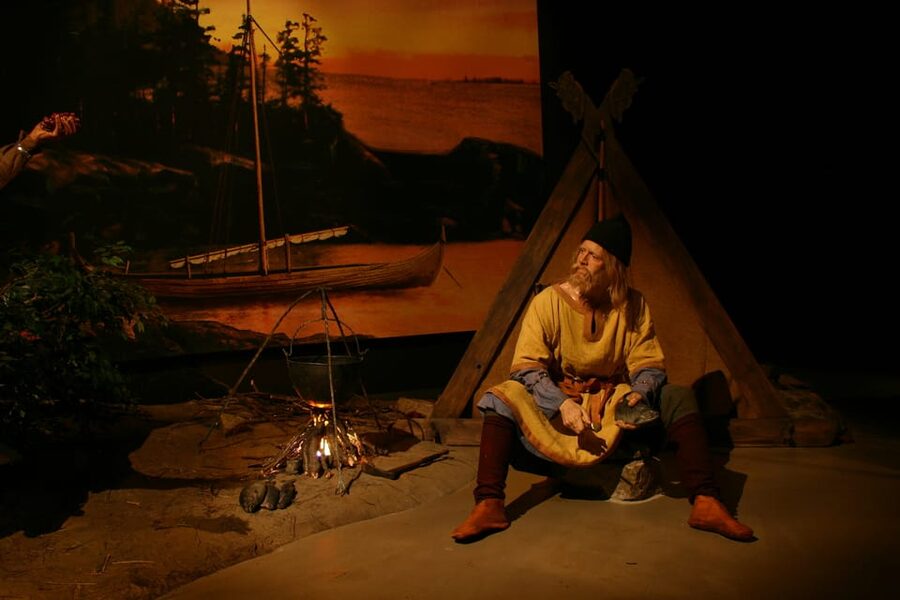
The visit begins with the earliest people connected to Iceland. You hear about the Papar, the Christian Irish monks traditionally linked with the island before the Norse settlement, and then the first Viking settlers.
The audio presentation also explains how Reykjavik received its name. This opening gives you a useful frame for the rest of the visit. Iceland was not simply an empty island waiting for one group to arrive. Its story includes earlier inhabitants, seafaring settlers, religion, law, and the hard work of creating a community in a remote place.
The wax figures put faces and clothing onto that story. You are not examining original tools or manuscripts here. Instead, you are looking at staged scenes designed to help you picture how people lived and what these early events may have looked like.
That approach works best if you want a quick, accessible introduction. You can follow the audio without needing much background. If you already know the Icelandic sagas in detail, the displays may feel more like a visual reminder than a major discovery.
A few more things to do in Reykjavík worth a look
- Reykjavik: Perlan Museum Wonders of Iceland Entrance Ticket
★ 4.7 · 2,575 reviews - Reykjavík: Hop-On Hop-Off Bus and Perlan Museum Entry Ticket
★ 4.3 · 719 reviews - Reykjavik: Whales of Iceland Museum Entrance Ticket
★ 4.4 · 493 reviews
Leif the Lucky and the founding of Parliament
The route then moves to Leif the Lucky and the Norse exploration of North America. Icelandic history is closely tied to the wider Viking world, and this section places Iceland within that larger story of Atlantic travel.
The museum also covers the founding of the Parliament, one of the most important events in Iceland’s past. The point is not just that people settled the island, but that they had to create systems for making decisions, handling disputes, and organizing a society spread across difficult terrain.
I like this part of the route because it connects adventure with everyday government. Viking history is often reduced to ships, raids, and weapons. Here, you also get the story of law and community building.
The audio format matters. Instead of reading a long panel at each display, you can listen while looking at the scene. That keeps the visit moving and makes the museum easier for children and first-time visitors to follow, although the content is not recommended for children under four and may be unsuitable for sensitive children.
The Saga Age and Iceland’s civil war
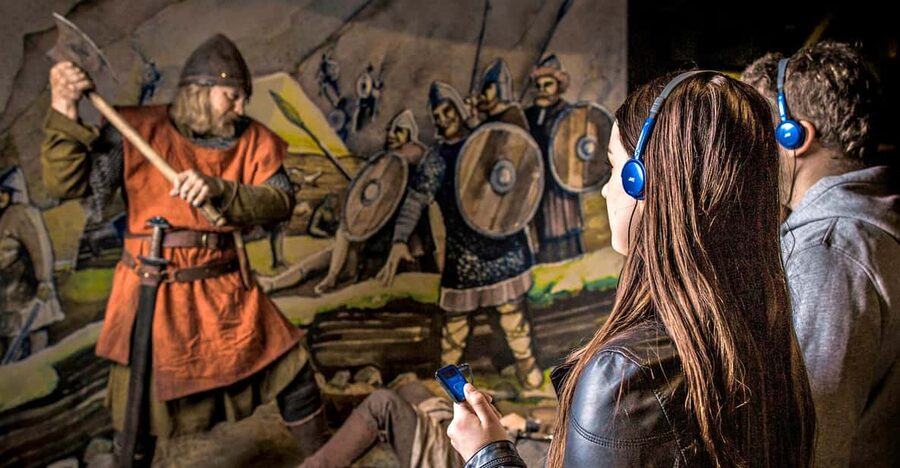
The next part takes you into the Saga age, when many of the stories associated with Iceland were written down. These sagas are not simple fairy tales. They preserve accounts of family disputes, political struggles, violence, loyalty, and revenge, all mixed with storytelling and memory.
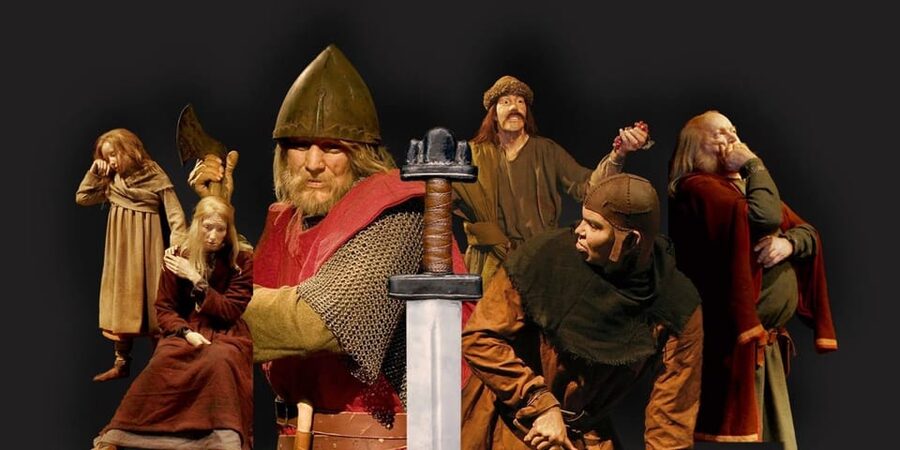
The wax scenes give these stories a dramatic quality. The figures are made to look unusually lifelike, which helps you understand why this museum feels different from a traditional history collection. You are shown people in specific situations rather than only dates and names.
The route also addresses the civil war in Iceland. This is an important reminder that the settlement period was not a peaceful chapter in which everyone simply worked together. Rival families and leaders competed for power, and conflict eventually put pressure on the political system.
Some people will find the subject matter gripping. Others may find the staged scenes intense, especially younger children. The museum’s own warning about sensitive children is worth taking seriously. Icelandic history includes murder, conflict, and harsh survival conditions, and the wax figures make those themes more direct than a printed description would.
The Reformation and Iceland’s last Catholic bishop
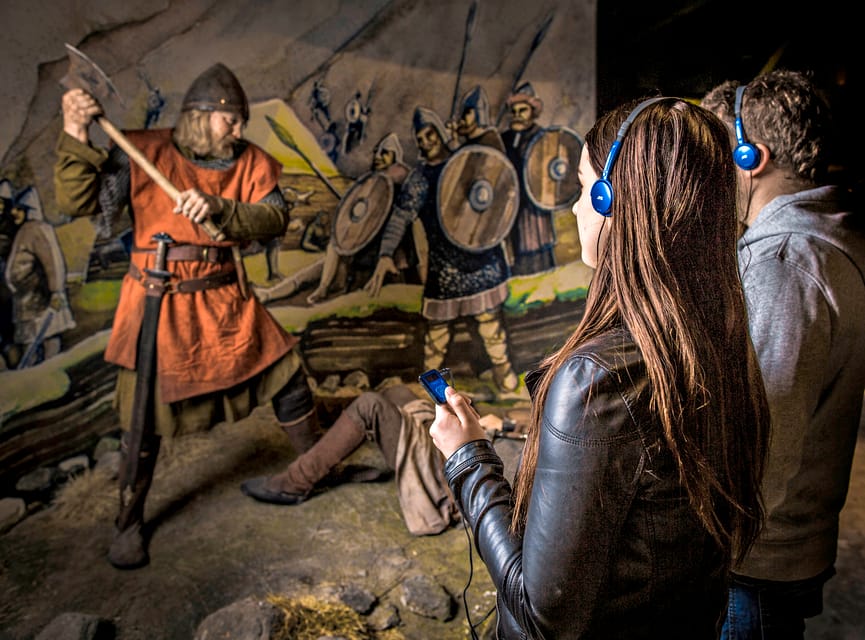
The final historical section moves toward the Reformation. You learn about the religious changes that reshaped Iceland and about the country’s last Catholic bishop.
This gives the route a clear ending. You start with the island’s earliest settlers, follow the growth of a Norse community and its political struggles, and finish with a major shift in religious life. It is a compact historical arc, not a collection of unrelated Viking scenes.
I appreciate that the museum continues beyond the familiar Viking image. Many visitors arrive expecting ships, warriors, and horned helmets, even though the horned-helmet idea is a later popular invention. The final section shows that Iceland’s story did not stop with the first settlers or the age of exploration.
The museum does not appear to offer a long academic treatment of the Reformation. You should see it as a concise introduction, with the wax figures and spoken story doing most of the work.
Same base, a different kind of day out:
- Reykjavik: Golden Circle Full-Day Tour with Kerid Crater
★ 4.8 · 24,485 reviews - Reykjavik Food Walk – Local Foodie Adventure in Iceland
★ 5.0 · 18,952 reviews - Iceland: Northern Lights Bus Tour from Reykjavik
★ 4.1 · 11,161 reviews - Reykjavík: South Coast Waterfalls, Black Sand & Glacier Tour
★ 4.8 · 11,030 reviews
The audio guide and the pace of the visit
The audio guide is included in the admission price, with headsets available in English, German, French, Spanish, Russian, Swedish, and Icelandic. Text guides are available in Polish and Italian.
For most people, the audio guide will be the backbone of the experience. It explains what you are seeing and links each scene to the larger story. This is useful because the wax figures alone cannot tell you who each person is or why the moment matters.
The route lasts about 35 minutes, which makes the museum easy to fit into a morning or afternoon in Reykjavik. You do not need to reserve half a day for it. The ticket is valid for one day from first activation, but the actual museum visit is much shorter.
There is one practical issue with the format. The route may be organized in stages, and you might need to wait for the next section to open. That can interrupt the flow, especially if you prefer to move at your own pace. If you are visiting during a busy period, allow extra time instead of assuming you will be finished exactly 35 minutes after entering.
The upside is that the sequence keeps the story in order. You are not left wondering which display to see next. The downside is less freedom to linger over one scene while skipping another.
The costume area gives the visit a lighter finish
After the historical section, you can try on Viking clothing and use the costume area. This is a welcome change of pace after the more serious subjects of conflict, religion, and political struggle.
The activity includes authentic-style clothes and weapons, giving you a chance to play with the Viking image in a controlled museum setting. It is especially useful for families with older children, couples, and anyone who enjoys taking photographs.
This section also helps explain why the experience is more than a standard audio tour. You are not only listening to history. You are seeing reconstructed figures and then taking part in a simple hands-on activity.
Still, it is best to keep expectations sensible. The costume area is an add-on to a small museum, not a full historical workshop. The main value comes from the combination of the audio route and the visual scenes. The dress-up element makes the ending more memorable, but it does not turn the visit into an all-day attraction.
How realistic are the wax figures?
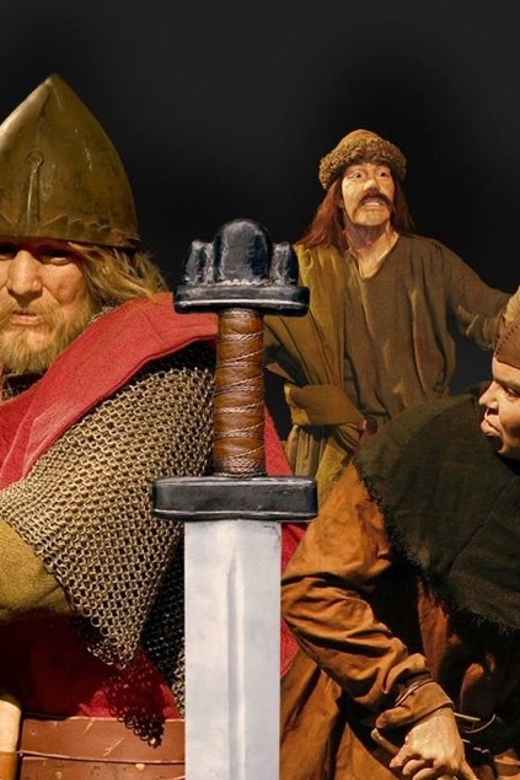
The figures are designed to look highly lifelike, and that is one of the museum’s strongest features. They show people in clothing and settings linked to the Icelandic past, giving the route a more human feel than a room of anonymous artifacts.
For me, the appeal is the directness. A written label may tell you that Icelandic settlers faced difficult conditions, political disputes, and religious change. A carefully staged scene lets you picture those events in a more immediate way.
Realism can also be the museum’s weakness. Scenes involving violence or hardship may feel uncomfortable for young children or sensitive visitors. The attraction specifically notes that it may not suit sensitive children, and children under four are not admitted as suitable participants.
The figures are not original historical objects. They are reconstructions made to support the story. You should visit for interpretation and atmosphere, not for a close study of authenticated clothing, tools, or archaeological material.
Is the $33 admission worth it?
At $33 per person, this is not a cheap quick stop. Iceland is expensive in general, but that does not automatically make every attraction good value. You need to decide how much you value a focused, guided introduction to the sagas.
The price includes entrance, the headset, parking, and lockers. You do not need to pay separately for the audio content or costume area. That makes the admission easier to judge, since the key parts of the visit are covered in one ticket.
I think the price makes the most sense for three types of visitors:
- You want a simple introduction to Icelandic history before visiting other sites.
- You enjoy wax museums, staged historical scenes, or audio storytelling.
- You are looking for a short indoor activity in Reykjavik that does not require transport outside the city.
The value is weaker if you expect a large museum with many rooms, original artifacts, or several hours of exhibits. The museum is small, and a 35-minute tour can feel brief for $33. One useful approach is to combine it with nearby plans in the Grandagarður area rather than treating it as your only activity for the day.
Location at Grandagarður 2
The Saga Museum is at Grandagarður 2 in Reykjavik’s Capital Region. The entrance is in a white building with a statue of a Viking on horseback outside. The door is shared with the restaurant Matur og Drykkur.
That landmark should make the entrance easy to spot. You can also use the included parking if you are driving, and lockers are available for belongings.
Pickup and drop-off are not included, so you arrange your own way to the museum. The location makes it better suited to an independent Reykjavik day than to a guided excursion with hotel transport.
The museum is wheelchair accessible, which is an important practical benefit. You should still allow time to locate the correct entrance, especially because the restaurant and museum share the same door.
Who will enjoy this museum most?
I would recommend the Saga Museum most strongly to first-time visitors who want context for Iceland’s early history without committing to a long museum visit. The route gives you the basic sequence of settlement, exploration, law, conflict, and religious change in one compact package.
It also suits people who learn best through scenes and spoken stories. The audio guide removes much of the work of reading labels, while the figures help make unfamiliar names and events easier to picture.
Families with older children may enjoy the costume area, but I would use caution with younger or sensitive children. The subject matter includes violence and difficult historical events, and the realistic figures may be more intense than expected.
History specialists may want more detail. You will not find an extensive collection or a large number of separate galleries. The museum gives you a guided overview, so it works better as an introduction than as a complete study of the Icelandic sagas.
Booking flexibility and practical details
You can cancel up to 24 hours before the visit for a full refund. A reserve-now-and-pay-later option is also available, which helps if your Iceland plans may change because of weather or transport.
The ticket is valid for one day from first activation. You can use the audio guide in seven languages, while written material is available in Polish and Italian.
Food and drinks are not included. Plan to eat before or after the visit, with the restaurant sharing the entrance if you want to combine the museum stop with a meal.
Should you book the Saga Museum?
Book it if you want a short, visual, audio-guided introduction to Iceland’s early settlers and sagas, and if the chance to dress as a Viking sounds like good fun. The realistic scenes, clear historical route, helpful staff, and broad language choice make it easy to enjoy without much preparation.
Skip it if you are looking for a large museum, original artifacts, or several hours of serious historical study. At $33, the visit is best value when you appreciate the storytelling style and combine it with other Reykjavik plans. Give yourself more than the advertised 35 minutes if you dislike waiting between sections, and keep young children’s sensitivity to realistic scenes in mind.
FAQ
How long does the Saga Museum visit take?
The audio-guided route lasts about 35 minutes. The ticket itself is valid for one day from first activation.
What languages are available for the audio guide?
Audio guides are available in English, German, French, Spanish, Russian, Swedish, and Icelandic.
Are written guides available in other languages?
Text guides are available in Polish and Italian.
Where is the Saga Museum located?
The museum is at Grandagarður 2 in Reykjavik. Look for the Viking statue on horseback outside the white building. The entrance is shared with the restaurant Matur og Drykkur.
Is parking included?
Yes. Parking is included with the museum admission.
Is the museum wheelchair accessible?
Yes, the museum is wheelchair accessible.
Is the museum suitable for young children?
Children under four are not considered suitable for this activity. The museum may also be unsuitable for sensitive children because some realistic scenes present violence and difficult events from Icelandic history.
Just added in Reykjavík
- From Reykjavik: Full-Day Horse Riding & Golden Circle Tour★ 3.7 · 81 reviews
- Reykjavik: Evening Icelandic Food and Drink Tour★ 4.9 · 66 reviews
- Hveragerdi: The Siggi Horse Riding Tour★ 4.8 · 13 reviews
- The Reykjavik Christmas Food Tour★ 4.8 · 19 reviews
- Reykjavik: Small-Group Snæfellsnes Day Trip★ 4.8 · 214 reviews
- The Golden Circle & Hop On – Hop Off Combo Deal★ 4.5 · 15 reviews
- Reykjavik: The Icelandic Sweet Tooth Tour★ 4.6 · 30 reviews
- Reykjavik: The Golden Circle Full-Day Tour★ 4.7 · 170 reviews
Museums, compared.

Perlan Museum Wonders of Iceland Entrance Ticket
Read our review →
Stockholm Pass: Save up to 50% – Includes Vasa Museum Ticket
Read our review →

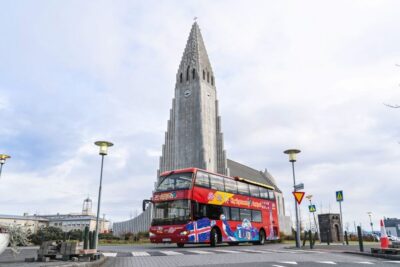
Hop-On Hop-Off Bus and Perlan Museum Entry Ticket
Read our review →Browse the lists this tour appears in