
Reviewed · MUSEUMS
Kon-Tiki Museum Entrance Ticket
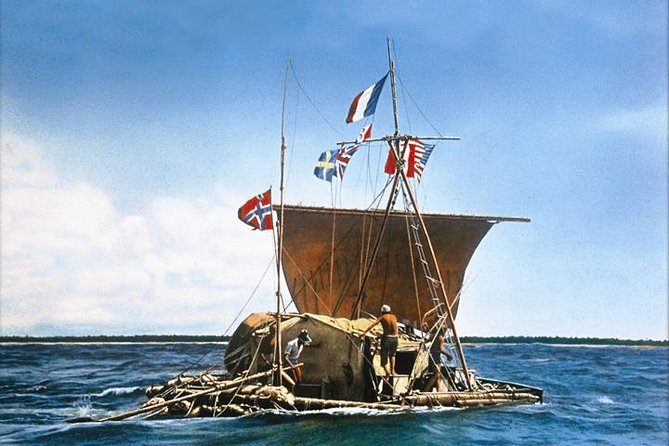
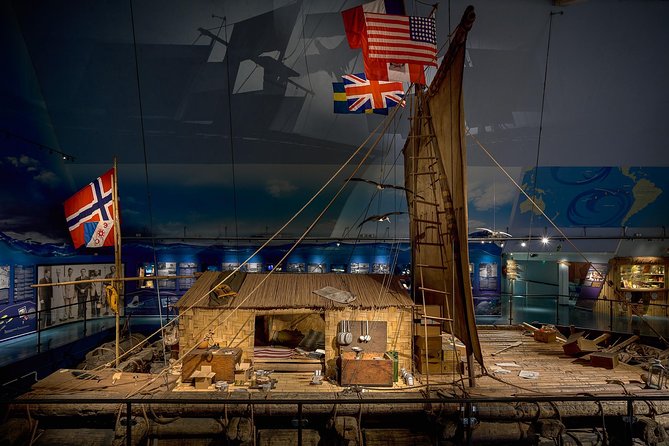
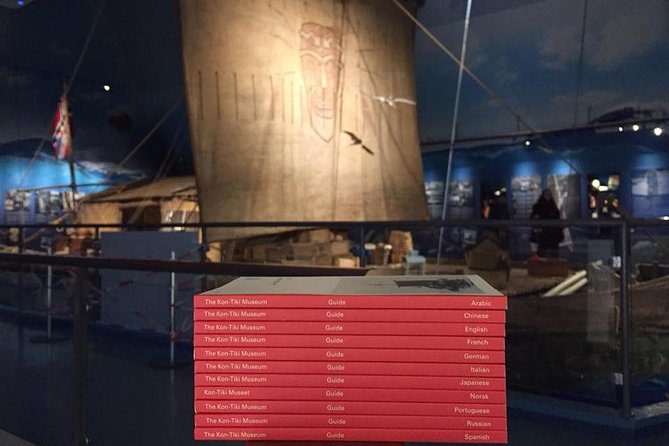
The original Kon-Tiki raft is the star here: a rough-looking balsawood craft that carried Thor Heyerdahl and his crew across the Pacific in 1947. Seeing the real vessel, rather than a polished replica, gives the expedition an immediate human scale.
I like the 12 noon screening of the Oscar-winning Kon-Tiki film, made with footage from the voyage, and the museum’s mix of boats, artifacts, and hands-on sights. I also like its family appeal, since children can follow the adventure story while adults take in the archaeology and expedition details.
The main consideration is that the museum is compact and self-guided. You may finish the core exhibits in about an hour, and some displays can feel dated. Pairing it with the Fram Museum next door makes the trip feel more worthwhile.
Key things to know before you go
- The real Kon-Tiki raft is the centerpiece: See the vessel used for Heyerdahl’s 1947 Pacific crossing.
- The noon film is worth planning around: The original Oscar-winning documentary screens daily at 12 noon.
- The museum covers more than one voyage: Exhibits include Ra, Tigris, Easter Island, Fatu-Hiva, Tucume, and the Galapagos.
- You can make it a double museum visit: The Fram Museum is next door, making the journey to Bygdøy more useful.
- Allow one to two hours: The basic visit takes about an hour, but the film and detailed displays can extend your stay.
- Advance booking keeps entry simple: The ticket includes admission and local taxes, but not transport, food, drinks, or a guide.
Why the Kon-Tiki raft still grabs your attention
Thor Heyerdahl’s 1947 expedition sounds almost too improbable for a museum label. He crossed the Pacific on a raft made largely from balsa wood to show that ancient South American people could have reached Polynesia by sea. The museum lets you look closely at the actual craft used for that journey.
The raft is not grand or comfortable. That is part of its power. Its simple construction makes the voyage feel less like a polished adventure tale and more like a risky experiment carried out with limited space, basic equipment, and plenty of open ocean.
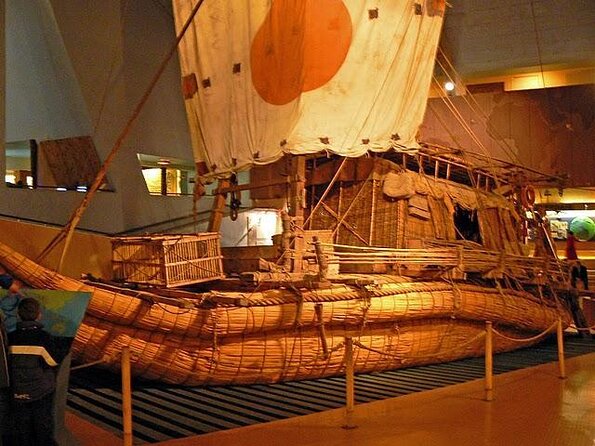
You can see the original Kon-Tiki vessel along with other expedition craft. Ra and Tigris show how Heyerdahl continued testing long-distance sea travel with reed boats after the Pacific crossing. Seeing these boats in person helps you compare the different ideas behind each expedition.
I find the boats more memorable than a wall of text could be. Photographs explain what happened, but the vessels show the cramped physical reality. One especially useful detail is the amount of room available to the crew. The boats make it clear how little personal space the men had during voyages that lasted for weeks or months.
A few more things to do in Oslo worth a look
- Oslo: Paradox Museum Entry Ticket
★ 4.3 · 799 reviews - The Fram Museum Admission Ticket
★ 4.5 · 490 reviews - Stockholm: Skansen Open-Air Museum Admission Ticket
★ 4.5 · 3,427 reviews
A self-guided visit with several distinct stories

This is an independent museum visit, not a guided tour. You move through the displays at your own speed, reading background information and stopping where your interest takes you. That works well if your family has different attention spans.
The central story is Kon-Tiki, but the museum also covers Heyerdahl’s wider work. The exhibits reach into Easter Island, Fatu-Hiva, Tucume, and the Galapagos. You also get material on the Ra and Tigris expeditions, Thor Heyerdahl himself, his library, and the later place of Tiki imagery in popular culture.
That range gives the museum more substance than a single-raft display. You are not simply looking at an old boat. You are following a career built around travel, theory, experimentation, and public debate.
Still, the compact format has limits. If you want a full biography of Heyerdahl or a detailed academic treatment of every expedition, you may find the presentation too brief in places. One practical criticism is that parts of the exhibition can feel dated, though planned changes described by the museum point toward a future update with new interactive features, an ocean setting, and a different presentation of the Kon-Tiki voyage.
The 12 noon film adds real expedition footage
Try to time your visit for the daily 12 noon screening. The original Kon-Tiki documentary uses footage recorded by the expedition crew, giving you moving images of the journey rather than only captions and still photographs.
The film matters because it supplies the motion and uncertainty that a stationary exhibit cannot. You see the raft as part of a working voyage, not just as an object behind museum barriers. It also gives helpful context before or after you examine the boat itself.
The film is screened in the museum cinema and lasts about an hour. If your schedule is tight, remember that the film alone can take up much of your visit. If you want to see the cave, underwater display, library material, and the other boats at a relaxed pace, plan more than the basic one-hour visit.
The most efficient approach is to arrive before noon, look through the displays, watch the film, then return to any sections you want to study. Another sensible plan is to watch the film first and let the rest of the exhibits fill out the story.
Small details make the museum more appealing to children
The Kon-Tiki story has the shape of an adventure book: a daring idea, a handmade raft, a small crew, and a long ocean crossing. That makes it easy for children to grasp, even if they do not read every label.
The museum also includes a 30-metre cave tour and an underwater exhibit with a 10-metre model of a whale shark. These features break up the reading and give younger visitors something visual to look for.
The unusual objects connected with Easter Island and the Galapagos help keep the visit from becoming only a boat display. Children can move between the big story of the voyages and smaller pieces tied to places Heyerdahl studied.
I would choose this museum for a family that likes real-world adventure and has at least one child who enjoys ships, exploration, or unusual historical stories. It is also useful for mixed-age groups because you can finish the main route quickly, then spend more time only where your interests are strongest.
There are no animals allowed, so plan accordingly if you are visiting Oslo with a pet.
Same base, a different kind of day out:
- Oslo: Scenic Fjord Cruise with Audio Guide Commentary
★ 4.5 · 5,375 reviews - Oslo Nature Walks: Island Hopping Tour
★ 4.8 · 2,713 reviews - Oslo: 100% Electric Oslofjord Sightseeing Cruise
★ 4.4 · 2,041 reviews - Oslo: Fjord Evening Cruise with Shrimp Buffet
★ 4.5 · 1,956 reviews
The location works best as a Bygdøy museum outing

The Kon-Tiki Museum is on Bygdøy, and the Fram Museum is next door. That makes the location a major part of the value. The Kon-Tiki visit by itself may take about an hour, but pairing it with Fram can turn the trip into a fuller half-day museum outing.
The two museums also complement each other. Kon-Tiki focuses on Heyerdahl’s experimental crossings and vessels. Fram gives you another perspective on Norway’s seafaring tradition. You do not need to choose between them if your schedule allows both.
Public transportation is available nearby, and a bus from Oslo city center stops directly in front of the museums. The museum can also be reached by hop-on hop-off bus, according to the practical information provided for the site. If you are coming from a cruise port, the location is described as not far away, though you should allow time for the actual connection you choose.
Transportation is not included with the admission ticket. Food and drinks are also separate. A cafe outside the museums provides a convenient place to pause, which helps if you are combining Kon-Tiki with Fram or another Bygdøy attraction.
What the $19.42 ticket buys you
At about $19.42 per person, this is a reasonable ticket if you care about Heyerdahl, maritime history, or unusual expedition stories. It is less compelling if you plan to rush through in 30 minutes and skip the film.
The value improves when you use the museum’s full offering: the original raft, Ra and Tigris, the expedition displays, the cave, the whale shark model, the documentary, and the material on Easter Island and other destinations. You are paying for access to a concentrated collection rather than a large museum with many separate galleries.
The ticket includes local taxes and admission. It does not include transportation, food, drinks, souvenirs, or a guide. Since the visit is self-guided, you should be comfortable reading the displays and setting your own pace.
This is not a tour with a guide telling stories as you walk. That can be a drawback for anyone who prefers spoken explanation. It is an advantage if you want freedom to pause, skip, or move quickly.
The museum is often booked about 25 days in advance, so reserving ahead is sensible during a busy Oslo visit. Advance entry also gives you a simple voucher-based arrival, without needing to arrange a separate guided time.
How long should you stay?

The official estimate is about one hour, and that is enough for a focused visit to the main exhibits. You can see the Kon-Tiki raft, read the central displays, and get a clear understanding of Heyerdahl’s work in that time.
I would plan 90 minutes to two hours if you want to watch the documentary and read carefully. That longer stay is also reasonable if you are interested in the cave, underwater display, library, and the sections on Easter Island, Fatu-Hiva, Tucume, and the Galapagos.
Two hours is not excessive for someone who enjoys museums of this kind. The subject has several separate expeditions, and the boats themselves reward a slower look. The main risk is not running out of things to see, but losing track of time if you are trying to fit in the neighboring Fram Museum.
The 10:00 AM to 5:00 PM opening hours apply daily for the stated periods from September 1, 2025 through April 30, 2026, and September 1, 2026 through April 30, 2027. Check your planned visit date against the current opening information before setting your transport schedule.
The museum’s limits, and who should know about them
The Kon-Tiki Museum is strongest when you want a clear, visual account of a famous expedition. The boats, film, and unusual displays give the story shape. It is weaker if you expect a large museum devoted equally to every part of Heyerdahl’s personal life.
Some visitors may find the exhibition style dated. That is a fair point to keep in mind, especially if you have recently visited Oslo’s newer, highly designed museums. The museum has described plans for a new presentation of the Kon-Tiki raft, with an ocean and sky setting, interactive stations, and an underwater scene beneath the boat. The timing and final details of those changes may affect what you see on your visit.
The museum is also not a substitute for a full guided explanation of Heyerdahl’s theories or their place in modern scholarship. The displays present the expeditions and their setting, but you should not expect a university lecture.
I would recommend it most strongly to families, maritime enthusiasts, fans of exploration, and anyone who appreciates seeing original objects tied to a famous event. It also suits cruise passengers and short-stay visitors because the visit is focused and easy to combine with Fram.
Booking, cancellation, and arrival basics
You receive confirmation when booking, and the advance ticket is designed for quick entry on the day. The museum is near public transportation, and most people can participate.
Free cancellation is available if you cancel at least 24 hours before the experience start time. Cancellations made less than 24 hours ahead are not refunded, and changes within that same period are not accepted. The cut-off follows local Oslo time.
Bring enough time for transport, especially if you are linking the museum with a cruise schedule or another attraction. Since neither transport nor a guide is included, check your route before leaving central Oslo.
Should you book the Kon-Tiki Museum?
Book it if you want to see a real expedition vessel, especially if Thor Heyerdahl’s story already interests you. The original raft, crew-shot film, and compact displays give you a direct look at one of Norway’s best-known modern adventure stories.
It is also a smart choice for families and for anyone planning to visit the Fram Museum next door. Arrive before noon if you want the best use of your ticket, since the documentary is a daily highlight.
Skip it only if your Oslo schedule is extremely tight, you dislike self-guided museums, or you need a full biography and highly modern exhibition design. For most visitors with an interest in boats, exploration, or Pacific voyages, the ticket offers a focused and memorable hour or two.
FAQ
Where is the Kon-Tiki Museum?
The museum is in Oslo, near public transportation. It is next to the Fram Museum, making it convenient to visit both in one outing.
What is included in the ticket?
The ticket includes museum admission and local taxes. Transportation, food, drinks, souvenirs, and a guide are not included.
How long does the visit take?
The estimated visit lasts about one hour. You may want 90 minutes to two hours if you watch the documentary and read the displays carefully.
Does the museum show the original Kon-Tiki raft?
Yes. You can see the original balsawood raft used by Thor Heyerdahl during his 1947 Pacific expedition.
When is the Kon-Tiki film shown?
The original Oscar-winning Kon-Tiki documentary is screened every day at 12 noon in the museum cinema.
Is the museum suitable for children?
Yes. The museum is described as a family-friendly activity, with boats, expedition stories, a cave tour, and an underwater display featuring a large whale shark model.
Are animals allowed inside?
No. Animals are not allowed at the museum.
Can I cancel the booking for a refund?
Yes, if you cancel at least 24 hours before the experience start time. Cancellations made less than 24 hours before the start time are not refunded.
Just added in Oslo
- Akerselva River: Urban Paddling Adventure Kayak Tour★ 4.3 · 29 reviews
- Oslo Sea Kayak Tour “Fjord City”★ 4.5 · 39 reviews
- Oslo: Historic Myths & Legends Evening Walking Tour★ 4.8 · 408 reviews
- Oslo: Guided Walking Tour of Central Oslo★ 4.7 · 438 reviews
- Oslo: Sightseeing with Holmenkollen Ski Jump & Vigeland Park★ 4.5 · 451 reviews
- City Sightseeing Oslo Hop-On Hop-Off Bus Tour★ 3.0 · 455 reviews
- Oslo: Best of Oslo Walking Tour★ 4.5 · 458 reviews
- The Fram Museum Admission Ticket★ 4.5 · 490 reviews
Museums, compared.


Perlan Museum Wonders of Iceland Entrance Ticket
Read our review →
Stockholm Pass: Save up to 50% – Includes Vasa Museum Ticket
Read our review →

Hop-On Hop-Off Bus and Perlan Museum Entry Ticket
Read our review →
Browse the lists this tour appears in