
Reviewed · VIKING HISTORY TOURS
Oslo Viking Quest: Exploration Game and Tour
Oslo Viking Quest turns a central-city walk into a self-guided history game. Instead of following a guide holding a flag, you use your phone, move from landmark to landmark, and solve clues to reveal the next stop. The route links major sights from the Nobel Peace Center to Akershus Fortress, giving you a quick introduction to Oslo’s civic, royal, religious, and wartime past.
I like the freedom to start when you choose and the low price of $7.20 per person. I also like that the puzzles give children, friends, and families a reason to look closely at buildings and statues that are easy to pass without noticing. The main drawback is that some clues may take patience, especially in poor weather, and there is no guide nearby to explain a puzzle or answer a question.
Key points to know before you play
- Eleven puzzles connect nine central Oslo sights, including City Hall, the Royal Palace, the Storting, and Akershus Fortress.
- The route takes about 1 hour 15 minutes if you follow it directly, but side trips can stretch the outing to several hours.
- You play privately with your own group, using a mobile access code and English-language content.
- No fixed departure time makes this easy to fit into a city break, with play available daily from 5:00 AM to 9:00 PM.
- The final section reaches Akershus Fortress and the Resistance Museum, adding important wartime context to the city walk.
- The price is unusually modest, though you are paying for a digital game rather than a guided sightseeing tour.
A low-cost way to get your bearings in Oslo
The best thing about this experience is its simple idea: use a game to make a walking route feel purposeful. You are not merely ticking off sights. At each stop, you look around for information that helps solve the next challenge, then receive a story about the place before moving on.
That format works well in central Oslo because many of the key sights sit within a walkable area. The route begins at Rådhusgata 30B and ends at the Scandinavian Star Memorial near Akershusstranda. Along the way, you pass government buildings, public squares, a cathedral, a university, royal sites, and a medieval fortress.
The advertised playing time is about 75 minutes. That is best understood as the time needed to follow the route and complete the challenges without long stops. If you pause for photos, enter a museum, sit for coffee, or take a side trip, plan on much longer. One participant stretched the game to several hours by adding extra stops, which is exactly how I would use it on a relaxed day in Oslo.
The game runs on your mobile phone, and the access code is included. You need to keep the phone charged and make sure your group can see the screen. Since the activity is private, you can stop whenever you want instead of keeping pace with strangers.
Other Norse history stops around Oslo:
- Oslo: Viking Planet Entry Ticket
★ 4.4 · 603 reviews - The Viking Planet Museum Ticket
★ 4.0 · 197 reviews - The Viking Planet Museum – Mini Group (4 adults)
★ 4.0 · 16 reviews
Starting at the Nobel Peace Center
The Nobel Peace Center is a fitting opening point for a route built around questions, stories, and public places. The center presents the Nobel Peace Prize and explores themes such as war, peace, conflict resolution, political debate, and cultural involvement.
Here, the challenge asks you to look around for an answer before the game sends you onward. That small act of observation matters. You are encouraged to study the surroundings instead of treating the building as a quick photo stop.
I would allow extra time here if the subject interests you, though the Viking Quest itself is not a full museum visit. The supplied route information explains the center’s role, but it does not include admission to exhibitions. Think of this stop as an introduction to Oslo’s public life and international role, not a guided tour inside the museum.
Oslo City Hall and the city’s working center
The next major stop is Oslo City Hall, one of the most recognizable buildings in the capital. It houses the city council, municipal administration, and other city organizations. The present building was constructed between 1931 and 1950, with work interrupted during the Second World War.
City Hall is more than a grand facade. It is where Oslo’s local government works, so the game gives you a chance to connect architecture with the daily running of the city. The puzzle asks you to inspect the surroundings and use what you find to advance.
This is one of the strongest parts of the route for first-time visitors. You get a practical sense of Oslo’s civic center without committing to a long formal tour. The challenge also helps keep a group moving, though anyone expecting detailed architectural commentary will need to supply some of that through their own reading or a separate visit.
A sculpture stop with Nils Sigurd Aas
The route then brings you to work associated with Nils Sigurd Aas, one of Norway’s prominent modern sculptors. Aas is known for the statue of King Haakon VII in Oslo’s June Seventh Square and for designing Norwegian coins, including the 10-krone and 20-krone pieces.
This stop adds a useful change of pace. You move from large public buildings to a piece of art and the details around it. The game asks you to find the answer by looking carefully, so the stop rewards attention rather than speed.
I like this kind of inclusion because it widens the idea of what counts as an Oslo highlight. You are not limited to the obvious palace and fortress. The downside is that a sculpture stop can feel less clear if you do not know what to look for, especially when the clue is difficult to interpret. Give yourself time and reread the challenge before guessing.
A few more things to do in Oslo worth a look
- Oslo: Scenic Fjord Cruise with Audio Guide Commentary
★ 4.5 · 5,375 reviews - Oslo To Bergen Self-Guided Full Day Trip with Flåm Railway And Fjord Cruise
★ 4.0 · 69 reviews - Self-Guided 22-Hour Round Trip From Oslo To Sognefjord With Flåm Railway
★ 4.5 · 54 reviews - Helsinki: Sightseeing Canal Cruise with Audio Commentary
★ 4.5 · 1,299 reviews
The Royal Palace and Norway’s royal story
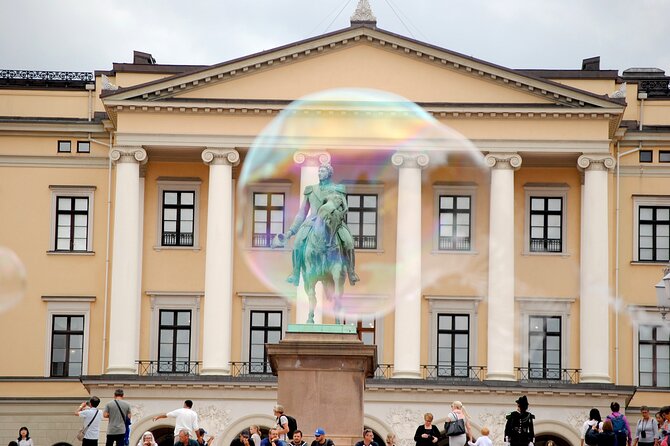
The Royal Palace was built in the first half of the 19th century as the Norwegian residence of Charles III John, the French-born king who ruled Norway and Sweden. The palace remains one of the central landmarks on the route and offers a direct link to Norway’s royal past.
The game does not replace a palace tour. Instead, it gives you an exterior-focused reason to examine the site and answer a question before continuing. If you are already walking along Oslo’s main central streets, this is an efficient way to add context without arranging a separate guided visit.
This is also a good place to slow down. The route’s flexible format means you can pause the game, take photographs, and resume later. That is more useful than it may sound. A fixed tour often gives you only a few minutes at a major sight, while this activity lets your group set the rhythm.
The University of Oslo and a touch of academic history
The University of Oslo is Norway’s oldest university. It was originally called the Royal Frederick University until 1939, and its presence gives the route another view of national life beyond politics and royalty.
The puzzle here asks you to observe the location and find the information needed to continue. That approach can make an institutional building feel less distant. You are encouraged to notice names, inscriptions, and visible details that might otherwise fade into the background.
For me, this stop works best as part of the larger sequence. On its own, it may not be the sight you planned your day around. In combination with the palace, parliament, cathedral, and City Hall, it helps show how much of Oslo’s identity is concentrated in a fairly compact central area.
The Storting, where Norway’s parliament meets
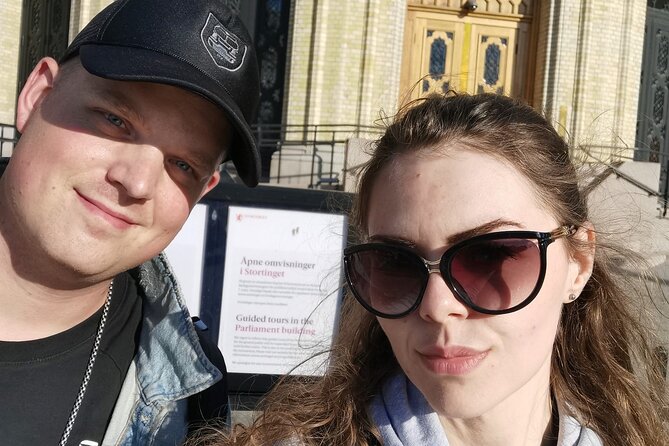
The Storting building is the seat of Norway’s parliament. It sits at 22 Karl Johans gate and came into use on March 5, 1866. The building was designed by Swedish architect Emil Victor Langlet.
This is one of the route’s most useful stops for understanding Norway as a modern constitutional state. The game places a puzzle at the building, so you get a reason to study its exterior and consider its role rather than simply walking past on Karl Johans gate.
The stop also helps break up the route. After royal history and university life, the parliament introduces a clear political thread. If you enjoy seeing how a capital city functions, this part of the quest will likely be more rewarding than a route made up only of monuments.
Oslo Cathedral and a pause in the city center
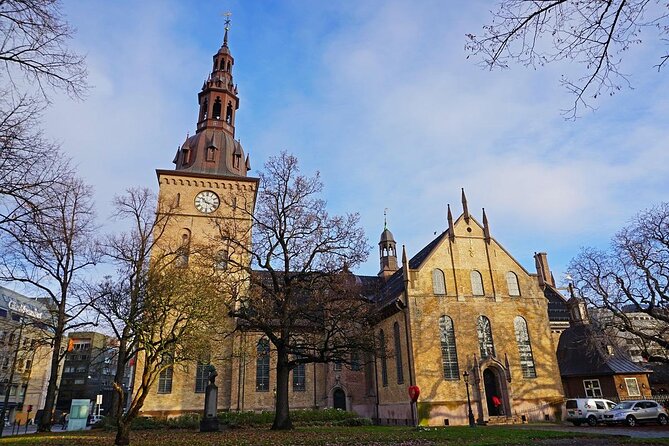
Oslo Cathedral, formerly Our Savior’s Church, is the main church of the Church of Norway Diocese of Oslo and the parish church for downtown Oslo. The current building dates from 1694 to 1697, and the Norwegian Royal Family and government use it for public events.
The cathedral gives the game a quieter, more traditional stop after the formal government buildings. Its long use and connection to national ceremonies make it an important part of Oslo’s public life.
Opening access and services can vary, and the supplied information does not promise entry as part of the quest. Plan to treat the cathedral as a landmark for the puzzle unless you confirm that you can go inside. The game’s value here comes from connecting the building to Oslo’s religious and civic traditions.
Akershus Fortress and Norway during the occupation
The final part of the route reaches Akershus Fortress, a medieval castle built to protect Oslo and provide a royal residence. The fortress is one of the city’s most substantial historic sites, and it gives the route a stronger sense of place than a simple downtown walk.
The Norway’s Resistance Museum is located at the fortress. Its collection focuses on Norwegian resistance during the German occupation from 1940 to 1945, with equipment, photographs, and documents from the war years. The game’s route includes the museum area and the fortress itself, although museum admission is not listed as included.
This section is especially valuable because it adds modern wartime history to a route that has already covered kings, parliament, religion, and local government. I would not rush through it. Even if you complete the puzzle quickly, the fortress area deserves time for its setting and the museum’s subject matter.
The route ends at the Scandinavian Star Memorial on Akershusstranda. The endpoint gives the activity a definite finish near the waterfront and fortress area. Because the start and end are different, you should expect a one-way walk rather than a loop back to Rådhusgata.
How the puzzle format affects the day
The eleven interactive challenges are the heart of the activity. You are not given a physical guide, so the phone provides the instructions, story content, and next steps. That makes the experience light on logistics, but it also means your group must manage the technology and interpret the clues on its own.
Some challenges may be solved in seconds. Others can require patience. One lower-rated experience specifically pointed to clues that were hard to understand and recommended choosing a day when it is not raining or very cold. That is sensible advice. A phone-based activity is less pleasant when you are standing outdoors with wet hands, poor visibility, or stiff fingers.
The Viking storyline adds a playful frame to the history. It should appeal most to people who enjoy solving problems together. If you want a polished spoken explanation at every stop, choose a conventional guided tour instead. If you like discovering a city through small tasks, this format is more active and often more memorable.
The ability to pause and resume is a major advantage. You can stop for lunch, visit a museum, take a break, or return later without losing the route. The game is offered in English, and most people can participate. Service animals are allowed, and the route is near public transportation.
Who gets the best value from $7.20
At $7.20 per person, this is inexpensive for an activity that combines a walking route, eleven challenges, and historical content. The value is strongest for a small private group that wants an easy introduction to central Oslo without paying for a private guide.
The price does not include a physical guide, museum admissions, food, transport, or other personal costs. That keeps the cost down, but it also limits the depth of explanation. You are buying a structured self-guided game, not a full sightseeing lecture.
Group discounts may improve the value for larger parties. Since only your group participates, the activity can work well for families, friends, and couples who want to move at their own speed. Children may enjoy the puzzles, though the difficulty of some clues means younger players may need help from adults.
I would choose this for a first afternoon in Oslo when I wanted to learn the city layout quickly. I would not make it my only history experience in the capital. Pairing it with a museum visit or a more detailed palace or fortress tour would give you a fuller picture.
Timing, meeting points, and cancellation terms
You can begin at Rådhusgata 30B in central Oslo. The route ends at the Scandinavian Star Memorial at Akershusstranda, so plan your onward route from the fortress and waterfront rather than back at the starting point.
The game is available Monday through Sunday from 5:00 AM to 9:00 PM during the stated operating period. Starting early may help you avoid crowds and give you more time at the sights, while a later start leaves less daylight for lingering. The experience is normally booked about 28 days in advance, so reserve ahead if your Oslo schedule is fixed.
Confirmation is provided when you book. Free cancellation is available up to 24 hours before the start time for a full refund. Changes or cancellations inside 24 hours are not accepted for a refund.
Should you book Oslo Viking Quest?
Book it if you want a cheap, flexible introduction to Oslo and enjoy solving clues as you walk. The route covers an impressive range of central sights, from the Nobel Peace Center and City Hall to the Royal Palace, parliament, cathedral, and Akershus Fortress.
Skip it if you want a live guide, detailed storytelling at every stop, or a completely effortless walk. Some clues can be hard to interpret, and cold or rainy weather will make an outdoor phone game less comfortable.
For most people, the strongest reason to book is the combination of price and freedom. You can play privately, pause whenever you like, and turn a 75-minute route into a longer Oslo outing. Just bring patience, a charged phone, and enough time to look beyond the next puzzle.
FAQ
How long does Oslo Viking Quest take?
The activity is listed as approximately 1 hour 15 minutes. You can take longer if you stop for photographs, sightseeing, food, museum visits, or side trips.
Where does the quest start and finish?
It starts at Rådhusgata 30B, 0151 Oslo, Norway. It finishes at the Scandinavian Star Memorial on Akershusstranda.
Is a physical tour guide included?
No. You receive a mobile access code and complete the quest without a physical guide.
How many puzzles are included?
The experience includes 11 interactive puzzle challenges.
Is the quest offered in English?
Yes. English is the stated language for the activity.
Can I cancel for a full refund?
Yes, if you cancel at least 24 hours before the scheduled start time. Cancellations or changes made within 24 hours are not refunded.
Just added in Oslo
- Unknown war. Oslo and Norway during 1940-45★ 5.0 · 74 reviews
- The Viking Planet Museum – Mini Group (4 adults)★ 4.0 · 16 reviews
- The Viking Planet Museum Ticket★ 4.0 · 197 reviews
- Oslo Winter Highlights Bike Tour★ 5.0 · 36 reviews
- The Ultimate Study of the Human Form at Vigeland’s Sculpture Park with a Local★ 4.0 · 14 reviews
- The Essential Oslo Private Walking Tour★ 5.0 · 79 reviews
- The Ultimate Norwegian Skiing Experience★ 5.0 · 16 reviews
- Central Oslo Guided Walking Tour with Local Guide★ 4.5 · 278 reviews
Viking History Tours, compared.
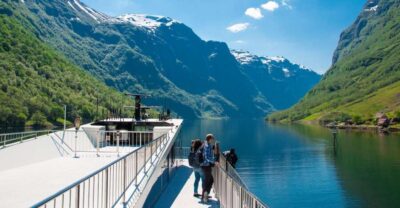
Viking Village, Nærøyfjord Cruise & Flåm Railway
Read our review →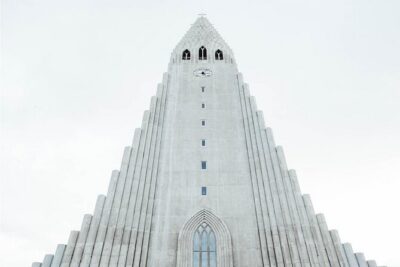
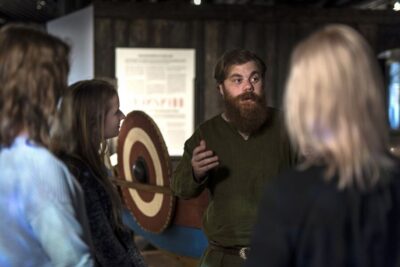

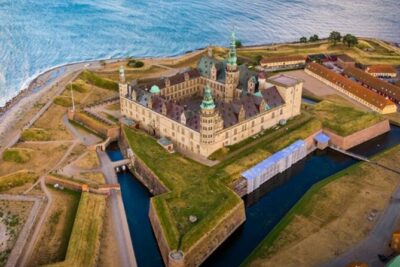
Full-Day; Castle, Palace, Cathedral & Viking ships Tour
Read our review →
Stockholm Viking History Full Day Tour to Sigtuna + Uppsala
Read our review →
Viking Ship Sailing Experience and Sightseeing Trip
Read our review →Browse the lists this tour appears in