
Reviewed · VIKING HISTORY TOURS
From Stockholm: Viking Culture and Heritage Small Group Tour
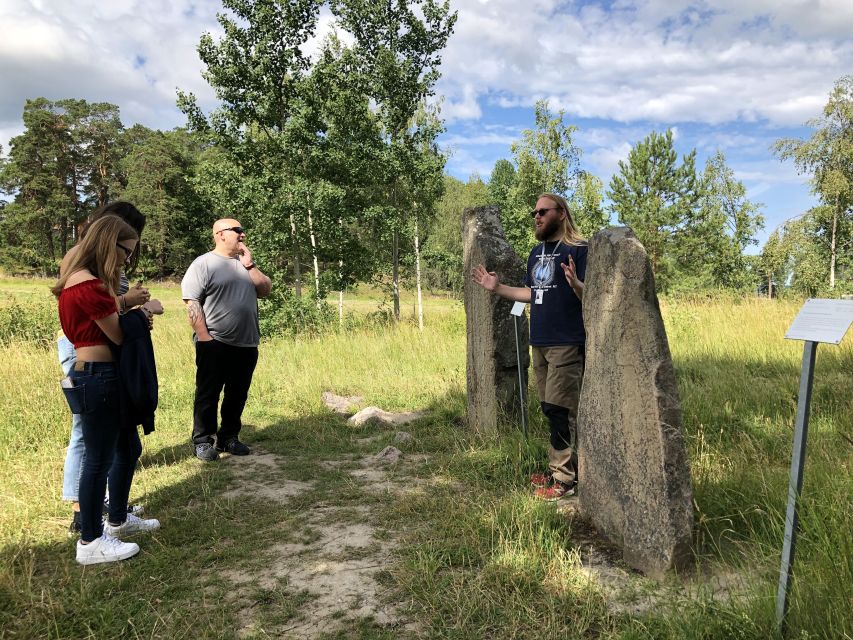
The most rewarding part of this outing is that you leave Stockholm’s polished streets and meet the Viking Age in ordinary countryside. At Broby bro, the Jarlabanke Bridge, and Arkils tingstad, you see real stones, graves, roads, and gathering places rather than a staged museum display.
I like the small-group format, limited to 16 people, and the way the tour links runestones to daily life, burial customs, religion, family power, and local government. I also like the simple hotel pickup, which saves you from sorting out a rural bus connection. The main drawback is the tight three-hour schedule. You get a strong introduction, not a full archaeological study, and the outdoor sites can be very cold in winter.
Key points at a glance
- Broby bro burial ground: See Viking Age graves and runestones connected with Estrid, a powerful Viking woman.
- Jarlabanke Bridge: Examine raised runestones and learn how Viking leaders marked roads, bridges, and public works.
- Arkils tingstad: Visit the remains of a Viking parliament and hear how local society was organized.
- English-speaking guide: Guides explain the sites in person and add stories during the drive. Erik has been singled out for his Norse history knowledge and food recommendations.
- Countryside escape: The tour trades city museums for open country, forest, old roads, and, in winter, snow and ice.
- Useful timing: Three hours is enough for a clear introduction, while pickup and drop-off within 5 kilometers of Stockholm Central Station keep the outing easy.
Leaving Stockholm for Uppland’s Viking Country
This is a short history tour with a clear purpose: show you where Viking Age people lived, died, traveled, worshipped, and made decisions. You are not heading to a theme park or a replica village. The stops are archaeological sites spread through the countryside north of Stockholm, in the historic Uppland area.
Your guide collects you from a hotel or accommodation within 5 kilometers of Stockholm Central Station. From there, the drive becomes part of the lesson. The guide can explain the places you pass and set up the stories before you arrive, which makes the three-hour schedule work better than simply meeting at the first stone.
The group can include no more than 16 people. That is large enough to keep the price reasonable, but small enough for you to hear the guide clearly and ask questions at the sites. It also avoids the slow shuffle that often comes with a large coach tour.
The tour is conducted in English. Erik is one guide associated with the experience, and his explanations have included both Norse history and practical Swedish food suggestions. Ask when booking who will lead your departure, since the guide can shape the tone of a short history outing.
Other Norse history stops around Stockholm:
- Stockholm: The Viking Museum Exhibition and Viking Ride
★ 4.5 · 667 reviews - From Stockholm: Uppsala and Sigtuna Viking Sites Tour
★ 4.7 · 157 reviews - From Stockholm: Viking Culture Guided Tour with Transfer
★ 4.5 · 81 reviews
Broby bro and the Stories Written in Stone
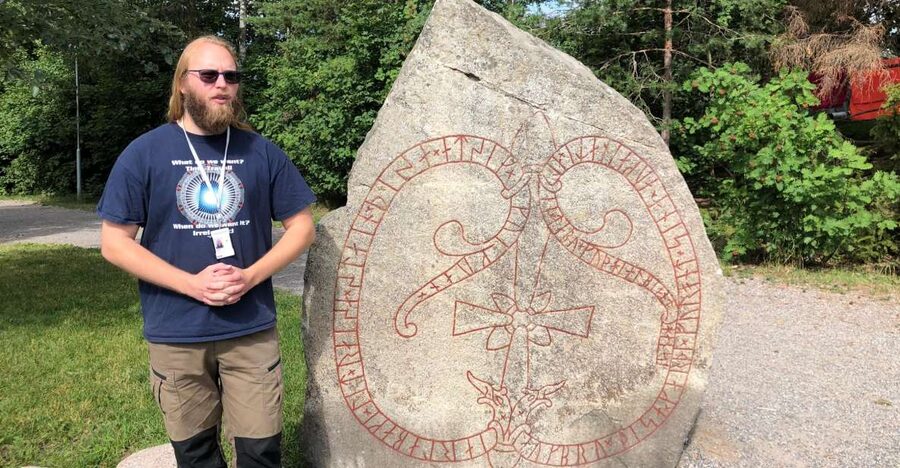
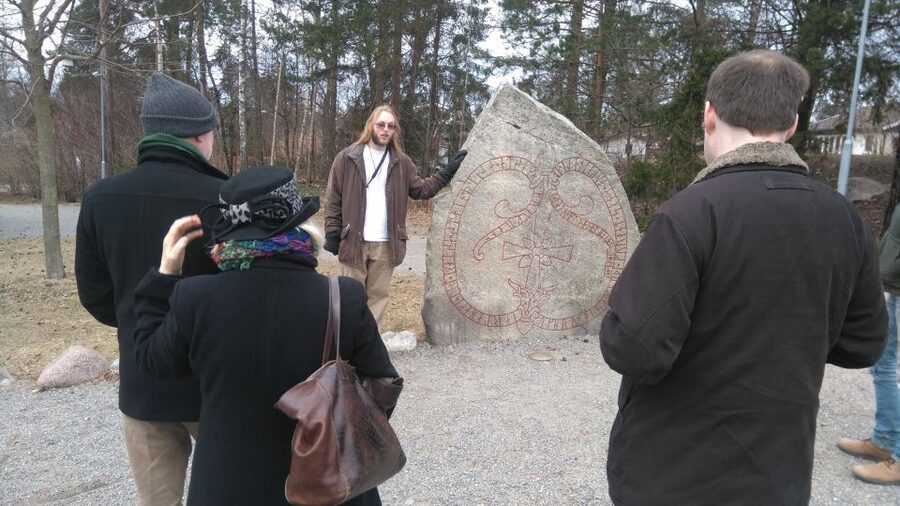
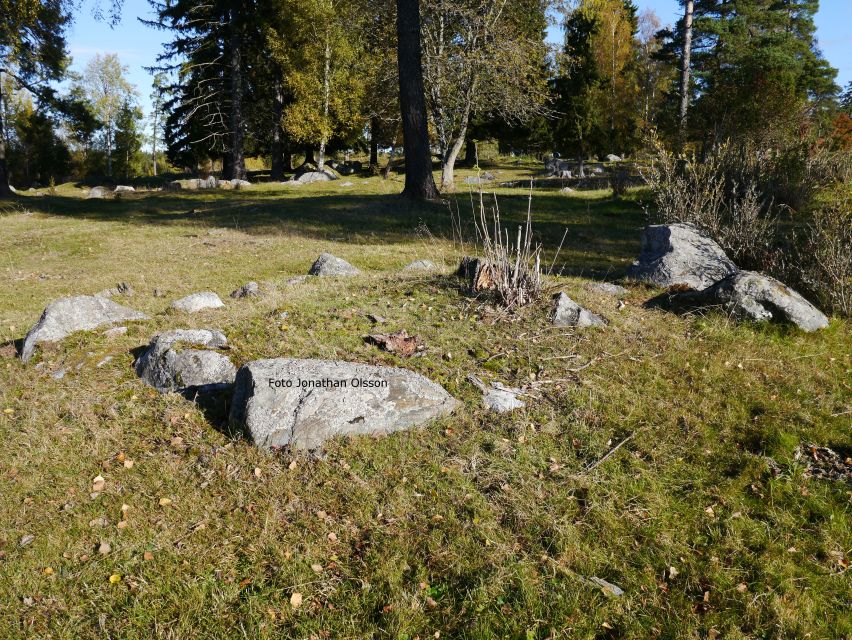
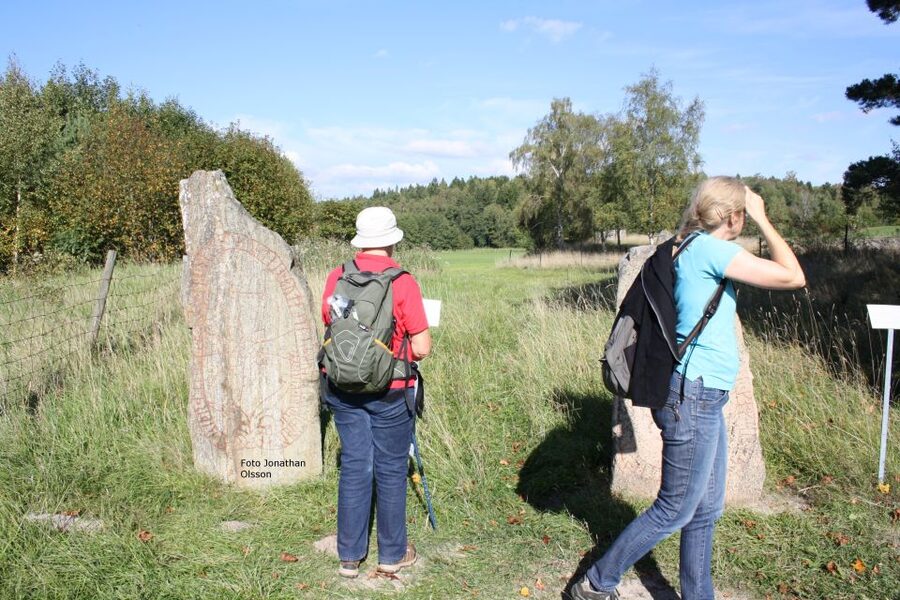
The first major stop is Broby bro, a famous burial ground connected with the Jarlabanke family and the woman known as Estrid. Here you encounter burial mounds and runestones in the setting where they were originally raised, not behind glass.
The guide explains Viking burial customs and the shift between pagan and Christian traditions. That contrast matters. The Viking Age was not one fixed culture with one set of beliefs. Customs changed, and the runestones help show how families presented themselves during that change.
The story of Estrid gives the place a personal focus. Instead of hearing only about unnamed warriors and ships, you learn about a powerful woman linked to the local ruling family. Her story also helps correct the popular image of the Vikings as men whose lives were defined only by raiding.
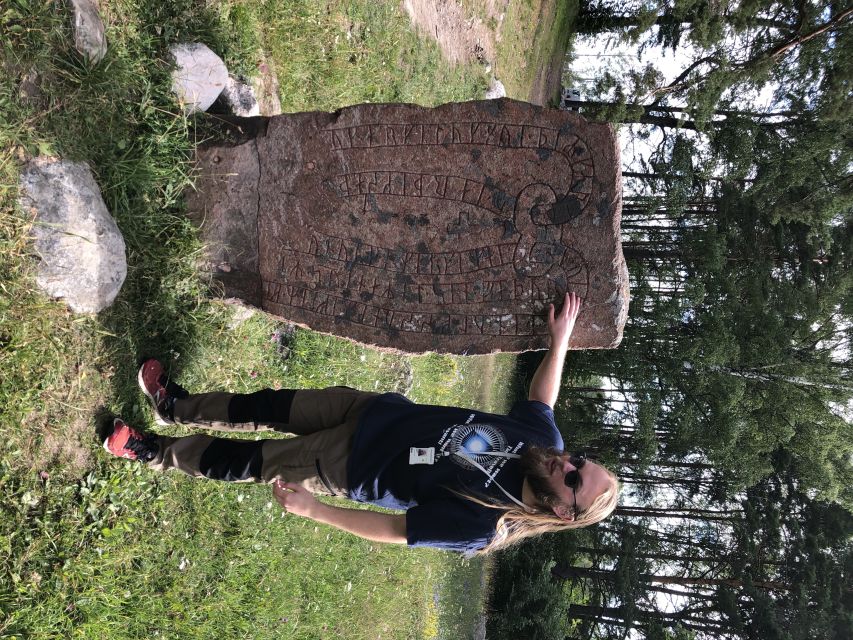
Give yourself time to look closely at the stones. Runic inscriptions are brief, but their purpose was public. They could honor the dead, record family connections, mark achievements, and announce who had the power and money to commission them. Your guide’s job is to connect those carved messages with the wider society around them.
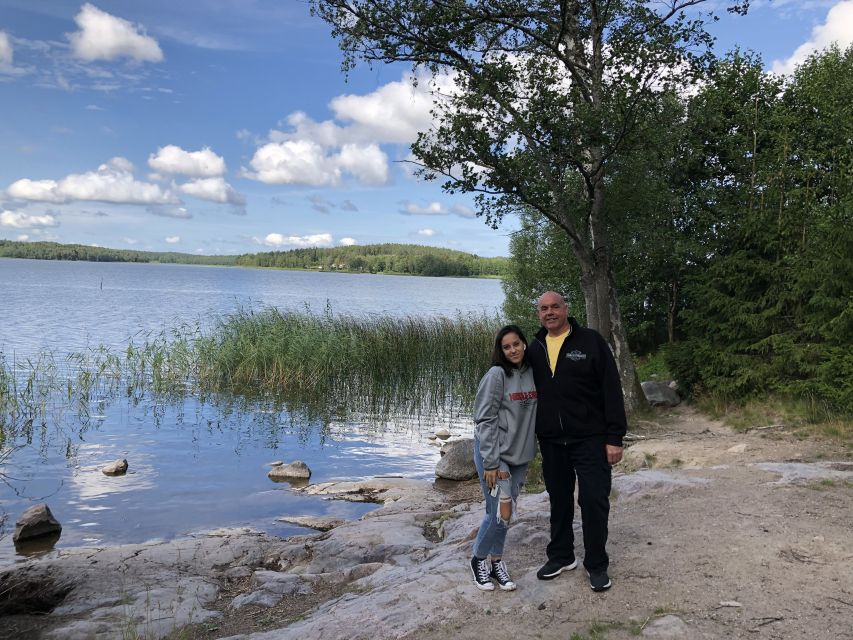
The site is outdoors, so your experience will depend on the season. In warm weather, the setting should be easier to explore at a relaxed pace. In winter, the same stop can become demanding. One January visit took place at about minus 10 degrees Celsius, with snow, forest paths, and a frozen lake nearby. Proper winter boots and warm clothing are not optional in those conditions.
The Jarlabanke Bridge and a Viking Family’s Public Power
The next stop takes you to the Jarlabanke Bridge, or what remains and has been reconstructed at the entrance to the old causeway. The bridge is a useful reminder that Viking life required more than ships and battle. People also needed roads, crossings, and maintained routes between settlements.
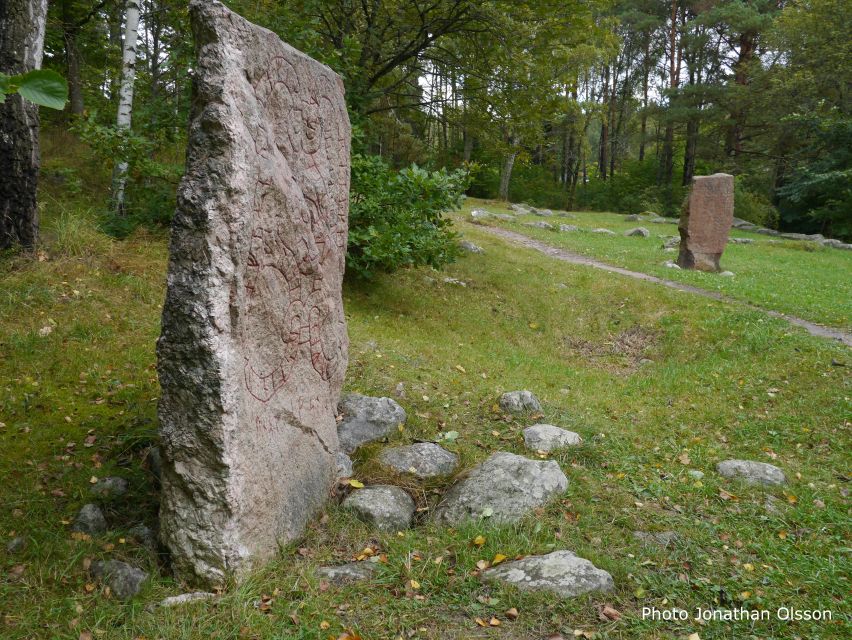
Here, raised runestones line the route and help you understand how public works could advertise private power. The guide tells the story of the Viking chief Jarlabanke and his clan, showing how a prominent family used construction and inscriptions to make its presence known.
The reconstructed bridge gives you something physical to read. You can see how a crossing fitted into a wider road system and why a causeway mattered in wet countryside. The point is not simply that Vikings built bridges. It is that roads and crossings helped connect communities, trade, family estates, and political authority.
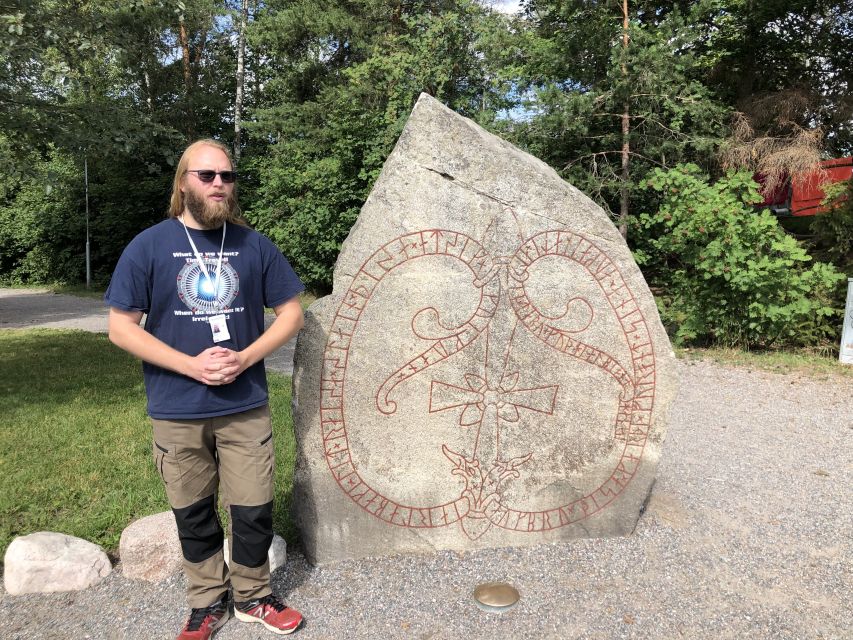
This is also a good place to ask questions about the runes. You will see several stones during the tour, many about 1,000 years old. Their weathered surfaces can be hard to interpret without help, so the guide’s explanation is central to the experience.
Do not expect every stone to look dramatic. Some are upright and easy to photograph, while others may require you to study their carving and position. The value comes from the connection between the object and its original setting. You are seeing a message placed beside a road that people actually used.
Arkils tingstad and How Viking Decisions Were Made
The final featured stop is Arkils tingstad, the remains of a Viking Age parliament or assembly site. This gives the tour a useful change of subject. After burial rituals and road building, you turn to law, authority, and community decisions.
The word parliament should not make you picture a modern government building. This was an outdoor meeting place where people gathered, and the remains help explain how Viking society was organized. Your guide describes how local groups worked and how assemblies fitted into the political life of the period.
For many people, this is the stop that gives the tour its broadest lesson. The Viking world was not simply a collection of raiders. It had rules, disputes, families, leaders, public meetings, religious customs, and systems for deciding matters. The site helps you see the Vikings as a functioning society.
Arkils tingstad is also a quieter place than the famous sites in Stockholm. You may find fewer obvious visual details here, so listen closely to the explanation. The significance lies in the layout and purpose of the site, as well as in the way it fits with the other stops.
Taken together, the three locations create a sensible sequence. Broby bro shows family memory and burial. Jarlabanke Bridge shows movement and public works. Arkils tingstad shows organized community life. That structure makes the tour easier to remember than a random list of old stones.
A few more things to do in Stockholm worth a look
- Stockholm: Ghost Walk and Historical Tour
★ 4.7 · 2,206 reviews - The Original Stockholm Ghost Walk and Historical Tour – Gamla Stan
★ 4.5 · 1,165 reviews - Stockholm: Old Town Historical Walking Tour
★ 4.9 · 344 reviews - Stockholm: Sigtuna and Uppsala Viking History Day Tour
★ 4.7 · 41 reviews
What the Countryside Adds to the History
The countryside is not just scenery between attractions. It gives you a better sense of why roads, bridges, and gathering sites mattered. You see the relationship between settlements, forest, open ground, water, and old routes in a way that a city museum cannot fully reproduce.
The setting also makes the tour feel more personal. You are not studying a distant civilization in a separate room. You are standing where people raised stones, buried relatives, traveled to meetings, and marked their family achievements.
Winter can make this especially striking. Snow, forest, and a frozen lake create a memorable setting, but they also bring real discomfort. If you are visiting Stockholm during a cold spell, bring insulated boots, warm layers, gloves, and a hat. The tour does not include food, so you should eat beforehand and carry anything you need for the three-hour outing.
In milder weather, the outdoor stops should be easier, but you still need clothing suited to country paths and open-air sites. The information provided does not specify the surface or walking distance at each stop, so anyone with particular mobility concerns should ask the operator before booking.
How Much the Three Hours Are Worth
The price is $138 per person. That is not a bargain basement excursion, but the value becomes clearer when you count what is included: hotel pickup and drop-off within the stated central area, a driver and guide, transport between several countryside sites, admission or site costs, and a small group capped at 16 people.
You are paying for access to several scattered places in one compact outing. Organizing the same route independently could mean researching transport, working out connections, and arriving without the historical explanation that makes the stones meaningful.
The price makes less sense if you want a long, slow visit at each location. Three hours includes the drive from Stockholm and the time spent at several stops, so the itinerary must keep moving. You will see a good sample of the area, but you will not have hours to linger at every runestone or read every inscription.
For a first visit to Stockholm, I think the tour offers good value if Viking history is high on your list and you want to get outside the city. It is less useful if you prefer indoor museums, independent wandering, or a full-day archaeological experience.
Who Will Enjoy This Tour Most
I would choose this trip if you want historical context along with actual sites. It suits visitors who like seeing where events happened rather than only viewing objects in a museum.
It is also a good fit for anyone curious about the Vikings beyond television stereotypes. The focus is on burial practice, religious change, family power, roads, bridges, runic writing, and public assemblies. You get a more grounded picture of Viking society.
Families with older children may find the runestones and burial ground interesting, especially if the children enjoy stories about named people such as Estrid and Jarlabanke. The short duration helps, though the outdoor setting and winter cold may be challenging for young children.
History students and repeat visitors to Stockholm can also get value from the trip because it reaches places that are not part of a standard city sightseeing route. On the other hand, serious archaeology enthusiasts may want more time, specialist detail, and the freedom to study each site independently.
The tour is not designed around food. No meal is included, although Erik has provided Swedish food recommendations on some departures. Eat before pickup, and treat any restaurant advice as a useful extra rather than part of the booking.
Practical Details Before You Reserve
Pickup is available from hotels and accommodation within 5 kilometers of Stockholm Central Station. Check your exact address before reserving, since a hotel farther out may not qualify.
The tour lasts three hours, and starting times depend on availability. The guide speaks English. Transport, the driver, guide, and listed site costs are included, while food and gratuities are not.
The booking terms are flexible: you can cancel up to 24 hours before departure for a full refund, and the reserve-now, pay-later option lets you hold a place without paying immediately. Those terms are useful if your Stockholm schedule is still shifting.
Plan around the weather. The tour is mainly outdoors, and cold conditions can affect how comfortable you feel at the burial ground, bridge, and assembly site. Good footwear matters, especially if paths are snowy or wet.
Should You Book the Viking Culture and Heritage Tour?
Book it if you want a compact, well-organized introduction to Viking life outside Stockholm. The strongest parts are the genuine sites, the named stories of Estrid and Jarlabanke, the runestones, and the explanation of how a Viking assembly worked.
Think twice if you want a relaxed full-day outing or dislike cold-weather sightseeing. The three-hour format is efficient, but it leaves limited time at each stop.
For most history-minded visitors, I would choose this over a purely fictional or heavily staged Viking attraction. You see real burial grounds, old roads, carved stones, and an assembly site, then return to Stockholm with a clearer idea of how Viking communities lived and governed themselves.
FAQ
How long is the Viking Culture and Heritage Tour?
The tour lasts three hours, including transportation between Stockholm and the countryside sites.
Is hotel pickup included?
Yes. Pickup and drop-off are included for hotels and accommodation located within 5 kilometers of Stockholm Central Station.
Which sites does the tour visit?
The route includes the Broby bro burial ground, the Jarlabanke Bridge and causeway area, and the remains of the Viking assembly site at Arkils tingstad.
Is the tour conducted in English?
Yes. The live tour guide speaks English.
Is food included in the price?
No. Food is not included, and you should eat before the tour or bring anything you need. Gratuities are also not included.
Can I cancel the booking?
Yes. You can cancel up to 24 hours before the tour for a full refund. The reserve-now, pay-later option is also available.
Just added in Stockholm
- Stockholm: Winter City Kayaking Tour★ 5.0 · 16 reviews
- Welcome to Stockholm: Private Tour with a Local★ 4.5 · 291 reviews
- Stockholm: The Skansen Aquarium Entry Ticket★ 4.6 · 83 reviews
- Stockholm: Top Highlights Bike Tour★ 4.3 · 243 reviews
- Stockholm: Self Guided GPS Bike Tour★ 4.2 · 38 reviews
- Stockholm: Sunset Hike in Tyresta National Park with Meal★ 4.8 · 126 reviews
- Stockholm: Sunset Kayak Tour in the City + Swedish Fika★ 4.8 · 31 reviews
- Stockholm: Private Custom Walking Tour With A Tour Guide★ 4.9 · 56 reviews
Viking History Tours, compared.

Viking Village, Nærøyfjord Cruise & Flåm Railway
Read our review →

Full-Day; Castle, Palace, Cathedral & Viking ships Tour
Read our review →
Stockholm Viking History Full Day Tour to Sigtuna + Uppsala
Read our review →
Viking Ship Sailing Experience and Sightseeing Trip
Read our review →Browse the lists this tour appears in