
Reviewed · MUSEUMS
Millesgården Museum: sculpture park and art galllery
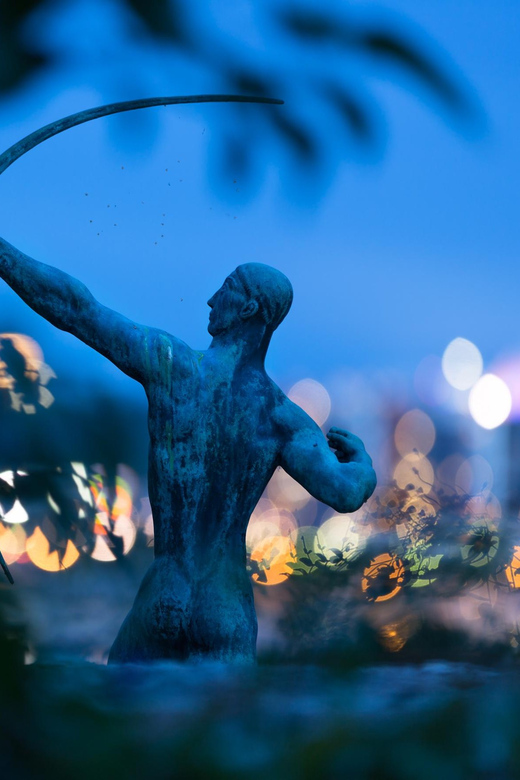
Millesgården is the kind of museum where the setting matters as much as the art. On Lidingö, just outside central Stockholm, Carl Milles’ sculptures rise among flowers, terraces, fountains, and open views toward the city. I like the outdoor-first experience and the chance to see the artist’s actual home and studios, not just finished works in a white gallery.
I also like Anne’s House, with its Svenskt Tenn interiors by Estrid Ericson and Josef Frank, and the easy mix of art, coffee, and fresh air. The main drawback is that the audio guide may not be obvious at first, and a gallery exhibition change can make part of the visit feel incomplete.
Key points to know before you go
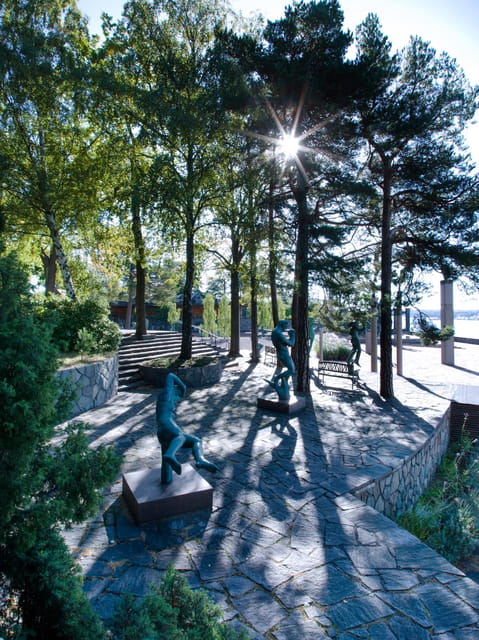
- Around 100 Carl Milles sculptures: See roughly ten large fountain groups among flowers, terraces, and sweeping views.
- The artist’s working world: Enter Carl’s Large Studio, the blue-tiled breakfast room, the Pompeii-inspired Gallery, and rooms filled with classical objects.
- Anne’s House is a design stop: Its interiors were decorated by Estrid Ericson and Josef Frank of Svenskt Tenn.
- A simple trip from Stockholm: Take the subway to Ropsten, then a bus or the Lidingöbanan tram to Torsvik or Baggeby.
- Allow most of a day: The grounds, homes, gallery, café, and shop reward a relaxed pace rather than a rushed stop.
- Bring a card: Millesgården is cash-free, including the restaurant and museum shop.
Why Millesgården feels different from a normal museum
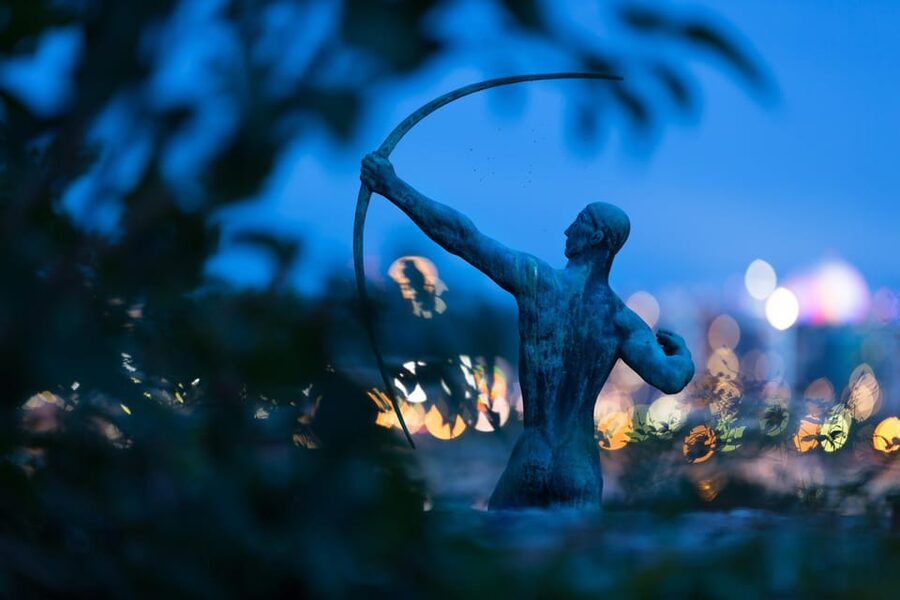
At many art museums, you move from room to room and study works against plain walls. Millesgården reverses that pattern. You first meet the sculptures outdoors, where fountains, flowers, stone terraces, and the view toward Stockholm become part of the presentation.
That matters because Carl Milles created many of his works with movement and open space in mind. A sculpture can look very different when it rises beside water or frames a patch of sky. The park gives you time to walk around the pieces and see their shapes from several angles.
The mood is peaceful rather than formal. You can make a cultural visit of it, but you can also treat it as a pleasant outing with a garden walk, lunch, and coffee. The combination makes Millesgården especially appealing if you want art without spending an entire day indoors.
The admission price is about $19 per person. I consider that a fair value if you use the whole site, since admission covers the sculpture park, Artist’s Home, antiques collection, Anne’s House, and Art Gallery. It is less compelling if you only have time for a quick look at the garden, so plan around the museum’s 11:00 to 17:00 opening hours.
A few more things to do in Stockholm worth a look
- Stockholm: Skansen Open-Air Museum Admission Ticket
★ 4.5 · 3,427 reviews - Stockholm Pass: Save up to 50% – Includes Vasa Museum Ticket
★ 4.1 · 2,392 reviews - Stockholm: Nobel Prize Museum and Exhibition Entry Ticket
★ 4.3 · 994 reviews
Reaching Millesgården from central Stockholm
Millesgården is in Lidingö, roughly 20 minutes from T-Centralen by public transportation. The usual route is the subway to Ropsten, followed by one of several buses to Torsviks Torg. Buses 201, 202, 204, 206, 211, 212, and 221 all serve that stop.
From Torsviks Torg, allow about seven minutes to walk to the museum. Follow the signs, since the final stretch is on foot rather than directly at the entrance.
You can also take the Lidingöbanan tram from Ropsten to Torsvik or Baggeby. Millesgården sits between those two stations, and each requires about a seven-minute walk. Check current departures at SL before setting out, as public transportation times can change.
Driving is possible, with free parking at Herserudsvägen 32 just outside the main entrance. Cycling is another option, thanks to a cycle path across the Lidingö Bridge. The route is practical for an active day, but public transportation is likely the simplest choice for most people staying in central Stockholm.
Starting in the sculpture park
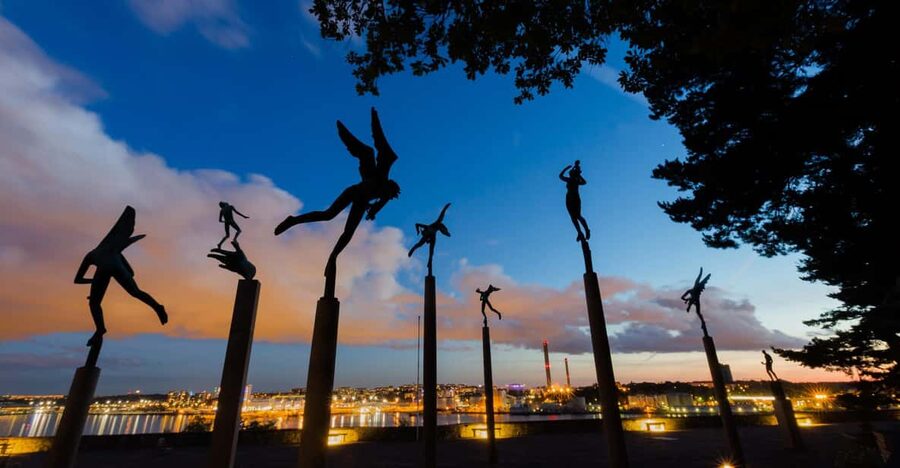
Give the outdoor grounds your attention before heading into the buildings. The park contains around one hundred sculptures by Carl Milles, including about ten larger fountain groups. The works are spread through terraces and garden areas, so the visit feels like a walk through a carefully arranged outdoor collection.
The fountains are among the strongest parts of the experience. Water adds sound and motion, while flowers soften the hard stone and bronze. The result is calm and theatrical at the same time. You do not need a special interest in sculpture to appreciate the way the pieces share space with the gardens.
The terraces also provide views of Stockholm. This is one of the best reasons not to rush directly indoors. Stop at the open areas, look across the water and city, then return to the sculptures with that wider view in mind.
Because the park is central to the experience, comfortable shoes will help. You are walking between outdoor works, terraces, buildings, and the gallery. The museum is wheelchair accessible, but the garden’s paths and changing levels may still make the pace more comfortable for some visitors than others.
Inside Carl and Olga Milles’ home
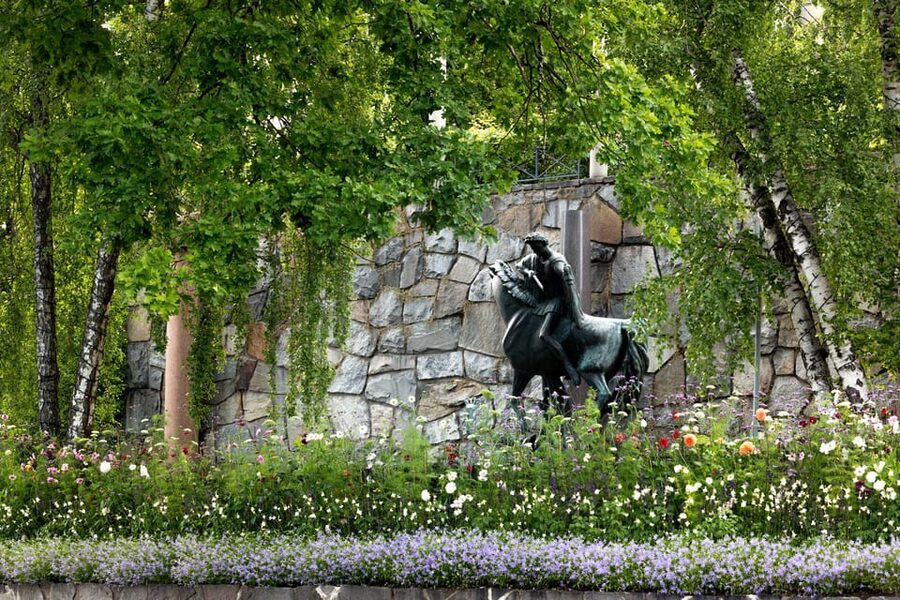
The Artist’s Home gives the museum a personal scale. Instead of seeing Carl Milles only as a famous sculptor, you get a sense of the rooms and objects around his daily creative life with Olga Milles.
The Large Studio is a key stop. This is where Carl worked on large sculptures, and its size helps explain the physical demands of his art. Seeing a working studio also adds useful context to the outdoor pieces: they were not made as small, isolated objects, but as substantial works requiring space, planning, and long periods of labor.
The breakfast room, clad in blue Dutch tiles, offers a more intimate contrast. It is a domestic room, yet its design has a strong visual character. The color and tilework make it one of the easiest interiors to remember.
You will also find a Pompeii-inspired Gallery and Carl’s collection of classical sculptures and objects. The antiques collection adds another layer to the visit. It shows the sources of interest that surrounded Milles and helps you see his work as part of a wider conversation with older art.
The home is not simply a display of furniture. It connects the sculpture park to the people who lived and worked there. I would give the house enough time to notice the rooms rather than treating it as a short passage between outdoor areas.
Same base, a different kind of day out:
- Stockholm: City Archipelago Sightseeing Cruise with Guide
★ 4.3 · 10,798 reviews - Stockholm: Archipelago Boat Tour
★ 4.4 · 3,110 reviews - Stockholm: Highlights Boat Tour
★ 4.3 · 2,542 reviews - Stockholm: Ghost Walk and Historical Tour
★ 4.7 · 2,206 reviews
Anne’s House and the Svenskt Tenn interiors
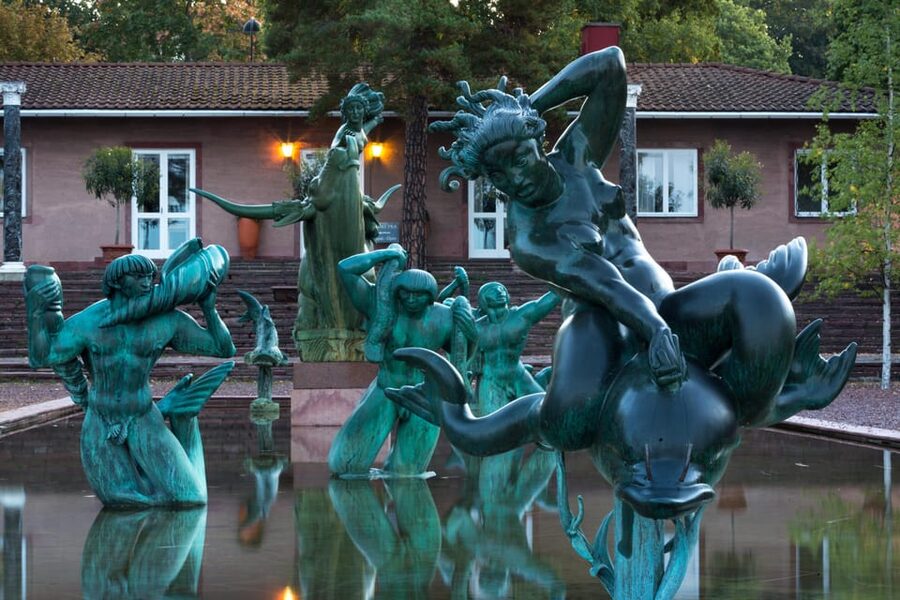
Anne’s House offers a change of tone after Carl Milles’ studios and sculpture terraces. The house was decorated by Estrid Ericson and Josef Frank, the leading names associated with Svenskt Tenn.
This stop is particularly useful if you enjoy interior design, textiles, and domestic spaces. Carl Milles’ world is dominated by monumental sculpture and classical references. Anne’s House brings you into a more carefully decorated home environment, where furniture, color, and pattern shape the experience.
The house also broadens the museum beyond one artist. You are not only following Carl Milles’ career. You are seeing how different Swedish creative traditions can meet in one setting: sculpture, architecture, antiques, and interior design.
I would not skip Anne’s House simply because it is smaller than the main Artist’s Home. Its appeal comes from the detail and the contrast. If you are traveling with someone who is less interested in sculpture, this may be the part that catches their attention most.
The Art Gallery and changing exhibitions
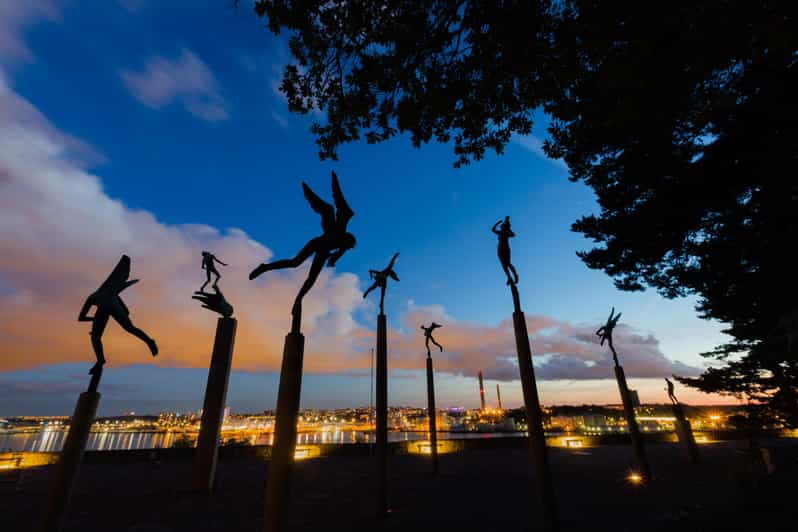
The Art Gallery provides a more conventional museum stop after the garden and historic homes. Its exhibitions change, so the exact subject will depend on your visit.
That flexibility can be a plus, since repeat visits may offer something different. It can also be a limitation if an exhibition is being installed during your visit. One recent experience found the gallery in the middle of a changeover, which meant the visit did not feel fully complete.
I would check the current exhibition status before planning your day around the gallery. Even if the exhibition is limited, the sculpture park and historic buildings remain the core of Millesgården. Still, knowing what is on view helps you judge the $19 admission more accurately.
The museum shop follows the gallery and is a natural final stop. It gives you a chance to browse before leaving, but remember that the entire museum is cash-free. You can pay by credit or debit card in the shop and restaurant.
Food, timing, and how long to stay

Millesgården Lanthandel is available for lunch or an afternoon coffee. That makes it easier to treat the museum as a full outing rather than a quick cultural stop squeezed between other Stockholm sights.
The best plan is to arrive near opening time, walk the sculpture park, visit the Artist’s Home, stop for food or coffee, then continue to Anne’s House and the Art Gallery. You do not need to follow that exact order, but a relaxed sequence works better than trying to see everything in one fast circuit.
The stated duration is one day, though you can adjust your visit to fit your schedule. The grounds alone can be a short visit, while the full combination of gardens, homes, gallery, café, and shop can comfortably fill several hours.
I would avoid arriving too close to closing time. The museum is open Tuesday through Sunday from 11:00 to 17:00 all year, and the site includes enough separate areas that a late start may force you to choose between the homes and the gallery.
Audio guide advice and practical access
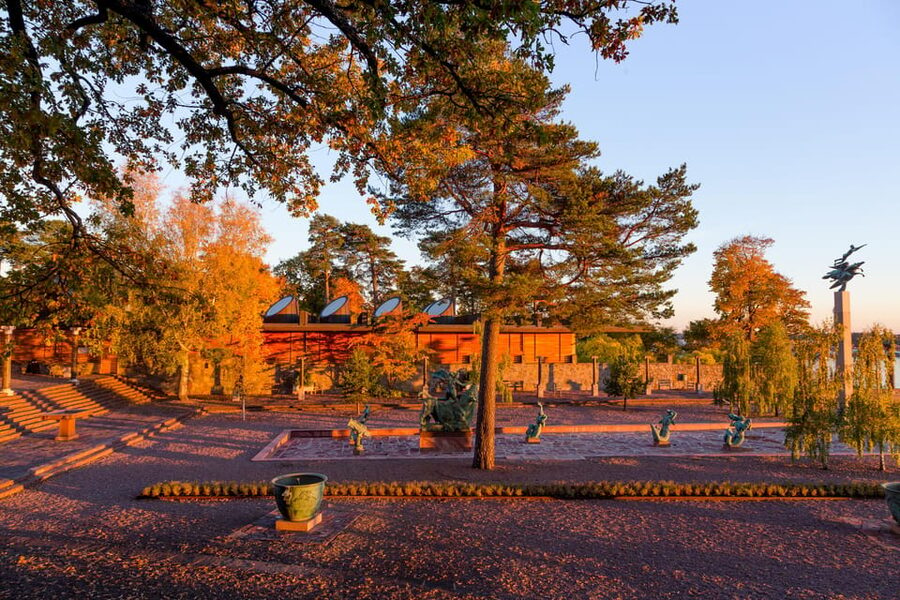
Swedish and English audio guides are included. If you want more background on the art and buildings, the guide can help connect the separate parts of the visit.
Pay attention at reception and ask where to begin with the audio guide. The access point may not be clearly explained at the start, and one visitor found the audio link only after noticing it on a wall in the studio. That is a small issue, but it matters because missing the opening information can make the tour feel less useful.
If you have booked a guide, ask at reception for meeting instructions. The supplied information does not identify a specific guide by name, so you should confirm the arrangements on arrival rather than expect a named person or fixed meeting spot.
Millesgården is wheelchair accessible. Large bags, oversize luggage, and luggage in general are not allowed, so this is not a good place to bring suitcases or bulky day bags. Plan to arrive with only what you need for the visit.
Who will get the most from Millesgården
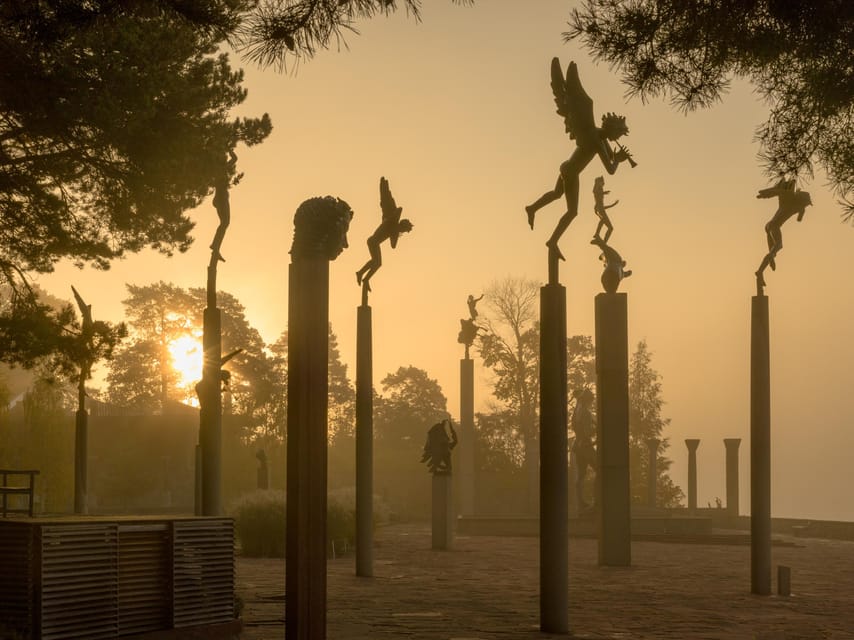
I would recommend Millesgården to you if you enjoy sculpture, gardens, historic homes, Swedish design, or quiet museum visits with room to wander. It also works well for people who find a full day of indoor galleries tiring.
The site suits couples, solo visitors, families with older children, and anyone looking for a change from central Stockholm. The fountains and garden paths make the experience less rigid than a standard museum, while the studios and antiques give the visit enough substance for serious art lovers.
It may be less suitable if you want a tightly guided, chronological account of Carl Milles’ life. The experience is spread across several settings, and the audio guide may require a little initiative. It is also not ideal if your Stockholm schedule is so tight that you can spare only a few minutes.
The 4.8 rating from 20 reviews reflects the site’s main strength: the combination of sculpture and setting. The most praised elements are the terraces, fountains, beautiful gardens, and the striking overall effect of the homes and studios. Those are the parts I would prioritize.
Should you book Millesgården?
Book it if you want art in an elegant outdoor setting and can give the visit at least a few hours. The sculpture park is the star, but Carl Milles’ home, Large Studio, antiques collection, Anne’s House, and the gallery make the $19 admission worthwhile when you see the full site.
If your main interest is only current exhibitions, check the gallery schedule first. If you dislike gardens, historic interiors, or walking between different parts of a museum, this may not be your best Stockholm outing.
For most visitors, though, Millesgården is an easy and rewarding side trip. Take the short ride from central Stockholm, slow down among the fountains, and leave enough time for the rooms where the art was made.
FAQ
Where is Millesgården Museum?
Millesgården is in Lidingö, in Stockholm County, Sweden.
How much does admission cost?
The stated price is $19 per person.
How long is the experience?
The admission is valid for one day. You can visit the main areas at a quicker pace, but the sculpture park, homes, gallery, café, and shop can fill several hours.
What are the opening hours?
Millesgården is open Tuesday through Sunday from 11:00 to 17:00 all year.
How do I reach Millesgården by public transportation?
Take the subway to Ropsten, then bus 201, 202, 204, 206, 211, 212, or 221 to Torsviks Torg. From there, walk about seven minutes. You can also take the Lidingöbanan tram from Ropsten to Torsvik or Baggeby, followed by a seven-minute walk.
Is parking available?
Yes. Free parking is available at Herserudsvägen 32, just outside the main entrance.
Is an audio guide included?
Yes. Audio guides are included in Swedish and English. Ask at reception where to access the guide before starting.
Is Millesgården wheelchair accessible?
Yes, the museum is wheelchair accessible.
Can I pay with cash?
No. Millesgården is cash-free. You can pay by credit or debit card in the museum shop and restaurant.
Just added in Stockholm
- Stockholm: Winter City Kayaking Tour★ 5.0 · 16 reviews
- Welcome to Stockholm: Private Tour with a Local★ 4.5 · 291 reviews
- Stockholm: The Skansen Aquarium Entry Ticket★ 4.6 · 83 reviews
- Stockholm: Top Highlights Bike Tour★ 4.3 · 243 reviews
- Stockholm: Self Guided GPS Bike Tour★ 4.2 · 38 reviews
- Stockholm: Sunset Hike in Tyresta National Park with Meal★ 4.8 · 126 reviews
- Stockholm: Sunset Kayak Tour in the City + Swedish Fika★ 4.8 · 31 reviews
- Stockholm: Private Custom Walking Tour With A Tour Guide★ 4.9 · 56 reviews
Museums, compared.


Perlan Museum Wonders of Iceland Entrance Ticket
Read our review →
Stockholm Pass: Save up to 50% – Includes Vasa Museum Ticket
Read our review →



Hop-On Hop-Off Bus and Perlan Museum Entry Ticket
Read our review →Browse the lists this tour appears in