
Reviewed · MUSEUMS
Skip the Line: Disgusting Food Museum Entrance Ticket
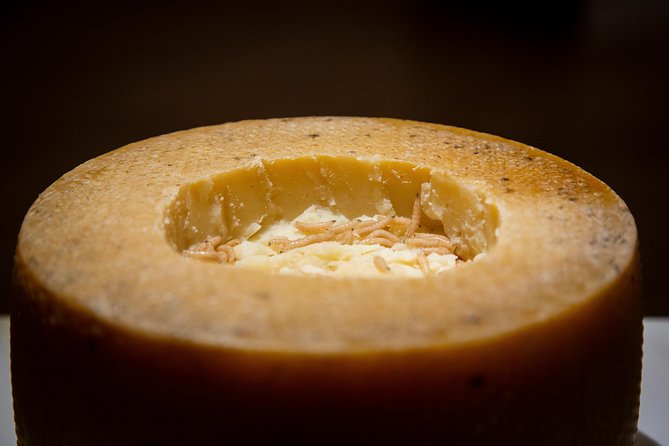
Malmö’s Disgusting Food Museum turns food curiosity into a hands-on challenge. You’ll move through displays of 80 foods from around the world, then decide how brave you feel at the smell-and-taste stations. The point is not simple shock. It is seeing how culture, memory, and personal taste shape what we call disgusting.
I like the chance to taste and smell the exhibits, rather than only read about them. I also like the friendly, interactive staff, who help keep the mood light when the food gets truly unpleasant. The museum is smaller than some people expect, and the final hot-sauce tasting may feel less inventive than the earlier samples.
Key points to know before you go
- Eighty unusual foods fill the museum, giving you plenty to inspect even though the space is compact.
- Smelling and tasting are optional challenges, with notorious items such as stinky cheese and sweets made with metal cleansing chemicals.
- The staff make the visit interactive, which helps children and adults take part at their own comfort level.
- Plan on one to two hours, making this an easy addition to a day in Malmö.
- Advance booking costs $25.25 per person and helps guarantee admission.
- German information is not provided, so visitors who need German text may find the displays less useful.
What the Disgusting Food Museum is really about
This is not a conventional museum where you quietly study objects behind glass. It is built around your reactions. You see food that people elsewhere consider normal, learn why it is eaten, and then face the question of whether you are willing to smell or taste it yourself.
That idea gives the museum more substance than its cheeky name suggests. Food disgust is not the same everywhere. A dish that seems impossible to you may be a treasured part of another culture’s cooking, while familiar foods can look strange to someone from a different background.
The museum uses that contrast to make a simple point: taste is learned. Your family, community, religion, and past meals all help decide what feels safe or revolting. The displays are meant to make you laugh, but they also encourage you to think before judging another food tradition.
The collection includes 80 examples, so you get a broad look at unusual ingredients, preparation methods, and food customs. You should not expect a large national museum. The venue is more like a compact boutique attraction, with a concentrated route rather than room after room of objects.
That smaller size is both a strength and a limitation. I like that you can see the full collection without giving up half a day. At the same time, the $25.25 admission may feel high if you expect a large museum with extensive galleries.
A few more things to do in Sweden worth a look
- The Nordic Food Walk Stockholm
★ 4.5 · 642 reviews - Stockholm Food Tour
★ 4.5 · 404 reviews - Malmö: Disgusting Food Museum Entrance Ticket
★ 4.5 · 234 reviews
Exploring 80 foods in a compact space
Your visit begins with the main exhibition. The displays introduce some of the world’s most notorious foods and explain what makes each one challenging for outsiders. The emphasis is on the food itself and your response to it, not on polished art objects or grand architecture.
Because the museum is compact, you can usually take in the displays at a steady pace. Allow roughly one to two hours. If you read every panel, discuss each example with your group, and try the tasting options, you will spend longer than someone who simply walks through.
I would plan this as a focused stop rather than the main event of an entire day in Malmö. It works well between other activities, especially because it does not demand a long time commitment. You get a distinct experience without booking a full-day excursion.
The exhibits are aimed at both children and adults. Families can make a game of deciding which foods look worst, which smell most alarming, and which one someone might actually taste. The subject is designed to provoke laughter, but younger children may still find some displays or smells too strong, so use your judgment.
The experience also suits adults who enjoy food culture, unusual museums, or a little controlled discomfort. You do not need specialist knowledge. Curiosity and a willingness to inspect strange things are enough.
One practical point matters here: information is not presented in German. If German text is important to you, you may get less from the explanatory side of the exhibition. The tasting and visual displays still offer plenty to do, but language can affect how much context you take away.
The tasting bar is the heart of the visit
The most memorable part is the tasting and smelling section. You can test your senses with foods chosen for their strong reputation, including the world’s stinkiest cheese. The museum also offers sweets made with metal cleansing chemicals, an example that sounds alarming before you even reach the counter.
This is where the experience becomes personal. Reading about an unpleasant food is easy. Putting it near your nose, or deciding to taste it, gives you a much clearer idea of how your own limits work. You can take part at your own pace, which is important because not every sample will appeal to every person.
The tasting bar also helps the museum avoid becoming just a series of photographs and labels. Your group will have something to discuss right away. One person may be willing to try a sample while another is happy to smell it, watch the reaction, and move on.
The staff are a major part of this section. They are described as very interactive and help make the tasting feel playful instead of awkward. That matters when the foods are designed to produce strong reactions. Good guidance can turn a nervous moment into a shared joke.
The final hot-sauce section is less universally satisfying. Some visitors may enjoy finishing with heat, but if you expect another unusual food discovery, six hot sauces can feel like a weaker ending. I would treat that part as an extra challenge rather than the main reason to book.
You should also remember that tasting is not the whole ticket. The displays provide the context, and the tasting bar works best after you have seen why the foods are considered unusual. If you rush straight to the samples, you may miss the cultural side that gives the museum its purpose.
Why the staff matter so much
This type of attraction depends heavily on its atmosphere. A museum about disgusting food could easily become a quick photo stop with a few gross jokes. The interactive staff help give it energy and make it easier for you to take part without feeling pressured.
That is especially useful for families and mixed groups. Some people will want to try everything. Others will prefer to observe. A welcoming approach lets both types enjoy the same visit.
No guide names are provided for this experience, so you should not expect a named private tour led by a particular expert. The interaction comes from the museum team on site, rather than from a dedicated sightseeing guide who accompanies you around Malmö.
This distinction matters when you compare the ticket with a guided food tour. You are paying for entry to a self-contained museum experience, not for a long walking tour, a city history lesson, or a meal. The staff add personality, but the visit remains centered on the exhibition.
Same base, a different kind of day out:
- Stockholm: City Archipelago Sightseeing Cruise with Guide
★ 4.3 · 10,798 reviews - Stockholm: Skansen Open-Air Museum Admission Ticket
★ 4.5 · 3,427 reviews - Stockholm: Archipelago Boat Tour
★ 4.4 · 3,110 reviews - Stockholm: Highlights Boat Tour
★ 4.3 · 2,542 reviews
Is $25.25 a fair price?
At $25.25 per person, this is not a bargain museum ticket for a quick look. The value depends on what you want from a Malmö attraction.
I think the price is easier to justify if you plan to use the full one to two hours, try several samples, and enjoy the social side of the visit. The museum offers something you cannot easily duplicate at a regular food market. You are paying for an unusual collection, controlled tasting opportunities, and a story that gives each food more meaning.
The value is weaker if you expect a large building, many rooms, or a long guided program. The museum is smaller than some first-time visitors imagine. Think of it as a boutique experience with a concentrated subject, not a major institution that fills an afternoon.
For a family, the total cost rises quickly, so I would consider how interested everyone is before booking. Children who enjoy strange foods and sensory challenges may think it is terrific. Anyone sensitive to strong smells or reluctant to taste unfamiliar items may get less from the ticket.
The high overall score of 4.8 from 359 ratings, along with a 96 percent recommendation rate, suggests that the concept works well for many people. Still, those figures should not hide the main tradeoff: the museum is compact, and the price makes most sense when you enjoy the interaction rather than measure value by square meters.
Timing, transport, and planning your visit
The museum is near public transportation, so you can fit it into a Malmö day without treating it as a difficult out-of-town trip. The supplied details do not name a specific bus, train, or tram stop, so check the current local route before setting out.
The usual visit lasts one to two hours. I would leave room for conversation and tasting rather than schedule another activity immediately afterward. Strong smells, curious food samples, and a final hot-sauce test can make the stop feel longer than a standard gallery visit.
Tickets are often booked about nine days ahead. That is useful planning information, especially if your Malmö schedule is fixed or you are visiting during a busy period. Booking in advance is the sensible choice if you want a particular time and do not want to risk arriving without space.
Confirmation is provided at booking. The experience is also described as suitable for most people, and most participants can take part. No additional access details are supplied, so if you have a specific mobility, sensory, dietary, or medical concern, ask the provider before purchasing.
The weather policy is unusual for an indoor museum. The experience requires good weather, and if poor weather causes cancellation, you can choose another date or receive a full refund. The provider may also cancel if the minimum number of participants is not met, with a different date, another experience, or a full refund offered.
You can cancel for a full refund up to 24 hours before the start time. Inside that 24-hour window, refunds are not available and changes are not accepted. Since cut-off times use Malmö local time, check the time carefully if you are booking from another time zone.
Who will enjoy this unusual Malmö stop?
I would recommend it most strongly to you if you enjoy:
- Food culture presented in an unconventional way
- Interactive museums rather than quiet galleries
- Family activities that give children something to talk about
- Strange smells, bold tasting challenges, and playful competition
- Short attractions that fit around a larger city itinerary
It is also a good pick for a group with mixed interests. Someone who enjoys food anthropology can focus on the cultural explanations, while someone else can concentrate on the tasting challenge. The museum gives you several ways to take part.
I would be more cautious if you dislike strong odors, are uneasy around unfamiliar foods, or expect a full meal. This is not a restaurant and not a standard culinary tour. The food is selected for its shock value and cultural interest, not for comfort or refinement.
Language may also affect your decision. The lack of German text is a real drawback for German-speaking visitors who want to understand every explanation. English-speaking visitors and those comfortable with the available information will likely find the displays easier to follow.
Should you book the Disgusting Food Museum?
Book it if you want one of Malmö’s most unusual short activities and you are willing to treat the ticket as entertainment, cultural education, and a tasting challenge in one. The interactive staff, 80-food collection, and chance to smell and taste notorious items give it more to offer than a simple novelty stop.
Before paying $25.25, be realistic about the size. This is a small, focused museum, not a large attraction that will occupy most of your day. If that sounds right, reserve ahead and allow about two hours so you can read the displays, test the samples, and enjoy the reactions around you.
FAQ
How long does the Disgusting Food Museum visit take?
The visit takes approximately one to two hours, depending on how closely you examine the 80 foods and how much time you spend at the tasting bar.
How much does admission cost?
Admission costs $25.25 per person.
Can I taste the foods at the museum?
Yes. Adventurous visitors can smell and taste selected foods, including notoriously strong or unusual examples. Tasting is available for those who want to take part.
Is the museum suitable for children?
Yes. The museum is family-friendly and aimed at both children and adults. Since some smells and foods are intentionally unpleasant, each family should decide what suits its children.
Is the museum near public transportation?
Yes. The museum is located near public transportation.
What is the cancellation policy?
You can cancel at least 24 hours before the experience start time for a full refund. Cancellations or changes made less than 24 hours before the start time are not refunded or accepted.
More Museums in Sweden
- Stockholm Pass: Save up to 50% – Includes Vasa Museum Ticket
★ 4.1 · 2,392 reviews - Stockholm: Nobel Prize Museum and Exhibition Entry Ticket
★ 4.3 · 994 reviews - Stockholm: Fotografiska Museum Entrance Ticket
★ 4.5 · 702 reviews - Stockholm: The Viking Museum Exhibition and Viking Ride
★ 4.5 · 667 reviews
Just added in Sweden
- Abisko/Björkliden: Panorama Snowmobile Tour with Snacks★ 4.9 · 60 reviews
- Abisko: Great Outback Snowmobile Tour with Lake Abiskojaure★ 5.0 · 24 reviews
- Abisko: Fjord Sightseeing and Photography Tour★ 4.8 · 48 reviews
- Abisko: Snowmobile Sightseeing Tour★ 4.9 · 43 reviews
- Abisko: Aurora Snowshoeing★ 4.7 · 59 reviews
- Gothenburg: 24 Hour Hop On–Hop Off Bus and Boat Tour★ 4.3 · 37 reviews
- Abisko National Park: Scenic Morning Hike with Transfer★ 4.7 · 172 reviews
- Malmö: 3-Hour Guided Walking Tour★ 4.4 · 34 reviews
Museums, compared.


Perlan Museum Wonders of Iceland Entrance Ticket
Read our review →
Stockholm Pass: Save up to 50% – Includes Vasa Museum Ticket
Read our review →




Hop-On Hop-Off Bus and Perlan Museum Entry Ticket
Read our review →Browse the lists this tour appears in