
Reviewed · HOP-ON HOP-OFF BUS TOURS
Oslo: City Sightseeing Hop-On Hop-Off Bus Tour
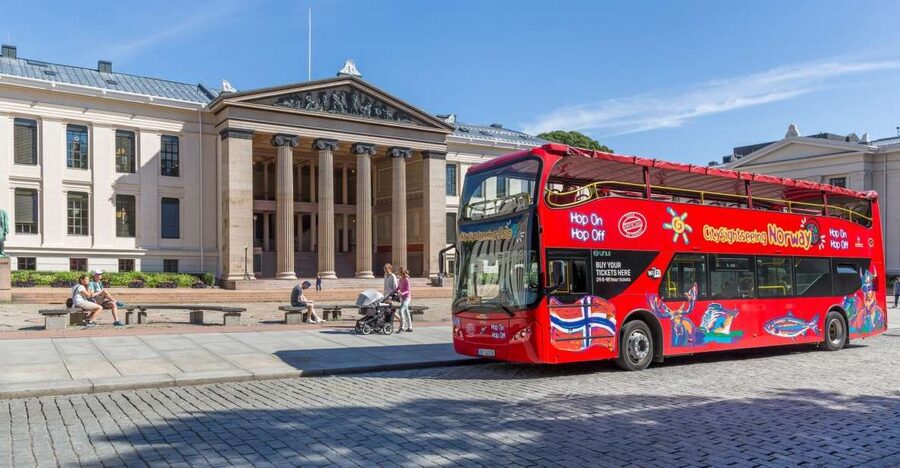
Oslo’s main sights spread between the city center, Frogner, and the Bygdøy museum peninsula. This open-top bus gives you a simple way to connect them, with 360-degree views and the freedom to get off when something catches your eye. I especially like the stops near the Viking museums and the Opera House, plus the direct access from several cruise terminals.
I also like the 24-hour and 48-hour choices, since a short visit can use the bus as a moving introduction, while a longer stay allows time for museums. The main catch is the limited operating window: the first bus leaves Nationaltheatret at 10am, the last leaves at 4pm, and waits or traffic can eat into your sightseeing time.
Key points to know before you ride
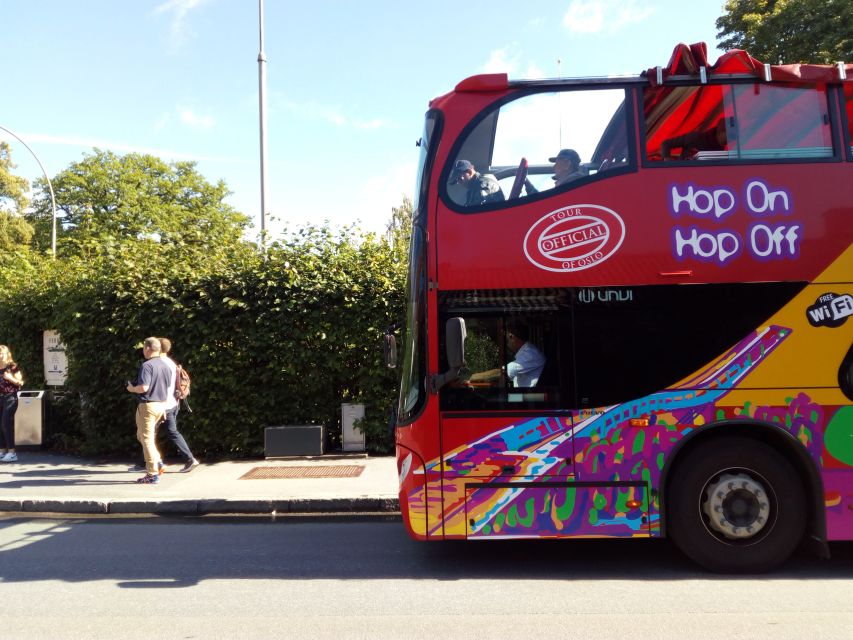
- The route links Oslo’s center with Bygdøy: You can reach Vigeland Sculpture Park, the Norwegian Museum of Cultural History, the Viking Ship Museum area, Fram, and the Maritime Museum without arranging separate transport.
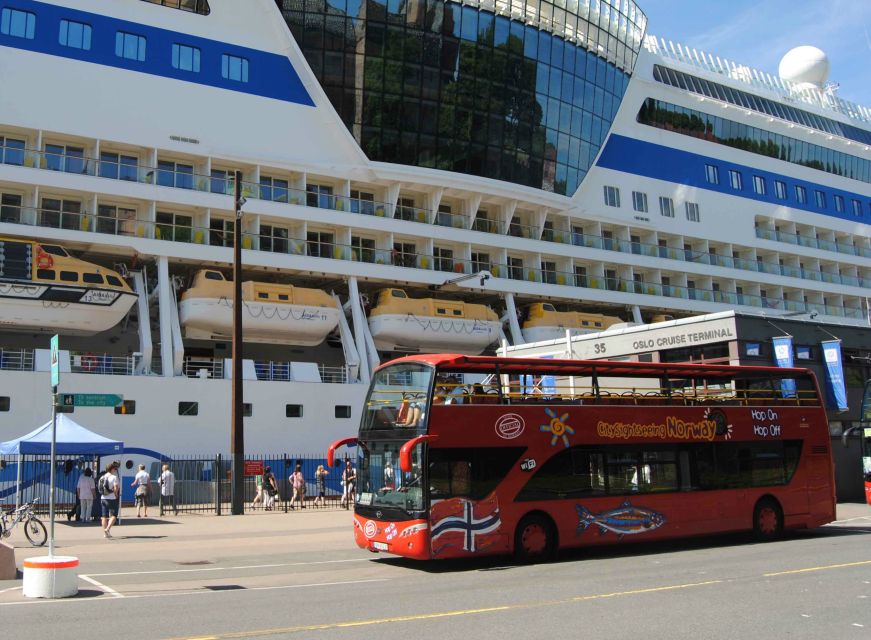
- Cruise passengers get especially useful stops: Buses call near the Oslo Cruise Terminal, Color Line Terminal, Filipstad Cruise Terminal, and Oslo ferry port.
- The full loop takes about 90 minutes: That is a good first ride, but not enough time to see every museum along the way.
- Audio commentary comes in eight languages: English, Spanish, German, French, Chinese, Italian, Dutch, and Japanese are available through headphones or your own device.
- Weather affects the experience: The upper deck gives the best view, but plastic coverings can make photographs difficult when the roof is up.
- The ticket has unusual flexibility: Your voucher can be used on any day within 12 months of the selected travel date, subject to the stated booking terms.
Why the bus works well for seeing Oslo
Oslo is easy to explore in pieces, but its most popular sights are not all gathered around one square. The Royal Palace, Karl Johans Gate, and Oslo Central Station sit in the center. Vigeland Sculpture Park is farther west, while Bygdøy puts several major museums on a peninsula across the harbor area.
That is where this bus earns its fare. You can ride the complete loop first, listen to the audio guide, and get a sense of how Oslo fits together. On the second circuit, you can get off at the places you want to explore properly.
The ticket costs about $46 per person. That is not cheap for a ride around town, so I would not buy it simply as a substitute for local public transport. The value improves if you visit several spread-out sights, use the bus for most of a day, or arrive from a cruise ship and want a ready-made route without working out each connection.
The bus runs about every 30 minutes. That sounds frequent, but a 30-minute wait matters when you have only one day in port. Keep an eye on the last departures, especially if you spend a long time inside a museum. The full loop lasts about 90 minutes, and city traffic can slow it down.
More easy ways to cover Oslo:
- Oslo: 24 or 48-Hour Hop-On Hop-Off Sightseeing Bus Ticket
★ 4.1 · 1,470 reviews - Oslo: Grand City Sightseeing Tour by Bus with Fjord Cruise
★ 4.6 · 647 reviews - City Sightseeing Oslo Hop-On Hop-Off Bus Tour
★ 3.0 · 455 reviews
Starting at Nationaltheatret and Karl Johans Gate
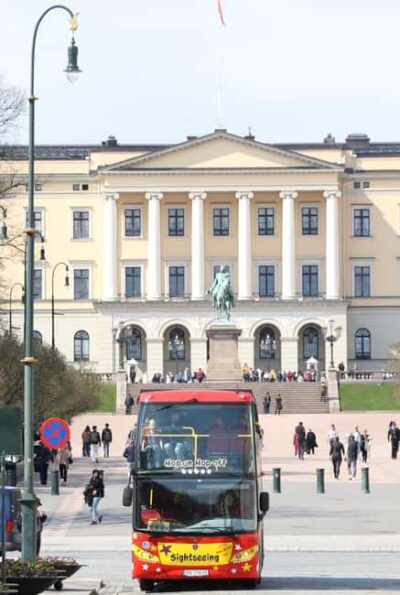
The first stop is at Nationaltheatret, near the Royal Palace and Karl Johans Gate. This is the clearest place to begin because you can orient yourself in central Oslo before heading farther out.
The Royal Palace is the official home of Norway’s present monarch. The stop also places you close to Ibsen Museum, which focuses on the 19th-century Norwegian playwright and poet Henrik Ibsen. If you want a quick central introduction, ride the whole loop. If the palace area is already on your walking plan, board here after seeing it on foot.
Nationaltheatret is also the stated first departure point. The first bus leaves at 10am and the last departure from this stop is at 4pm. If you arrive before 10am, do not assume a bus waiting at the stop is ready to leave. One passenger arrived early and had to wait for the next departure, which shortened the day.
Majorstuen and Frogner Park

The bus passes through Majorstuen on its way to Frogner Park. Majorstuen is useful as a neighborhood reference, but Frogner Park is the more important stop.
Frogner Park contains Vigeland Sculpture Park, one of Oslo’s signature sights. The sculptures by Gustav Vigeland give this stop a clear reason to get off, even if you have only a few hours in the city. The park and the nearby Oslo Museum also offer a change from the waterfront museums and royal landmarks.
Plan your time here before leaving the bus. A quick look at the sculpture area is different from a visit to the park and museum, and the bus cannot wait for you. If you are using the route as transportation, note exactly where you get off so you can find the return stop.
Bygdøy’s museum stops
The route’s strongest sightseeing section is on Bygdøy, where several museums sit close to the Norwegian Museum of Cultural History and the former Viking Ship Museum stop.
The Norwegian Museum of Cultural History is an open-air museum focused on Norwegian culture. The stop can take much longer than a brief photo break, so it is better suited to a 48-hour pass or a full day with fewer other plans.
The Viking Ship Museum is listed as a stop, but you should check its current opening status before relying on it as your main visit. The bus route also serves the Kon-Tiki Museum, Fram Polar Ship Museum, and Norwegian Maritime Museum. These museums cover exploration, polar travel, maritime life, and seafaring, giving you several ways to shape the day.
I like this part of the route because it lets you choose rather than forcing a single theme. The Fram Museum suits an interest in polar exploration. Kon-Tiki focuses on Thor Heyerdahl’s expeditions. The Norwegian Maritime Museum gives you a broader look at Norway’s connection with the sea.
The drawback is obvious: you cannot see all of these museums well in one short stop. Choose one or two, then leave time for the bus ride back. If you try to visit everything, the 4pm last departure can become a real problem.
A few more things to do in Oslo worth a look
- Oslo Combo Tour: Grand City Tour and Oslo Fjord Cruise
★ 4.5 · 555 reviews - Oslo Sea Kayak Tour “Fjord City”
★ 4.5 · 39 reviews - Stockholm: City Archipelago Sightseeing Cruise with Guide
★ 4.3 · 10,798 reviews - Bergen: City Tour on Foot
★ 4.9 · 1,327 reviews
Returning through the harbor and cruise terminals
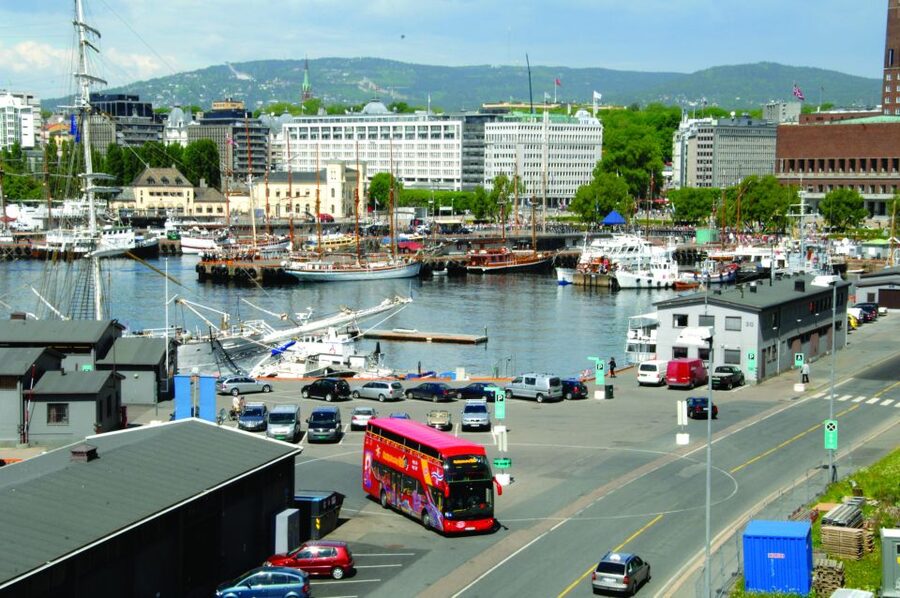
After Bygdøy, the route returns toward the waterfront and serves several cruise-related stops. These include the Color Line Terminal at Hjortnes, Filipstad Cruise Terminal, Tjuvholmen as an alternative stop, the Oslo Cruise Terminal near Akershus Fortress, and the Oslo ferry port used by Go Nordic Cruiseline and DFDS.
This makes the tour especially handy when your hotel is not in the center or your Oslo visit begins and ends at the ship. You can board near the port instead of walking back to Nationaltheatret. The cruise-terminal access is one of the strongest practical reasons to choose this tour.
A stop near Akershus Fortress gives you another good chance to leave the bus. The fortress adds a historic setting beside the water, and it pairs well with the nearby harbor sights. The route then continues through Langkaia toward the Opera House and MUNCH Museum.
Port traffic can affect timing. A past ride became badly delayed in the center when a major royal visit closed or slowed roads. That sort of delay is not something the bus operator can fully control, so leave a buffer if you must return to a ship at a fixed time.
The Opera House, MUNCH, and Oslo Central Station
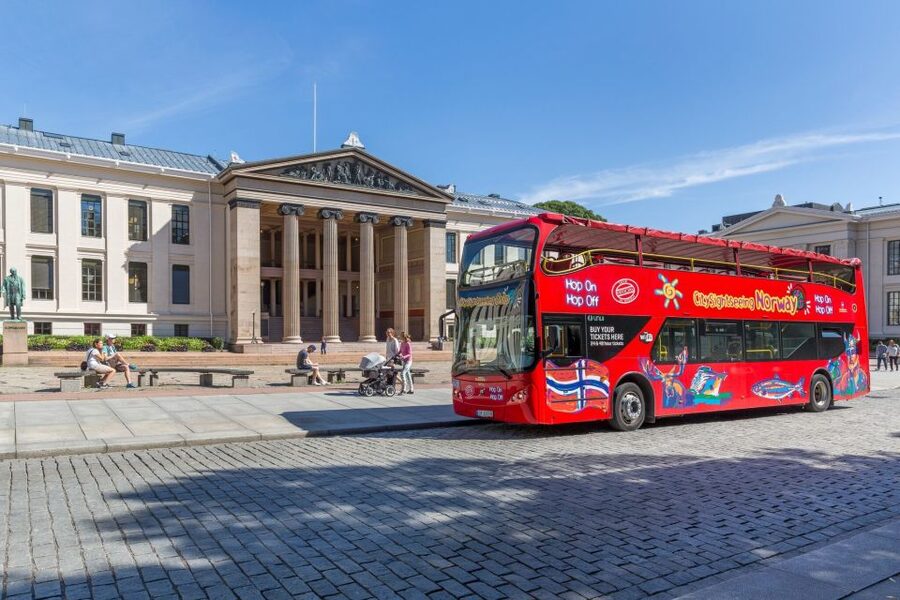
The Opera House and MUNCH Museum stop is one of the easiest to use for a short city visit. Oslo Opera House is a prominent waterfront building, while MUNCH holds the work of Edvard Munch, Norway’s best-known painter.
You can get off here, walk around the waterfront area, and rejoin the route later. This is also a useful stop if you want photographs without committing to a long museum visit.
The bus then passes Oslo Central Station before returning to Nationaltheatret. The central station area is convenient for combining the bus with an independent walking route through central Oslo. It also helps you reach the tour from other parts of the city, though the official first boarding point remains near Nationaltheatret.
What the audio guide adds
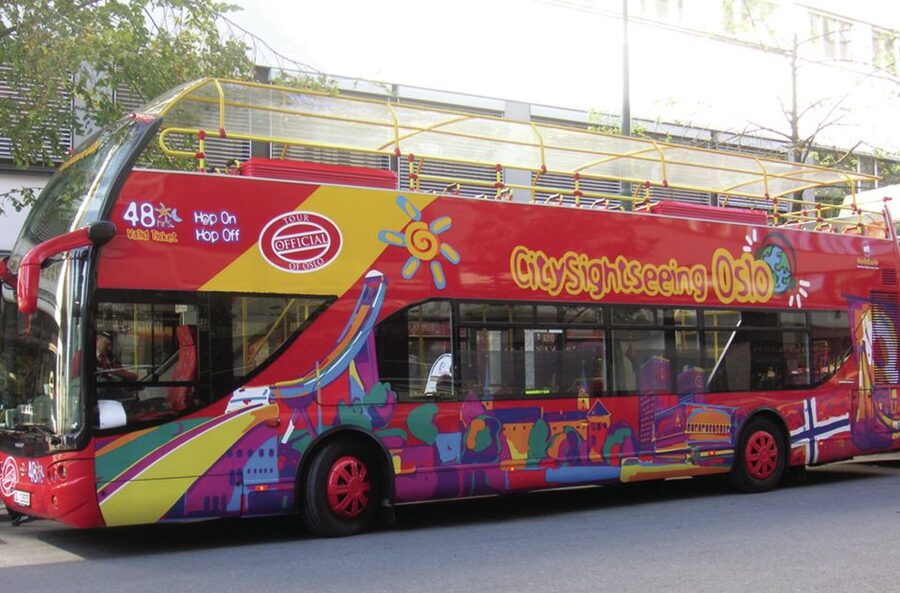
The audio commentary is available in English, Spanish, German, French, Chinese, Italian, Dutch, and Japanese. Headphones are included, and the guide can also be used on your own device.
The commentary gives you context as the bus moves between districts. It is most useful on the first circuit, when you are trying to decide where to get off. The information is described as informative, though some rides have had sound problems or commentary that was hard to hear.
Check your headphone connection when you board. Some audio ports have not worked properly, and a guide that cuts out loses much of the tour’s value. If the sound is poor, the open-top view still works, but you will be paying mainly for transport and orientation.
The route does not always announce the next stop clearly enough. I suggest keeping the printed stop list or route map open on your phone. That is especially helpful when you are waiting to get off near a museum and do not want to miss the stop.
Open-top views, weather, and bus comfort
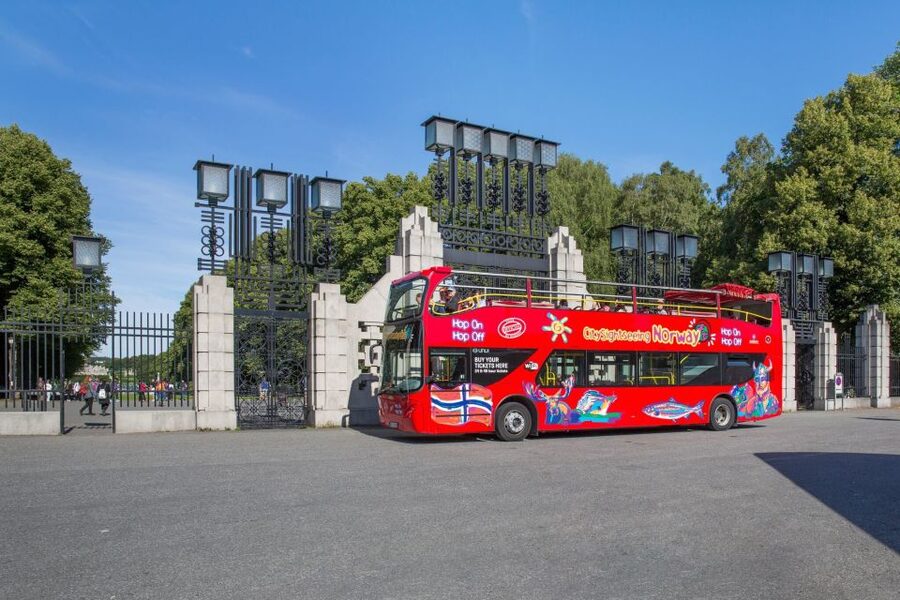
The upper deck is the reason to choose a sightseeing bus rather than an ordinary city bus. You get a broad view of the streets, waterfront, palace area, and museum route, with a better chance to take photographs.
Oslo weather can change the experience quickly. In rain or strong wind, you may prefer the covered lower level. Plastic roof coverings can make photos difficult, so take pictures when the upper deck is open if conditions allow. On a wet day, the bus can still be useful because you can see the city between short indoor visits rather than spending the entire day outside.
The bus has free Wi-Fi, which is practical for checking museum hours, finding your next stop, or looking up the return route. It is a useful extra, but I would not buy the ticket for Wi-Fi alone.
Some buses may fill up at busy stops. If you want a seat, starting at Nationaltheatret helps. At the end of the day, the final buses can also be more crowded, so do not plan your schedule around the last possible departure.
One day or two days?
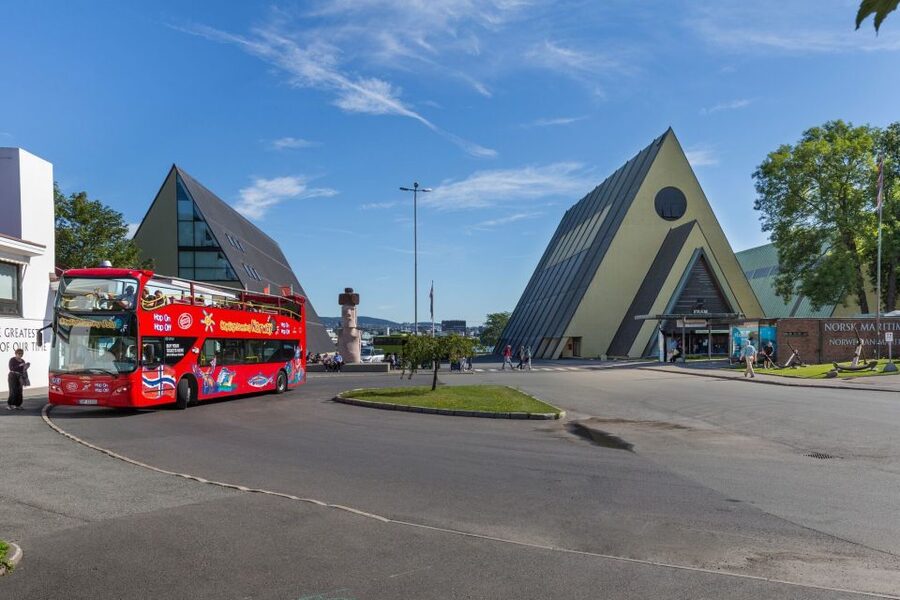
A 24-hour pass makes sense for a first look at Oslo. Ride the loop once, then choose one museum cluster and one central stop. A possible plan is:
- Start at Nationaltheatret around 10am.
- Ride through Frogner to Bygdøy.
- Visit one museum, such as Fram, Kon-Tiki, or the Maritime Museum.
- Continue to the Opera House and MUNCH area.
- Finish near the Royal Palace or Nationaltheatret.
This plan gives you a broad view without pretending you can see every attraction.
A 48-hour pass gives you more breathing room. Use the first day for the full loop and central sights. Use the second day for Bygdøy or Vigeland Sculpture Park, with less concern about missing the next bus.
Because the voucher can be used on any day within 12 months of the selected date, it is also useful for a trip whose plans may shift. Once you are using the pass, remember that the active sightseeing period is the 24 or 48 hours you selected.
Who gets the best value?
I would recommend this bus most strongly to first-time visitors, cruise passengers, families wanting simple transport between major sights, and anyone who does not want to plan Oslo’s connections stop by stop.
It also suits you if you want an introduction before choosing where to spend your limited museum time. The route gives you a useful mental map and reduces the effort of linking the center with Bygdøy.
I would be less enthusiastic if you are staying several days and already enjoy using local transport. Oslo is walkable in sections, and paying $46 can be hard to justify if you only ride once and do not enter any of the museums. Attraction entry is not included, and food and drinks are not included either.
The bus is also not ideal for a tightly timed ship return unless you build in plenty of extra time. Thirty-minute intervals, a 90-minute loop, and possible traffic delays require a cautious schedule.
Booking, boarding, and practical details
You can board at Nationaltheatret or at the listed stops near Frogner Park, the Norwegian Museum of Cultural History, the Viking Ship Museum, the Kon-Tiki and Fram museums, Oslo Cruise Terminal, and the Opera House. Mobile and printed vouchers are accepted, and the voucher can be redeemed at any stop along the route.
Earlier boarding problems involved staff expecting a printed voucher even when a mobile confirmation was available. The current instructions accept both formats, but carrying a screenshot and a printed copy, if convenient, is sensible. Bring a passport or identity card, and remember that pets and smoking are not allowed.
Free cancellation is available up to 24 hours before the activity for a full refund. You can also reserve and pay later, which helps if your cruise schedule or Oslo plans are not settled.
Should you book the Oslo bus tour?
Book it if you want a low-effort overview, need to connect the city center with Bygdøy, or are arriving by cruise ship. The well-placed stops, multilingual audio, and flexible 24 or 48-hour format make it a practical first-day tool.
Skip it if you plan to walk central Oslo, use ordinary public transport, and visit only one nearby attraction. At $46, the ticket needs a full day of use to feel worthwhile.
My best advice is to ride the complete 90-minute loop early, then get off on the second pass. Sit upstairs when the weather is clear, check the audio before leaving the stop, and never leave a museum visit until the final departure is close. Used that way, this tour gives you a broad first look at Oslo without turning your day into a transport puzzle.
FAQ
How long is the complete Oslo bus route?
The tour loop takes about 90 minutes.
How often do the buses run?
Buses run approximately every 30 minutes.
What time does the first bus leave?
The first departure from Stop 1 at Nationaltheatret is at 10am.
What time is the last departure?
The last departure from Stop 1 is at 4pm.
Can I use the ticket for more than one day?
Yes. You can choose a pass valid for either 24 or 48 hours.
Where can I board the bus?
You can board at Nationaltheatret or at stops near Frogner Park, the Norwegian Museum of Cultural History, the Viking Ship Museum, the Kon-Tiki and Fram museums, Oslo Cruise Terminal, and the Opera House.
Which languages are available for the audio guide?
Audio commentary is available in English, Spanish, German, French, Chinese, Italian, Dutch, and Japanese.
Are museum admissions included?
No. Entry to attractions, along with food and drinks, is not included.
Just added in Oslo
- Akerselva River: Urban Paddling Adventure Kayak Tour★ 4.3 · 29 reviews
- Oslo Sea Kayak Tour “Fjord City”★ 4.5 · 39 reviews
- Oslo: Historic Myths & Legends Evening Walking Tour★ 4.8 · 408 reviews
- Oslo: Guided Walking Tour of Central Oslo★ 4.7 · 438 reviews
- City Sightseeing Oslo Hop-On Hop-Off Bus Tour★ 3.0 · 455 reviews
- Oslo: Best of Oslo Walking Tour★ 4.5 · 458 reviews
- The Fram Museum Admission Ticket★ 4.5 · 490 reviews
- Oslo: Sightseeing with Holmenkollen Ski Jump & Vigeland Park★ 4.5 · 451 reviews
Hop-On Hop-Off Bus Tours, compared.
24 or 48-Hour Hop-On Hop-Off Sightseeing Bus Ticket
Read our review →
Hop-On Hop-Off Bus and Perlan Museum Entry Ticket
Read our review →
Grand City Sightseeing Tour by Bus with Fjord Cruise
Read our review →
Browse the lists this tour appears in