
Reviewed · MUSEUMS
The Fram Museum Admission Ticket
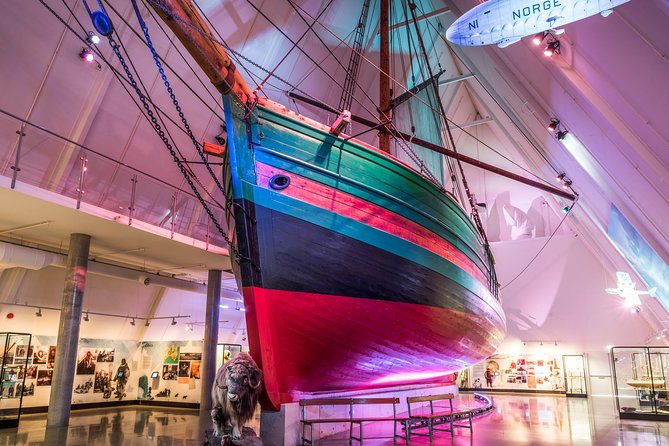
The remarkable thing here is that the museum places Fram, the famous polar exploration ship, inside its own building and lets you walk through it. You can inspect cabins, crew spaces, lower levels, and the engine room instead of viewing a ship from behind a rope.
I like the chance to see how expedition life actually worked, and I like the clear mix of maps, objects, films, and original vessels. The main caution is time: a quick visit can miss much of the story, and the museum can feel crowded or dim in places.
Key points at a glance
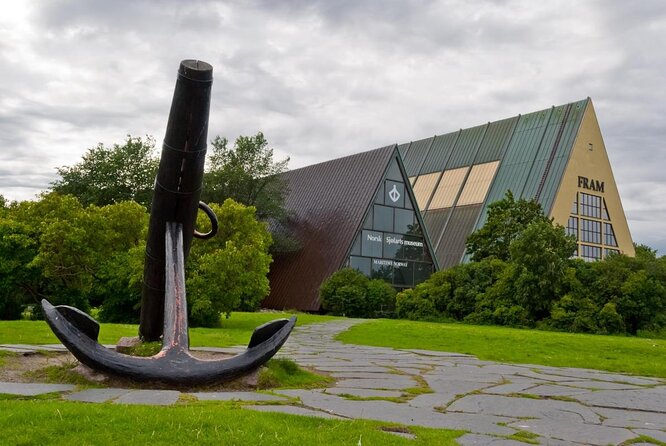
- Walk aboard two original exploration ships: Explore Fram and Gjøa, including rooms, passageways, and working areas.
- See where the Northwest Passage was first navigated: Gjøa is the centerpiece of the newer building.
- Plan on two hours for a proper visit: Many exhibits reward careful reading before you board the ships.
- Catch the polar film early: The cinema shows a High North introduction every 15 minutes.
- Expect a hands-on museum: Storm effects, an ice bunker, interactive displays, and ship access add movement to the history.
- Pay about $19.38 per person: That is a fair price if you have time to explore both buildings rather than make a brief stop.
Why the Fram ship changes the museum visit
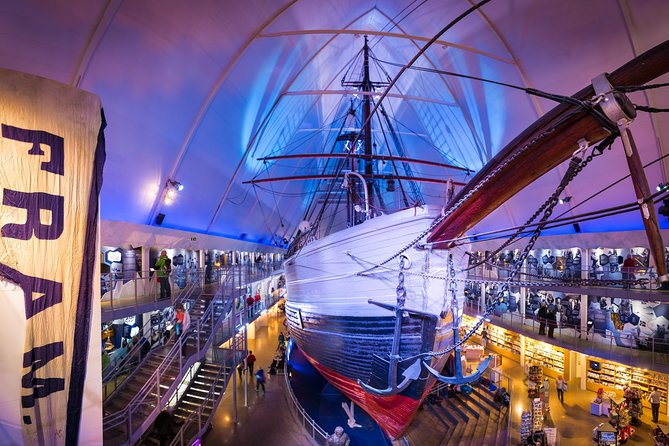
Many maritime museums show you a ship. The Fram Museum lets you enter one and move through the spaces where polar expeditions actually took place. That simple difference gives the visit its force.
Fram was built for the harsh conditions of polar travel, and the museum’s displays explain the ship’s three great expeditions. You can see the narrow sleeping areas, working spaces, and practical parts of the vessel that made long journeys possible. The ship is not just a backdrop for the exhibits. It is the main object.
I would allow time to walk slowly. The upper areas give you a sense of the ship’s arrangement, while the lower sections and engine room show the less glamorous side of exploration. The cramped spaces help you understand the daily limits faced by the crew far better than a wall panel alone.
The museum also adds atmospheric effects. A storm and iceberg presentation can play while you are on deck, and some areas include rocking or cold-weather effects. These touches are a little theatrical, but they help explain the physical strain of Arctic and Antarctic travel without turning the visit into a theme-park ride.
A few more things to do in Oslo worth a look
- Kon-Tiki Museum Entrance Ticket
★ 4.5 · 1,096 reviews - Oslo: Paradox Museum Entry Ticket
★ 4.3 · 799 reviews - Stockholm: Skansen Open-Air Museum Admission Ticket
★ 4.5 · 3,427 reviews
Start with the story before boarding Fram
The best way to use your time is to begin with the exhibition areas rather than rushing straight onto the ship. Maps, timelines, objects, and explanatory texts outline the expeditions and give the vessel a purpose.
Texts in the Fram building are available in ten languages. English is among the languages offered, so you can follow the main story without relying only on visual displays. I would read enough to understand the route and expedition goals, then return to any sections that catch your attention after exploring the ship.
This order matters. Without context, Fram can look like an impressive old vessel with tight corridors. With the background in place, each cabin and piece of equipment becomes part of a larger story about planning, risk, endurance, and navigation.
The museum’s layout is not always a perfect chronological path. You may need to pay attention to the maps and dates to keep the different expeditions straight. One useful approach is to watch the film first, then work through the exhibits in a deliberate order.
Gjøa and the Northwest Passage
The newer Gjøa building connects to Fram through an underground tunnel. The tunnel itself adds a change of pace, and some parts of the route include cold or icy effects that reinforce the subject.
Gjøa is the centerpiece. It was the first ship to navigate the entire Northwest Passage, a route through the Arctic that challenged generations of explorers. Seeing the vessel after learning what the route involved gives the ship a clear role in the museum’s story.
The Gjøa building also covers more than one expedition. Displays include the voyages of Gjøa and Maud, the N24 and N25 aircraft, and the airship Norge. John Franklin’s expedition, along with the work of Henry Larsen and Eivind Astrup, also appears in the historical sections.
That wider focus makes the museum more useful than a single-ship exhibit. You get to compare different forms of polar travel, from wooden vessels to aircraft and airships. The displays show how exploration methods changed as technology improved, while the central problem remained the same: how to move people and equipment through extreme northern conditions.
The film and interactive parts
A 116-seat cinema shows a polar introduction film every 15 minutes. If you arrive at a convenient time, it is worth making the film your first stop. It gives you a quick framework before you begin reading the longer displays.
The experience also includes the N25 Flight 4D Cinema. The film element helps break up the reading and gives children or restless adults a reason to stay engaged. This is not a museum where every useful detail sits behind glass.
Interactive features include storm and ice effects, a cold walk-through tunnel, and an ice bunker. The atmosphere is strongest when it supports the objects around it. You can look at the ship’s deck, feel the suggestion of rough weather, and then step inside the tight working areas.
The effects will not appeal to everyone. If you prefer a quiet museum with a purely academic presentation, the theatrical touches may feel a little much. I see them as useful additions, especially for families, as long as you treat them as introductions rather than substitutes for the written exhibits.
Same base, a different kind of day out:
- Oslo: Scenic Fjord Cruise with Audio Guide Commentary
★ 4.5 · 5,375 reviews - Oslo Nature Walks: Island Hopping Tour
★ 4.8 · 2,713 reviews - Oslo: 100% Electric Oslofjord Sightseeing Cruise
★ 4.4 · 2,041 reviews - Oslo: Fjord Evening Cruise with Shrimp Buffet
★ 4.5 · 1,956 reviews
What two hours really gets you
The official visit can take from one to three hours. One hour is enough for a brisk look at the ships and the main film, but it is not enough for careful reading throughout both buildings.
I would plan on about two hours as a sensible middle ground. That gives you time to read the maps and expedition panels, walk through Fram, use the tunnel to reach Gjøa, and see the key aircraft and airship displays.
If polar exploration is a major interest, three hours is reasonable. You may want to revisit parts of the ship, study the routes, and spend time on the current High North displays. The museum asks you to think about both past exploration and present-day pressures.
A visit at opening time may help if you want photographs or a quieter first look. The museum is open daily from 10:00 a.m. to 5:00 p.m. Crowds can make the ship’s narrow spaces harder to enjoy, and some areas have been described as needing more light. If you dislike tight passageways or dim exhibits, give yourself extra time and avoid rushing.
The High North beyond heroic exploration
The museum does not stop with stories of brave crews and difficult voyages. It also presents current issues affecting the High North, including polar bears, melting ice, gas, and oil.
This section gives the visit needed balance. Polar exploration can easily become a procession of heroic names and dramatic routes. The modern displays remind you that the Arctic is not only a stage for past expeditions. It is a changing region with environmental and economic pressures.
I appreciate that the museum connects old navigation challenges with current questions. The original ships show what explorers faced, while the modern displays ask what is happening to the same northern environment now.
The coverage is useful even if you are not an enthusiast for expedition biographies. You can come for the ships and leave with a wider understanding of why the High North matters today.
Is $19.38 good value?
At about $19.38 per person, admission is reasonable for the amount of material on display. The price includes access to Fram, Gjøa, the connected exhibition areas, and the film elements. Food and drinks are not included, so plan to eat before or after the visit.
The real value depends on how much time you give it. If you spend only 30 minutes walking around the most obvious ship areas, the ticket may feel less worthwhile. If you allow two hours, read the displays, and watch the film, the admission covers a substantial museum visit.
Prepaid admission gives you a straightforward entrance and can save a little time. It is not presented as a guided tour, so you should not expect a named guide or a live explanation at each stop. Instead, you move at your own pace through the displays, films, and ships.
The booking information lists a maximum of 14 participants for the activity, but the museum itself can still feel busy at popular times. That distinction matters: the ticket is for a museum visit, not a small-group guided walk through the collection.
Getting there and planning your visit
The museum is near public transportation, though the location can feel somewhat remote depending on where you are staying in Oslo. Check your route and departure times before setting out, especially if your day is built around a cruise schedule or a tight series of attractions.
You can expect confirmation at booking, and the ticket is mobile. Service animals are allowed with identification. Most people can take part, but the ship’s narrow, uneven-feeling spaces and multiple levels may affect how comfortable you are moving around.
The museum is open every day from 10:00 a.m. to 5:00 p.m. The published opening period runs through April 2, 2027, so check the date shown on your booking if your visit is later than that.
The ticket can be canceled for a full refund if you cancel at least 24 hours before the experience start time. Cancellations or changes made inside that 24-hour window are not refunded or accepted, and the cut-off follows local Oslo time.
Who will enjoy Fram Museum most?
This is an easy choice for anyone interested in polar travel, Norwegian exploration, maritime engineering, or the practical details of life at sea. The original ships give the visit a physical quality that a standard historical museum cannot match.
Families should find plenty to hold attention, especially in the cinema, storm presentation, ice effects, and ship interiors. Children can understand the scale of the expedition more easily when they can move through the same tight spaces and see where equipment and crew areas were arranged.
It also suits adults who want a self-guided visit. You are free to spend five minutes on a display or much longer on a particular expedition. The ten-language texts help international visitors follow the main exhibits without needing a private guide.
I would be less enthusiastic if your Oslo schedule allows only a very short stop. The museum is not difficult to enter, but the story works best when you allow enough time for both buildings. If all you want is a quick photograph of an old ship, you will miss the strongest part of the visit.
A few practical drawbacks
The museum’s popularity can work against it. Crowding is most noticeable on board the ships, where passageways are narrow and stopping to read can block the flow. Arriving near opening time is a sensible choice if you want clearer photographs and more room to examine the interiors.
Lighting is uneven in some parts of the exhibition. Bring patience rather than assuming every panel will be easy to read at a glance.
The museum’s story is also spread across several forms: wall text, ship interiors, films, maps, and modern issue displays. That variety is useful, but the route is not always perfectly obvious. Starting with the polar film can help you get your bearings before moving through the exhibits.
Finally, remember that this is admission rather than a guided expedition. You will need to build your own route and decide how much background to read. For many people, that freedom is a benefit. If you want a guide to explain every object, this ticket alone will not provide that.
Should you book the Fram Museum ticket?
I would book it if you have at least two hours in Oslo and want more than a quick look at a standard collection. The chance to walk through Fram and Gjøa, see original expedition spaces, and connect those ships to aircraft, airships, and current Arctic concerns makes the admission worthwhile.
Book with extra care around your schedule if you are coming from a cruise or arriving late in the day. The museum closes at 5:00 p.m., and a missed visit inside the 24-hour cancellation window is not refundable.
For the best experience, arrive early, watch the film first, read the main maps and timelines, then board Fram before moving through the tunnel to Gjøa. If you follow that order and allow two to three hours, this is one of Oslo’s more memorable history stops.
FAQ
How long does the Fram Museum visit take?
The visit can take about one to three hours. Allow around two hours for the main exhibits, both ships, and the film, or closer to three hours if you want to read the displays carefully.
What is included with admission?
Admission includes access to Gjøa and the N25 Flight 4D Cinema. The museum visit also covers the Fram building, the connected Gjøa building, and their exhibitions.
Is the museum open every day?
Yes. The listed opening hours are Monday through Sunday, 10:00 a.m. to 5:00 p.m.
Are the exhibits available in English?
Yes. The main Fram exhibition has explanatory texts in ten languages, and the activity is offered in English.
Is food included?
No. Food and drinks are not included with the admission ticket.
Can I cancel for a refund?
Yes, you can receive a full refund if you cancel at least 24 hours before the experience start time. Cancellations or changes made less than 24 hours before the start time are not accepted, and the cut-off uses local time.
Just added in Oslo
- Akerselva River: Urban Paddling Adventure Kayak Tour★ 4.3 · 29 reviews
- Oslo Sea Kayak Tour “Fjord City”★ 4.5 · 39 reviews
- Oslo: Historic Myths & Legends Evening Walking Tour★ 4.8 · 408 reviews
- Oslo: Guided Walking Tour of Central Oslo★ 4.7 · 438 reviews
- City Sightseeing Oslo Hop-On Hop-Off Bus Tour★ 3.0 · 455 reviews
- Oslo: Best of Oslo Walking Tour★ 4.5 · 458 reviews
- Oslo: Sightseeing with Holmenkollen Ski Jump & Vigeland Park★ 4.5 · 451 reviews
- Oslo: Fjord Mini Cruise by Wooden Sailing Ship★ 4.5 · 503 reviews
Museums, compared.


Perlan Museum Wonders of Iceland Entrance Ticket
Read our review →
Stockholm Pass: Save up to 50% – Includes Vasa Museum Ticket
Read our review →




Hop-On Hop-Off Bus and Perlan Museum Entry Ticket
Read our review →Browse the lists this tour appears in